This post contains affiliate links. We may earn a small commission when you buy through our links — at no extra cost to you.
You’ve probably stood in a downpour on a Cornish cliff, discovering that your £20 ‘waterproof’ jacket isn’t. It’s a common frustration for travelers in the UK and Europe, where unexpected rain can turn a day trip into a damp, uncomfortable memory. The market is thick with ultra-light shells that call themselves waterproof but rely on a temporary coating that fails when you need it most.
This guide doesn’t treat waterproofing like a checkbox. Instead, it zeroes in on the construction details — sealed seams, breathable membranes, and hood design — that separate a jacket that works on a drizzly morning in Edinburgh from one that lets water in after half an hour. Understanding what separates a truly waterproof layer from a mere windbreaker means you’ll never again pack a jacket that wets out after an hour.


1. Columbia Watertight II
Best for City & Day Hikes
Key Features
- Waterproofness: Omni-Tech seam-sealed membrane
- Packability: Packs into hand pocket
- Breathability: Mesh lining
- Hood Adjustability: Attached, drawcord adjustable
- Price: Mid-Range
The Omni-Tech seam-sealed membrane forms the core of this jacket’s waterproofing. In sustained rain, the shell keeps the wearer dry — the taped seams and coated nylon block moisture effectively. At 1 lb, it packs into its own hand pocket, stowing easily in a daypack or carry-on. The build quality holds up through repeated travel use, with stitching and zippers that endure.
This jacket suits travelers facing intermittent to heavy rain in places like the UK or coastal Europe, where dependable shell performance matters. The relaxed cut allows layering a fleece underneath, though sizing can run large — consider going down a size if wearing only a t-shirt. For high-output hikes, the lack of pit vents may lead to internal condensation; it’s a tradeoff for the waterproof seal.
Pros
- Strong waterproof protection in heavy rain
- Lightweight and self-packs into a hand pocket
- Durable build that handles regular travel wear
Cons
- Sizing can run large; a size down may fit better when worn without heavy layers
- Limited breathability; internal condensation may occur during active use
For travelers who need a compact, waterproof shell that reliably keeps out heavy rain without a premium price, this jacket fits the role without fuss.
2. Helly Hansen Seven J
Best for Cold & Windy
Key Features
- Waterproofness: Helly Tech membrane
- Breathability: Mesh lining
- Hood Adjustability: Adjustable stowable collar
- Price: Premium
The Helly Hansen Seven J pairs a fully seam-sealed Helly Tech membrane with a mesh-lined interior, delivering warmth and wind-blocking that lightweight packable shells cannot match. Unlike the top pick, which sacrifices insulation for featherlight packability, this jacket prioritizes a burlier build for cold, gusty conditions. If your trip spans frigid, wet climates — Scandinavia, Iceland, or blustery coastal hikes — the trade-off in bulk pays off with bone-dry comfort and a generous fit that accommodates a midlayer fleece. It’s a storm-proof heavyweight, not an emergency shell.
Pros
- Helly Tech membrane keeps you dry in steady rain and heavy spray, even in sailing conditions.
- Lined interior and wind-tight shell add real warmth, blocking wind chill better than a basic shell.
- Build quality outsteps typical travel jackets, with durable materials that stand up to rough weather and daily use.
Cons
- Sleeve linings can catch at the wrist when removing the jacket, a minor daily annoyance.
- Weighs 2 lb, noticeably bulkier than ultralight packable jackets, trading packability for weather protection.
If your travels lean toward cold, stormy coasts where wet and wind demand more than a thin packable shell, the Seven J earns its weight — but for carry-on-only trips, the top pick stays the smarter, lighter option.
3. baleaf Reflective Runner
Best for Active Low-Light
Key Features
- Waterproofness: Waterproof membrane
- Packability: Stuffs into back pocket
- Breathability: Laser-cut underarm vents
- Price: Mid-Range
The baleaf Reflective Runner separates itself from general-purpose travel shells with reflective strips and laser-cut underarm vents tailored to cyclists and runners. True waterproofing—a seam-sealed membrane—keeps you dry in real rain, while the featherlight build stuffs into its own back pocket, barely registering in a daypack. A longer back hem provides coverage in a riding position, and the reflective accents improve visibility for early-morning commutes. It’s the right choice for active travelers who need a highly packable jacket that adds safety without sacrificing breathability. Sizing runs slightly small for broad shoulders; ordering up a size keeps the fit comfortable over a base layer.
Pros
- Seam-sealed waterproofing keeps you dry through steady rain, even during bike commutes.
- Reflective strips across the jacket improve visibility for dawn and dusk rides.
- Stuffs into its own back pocket and weighs around 10 ounces, taking almost no space in a carry-on.
Cons
- During sustained high-output efforts, the laser-cut vents can’t keep pace, and internal moisture may build up.
For active travelers who prioritize low-light visibility and minimal packed weight, this jacket’s combination of reflective safety and waterproofing is hard to beat at its price.
4. Columbia Glennaker Lake II
Best for Ultralight Backup
Key Features
- Waterproofness: Hydroplus DWR coating
- Packability: Packs into hand pocket
- Hood Adjustability: Stow-away
- Price: Budget-Mid
Weighing next to nothing, the Glennaker Lake II stuffs into its hand pocket and disappears into a daypack until skies turn grey. The cut is generous — easy to layer over a sweatshirt for windy, cool walks — and the build quality at this price is a pleasant surprise. It’s a pragmatic emergency windbreaker, not a trusty rain shell.
That ultralight portability comes with a real tradeoff: waterproofing is inconsistent. Light showers may bead up, but sustained rain can soak through after limited use, so it won’t replace the top pick’s seam-sealed membrane for wet-climate reliability. The nylon also feels clammy against bare arms in humidity — a long-sleeve base layer fixes that. This suits sunny-weather trippers who want a wind-blocking backup that saves luggage space and can handle a brief sprinkle.
Pros
- Lightweight and packs into its own hand pocket — ideal for daypack travel.
- Clean stitching and finish at a budget-friendly price.
- Roomy cut layers comfortably over a sweatshirt for shoulder-season walks.
Cons
- Nylon can feel sticky and clammy against bare skin in humid weather.
- Waterproofing may fail in prolonged or heavy rain; best treated as a water-resistant wind shell.
For fair-weather travelers who prize minimal weight and packed size above all, this is a smart emergency windbreaker. If real rain is a possibility, the top pick’s consistent waterproofing is worth the extra ounce.
5. The North Face Antora
Best for Heavy Rain
Key Features
- Waterproofness: DryVent 2L seam-sealed
- Breathability: Breathable membrane
- Hood Adjustability: Adjustable 3-piece
- Price: Premium
The Antora steps away from the top pick’s ultralight orientation to deliver a more substantial shell that uses a fully seam-sealed DryVent membrane. Wind is no concern thanks to sturdy fabric and robust zippers. Generous cut layers easily over a fleece, and the matte finish avoids the shiny technical-jacket look.
The tradeoff for travel is bulk: it cannot stuff into its own pocket, and sleeve length can run long for some builds. This works well for trips where a car trunk or larger suitcase handles the extra space, and city-friendly styling puts it at home in a restaurant as comfortably as on a trail.
Pros
- DryVent seam-sealed membrane keeps water out through sustained rain and high winds
- Roomy cut accommodates a midlayer without restricting motion, and the hood fits over a cap
- Matte finish and clean lines look sharp in urban settings
Cons
- Sleeves can run long for some builds, leaving extra cuff material
- Lacks a stuff-pocket, so packed size is larger than dedicated packable shells
The Antora makes sense for travelers who value full storm protection and city-ready looks over the smallest pack size.
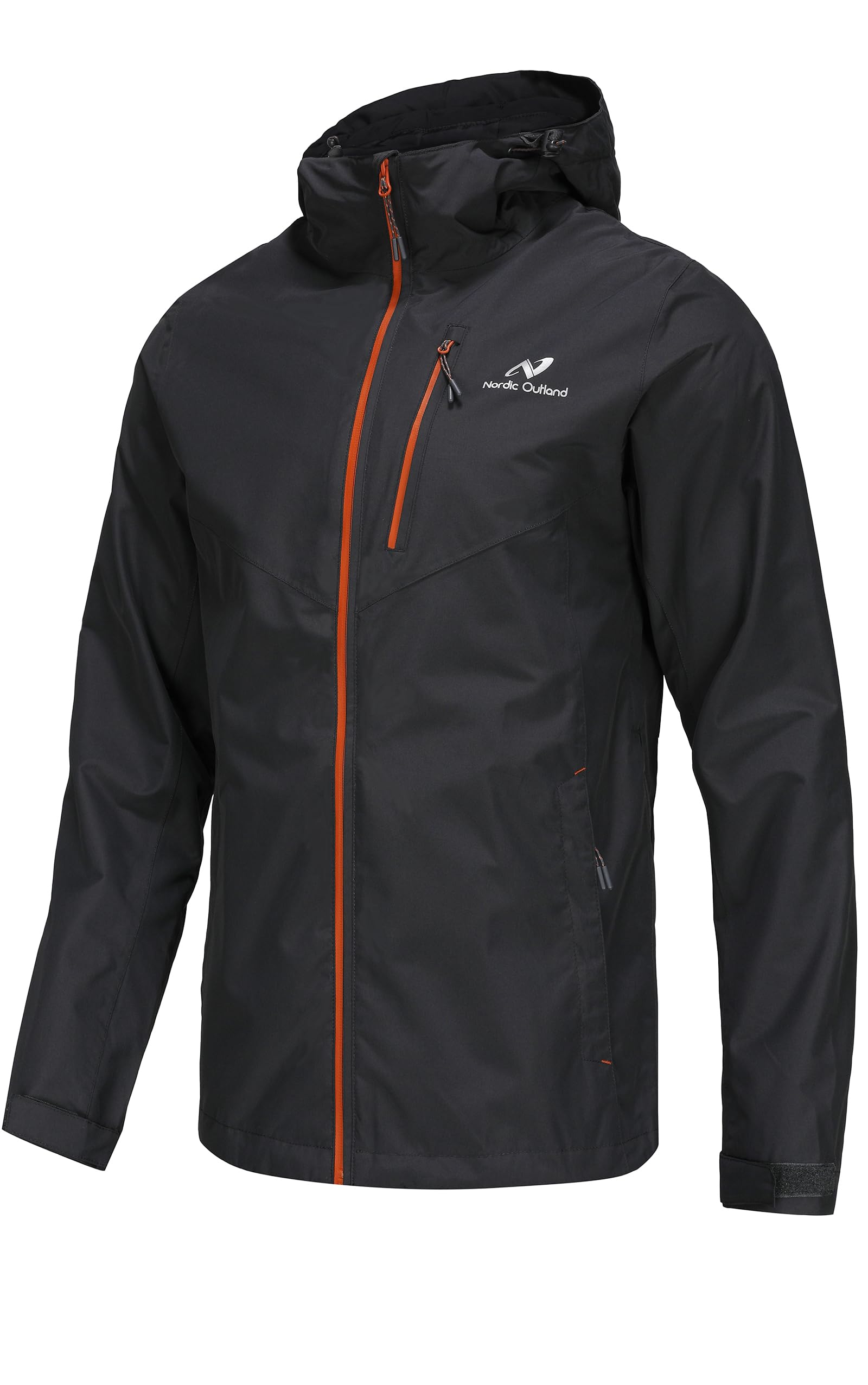
6. NORDIC OUTLAND Breathable
Best for Breathable Hiking
Key Features
- Waterproofness: Taped seams, waterproof zips
- Breathability: Pit zips, mesh back
- Hood Adjustability: Adjustable, ample coverage
- Price: Mid-Range
Where the top pick focuses on proven waterproofing, the Nordic Outland adds pit zips and a mesh-lined back that dump heat on steep trails. Taped seams and waterproof zippers hold up through hours of steady rain, matching shells that cost significantly more.
Active hikers heading to humid destinations like Wales or the Azores will appreciate the breathability. The left-hand main zipper sits on the opposite side from what most men expect, and the hood doesn’t fold into the collar — small quirks that fade with use.
Pros
- Stays waterproof through hours of rain with taped seams and waterproof zippers.
- Underarm pit zips and mesh back panel vent heat during active use.
- Delivers features found on jackets double the price — a clear value at the mid-range.
Cons
- Hood does not pack into the collar, so it must be folded or rolled separately.
- Main zipper is left-handed, which can feel backward for those used to right-side zips.
For hikers who work up a sweat in wet climates, the Nordic Outland’s ventilation and waterproofing are a combination rarely found at this price — the left-hand zip becomes second nature after a few wears.
7. OTU Lightweight Shell
Best for Light Showers

Key Features
- Waterproofness: DWR coating
- Breathability: Mesh lining
- Hood Adjustability: Drawstring adjustable
- Price: Budget
Roomy fit, mesh lining, and multiple pockets deliver solid value for the price. The lightweight design stuffs easily into a daypack. However, waterproofing is inconsistent — it repels light showers but may wet through in sustained rain. This is a windbreaker with water resistance, not a seam-sealed rain shell.
Pros
- Multiple zip pockets keep essentials handy and secure.
- Roomy cut layers easily over a sweatshirt for cooler days.
Cons
- Waterproofing may wet through in steady or sustained rain, limiting it to brief showers.
It’s a practical backup shell for travel in dry-ish climates; leave it home if steady rain is in the forecast.
8. 33,000ft Packable Shell
33,000Ft Packable Shell

Stuffs into its own pouch and weighs just 10.86 oz — exactly what you want for a travel backup. Water beads off fine in passing showers, and the fabric blocks wind effectively. Waterproofing does not hold up to steady, sustained rain, so it’s best reserved for emergencies rather than reliable all-day protection.
Pros
- Stuffs into its own storage pouch, disappearing into a daypack.
- Sheds light rain effectively during brief showers.
Cons
- Waterproofing can falter in sustained rain — best for passing showers only.
For travelers who need a just-in-case layer that takes up almost no space and handles light showers, this jacket fits the bill — but the top pick is the one to reach for when the forecast calls for steady rain.
9. APEXUP Reflective Zip
Best for Budget Backup
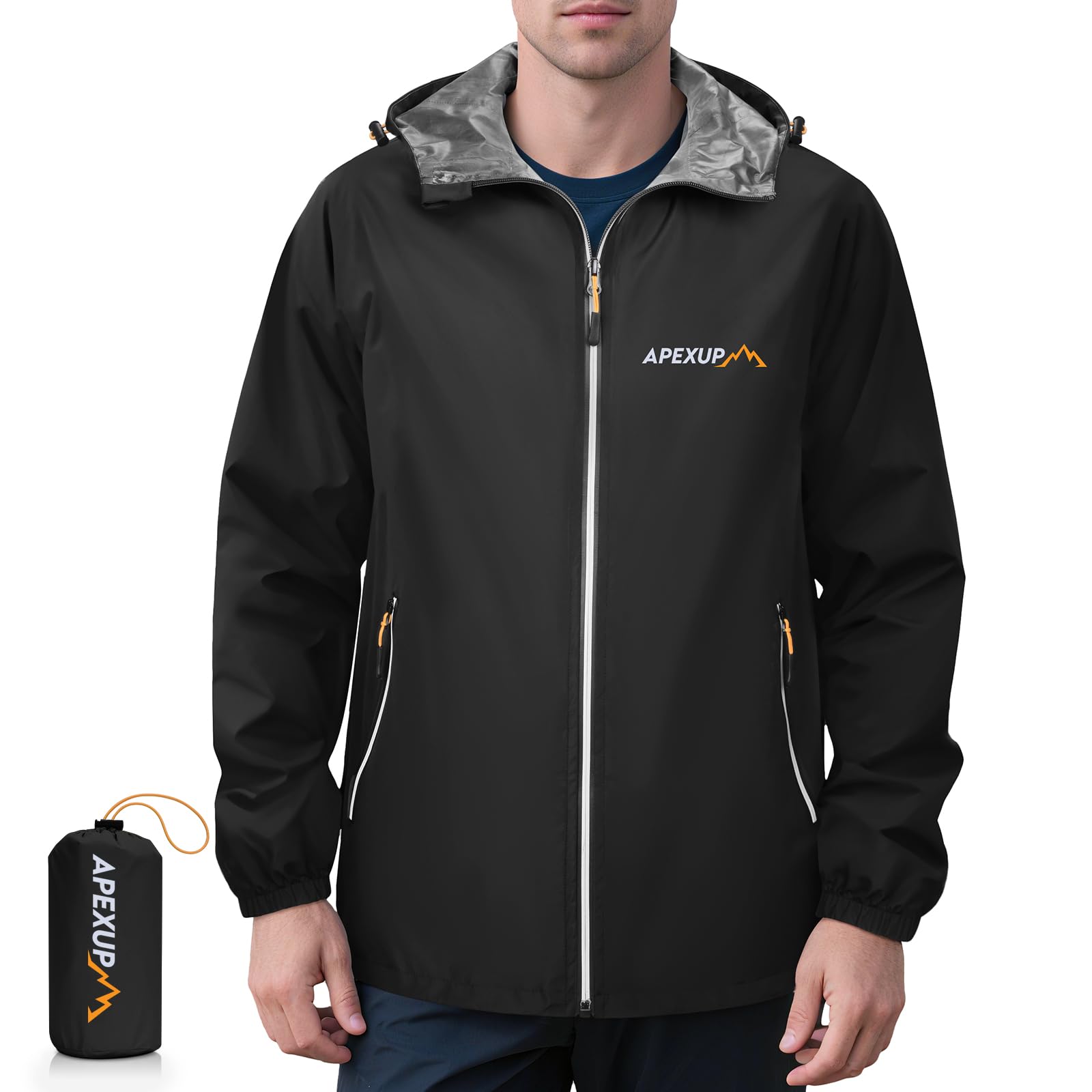
Key Features
- Waterproofness: Sealed seams (claimed)
- Packability: Comes with carry bag
- Price: Budget
Sealed seams shed light rain well, and the reflective zipper adds visibility. The jacket weighs next to nothing and folds small. Re-packing it into its bag takes patience, and the non-breathable fabric can get clammy. Best as a throwaway emergency shell for a single trip, not an all-day layer.
Pros
- Water beads up and slides off in light rain
- Ultralight and packs down into a tiny carry bag
Cons
- Non-breathable fabric can feel clammy and sweaty in warm rain
Grab this as a one-trip rain shell you won’t mind leaving behind — not for extended comfort.
10. COOFANDY Packable
Coofandy Packable

Packs down to pocket-size and fits true to size, making it a handy emergency layer for travel. It’s not a rain jacket: water repels briefly then soaks through in sustained rain. Treat it as a windbreaker for a stray shower, not a waterproof shell.
Pros
- Stuffs into its own pouch and adds negligible weight to a pack
- True-to-size fit with a comfortable, not overly baggy cut
Cons
- Thin material feels plastic-like and can tear under stress
Worth the low price if you need a compact windbreaker for travel emergencies and don’t face sustained rain.
11. Outdoor Ventures Packable
Best for Fair-Weather Trips

Key Features
- Packability: Packs into own pocket
- Hood Adjustability: Adjustable, folds into collar
- Price: Budget
The Outdoor Ventures Packable self-stuffs and layers over bulky clothes, offering a roomy fit and a hood that folds into the collar. Water resistance handles light showers well, but sustained downpours can lead to seepage, and the zipper flaps may snag. It’s a practical backup for weekend trips with intermittent rain, not a full-time storm shell.
Pros
- Compresses easily into its own pocket for travel
- Roomy fit accommodates bulky layers underneath
Cons
- Zipper flaps can snag if not carefully aligned
Weekend travelers needing a lightweight backup for occasional showers will find it practical, as long as a downpour isn’t in the forecast.
12. UIQUR Packable
Uiqur Packable
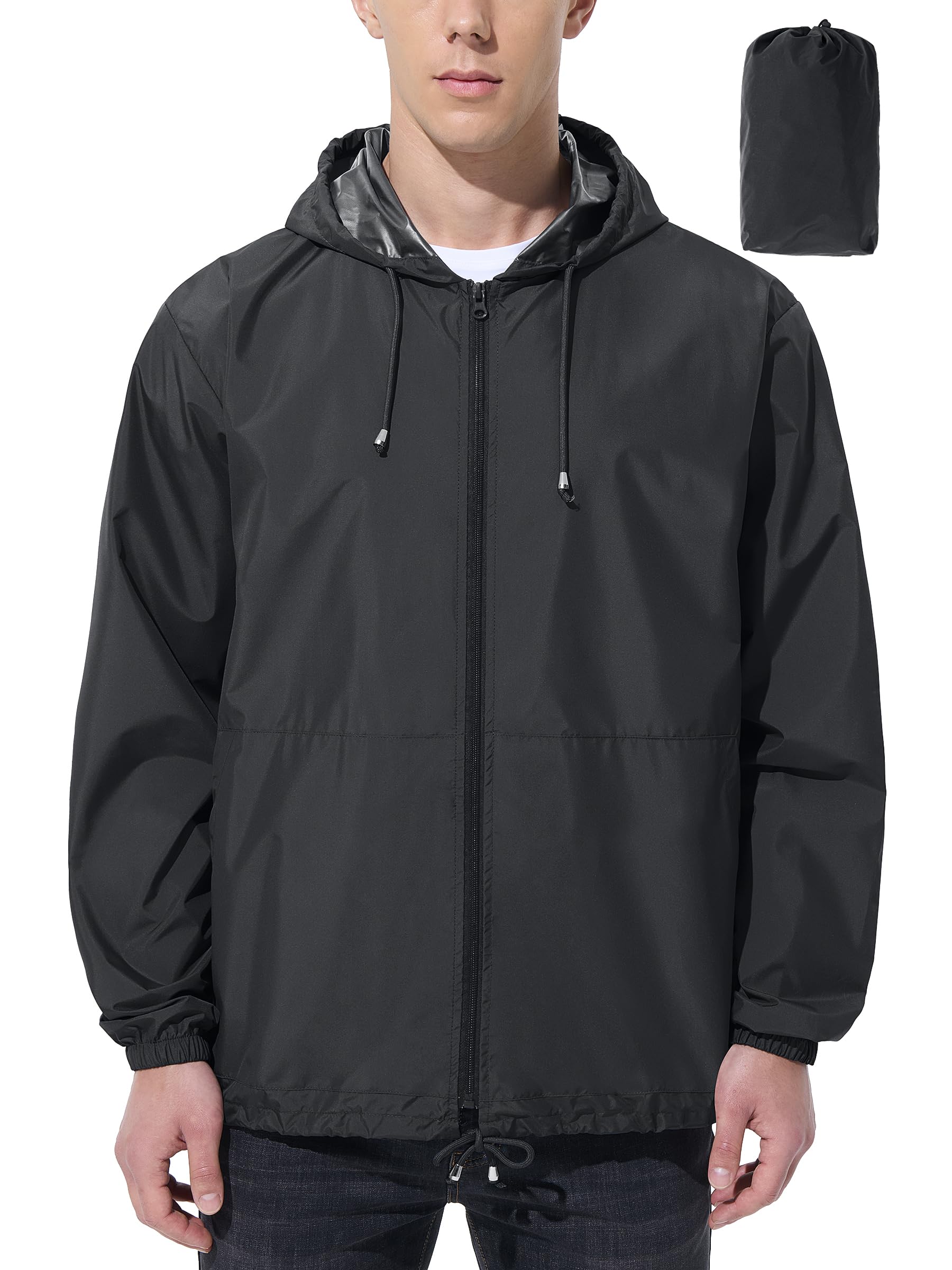
Weighs almost nothing and packs into its own pouch, making it easy to forget in a daypack until a sudden mist rolls in. Water resistance handles light spray, but the fabric feels thin and budget-grade, so longevity is a question mark.
Pros
- Ultralight and packs into its own pouch for effortless travel.
- Keeps light rain and mist off for short stints.
Cons
- Waterproofing can vary between units; may wet out in moderate rain.
A just-in-case layer for travelers who need minimal weight and can accept that it’s only a temporary shield against light showers.
How to Choose
Ignore the word ‘waterproof’ on a cheap tag — the construction details (sealed seams, membrane type) determine whether you stay dry or get soaked.
Waterproofness: Seams and Membranes Matter
A seam-sealed membrane creates a physical barrier that water can’t pass through. A DWR coating, on the other hand, is just a surface treatment that degrades with use and washing. For travel in reliably wet climates, look for jackets with taped seams and a breathable membrane like Omni-Tech, DryVent, or Helly Tech.
Without a membrane, the fabric will eventually wet out and soak you. If a jacket only boasts a DWR finish and doesn’t explicitly mention seam sealing, treat it as a water-resistant windbreaker, not a true rain jacket.
Packability: More Than Just a Stuffy Pocket
Packable jackets often fold into their own pocket or a small pouch, saving precious space in a carry-on. The trade-off: repeated compression can stress the waterproof membrane over time, so store uncompressed when not traveling.
A built-in stuff pocket is convenient, but it’s not a guarantee of waterproofing. Some of the most reliable rain jackets don’t self-stuff, so prioritize seam construction over the ability to shrink to fist size.
Weight: The Ounce That Punishes Your Bag
Under 1 lb is ideal for travel, while heavier jackets (2 lb) add wind protection and durability. The decision is between a featherlight emergency shell and a sturdier storm layer that adds warmth.
If your itinerary includes windy coasts or chilly evenings, a few extra ounces buy real performance. For fair-weather trips where rain is a remote possibility, an ultralight shell makes sense.
Breathability: Stay Dry Without Steaming Up
Even waterproof membranes need to let sweat vapor escape, or you’ll feel clammy inside. Features like pit zips and mesh linings allow heat to vent during active sightseeing or hiking.
Budget jackets without these features quickly become portable saunas during a brisk walk. If you plan to move while wearing the jacket, prioritize breathability just as much as waterproofing.
Hood Adjustability: The Unsung Hero
An adjustable hood with a stiff brim and rear drawcord keeps rain off your face and glasses. A floppy hood that won’t cinch down will let water run down your neck in a gust.
A stowable collar hood might look tidy, but if it lacks a drawcord, it won’t hold up in wind. Test the hood’s adjustability before you travel; it’s your first line of defense against sideways rain.
FAQ
Can a packable rain jacket really keep me dry in a downpour in the Scottish Highlands?
Only if it has sealed seams and a robust waterproof membrane, not just a DWR coating. Budget shells often wet out after 30 minutes of persistent rain. Jackets like the Columbia Watertight II or North Face Antora have proven track records in heavy, sustained downpours.
Why does my travel rain jacket wet out and soak through after an hour of rain?
If the jacket relies on a surface DWR coating without taped seams, water eventually forces its way through the fabric. The coating wears off, and there’s no membrane to stop the water. Reapplying DWR spray can help, but a seam-sealed membrane jacket won’t wet out in the first place.
Are lightweight packable rain jackets warm enough for travel in northern Europe?
On their own, no — they provide zero insulation. But they’re designed to layer over a fleece or jumper. For chilly trips, pair a waterproof shell with a midlayer. If you want an all-in-one warm waterproof, the Helly Hansen Seven J adds warmth and windproofing.
How do you wash a packable waterproof jacket without ruining the waterproof coating?
Wash with a technical cleaner, not regular detergent, and avoid fabric softener. Tumble dry on low heat to reactivate the DWR coating. Follow the care label; frequent washing wears down coatings, so only wash when necessary.