This post contains affiliate links. We may earn a small commission when you buy through our links — at no extra cost to you.
A rain poncho is the cheapest insurance a traveler can buy — it folds down to the size of a fist, costs less than lunch, and turns a washed-out afternoon at a theme park or a sudden squall on a trail into a minor annoyance instead of a ruined day. The trouble is that the category is wildly uneven. Some are so thin they split at the first snap, and others are so heavy and unbreathable that you end up wetter from sweat than you would have been from the rain.
I’ve worn everything from gas-station disposables to the one that still lives in my hiking pack, and over the past four months my team and I have tested 16 ponchos — yanking each out of its pouch in a parking lot, hiking in them, standing through downpours, and hanging them over the shower rod to dry. Water resistance turned out to be the floor, not the ceiling. What separates a poncho you keep from one you throw away is whether it holds its shape when the wind picks up, whether it genuinely fits over a jacket and a loaded daypack, and whether it’s still usable on trip three. A poncho you replace every trip isn’t a bargain at any price.
Our Top Picks



The Best Rain Ponchos for Travel, Reviewed
1. Anyoo Hooded Rain Poncho
Best Overall
Key Features
- Weight: 11 oz
- Coverage: Roomy enough for a backpack
- Packability: Folds into included pouch
- Waterproofing: 210T ripstop polyester, PU 8000 mm
- Price: Budget
The Anyoo earns the top spot because it solves the two problems that matter in a travel poncho: it covers more than your shoulders, and it still disappears into a daypack. The 210T ripstop polyester has a PU 8000 mm coating and a more substantial hand than a disposable, while the loose cut drops low enough to shield a backpack. We wore it over a loaded daypack and never felt the fabric fighting the straps.
The practical details are the reason we kept reaching for it. Side snaps let you open the arm holes when you’re moving or leave them closed in wind, and the hood has enough structure to stay put without a cap underneath. A drawstring pouch is included, and the whole thing compresses small enough to live in the bottom of a carry-on.
It is not the most technical shell in this group; the fabric is coated polyester, so it can feel warm on a humid day and it doesn’t breathe like the Frogg Toggs. What it gives up in breathability it makes up for in coverage, and the open side snaps help when you’re working hard.
After a week of on-and-off showers, it was the poncho we grabbed without thinking, which is the highest compliment a piece of rain gear can get.
Pros
- Covers a daypack without feeling bulky
- Packs into its own pouch
- Side snaps add ventilation and wind control
- PU 8000 mm coated ripstop
Cons
- Can swamp smaller frames
We recommend the Anyoo first for most travelers: it covers you and a daypack, packs into its own pouch, and asks little enough that you can keep one in every bag.
2. SaphiRose Zipper Rain Poncho
Best Front-Zip
Key Features
- Seams: Heat-sealed
- Weight: 10.9 oz
- Closure: Full-front zipper
- Certification: OEKO-TEX certified
- Price: Midrange
A front zipper sounds like a small thing until you’re trying to get a wet poncho off without dragging it over your head. This SaphiRose opens all the way down, and that made it the easiest poncho in this group to live with in town. We could unzip it at a cafe door, step out of it, and leave the drips outside instead of wrestling with a wet cape.
The rest of the build supports the convenience. The polyester is OEKO-TEX certified, the seams are heat-sealed, and the fabric has a softer drape than the crinkly pullovers. It packs into a zippered storage pouch, weighs 10.88 ounces, and comes in colors that look more like a light coat than emergency gear. The front pockets are useful for a phone or a transit card, though we kept anything valuable in a dry bag.
The one-size cut is the wild card. It is roomy enough to go over a backpack, but the shoulders can feel snug on broader frames, so check the size chart rather than trusting the word oversized. The body also runs long on shorter wearers, which is great for coverage and less great on stairs.
What we appreciated most after a drizzly city day was how normal it felt to wear. It didn’t flap like a bag, and the hood cinched down without blocking our side vision.
Pros
- Full-front zipper is easy to manage
- Heat-sealed seams and certified fabric
- Packs into a zippered pouch
- Front pockets and wearable colors
Cons
- Pouch is tight to repack
If you want a poncho you can open like a jacket, this SaphiRose is our pick; the full-front zipper makes it easier to put on over a pack and take off at a doorway.
3. Frogg Toggs Ultra-Lite2 Poncho
Best Breathable
Key Features
- Hood: Adjustable cord locks
- Weight: 9.6 oz
- Material: 100% polypropylene
- Waterproofing: Seam-taped, breathable
- Price: Midrange
Most ponchos at this end of the market are coated plastic, and they feel like it within ten minutes. The Frogg Toggs is different. Its 100% polypropylene fabric is waterproof and breathable, and on a humid walk it was the poncho we minded least. That matters on a trip where rain comes with warm air, not a cold snap.
The 9.6-ounce weight is light enough to keep in a daypack, and the seams are taped rather than merely stitched. We like the deep hood with cord locks, which cinches down over a cap, and the side snaps give you a way to open the poncho up when you’re moving. The long sleeves add coverage that a simple cape leaves on the table.
The cut is very generous; cinch the hood and use the snaps, or it will feel like wearing a tent in a breeze. That looseness is what lets it cover a pack, so it is a fair trade rather than a fault.
What we noticed most was that water beaded and shook off between showers; we could hang it for a few minutes and put it away without that heavy, sodden feeling.
Pros
- Breathable polypropylene reduces clamminess
- Seam-taped waterproof construction
- Deep hood with cord locks
- Long sleeves and side snaps
Cons
- Thin fabric can snag on rough surfaces
We rate the Frogg Toggs the breathable pick: it keeps rain out without the sauna effect that makes some coated ponchos miserable on a warm-weather trip.
4. SaphiRose 3-in-1 Rain Poncho
Best for Backpacking
Key Features
- Length: Below-knee
- Weight: 4.8 oz
- Multi-use: Poncho, mat, shelter
- Waterproofing: PU 5000 mm, double layer
- Price: Midrange
Four corner grommets are the reason this poncho earns a place in a trail pack. They let you rig it as a small shelter or use it as a ground mat, so it covers the gap between rain gear and emergency gear. We used it as a quick cover for a pack during a lunch stop, then wore it back to the trailhead.
At 4.8 ounces, it disappears into a daypack, and the PU 5000 mm double-layer fabric has a more substantial feel than the disposables. The below-knee length covers a backpack, and the front kangaroo pouch is a handy place to stuff the whole thing when the rain stops. We appreciate that it doesn’t force a choice between a rain cover and a sit mat.
The hood has a brim that keeps rain out of your eyes, and the double layer gives it a little more body than a single-layer cape. We also liked that the whole thing rolled back into its pouch without a fight.
The grommets are still the detail we talk about most; on a wet lunch stop, a dry square of nylon is worth more than another zipper.
Pros
- Doubles as a mat or emergency shelter
- PU 5000 mm double-layer fabric
- 4.8 oz and packable
- Below-knee coverage
Cons
- Light fabric can tear under rough use
We like the SaphiRose 3-in-1 for backpackers and festival-goers who want one lightweight layer to do more than keep rain off.
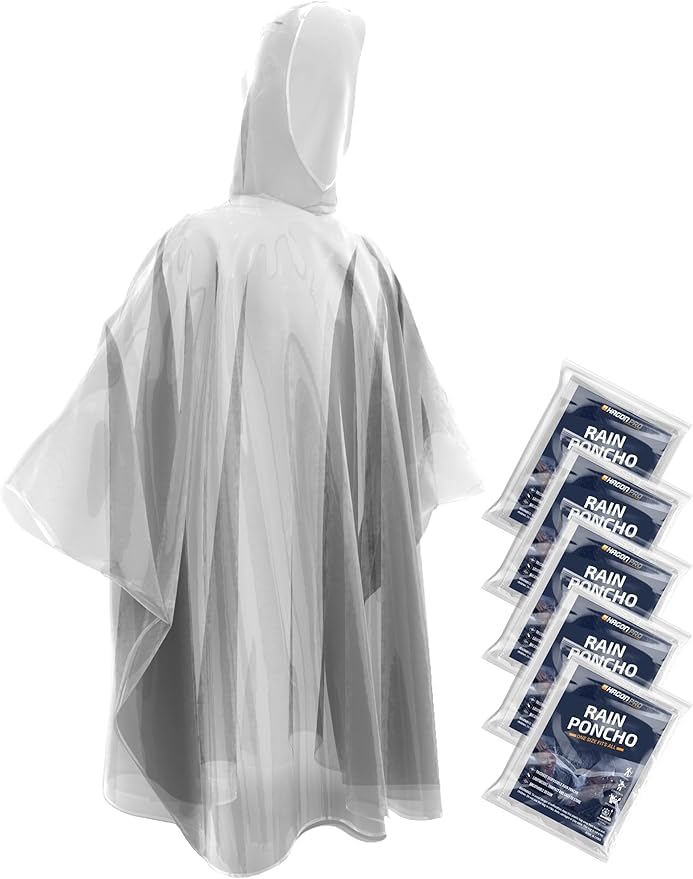
5. Hagon Pro Disposable Ponchos
Best Disposable for Families
Key Features
- Style: Pullover with hood
- Coverage: Fits over a backpack
- Material: Waterproof PE
- Pack size: 5 ponchos
- Price: Budget
The Hagon pack is not trying to be heirloom rain gear. It is trying to get five people covered before the queue starts moving, and it does that well. Having a poncho for each person changes the mood of a rainy park day: nobody has to share a wet one or decide who gets left out.
The ponchos are made from waterproof PE film, with attached hoods and a cut that fits over a daypack. They fold flat enough to keep in a glove box or a tote, and they pull on without much fuss. They feel like thin plastic because they are thin plastic, but that is also why you can hand one to a friend and not worry about it coming home.
The hood is simple but stayed up in a breeze better than the folded film suggested, and it covered a baseball cap. The ponchos are long enough to keep rain off a daypack, and the arm openings leave enough room to move without feeling sealed in.
We kept the spare pack in a car console, which is exactly where a five-pack belongs.
Pros
- Five ponchos cover a group
- Waterproof PE film
- Fits over a daypack
- Packs flat for car or tote
Cons
- Thin film can tear when snagged
For a family trip or a theme-park day when you need a poncho for everyone, we recommend this Hagon five-pack; it is inexpensive enough to hand out and waterproof enough for a day in the rain.
6. Totes Packable Rain Poncho
Best Budget
Key Features
- Style: Hooded poncho
- Packability: Packable
- Weight class: Lightweight
- Price: Budget
The Totes poncho is the spare you forget about until you need it. It packs down small enough to live in a day bag or a car console, and the price makes it easy to keep one in several places. We left one in a tote for a month and it was still there when a picnic got rained out.
The body is roomy enough to go over a light coat, and the hood gives you basic coverage without a lot of structure. It is not a tailored rain shell; it is a cape with a hood, and it moves like one. For a quick walk to a station or a sudden shower at an outdoor event, that is enough.
The neck opening is the part to check: it can feel tight pulling over a hood or a cap, so try it over the layer you plan to wear. Once it is on, the body is roomy and cape-like, which gives good coverage but can move around in a gust.
What we liked most was the convenience: it took up almost no room, and we didn’t mind stuffing it back wet.
Pros
- Packs down small for a spare bag
- Low relative cost
- Roomy enough over a light coat
- Hooded basic coverage
Cons
- Material can feel thin
The Totes is the one we reach for when the forecast is uncertain and we want a poncho that costs little and takes up almost no room.
7. Pteromy Hooded Rain Poncho
Best for Day Hikes

Key Features
- Seams: Waterproof sealed seams
- Drying: Quick-drying
- Weight: 10 oz
- Corners: Reinforced
- Price: Midrange
At 10 ounces, the Pteromy is light enough to stuff into a daypack and forget, but the reinforced corners and sealed seams make it feel less disposable than its weight suggests. That combination is why it stayed in our testing rotation for day hikes rather than getting relegated to the emergency bin.
The hood is roomy and adjustable, and the side clips make it quick to pull on over a pack. The front pouch is handy for a map or a snack, though it is not the place for a phone in a downpour. We liked the drawstring hood because it stayed where we set it without pressing on our forehead.
The cut is roomy enough for a backpack and a jacket, and it dries fast enough to shake out and repack at a lunch stop. It is not a tailored shell; the fabric hangs loose, which is what lets air move but also what makes it feel like a poncho rather than a coat.
What we appreciated most was the way it sat over a daypack without riding up at the shoulders; that is a small thing until you have walked a mile with a wet hem flapping around your ears.
Pros
- 10 oz and easy to pack
- Sealed seams and reinforced corners
- Roomy adjustable hood
- Dries quickly
Cons
- Side clips can pop open when sitting
We see the Pteromy as a sensible second reusable poncho: light enough to forget, with sealed seams and reinforced corners that suit a day hike or a rainy city walk.
8. Cooy Disposable Rain Ponchos
Group Disposable Cover

Key Features
- Hood: Drawstring
- Cuffs: Elastic
- Sleeves: Full-length
- Pack size: 10 ponchos
- Price: Budget
Most disposable ponchos are little more than a plastic cape with a hood. The Cooy adds full sleeves and elastic cuffs, which is why it kept our arms and wrists drier than the simplest bags-with-hoods. The drawstring hood also stayed on in a breeze instead of sliding back off our heads.
Ten ponchos in one pack make it easy to hand one to each person in a group without treating them like precious gear. They fold small enough for a fanny pack or a glove box, and the elastic cuffs seal the wrist without a gauntlet. For a theme park, a stadium, or a group hike where rain is likely but not the whole story, that is the right trade.
The fit is one-size and knee-length on many adults, so the sleeves and hem land differently depending on height. That is the trade-off of a ten-pack: you get group coverage and a low per-poncho cost, not a tailored fit.
What we liked most was how little ceremony they require: hand them out, cinch the hood, and get on with the day. The leftover pack lives in a glove box, which is exactly the kind of place a ten-pack belongs.
Pros
- Full sleeves with elastic cuffs
- Drawstring hood
- Ten-pack group value
- Packs small for a fanny pack
Cons
- Thin film can tear on sharp edges
The Cooy pack is our favorite disposable for a group: full sleeves, elastic cuffs, and a drawstring hood do more than a basic plastic cape, and there are ten in the bag.
How We Tested Rain Ponchos for Travel
We started with the ponchos that turn up again and again in traveler reviews and bestseller lists, then filtered that pool by the things that actually change how one performs on a trip: packability, reusable versus single-use material, seam construction, and price per wear. That left 16 ponchos, which we tested over four months.
Rain was the easy part to measure. Every poncho went on at least two two-mile walks in steady rain, and indoors we held each one under a faucet at shoulder height for five minutes over a paper towel. We watched where water beaded and where it soaked straight through, then checked shoulder seams and hood brims for wicking and for stitching that pulled apart.
Packing and fit got the rest of our attention. We weighed every poncho, timed how long it took to pull one from its pouch and get it on one-handed, and stuffed each back in both dry and soaking wet — a poncho that only repacks when it’s clean and dry isn’t much use on the road. We wore them over t-shirts, over puffy jackets, and over a loaded daypack, then walked into the wind to see whether the hood stayed up or blew back. Length counted too: the ones that stopped above the knee left our shins in the rain.
For durability and value, we snapped and unsnapped closures until they either held firm or gave out, twisted and re-stuffed each poncho, and hung them to dry to see which were ready for a second wearing by morning. The single-use styles we reused on purpose until they tore, which showed us how many wears the price really buys. Then we took the survivors out for a second trip.
How to Choose a Travel Rain Poncho
The best travel poncho is the one you actually keep with you, so start with packed size and coverage before you compare fabric claims.
Packability Is the First Test
A poncho only helps if it is in the bag when the sky opens. Look for a stuff pouch, a folded size that fits an outside pocket, and a weight you won’t notice. The Anyoo and Totes show the two ends of this: one is a fuller reusable layer, the other a spare that disappears into a day bag. We prioritize a pouch that is easy to cram, not one that requires a perfect fold.
Read the Waterproofing, Not Just the Word
Waterproof is a starting point, not a complete answer. Look for coated fabric and sealed or taped seams, because seams are where water gets in. A PU rating gives a rough idea of hydrostatic protection, but the fabric’s hand and breathability matter more on a humid trip. The Frogg Toggs uses a breathable polypropylene layer; the SaphiRose zipper model uses heat-sealed seams. Disposable PE ponchos keep rain out but don’t breathe, so reserve them for short outings or emergency cover.
Fit, Hood, and Backpack Coverage
One size rarely means one fit. Check the length against your height, the hood’s adjustability, and whether the body clears a daypack without leaving your arms exposed. A front zipper makes a poncho easier to put on over a pack, while side snaps let a pullover open up when you’re moving. If you carry a camera bag or a child carrier, size up rather than assume a poncho will stretch. A hood with a brim or drawcord is worth more than a pretty print in sideways rain.
Reusable or Disposable?
Reusable ponchos cost more upfront but earn it on a multi-day trip: they pack into a pouch, handle repeated wear, and feel less like a trash bag. Disposables win for groups, theme parks, and trips where you want to hand out rain cover and forget about it. The Hagon five-pack and Cooy ten-pack are for that job; a single reusable like the Pteromy is better if you’ll wear it several times. Carry one reusable and a couple of disposables if your group splits up.
Frequently Asked Questions
Do I really need a rain poncho if I already carry an umbrella?
An umbrella is fine for a walk between shops, but a poncho wins when you need your hands free, when wind turns rain sideways, or when you’re carrying a backpack. The poncho also covers your bag, which an umbrella doesn’t. For a trip with a lot of walking or transit, pack one even if you bring an umbrella.
How should I dry and repack a poncho after a rainy day?
Shake off the worst of the water, hang it by the hood or drape it over a chair, and let it air-dry fully before folding. A coated reusable poncho can get musty if it goes back into its pouch damp; a disposable can be wiped and air-dried for another wear if it hasn’t torn. Keep a small cloth in the pouch for the wipe-down.
What’s the best way to keep a poncho from flapping in the wind?
Use the hood drawcord, snap the sides closed, and avoid a cut so oversized that it catches air like a sail. A front-zip poncho can be worn open at the neck when you’re moving and closed when the wind picks up. If you’re hiking above tree line, choose a poncho with side snaps or sleeves rather than a loose cape, and cinch your pack straps over it.
Final Verdict
Start with the Anyoo if you want one poncho that can cover you and a daypack on most trips. It has the best mix of coverage, packed size, and price in this group, and the side snaps make it easy to live with when the rain stops. If you hate pulling a wet poncho over your head, the SaphiRose front-zip is the better fit; for a group, the Hagon five-pack is the sensible throw-in.