This post contains affiliate links. We may earn a small commission when you buy through our links — at no extra cost to you.
The first time I clamped earmuffs onto a toddler, it was at an indoor monster truck show, and the wince left her face in about ten seconds. These don’t erase sound; they take the sting out of it, which is the difference between a kid who lasts the whole fireworks show and one you carry back to the car.
Worth knowing before you buy: almost nothing in this category is electronic. The "noise cancelling" on these boxes is passive blocking — foam, padding, and a seal that sits tight against the head — so the decibel number printed on the front matters less than whether the cups actually fit a particular size of skull. Fit, adjustability, and comfort do the real work, and cups that press too hard come off in minutes no matter how quiet they are. We spent four months with 14 pairs, from newborn muffs to adjustable ones meant for school-age kids, through flights, fireworks, and a very loud Monster Jam.
What follows is what held up — for a newborn at a wedding, for a sensory-sensitive first grader at an assembly, and for everything loud in between.
Our Top Picks


The Best Noise-Cancelling Headphones for Kids, Reviewed
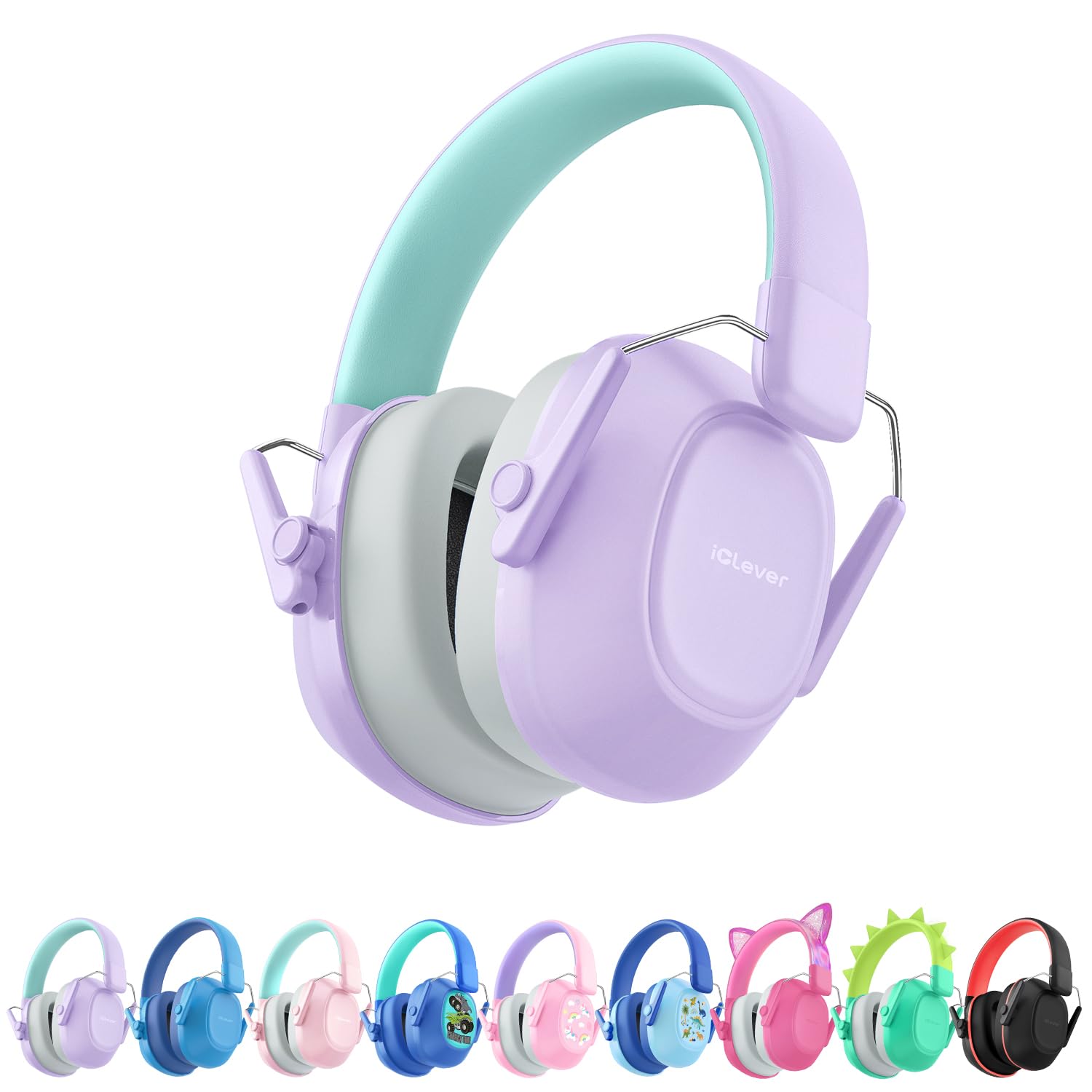
1. iClever EM01 Ear Muffs
Best Overall
Key Features
- Fit: Kids, teens, and adults
- Shell: BPA-free ABS
- Certifications: ANSI S3.19-1974 and CE EN 352-1
- Noise reduction: 29 dB SNR
- Price: Midrange
One pair that fits a four-year-old and a ten-year-old, opens up far enough for a parent, and carries certification on two continents is a rare combination in this category. The iClever EM01 is the only pick here that manages both: ANSI S3.19-1974 in the States and CE EN 352-1 in Europe, on a headband that runs from small-child sizing to an adult head. That’s the reason it takes the top spot over pairs with lower prices and longer histories.
The rating behind those certifications is 29 dB, the highest single-number figure we recommend, and the build backs it up. The steel-reinforced ABS frame feels less hollow in the hand than the all-plastic pairs, and a thick porous sponge and a honeycomb chamber inside each cup do the actual absorbing. We keep coming back to it because it survives a growth spurt: the same set that seals on a preschooler still fits the twelve-year-old, and it will fit you in a pinch at a ballgame.
The detail we didn’t expect to matter is how they look. They read as regular headphones rather than baby gear, and that’s most of the battle with a kid old enough to have opinions. The trade-offs are real but small: the band doesn’t travel down as far as some parents expect, so a small two-year-old may still be swimming in it, and the fit feedback thins out at the toddler end. Neither changes the recommendation for a family with kids of different ages.
Pros
- 29 dB rating, certified to US and EU standards
- Fits a small child and an adult head
- Steel-reinforced frame feels sturdier than plastic rivals
- Looks like regular headphones, so kids wear them
Cons
- Band travel is short for very small toddlers
We recommend the iClever EM01 to most families: 29 dB, certified to US and European standards, and sized to fit a preschooler or a parent.
2. BANZ Baby Ear Muffs
Best for Babies and Toddlers
Key Features
- Design: Folds for travel
- Weight: 4.76 oz
- Age range: Newborn to 36 months
- Noise reduction: 26 dB NRR
- Price: Premium
A baby who forgets the earmuffs are on is the entire goal, and the BANZ is the pair we hand over first when there’s an infant in the group. At 26 dB NRR it carries the strongest rating of the baby-specific picks here, and the cups sit flat against a small head rather than riding up toward the eyes — the failure that turns a loud afternoon into a meltdown.
The build explains the price. At 135 grams it’s heavier than the BBTKCARE by a wide margin, but the weight sits in the cups, the headband is wrapped in soft fabric rather than bare plastic, and the ear cushions are thick enough to keep a seal while a baby turns their head. The band extends from newborn sizing out to 36 months, and the whole thing folds flat, which is how it ends up living in a diaper bag instead of on a shelf at home.
One thing to know before you order: BANZ’s warranty only applies with proof of purchase from a seller it authorizes, and the brand names the specific ones. Buy elsewhere and you’re relying on the return window rather than the warranty. It’s also the most expensive pair here — what you’re paying for is the rating, the fold, and a fit that genuinely works on a three-month-old.
Pros
- 26 dB NRR, the strongest of the baby picks
- Folds flat for a diaper bag
- Soft fabric headband and padded foam cups
- Adjusts from newborn to 36 months
Cons
- The most expensive pair here
For a baby under three, we reach for the BANZ: 26 dB, 135 grams, and a band that closes down small enough to seal on a newborn.
3. Dr.meter EM100 Ear Muffs
Best Budget
Key Features
- Fit: Toddlers through adults
- Ear cushions: Memory foam and PU leather
- Noise reduction: 27.4 dB SNR
- Price: Budget
Reduce, not mute: that’s the line Dr.meter prints in its own listing, and it’s the most honest sentence in this category. A rated pair of earmuffs takes the edge off a monster truck show while leaving enough sound that a kid can still hear you say hold my hand. At 27.4 dB SNR this one does about as much reducing as the pairs at the top of this guide, for less money.
The fit is why it keeps turning up in backpacks. The headband slides from toddler sizing out to a teenager, so it’s the set that survives the years when a kid’s head is the only thing growing, and the memory-foam cups under PU leather are the softest thing at this price. We hand it to a five-year-old for a show and then pass it up to a twelve-year-old cousin without buying anything new.
What we like most is how little the decision costs you. This is the pair to buy two of — one for the backpack, one for the car — and the pair to hand a friend whose kid is falling apart at a ballgame. The cups and the frame are on the light side, so if you want one set to survive three siblings, spend up to the iClever or the ProCase instead.
Pros
- 27.4 dB SNR at a low price
- Band spans toddler through teenager
- Memory-foam cups under PU leather
- Reduces noise without cutting a child off
Cons
- Runs snug on some head sizes
The Dr.meter EM100 is the pair we hand a growing kid: 27.4 dB of reduction and a band that stretches from a two-year-old to a teenager.
4. BBTKCARE Baby Ear Muffs
Best Lightweight Pair for Babies
Key Features
- Weight: 1.76 oz
- Age range: 3 months to 3 years
- Materials: ABS shell, PU padding
- Noise reduction: 23 dB
- Price: Midrange
1.76 ounces is the figure on the BBTKCARE listing, and it’s less than half what the BANZ weighs — a difference you feel the moment you put a pair on a three-month-old who is still working on neck control. Weight matters more in this category than most parents expect. A heavy cup drags the band forward, and a band that has slid forward is no longer sealing around the ear.
The rating is 23 dB, the lowest of the baby-specific picks, and we don’t think most families will feel the difference. A baby at a wedding, on a flight, or in a church pew doesn’t need maximum attenuation; they need the cups to stay over the ears for the length of the ceremony. That’s where this pair earns its place — it’s the one that gets forgotten about, which is the highest compliment a baby product can get.
The 3-month-to-3-year window is honest rather than generous, and the PU-covered padding wipes down after a bottle or a snack. What it won’t do is carry a four-year-old: the band tops out right where the listing says it does, with nothing left to extend. If your child is already past three, the BANZ or the ProCase is the better buy.
Pros
- 1.76 ounces, the lightest pair here
- Cups stay put on a small head
- PU padding wipes clean
Cons
- Outgrown at three years
We like the BBTKCARE for babies from about three months: it’s the lightest pair here, rated at 23 dB, and it stays put through a flight.
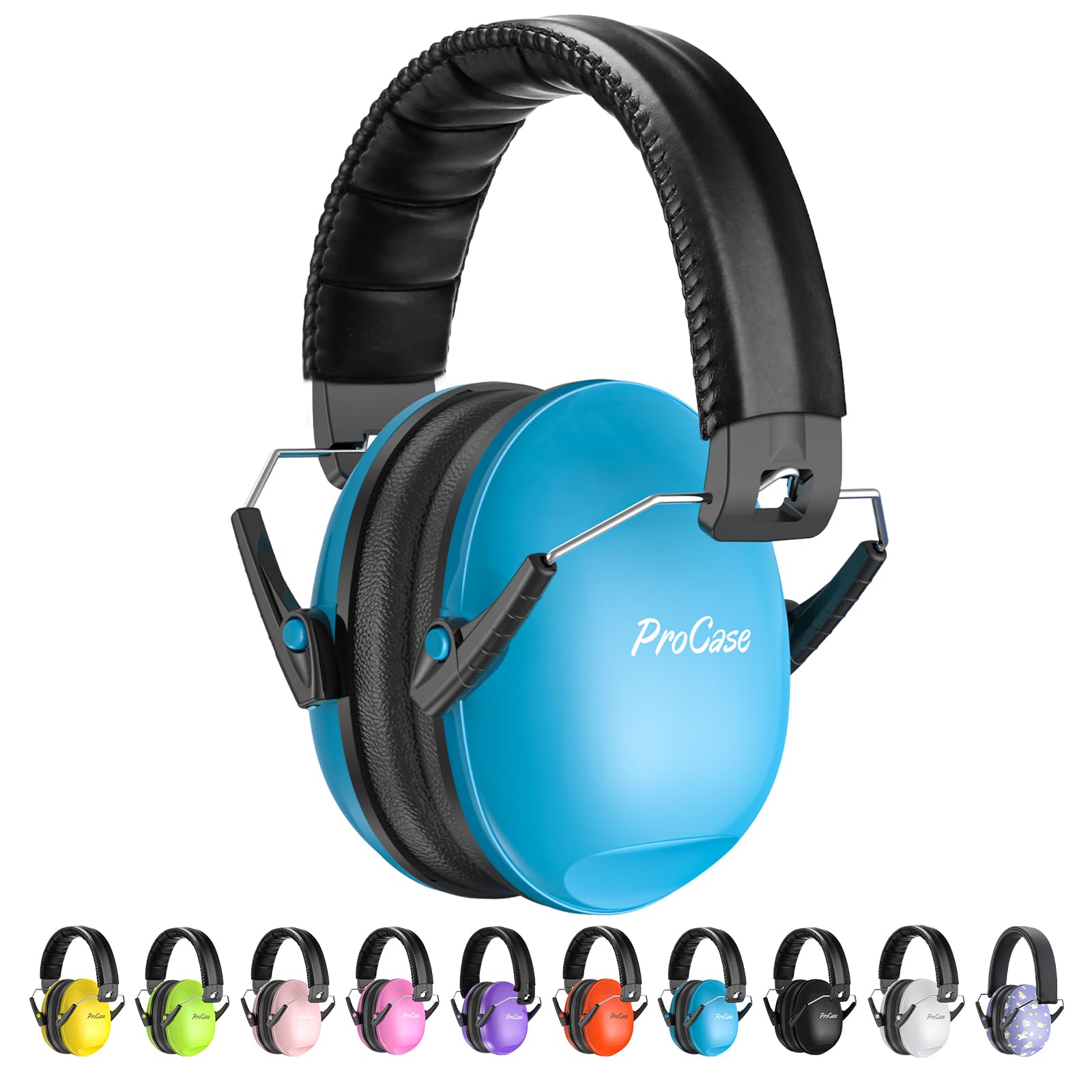
5. ProCase Kids Ear Muffs
Best Value for a Wide Age Range
Key Features
- Shell: ABS with dampening foam
- Certifications: ANSI S3.19 and CE EN 352-1
- Headband travel: 32 mm (1.3 in) per side
- Noise reduction: 27 dB SNR
- Price: Budget
The ProCase gives up very little to our top pick and costs less. It carries a 27 dB single-number rating and the same pair of certifications — ANSI S3.19 here and CE EN 352-1 in Europe — which is more paperwork than almost anything else at the bottom of this list bothers with. For a family that wants a rated, certified pair and doesn’t want to think about it any further, this is the answer.
The headband is the interesting part. Each side telescopes about an inch and a third, more travel than most of the pairs here offer, so the set that seals on a three-year-old will open up far enough for a small adult at the back of a loud room. It’s also the pair we pack when two kids of different ages are coming, because one set covers both.
One detail worth catching: the listing quotes two numbers, an SNR and a US NRR, and they aren’t the same figure — if you’re comparing this against a pair rated only in NRR, use the smaller one. That’s the kind of gap that makes a budget pair look better than it is, and it’s the one place ProCase’s paperwork gets fuzzy. At this price, though, we’re not sending you elsewhere.
Pros
- ANSI and CE certified at a low price
- Headband extends 1.3 inches per side
- 27 dB rating with thick dampening foam
Cons
- Runs small for some kids
The ProCase is our budget pick: ANSI- and CE-certified, 27 dB rated, and adjustable enough to fit a three-year-old or a small adult.
6. Alpine Muffy Baby Ear Muffs
Best for Newborns in Arms

Key Features
- Weight: 4.02 oz
- Headband: Soft polyester, no hard parts
- Age range: Up to 4 years
- Noise reduction: 23 dB
- Price: Premium
There are no hard parts on the Muffy. The band is polyester, the closure is hook-and-loop, and nothing rigid presses against a baby’s skull — which is the whole argument for it, and the reason a parent who has watched a plastic slider dig into a newborn’s head will pay for the difference.
At 114 grams and 23 dB it sits in the middle of the baby options on both counts, and the stated range runs to four years, more than most infant-specific pairs here claim. What you’re paying for over the BBTKCARE is that softness, and for a newborn who will spend the whole event in a carrier or in someone’s arms, it’s worth it.
Soft is also the limitation. This is where the fit divides most sharply in our group: held against a chest, the band stays where you set it, and once a child is walking, climbing, and shaking their head, it doesn’t. So it’s a lovely thing for a christening, a wedding, or a flight with a baby who is mostly in your arms, and the wrong shape once they’re mobile — the BANZ or the BBTKCARE stays on with less fussing.
Pros
- No hard parts anywhere on the band
- 114 grams with 23 dB reduction
- Stated to fit up to four years
Cons
- Slides off on mobile toddlers
- Hook-and-loop strap is fussy to set
Buy the Alpine Muffy for a newborn who’ll spend the event in your arms — no hard parts, 114 grams, and a soft band.
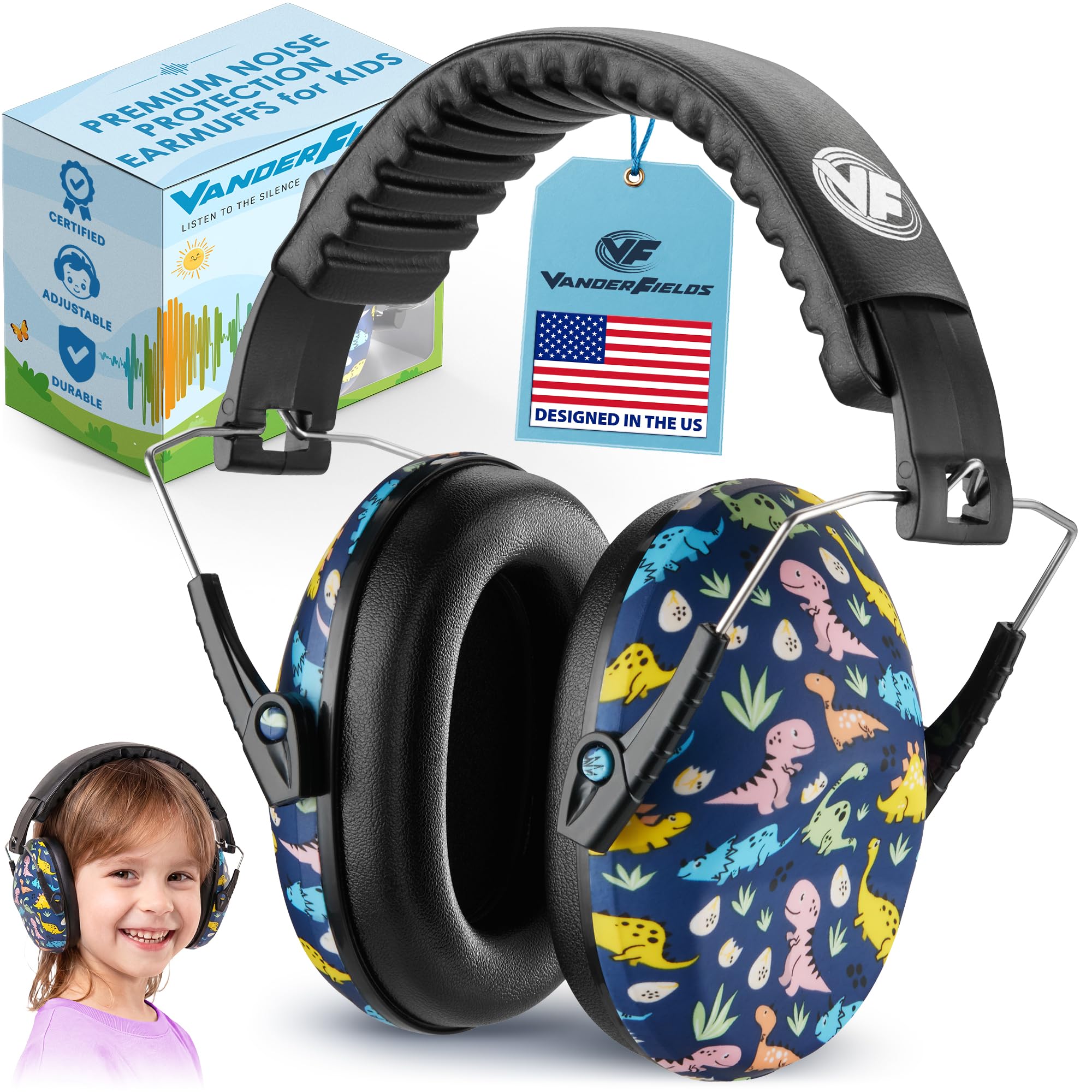
7. Vanderfields Kids Ear Muffs
Best for School-Age Kids
Key Features
- Fit: Kids
- Headband: Adjustable
- Noise reduction: 31 dB (2K Hz)
- Price: Budget
Thirty-one decibels is the biggest number in this guide, and it isn’t the same kind of number as the others. Vanderfields measures attenuation at 2 kHz rather than quoting a single-number NRR or SNR, so you can’t set it beside the 26 dB on the BANZ or the 29 dB on the iClever and conclude it blocks more. It’s a real measurement that answers a narrower question.
What the pair has going for it is comfort and a genuinely kid-sized shape. The cushions are soft, the band adjusts, and this is the set that stays on through a school day rather than coming off at lunch. For a child with sensory sensitivities who needs quiet to concentrate, that quality matters more than the last two decibels.
Fit is where it divides. The band has limited settings, so some kids land between notches — snug enough to ache or loose enough to slip — and on a four-year-old the whole thing can read as scaled small. It’s aimed at school-age kids, and that’s the right way to buy it: try the band on the widest and narrowest settings before you commit to it for a long assembly or a testing week.
Buy it for a six- or seven-year-old who needs it in a classroom, where the priority is a pad soft enough to wear for six hours. Don’t buy it as the family’s only pair for fireworks and flights: the ProCase covers more head sizes for the same money, and the iClever covers more years.
Pros
- Soft cushions for all-day school wear
- Adjustable band sized for kids
- Low price for a padded pair
Cons
- Plastic can peel at the cup edges
The Vanderfields is the pair we suggest for a school-age kid who needs quiet in a classroom: kid-sized, well padded, and inexpensive.
How We Tested the Best Noise-Cancelling Headphones for Kids
We started with every earmuff we could find that was genuinely sized for small heads, then narrowed the field by the head-size range each one covered, how much adjustment it offered, and whether the padding was replaceable or the band was soft enough to lie against a newborn’s skull. That left 14 pairs, running from infant muffs to adjustable models built to last a kid into elementary school. Each one went home with a family on my team — parents of a four-month-old, a two-year-old, and a seven-year-old with sensory sensitivities — and stayed in rotation for four months.
Testing happened where loud things happen: a wedding reception with a baby in a carrier, fireworks on the Fourth, an indoor Monster Jam, a long flight, school assemblies, and the ordinary chaos of a leaf blower outside the kitchen window. To gauge actual blocking, I held a decibel meter against the outside of each cup and again just inside it at the same party-volume music, then watched whether a kid startled at a dropped pan or turned when someone said their name. Wear sessions ran 45 minutes, after which I checked behind the ears for red marks and noted whether the kid reached up to pull them off.
Fit got the most scrutiny because it decides everything else. I put each pair on kids at the bottom and top of its stated size range and watched whether the cups slid down over the eyes, whether the headband stayed where I set it, and whether a baby could lie back in a car seat without the band digging in. Ease of use meant handing a pair to a kid and timing how long a self-fit took, plus whether it could be managed one-handed in a car seat. For durability I stuffed them into backpacks, dropped them from counter height, and tugged the band and hinge on purpose, then looked at seams and stitching for signs of give. Value came last, as a simple question of what the same money bought in padding, a case, or a wider size range.
How to Choose Noise-Cancelling Headphones for Kids
Most of what’s sold as noise-cancelling headphones for kids is a pair of passive earmuffs — foam, a plastic shell, a band — and the figure printed on the box tells you less about whether your child will keep them on than the fit does.
What You’re Actually Buying
Everything we recommend here is passive: a foam cushion inside a plastic shell, no battery, no music. That’s the right tool for a fireworks show or a monster jam, because passive cups don’t need charging and don’t quit halfway through.
The figures come in two flavors. NRR and SNR are single-number ratings you can compare across pairs. A figure quoted at one frequency, like 31 dB at 2 kHz, answers a narrower question and shouldn’t be lined up against a 26 dB NRR. Compare like with like, then choose on fit.
Fit Is the Rating That Matters
A box that says 3 months to 3 years is describing a headband range, not a promise. What matters is whether the cups sit flat over the ears with the band on one of its smallest notches; a cup that rides up toward the eye isn’t sealing, and an unsealed cup gives you a fraction of the rated reduction.
Fit them at home a week before the event and look at the ears from the side rather than the front. If your child lands between sizes, a soft band buys a little room. A hard slider doesn’t.
Weight, Clamp, and Whether They Stay On
Two things push a pair off a kid’s head: weight dragging the band forward, and clamp pressure around the skull. The lightest pair here weighs 1.76 ounces; the BANZ, built for the same age group, weighs 135 grams. That gap is the difference between a baby forgetting them and a baby arching away.
Clamp is harder to predict — the band that feels secure on one child leaves a mark on another. If your kid pulls hats off, start with the lightest, softest pair you can find.
Where They Break First
The joint where the cup meets the band is the usual failure point, after a season of being stuffed into a backpack, and the glued edge of the cushion is second. That’s why several popular pairs didn’t make this list.
Check the return window before you buy and keep the packaging through the first month. If the brand’s warranty requires proof of purchase from a seller it authorizes — BANZ does — buy from one of the sellers it names, or treat the warranty as decoration.
What to Spend
Most of the pairs here sit in a narrow band, so the extra money buys a fold, a lighter shell, or a rating somebody actually certified. None of that helps if your child refuses to wear them. For a first pair, especially for a toddler who has never worn anything on their head, buy an inexpensive one, test it at home, and spend more once you know they’ll keep it on.
Frequently Asked Questions
How loud does it have to be before a kid needs them?
A decent rule of thumb: if you have to raise your voice to be heard at arm’s length, it’s loud enough that a couple of hours starts to matter for small ears. Fireworks, monster truck shows, air shows, stadium games, and marching band practice all clear that bar easily.
The loudest part of those outings is usually the walk in from the parking lot, so put them on before you reach the gate rather than after the first boom.
Can my child hear me while wearing them?
Yes. Passive protection reduces sound rather than muting it, which is exactly what you want near traffic, in a crowd, or when you need to give an instruction. A 23 to 29 dB rating takes a roar down to something tolerable without cutting the world off.
Test it at home: put the pair on, stand a few feet away, and speak in a normal voice. If your child hears you, the seal is working the way it should.
Can a baby sleep in them?
They do, and that’s often the reason to buy a pair for a flight, a fireworks show, or a wedding. There’s no reason to wake a sleeping baby to pull them off mid-event.
Back in a quiet room, though, they come off. A snug band isn’t doing anything for a baby in a quiet bedroom, and it can leave a mark if it stays on for hours.
Final Verdict
We recommend the iClever EM01 to most families. Certified attenuation to both ANSI and CE standards, a steel-reinforced frame, and a band that fits a preschooler or a parent is the combination that covers the most children for the longest, and it doesn’t cost much more than the pairs with no paperwork behind them at all.
If there’s a baby in the house, buy the BANZ instead: the 26 dB rating, the 135-gram build, and the fold are worth the premium for a child still riding in a carrier. If the budget decides it, the ProCase carries the same certifications for less.