This post contains affiliate links. We may earn a small commission when you buy through our links — at no extra cost to you.
You board the flight, hand your child their new headphones, and five minutes after takeoff they can’t hear a thing over the engine drone. The volume limiter — what made you feel safe — becomes the reason the tablet is useless. It’s a frustration many traveling families know all too well, and it’s not because the headphones are broken; it’s because they lack the right kind of noise isolation for a cabin that regularly hits 85 decibels.
Parents often buy on the promise of ‘safe volume’ without realising that unless the ear cups seal well or active noise cancellation actively counters that low-frequency hum, the audio simply gets lost. This guide picks the models that manage that balance — hearing protection that doesn’t become muting at 35,000 feet. The right headphone puts the film at the front, not the engine.
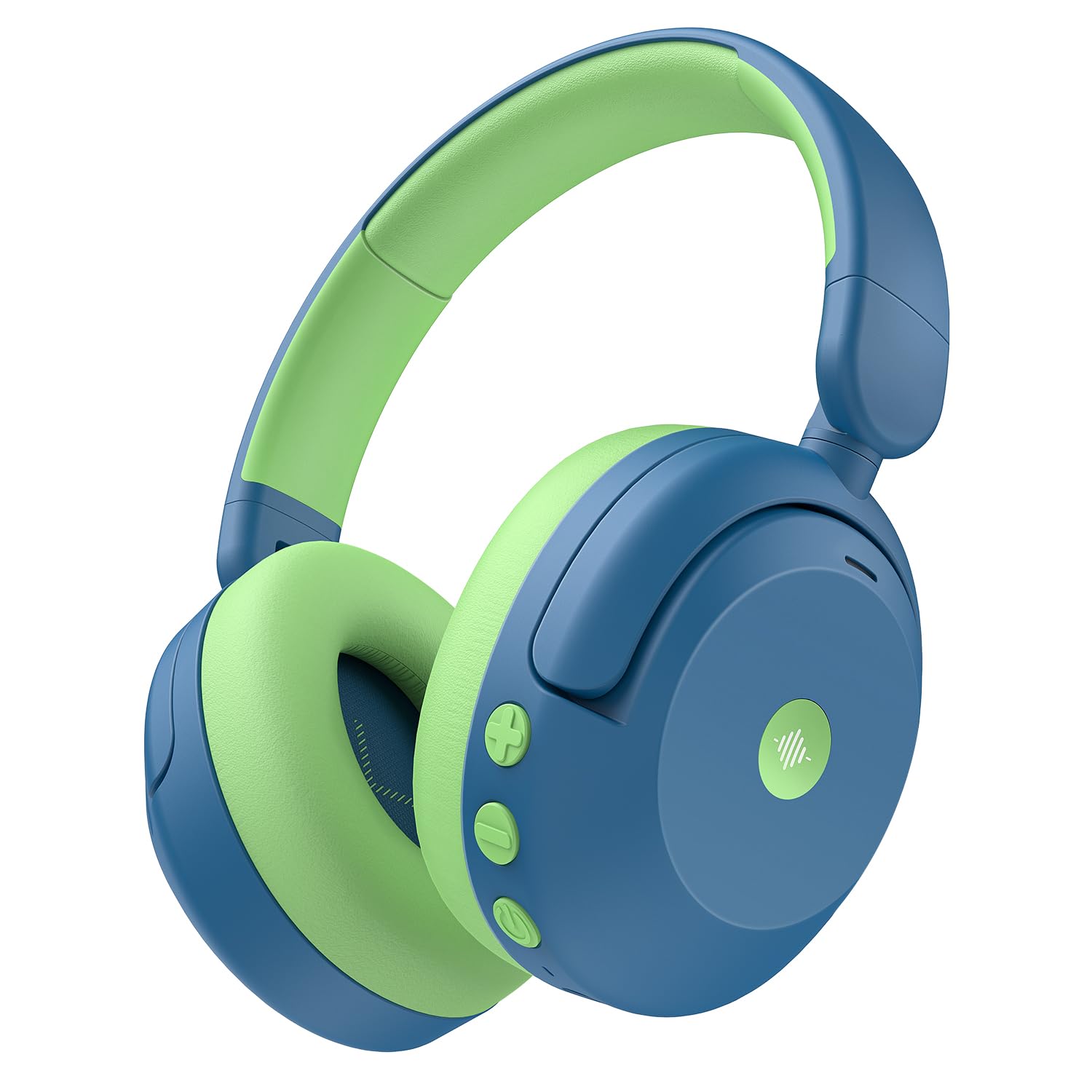


1. iClever BTH20
Best for Anc for Flights
Key Features
- Connection: Wireless + wired
- Noise Control: ANC (40dB total)
- Volume Limiter: 80dBA
- Battery Life: 60h (off), 35h (ANC)
- Portability: Foldable
- Price: Mid-Range
The iClever BTH20 combines active noise cancellation that measurably reduces low-frequency cabin rumble with an 80dBA volume limiter, so kids hear audio clearly at safe levels even over persistent engine noise. The noise reduction feels genuinely useful in the air, not just a spec on paper, and it works well against background chatter and road hum in a car. Sound quality stays balanced — no tinny treble or muddy bass — while the ceiling on loudness removes any chance of hearing damage.
Over-ear cups with dense soft padding make these comfortable enough for a long-haul flight, and at just over 7.5 ounces the weight doesn’t pull on a child’s head. The fold-flat design slides easily into a carry-on, and the matte finish resists fingerprints. Memory foam-level plushness isn’t quite there, but the padding strikes the right balance between cushioning and size for small ears.
Bluetooth 5.4 pairs quickly and holds a connection without stutters across a typical airplane seat or hotel room. With ANC turned off, battery life reaches 60 hours; keeping noise cancellation engaged still nets 35 hours, and a 10-minute fast charge adds roughly three hours of playback. A 3.5mm cable is included for seatback screens, so no adapter dangles are needed.
This set fits families who fly regularly, take long road trips, or need both hearing protection and real ANC for kids aged roughly four and up who can manage Bluetooth controls. The trade-off is build longevity: the hinge mechanism and internal speaker connections may not hold up under rough daily use. Some units develop a loose hinge or lose audio in one ear after several months. The iClever BTH20 rewards mindful handling — treat it as electronics, not a toy that can be tossed around.
Pros
- ANC noticeably reduces airplane engine drone and background hum
- Plush, lightweight over-ear cushions comfortable for long flights
- Clear, balanced audio at a fixed, safe 80dBA maximum
- Stable Bluetooth connection with quick, hassle-free pairing
- Premium-feeling materials and sturdy construction that feel solid to the touch
Cons
- Hinge mechanism may weaken over time with repeated folding
- Audio in one ear can cut out after extended use
For air travel where safe volume and effective noise cancellation are the priority, the BTH20 delivers a combination that’s rare in the under-£40 bracket — with the caveat that it won’t survive rough-and-tumble play without care.
2. JoySpark T5
Best for Long Battery, Value
Key Features
- Connection: Wireless + wired
- Noise Control: Passive isolation
- Volume Limiter: 85/94dB switchable
- Battery Life: 60h
- Portability: Foldable
- Price: Budget
The JoySpark T5’s 60-hour battery life outlasts most competitors, with quick charging that adds hours in minutes. Memory foam ear cushions provide a comfortable fit for kids during long car rides or flights – the padded headband and lightweight 170g design reduce pressure points. Bluetooth 5.3 pairs effortlessly and maintains a stable connection even when the device is in a backpack.
Where it falls short of the top pick with active noise cancellation is in noisy environments like airplane cabins. The passive isolation is adequate for general use but won’t cut engine drone significantly – parents will need to rely on the 85/94dB volume limiter to keep audio at safe levels. Additionally, a small number of units have been noted to develop charging or audio issues after several weeks, a vulnerability common in this price bracket.
This headphone suits families who want a budget-friendly wireless option for daily use and travel, especially if battery longevity and comfort are top priorities. It’s best for children aged 3-8 who will use it mainly at home, in the car, or on quieter flights. Those needing strong noise isolation for loud airplanes should look to the ANC-equipped alternative.
Pros
- 60-hour playtime with quick charging keeps kids entertained through long trips.
- Memory foam ear cushions fit securely and comfortably for extended wear.
- Stable Bluetooth 5.3 connection pairs easily and stays linked.
- Selectable 85/94dB volume limiter protects young ears while delivering clear audio.
Cons
- A small number of units may develop charging or audio issues within the first few months – a risk typical at this price.
For parents who prioritize battery life and comfort over active noise cancellation, the JoySpark T5 offers outstanding value – just be aware of the small defect risk typical of budget electronics.
3. acer HK03
Best for Airplane Jacks, Wired
Key Features
- Connection: Wired
- Noise Control: Passive isolation
- Volume Limiter: 85/94dB dual
- Portability: Foldable
- Price: Budget
The Acer HK03 uses a standard 3.5mm plug, which means it works with nearly every airplane seatback screen without pairing or battery checks. The dual-mode volume limiter (85dB for quiet environments, 94dB for noisier cabins) keeps levels child-safe while the over-ear design provides enough passive isolation to cut ambient drone.
Soft padded ear cups and a lightweight 147g frame make extended wear comfortable — even for younger kids who tend to fidget. The foldable hinge tucks into a backpack corner without adding bulk. Build quality feels solid for the price point, with a braided cable and reinforced jack that resist the usual snags.
This is a match for parents who want a simple, budget-friendly wired headphone for classroom Chromebooks, family road trips, or airplane seatback screens. The tradeoff is that the cable or one speaker can develop issues after months of daily use — treat the HK03 as a consumable that may need occasional replacement rather than a heirloom accessory.
Pros
- Sturdy build that holds up to school and travel wear
- Designed for classroom use with safe volume limits
- Soft ear pads that stay comfortable during long sessions
Cons
- Cable or speaker failure can occur after heavy daily use, particularly cord damage or one-sided audio
For parents wanting a cheap wired headphone for school and airplane seatback jacks, the HK03 delivers safe volume and comfort — with the caveat that the cable may need replacing over time.
4. JBL Junior 320
Best for Sound Quality
Key Features
- Connection: Wired
- Noise Control: Passive isolation
- Volume Limiter: <85dB Safe Sound
- Portability: Folds flat
- Price: Mid-Range
The Junior 320 stands apart by treating children’s ears to the same JBL sound profile found in adult headphones — clear mids, tight bass, and a wide enough stage to make Frozen sing rather than shout. This is not the muffled, tinny playback that often comes with volume-limited kids sets. The cushioned on-ear pads seal passively, blocking enough ambient noise for road trips and train rides without the battery or price of active noise cancellation. Where the top pick uses ANC to quell airplane drone, these lean on JBL’s tuning to keep music engaging at safe levels, a better fit for daily listening.
The fit hits a sweet spot for 5- to 8-year-olds: lightweight at 116 g, clamp-force gentle, and foldable for a backpack. A sheet of stickers invites personalisation, though that enthusiasm can expose the one real caveat — the soft ear pad glue isn’t as robust as what JBL uses in its pro gear. Over months, pads may peel and, in rarer cases, audio can cut out in one ear. For airplane travel where ANC is non-negotiable, the top pick handles engine hum better. But for parents who want the best musicality in a wired, volume-safe headphone and are ready to treat them with care, the Junior 320 fills a distinct, rewarding role.
Pros
- Rich, balanced JBL-tuned audio keeps music clear and enjoyable below 85dB
- Plush ear cushions and light clamping force allow hours of wear without fatigue
- Sized perfectly for younger kids (5–8), folds flat for easy packing
- Sticker sheet lets kids personalise, making them more likely to wear them
Cons
- Ear pads can peel away from the housing as the adhesive weakens over time
- Audio may cut out or stop in one ear after several months of use
If great sound matters more than tank-like build, these are the only wired kids headphones that bring JBL’s full musicality to small ears — just expect to handle them more like a nice pair of glasses than a toy.
5. iClever BTH22
Best for Budget Bluetooth, Battery
Key Features
- Connection: Wireless + wired
- Noise Control: Passive isolation
- Volume Limiter: 74/85dBA switchable
- Battery Life: 60h
- Portability: Foldable
- Price: Budget
A 60-hour battery and USB-C fast charging give the iClever BTH22 the stamina to last through multiple trips without a recharge, paired with a switchable 74/85dBA volume limiter that parents can set and forget. They rely on padded on-ear cushions for passive noise isolation, not active noise cancellation, so loud airplane cabins will still bleed through — but for road trips, classrooms, and quiet homes, that’s often enough.
Pairing with a tablet or phone is near-instant and the Bluetooth 5.4 connection stays stable within the usual 10-meter range, with no noticeable audio dropouts. The 40mm drivers deliver clear voices and enough bass for cartoons and singalongs, though they’re not tuned for critical music listening.
At 149 grams, the BTH22 is light enough that a 2-year-old can wear it comfortably without the band sliding forward, and the foldable design packs flat for travel. The weak point is the plastic headband — it can crack if twisted or bent sharply, so it’s best suited for gentle handling and supervised use rather than the rough-and-tumble of a toy bin.
Pros
- Incredible battery life that lasts weeks on a single charge
- Effortless Bluetooth pairing with instant, drop-free connection
- Lightweight comfort that fits toddlers well
- Clear sound with decent bass for shows and games
Cons
- The plastic headband can crack under sharp bends or rough handling
As a tablet backup headphone or a first wireless set for a careful toddler, the BTH22 delivers unmatched battery endurance and simple pairing at a price that’s easy to live with — just treat the headband gently and don’t expect engine-blocking silence.
6. Acer OHR668
Best for Newest Bluetooth

Key Features
- Connection: Wireless + wired
- Noise Control: None (passive)
- Volume Limiter: 85/94dB
- Battery Life: 60h
- Portability: Foldable
- Price: Budget
The Acer OHR668 brings the latest Bluetooth 6.0 to a kids’ headphone in a lightweight, foldable frame that’s easy to pack. At just 6.6 ounces, it’s comfortable for long car rides, and the 60-hour battery means it can go days between charges. Sound quality is clear and pleasant for the price, and pairing is straightforward.
Long-term reliability under travel demands is still unknown. The two volume limit settings (85/94dB) work well, but noisy cabins lack active noise cancellation. This makes the OHR668 a calculated bet for early adopters, not a sure thing for frequent flyers.
Pros
- Exceptionally lightweight and comfortable for long wear
- Bluetooth 6.0 provides quick pairing and stable connection
- 60-hour battery lasts days between charges
Cons
- A few units have stopped turning on after about a month of use
If you’re willing to trade proven reliability for the latest wireless standard and a featherweight design, the Acer OHR668 is a promising choice — but keep the warranty handy for peace of mind.
7. Belkin SoundForm Mini
Best for Belkin Loyalty

Key Features
- Connection: Wireless + wired
- Volume Limiter: 85dB
- Battery Life: 30h
- Portability: Lightweight, stickers
- Price: Mid-Range
The SoundForm Mini leans into kid-friendly fun with a sticker-customisable design and a plush, lightweight build that stays comfortable for hours. Audio is clear and capped at 85dB, so volume stays safe for young listeners, while the 30-hour battery easily lasts through several days of use between charges.
Wireless performance is where the compromise bites. The Bluetooth connection can drop or refuse to pair, and micro-USB charging feels dated next to modern USB-C alternatives. For short trips where a quick re-pair isn’t a dealbreaker, the charm of the stickers and the long battery still earn a place. But anyone needing rock-solid connectivity for airplane cabins or all-day wear should look to the ANC-equipped top pick instead.
Pros
- Clear audio at 85dB limit keeps volume safe for young ears
- 30-hour battery lasts through multiple days of use on a charge
- Stickers and lightweight design make them fun and comfortable for kids
Cons
- Bluetooth connection may drop or fail to pair, requiring manual reconnection
- The headphones can develop hinge or speaker issues after several months of use
For Belkin loyalists needing a volume-limited, sticker-adorned pair for short rides or tablet time at home — where an occasional Bluetooth re-pair is manageable — the SoundForm Mini fits within its limits.
8. CozyPhones Fox
Best for Sensory-Friendly Sleep

Key Features
- Connection: Headband, wireless/wired
- Noise Control: None (fabric)
- Volume Limiter: 90dB
- Portability: Collapsible, travel bag
- Price: Mid-Range
The CozyPhones Fox headband replaces rigid ear cups with a soft fabric sleeve that stays in place without pressure, making it a favourite for sensory-sensitive children. The entire headband is machine washable, and when a child falls asleep, it folds flat into a built-in sleep mask — a design that solves the discomfort and bulk of traditional travel headphones.
The trade-off reveals itself on a plane. Without ear cup isolation, the speakers can sound thin and too quiet against engine drone, and Bluetooth may drop out occasionally in close quarters. For quiet car rides, bedtime listening, or a toddler who simply won’t wear anything else, it’s a thoughtful alternative — just plan on using the wired connection for in-flight movies if you bring it aboard.
Pros
- Soft fabric comfort that stays on without pressure, ideal for sensory-sensitive kids
- Washable headband keeps the headphones fresh trip after trip
- Collapses into a sleep mask for drowsy travel
Cons
- Occasional Bluetooth pairing hiccups and audio dropouts
- Volume may be insufficient to overcome airplane engine noise
Worth a look for toddlers who refuse over-ear headphones and for quiet car rides or bedtime listening, but skip it if airplane travel is the priority.
9. noot K11
Best for Supervised Home Use

Key Features
- Connection: Wired
- Noise Control: Sound isolation
- Portability: Foldable
- Price: Budget
The noot K11 delivers clear, balanced audio and soft, padded ear cushions that stay comfortable through school lessons or movie marathons. Its foldable frame and lightweight build make it easy to toss into a bag, and the 3.5mm cable works with most tablets and laptops.
What prevents this from being a take-anywhere kids headphone is the lack of any volume limiter. The driver can reach levels that hurt even adult ears, so children need an adult to control the source volume. Sound isolation is also too weak for airplane cabins, and there’s no microphone for calls. This is a supervised-use headphone for quiet indoor environments, not a travel companion.
Pros
- Clear, balanced audio that sounds better than the price suggests
- Plush ear cushions and padded headband keep kids comfortable for long stretches
- Foldable, sturdy design stands up to daily school bag use
Cons
- Cord breakage or one-sided audio loss can occur with heavy use
- Lacks any volume limiter; can produce dangerously high levels that risk children’s hearing
If you need an inexpensive wired headphone for schoolwork or tablet time at home and can keep the volume in check, the noot K11 provides good sound and comfort—just don’t expect it to protect young ears or work for travel.
How to Choose
The key to a peaceful flight is not just volume limiting, but effective noise isolation.
Wireless vs. Wired
Wireless headphones free your child from tangled cables around the tray table, and Bluetooth means they can pair with a tablet without blocking the seatback screen. The trade-off is battery dependency and the rare pairing glitch in the cramped metal tube of a plane. Wired headphones plug straight into the airplane’s entertainment jack — no charging, no dropouts — but the cord can snag and transfer noise.
If your child mostly uses a tablet, wireless is more convenient. If you rely on the seatback screen, a wired pair with a 3.5mm plug avoids adapters and dead batteries.
Active Noise Cancellation vs. Passive Isolation
Active noise cancellation (ANC) uses microphones to create inverse sound waves that cancel low-frequency engine drone — the exact frequency range that masks podcast dialogue. Passive isolation relies on the ear cup seal to block noise physically. ANC can reduce perceived cabin rumble significantly, but it requires a power source.
For long-haul flights, ANC is a genuine advantage. However, a well-sealed over-ear headphone with dense foam can still cut enough drone that safe volume remains audible; ANC is the cherry on top, not the whole cake.
Volume Limiting and Safety
Most reputable kids headphones cap output at 85dB, the threshold where prolonged exposure can begin causing hearing damage. Some offer switchable modes (74dB for toddlers, 85dB for older children). On a plane, the cabin noise floor can exceed 80dB, so a limiter set to 85dB without good isolation will still sound quiet.
Check that the limiter is built into the headphone circuitry, not just a software warning. A true limiter prevents the amp from exceeding the set level regardless of the source device’s volume.
Battery Life
For wireless headphones, battery life that lasts the entire journey — including airport delays and multiple legs — eliminates the nightmare of a dead headphone mid-flight. Look for at least 30 hours, with 60 hours being the sweet spot for a week-long trip without recharging. Fast-charge (10 minutes for 2-3 hours) is a practical backup.
Build Quality and Durability
Children twist headbands, drop headphones, and yank cables. The hidden trade-off in budget kids headphones is that plastic hinges and thin cables are the first points of failure. Even highly-rated models see a non-trivial number of units developing a crack at the adjustment slider or losing sound in one ear after a few months.
For travel, where a spare pair isn’t readily available, favour headphones with reinforced hinges or a proven track record of surviving drops. A folding design can protect the headband in a bag but shouldn’t be flimsy enough to snap with normal use.
Portability
Foldable headphones flatten into a carry-on pocket, but a rigid case adds actual protection against being crushed. Some models come with a drawstring bag; a hard case is better if your child tosses their backpack under the seat. Lightweight headphones (under 200g) reduce neck fatigue on long flights.
FAQ
Do kids noise-cancelling headphones actually work on planes?
Yes, but only if the ANC is well-tuned for low-frequency drone. The iClever BTH20, for example, uses a 40dB ANC+PNC combination that reviewers confirm reduces engine hum noticeably. Cheap ANC implementations may barely make a difference, so rely on models where owners specifically mention flights.
Why can’t my child hear their tablet through headphones on the airplane?
The cabin noise floor can exceed 80dB. If the headphones don’t create a good seal or lack ANC, the engine drone drowns out the audio, even at the volume limiter’s maximum. Over-ear designs with dense cushions and passive isolation are the minimum; ANC gives the real lift.
Are 85 decibel headphones safe for toddlers on long flights?
85dB is the industry-accepted child-safe limit for up to 8 hours a day. For toddlers, a switchable 74dB mode (as found on the iClever BTH22) gives extra headroom for safety. The real risk on a plane is turning up a non-limited headphone to compensate for noise, which can blast past 100dB.
How do I stop my child’s Bluetooth headphones from disconnecting during a flight?
Pair before takeoff and turn off Wi-Fi on secondary devices that may interfere. Choose headphones with Bluetooth 5.3/5.4 or later — they handle multipoint connections more stably. Avoid models with documented connectivity issues, like the Belkin SoundForm Mini, which many users report dropouts with.
Why do kids headphones keep breaking after a few months?
Many budget models use thin plastic headbands and flimsy cables that crack or fray under regular kid handling. Even highly-rated picks like the iClever BTH22 have a known headband snapping issue. Treat them as consumable, and for travel, consider a backup pair or a model with a reinforced hinge.