This post contains affiliate links. We may earn a small commission when you buy through our links — at no extra cost to you.
A noisy cabin is a strange place to try to sleep. Engine drone, crying babies, and a seatmate watching videos without earbuds can make a long trip feel longer. The right noise-canceling headphones don’t erase the racket, but they lower it enough that you can hear a podcast at a sane volume, nap without pressing a cushion to your head, or take a call without shouting. That matters on a plane, a train, or the open office you left behind.
We spent six months with 12 pairs, packing them for weekend trips, wearing them on commutes, and passing them around the team to check fit and comfort after the first hour. Surprises weren’t in the spec sheets; they were in the small things, like whether a headband dug in after two hours or the controls were findable by feel in a dark cabin. Battery claims got timed with ANC on, and we paired each set to a phone and laptop to see whether the connection held. The picks below are the pairs that earned a spot in a carry-on.
Our Top Picks


The Best Noise Cancelling Headphones for Travel, Reviewed
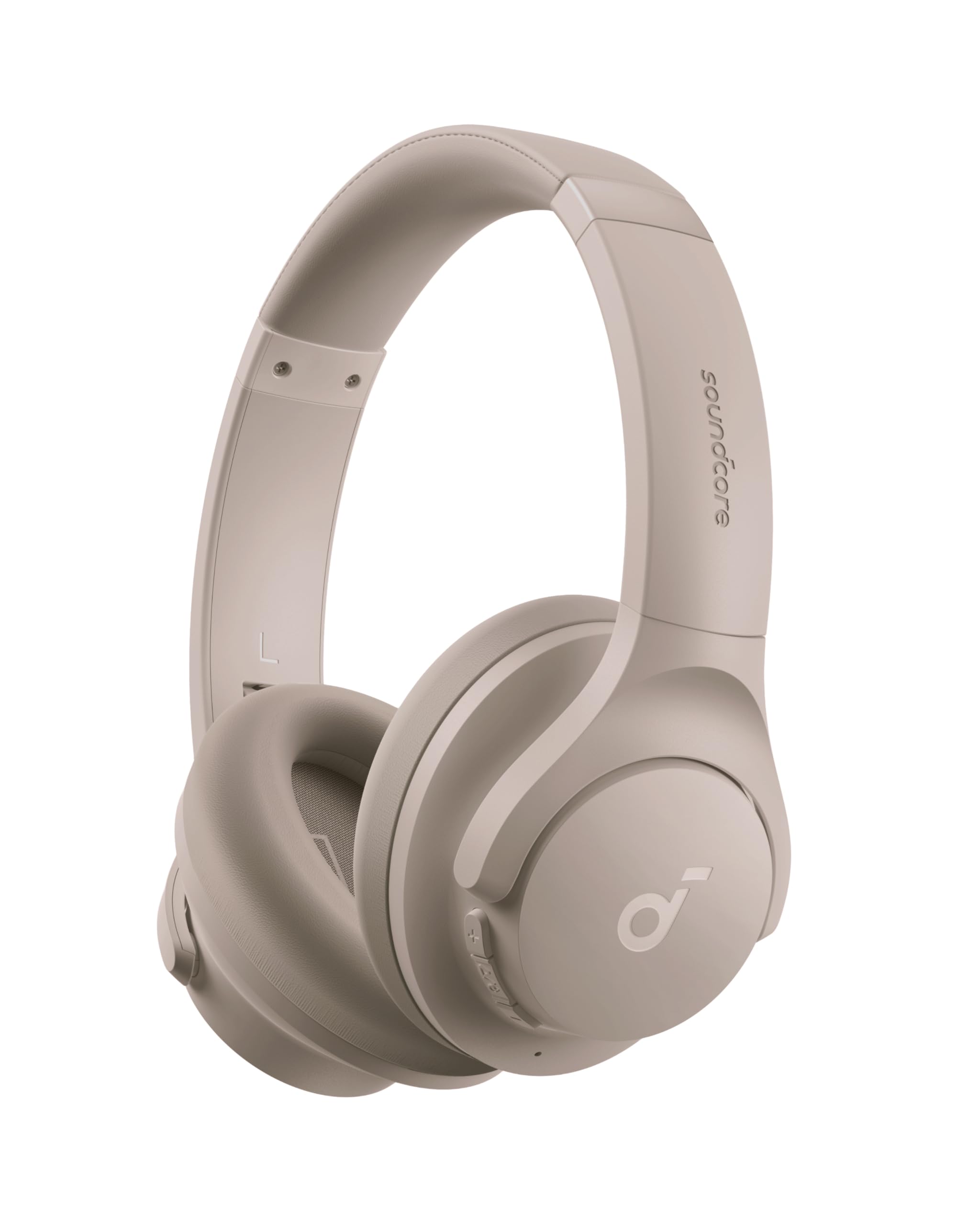
1. Soundcore Q20i
Best Overall
Key Features
- Weight: 9.12 oz
- Drivers: 40 mm
- ANC playtime: 40 hours
- Connectivity: Bluetooth 5.0 + 3.5 mm
- Price: Midrange
Forty hours is the number that makes the Q20i our default travel pair: that is noise cancelling switched on for a transatlantic round trip with hours to spare, so the charging cable can stay in the suitcase. At 9.12 ounces it disappears into a personal item, and the earcups fold flat against the headband between flights. Nothing else here does the basic travel job this well for the money.
The cancelling itself is a hybrid setup, with two mics inside the cups and two outside, and it is honest about what it can do. Engine drone, air conditioning, road noise at highway speed: gone, or close enough that you stop noticing them. Voices two rows back are not, and you will still catch the gate announcement. The app is the better surprise — 22 EQ presets, three noise-cancelling modes, and a BassUp tuning that is punchy out of the box until you pull the low end back and the mids open up.
Comfort held up over long stretches. The pads are roomy enough not to press on the ears, the band is light enough that the weight never gathers in one spot, and Bluetooth 5.0 keeps a laptop and a phone connected at the same time. Physical buttons are a small mercy in a dark cabin, where a touch panel would have you swiping at your own ear.
The fit is where it splits. The clamp is gentle to a fault, so on smaller heads the cups slide down and sit lower than you want. There is also no case or pouch in the box, just the charging and audio cables, which makes a duffel bag the wrong place to keep them.
Pros
- 40 hours of ANC per charge
- Light 9.12-ounce folding frame
- 22 EQ presets and three ANC modes
- Two devices connected at once
Cons
- No case or pouch included
- Loose clamp on smaller heads
We recommend the Q20i to most travelers: 40 hours of ANC, a 9-ounce folding frame, and sound you can tune, all at midrange money.
2. Beats Studio Pro
Best Premium
Key Features
- Weight: 9.2 oz
- Battery: Up to 40 hours
- Dimensions: 7.01 x 3.07 x 7.13 inches
- Wired audio: USB-C lossless + 3.5 mm
- Price: Premium
The Studio Pro is the most polished pair here and the only one asking premium money. The 9.2-ounce frame has the solid, sculpted feel of something built to be handled, and the real cost sits in the plumbing: one-touch pairing that hops between an iPhone, an iPad, and a Mac without a menu, spatial audio with head tracking, and USB-C lossless audio the moment you plug into a laptop.
We think it earns the money for one specific traveler — someone already inside Apple’s ecosystem who wants the handoff to be invisible and will actually use the extras. Everyone else gets less. The noise cancelling is competent rather than the deepest in this group, and on a loud engine row you will still hear the rumble sitting under the music. The 3.5 mm cable works, so a seatback screen is not out of reach.
Battery is rated at up to 40 hours, enough for a long-haul round trip with charge left over for the airport, and the USB-C port means the same cable as your laptop. That is the practical argument for the price: fewer accessories, fewer adapters, and a pair that behaves like the rest of your kit.
Pros
- One-touch pairing across Apple and Android
- USB-C lossless and 3.5 mm wired options
- Up to 40 hours of battery
- Spatial audio with head tracking
Cons
- Firm clamp presses after a few hours
- Headband is the fragile point
Buy the Studio Pro if you live in Apple’s ecosystem and want lossless audio and spatial sound without thinking about pairing; the cheaper picks here cancel more noise.
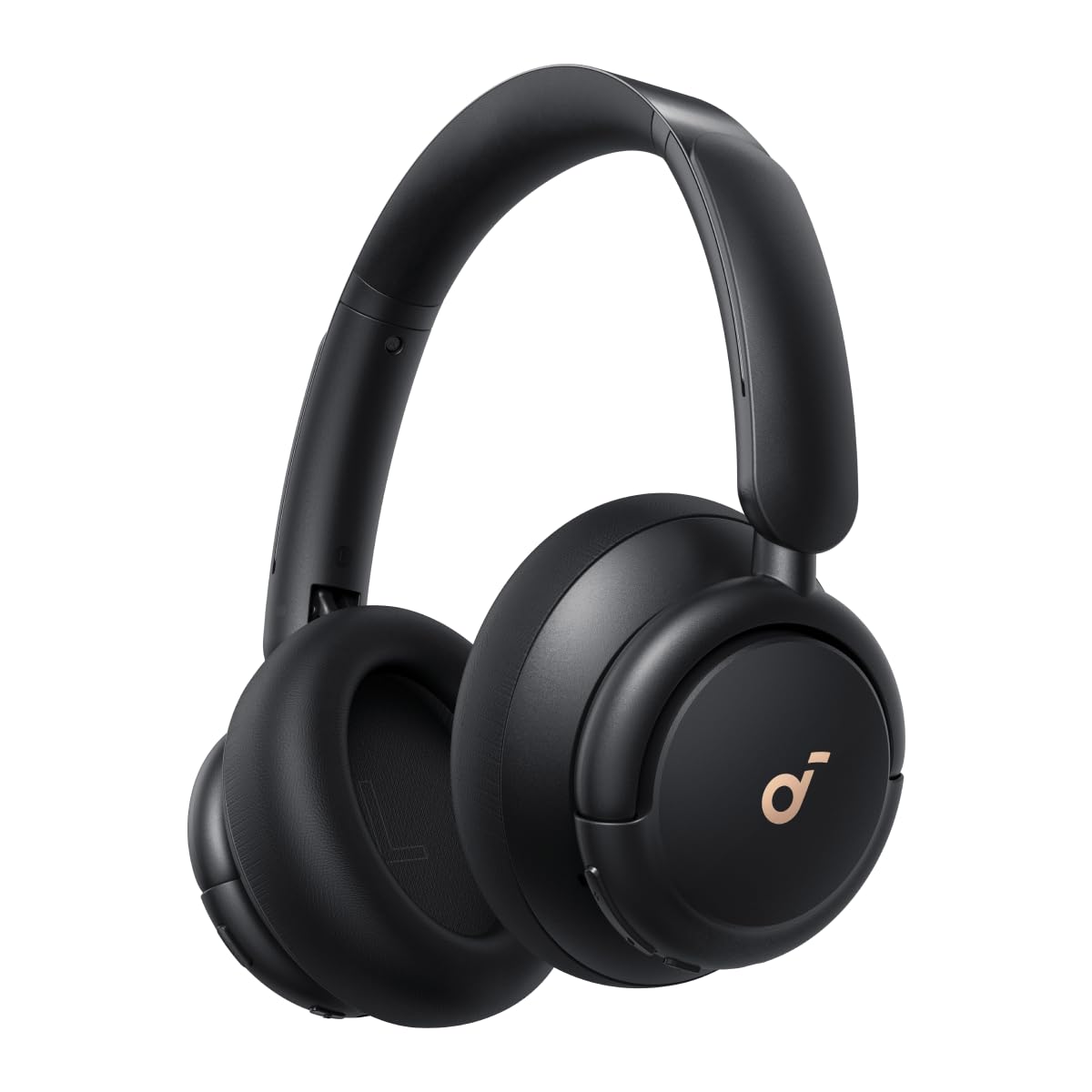
3. Soundcore Q30
Best for Flights
Key Features
- Weight: 9.6 oz
- ANC modes: Transport, Outdoor, Indoor
- Multipoint: Yes
- ANC playtime: 50 hours
- Price: Midrange
The Q30 is our top pick with a flight mode bolted on. Same brand, same folding hinge, same app, plus a three-way noise cancelling switch. Transport is the one that matters: it targets the steady low-frequency drone of a cabin, while Outdoor leans on street noise and Indoor handles the hum of an office. Fifty hours with the cancelling on also beats the Q20i by ten.
That makes it the better buy for a long-haul trip, and the step up in money is modest. The memory foam pads under protein leather are plusher than the Q20i’s, multipoint keeps a laptop and a phone live at the same time, and the Transport setting audibly quiets engine noise in a way the standard mode does not. If your travel is mostly short hops, save the difference and take the top pick.
Where it gives ground is in the small stuff. The touch panel takes a flight or two to learn, there is no case in the box, and the app’s EQ does most of the tonal work, since the stock tuning is warm and bass-forward. None of that is a dealbreaker at 35,000 feet, where you’ll listen at a lower volume than you would at home anyway.
Pros
- Transport mode built for cabin drone
- 50 hours with ANC on
- Plush memory foam pads
- Multipoint for two devices
Cons
- Headband and earcup joints can crack
- Clamp runs large for smaller heads
For long flights the Q30 earns its step-up price: a Transport mode built for engine drone, plusher pads, and 50 hours with the cancelling on.
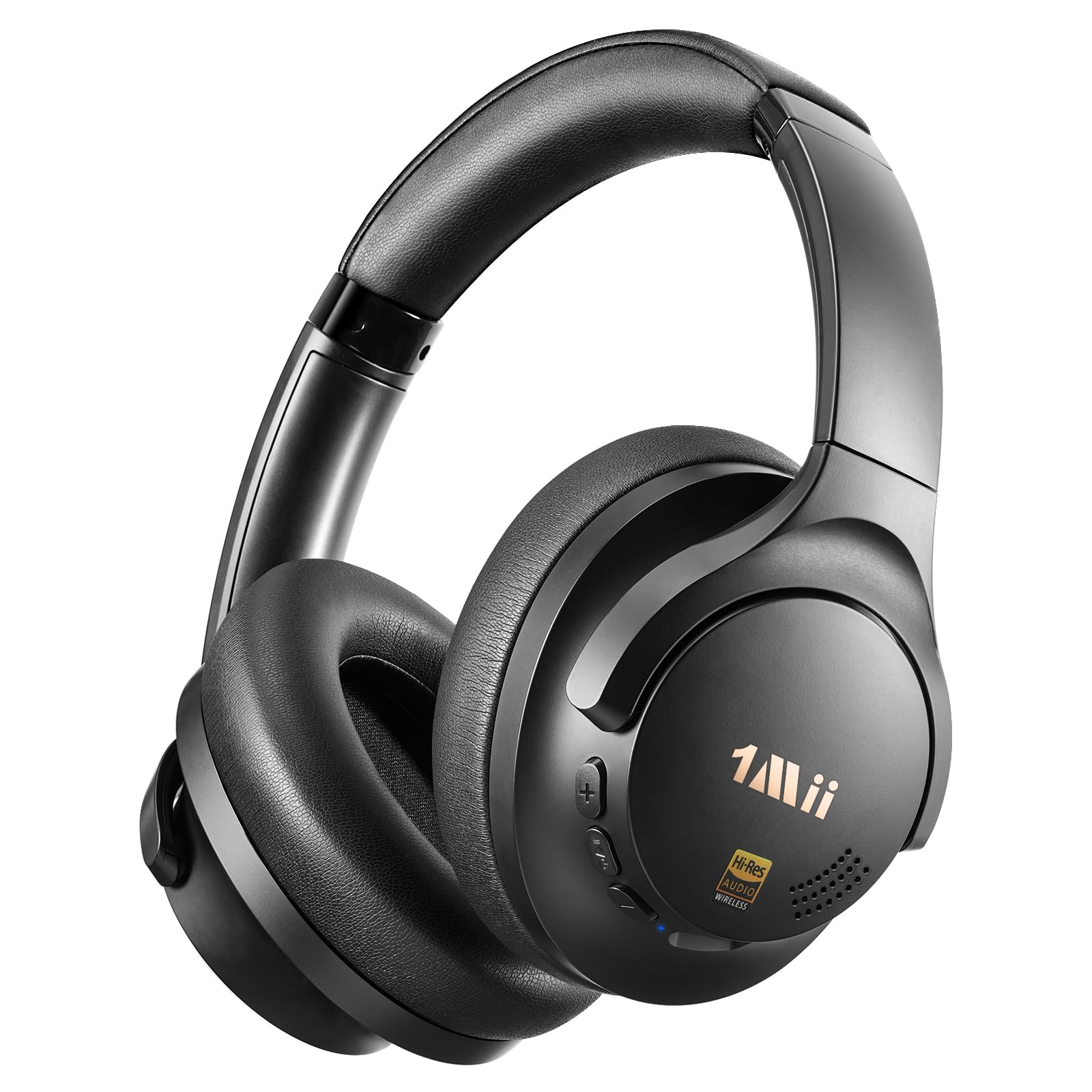
4. 1Mii Y8+
Best for Long Trips
Key Features
- Mics: 6 (4 ANC, 2 calls)
- Codec: LDAC
- Weight: 8.68 oz
- Battery: 100 hours
- Price: Midrange
Here is the catch with the Y8+: the noise cancelling runs on Bluetooth, so the moment you plug in the 3.5 mm cable for a seatback screen you are down to whatever the pads block on their own. We still rate it near the top of this group for long trips, because everything around that one quirk is aimed squarely at them.
Start with the battery. One hundred hours, plus a ten-minute top-up that buys enough for a decent leg. At 8.68 ounces it is the lightest full-size pair here, and it ships with a pouch rather than a bare box. The audio side is more ambitious than most at the price: LDAC for hi-res streaming from an Android phone, 40 mm drivers, and bass that stays firm without swallowing the mids.
Comfort is where it quietly wins. Soft memory foam pads, a band that doesn’t dig in, and cups that stay put when you lean back against a headrest. The six-mic hybrid ANC is aimed at low-frequency noise, which is exactly what a cabin produces, so engine drone and air handlers recede while the toddler behind you does not. The app adds a custom EQ and a low-latency mode; the EQ is the one we used.
Pros
- 100 hours of playback
- LDAC hi-res audio
- Light at 8.68 ounces
- Soft memory foam pads
Cons
- Bluetooth dropouts need a re-pair
- Pouch only, no hard case
We pack the Y8+ for long trips: 100 hours, LDAC sound, and the lightest full-size frame here, as long as you can live without ANC on a cable.
5. TOZO HT3
Best Budget
Key Features
- Weight: 8.96 oz
- Battery: 90 hours
- ANC rating: 45 dB
- Audio inputs: Bluetooth 6.0, 3.5 mm, USB-C
- Price: Budget
Somewhere near the bottom of this group’s price range sits a pair with 45 dB of hybrid noise cancelling, 90 hours of playback, and 40 mm drivers. Nothing on the HT3’s spec sheet reads cheap, which is why it kept its place next to pairs costing several times as much.
The cancelling runs four microphones and adapts to the room, and on a bus or in a cabin it takes enough edge off the drone that you listen at a lower volume than you otherwise would. Sound out of the box is bass-forward. The app is the fix: 32 EQ presets, a custom curve, spatial audio, and a left-right balance control, which is an odd amount of tuning to get at this price.
We think it is the best budget buy here, and the money went where you notice it: 254 grams on your head, a hinge that folds into a small bag, and USB-C audio alongside 3.5 mm and Bluetooth 6.0, so a laptop can feed it without a dongle. That is a lot of hardware for the least money in this group outside one pair, and it is why we hand it to people who commute more than they fly.
Pros
- 45 dB of hybrid ANC
- 90 hours of playback
- 32 EQ presets in the app
- Weighs 254 grams
Cons
- Thin padding on the headband
- Build can fail within months
The HT3 is our budget pick: real hybrid ANC, 90 hours, and an app full of tuning for less than most pairs on this list.
6. KVIDIO WH304A
Best for Glasses Wearers

Key Features
- Weight: 12.3 oz
- Bluetooth: 5.3
- ANC playtime: 40 hours
- Standard playtime: 70 hours
- Price: Budget
If you wear glasses, a behind-the-ear hearing aid, or a cap you never take off, the WH304A is the pair to try first. The cups are deep enough to settle around a frame arm instead of pressing on it, and the band doesn’t need to clamp hard to stay in place.
The rest is competent rather than exceptional. Forty hours with the cancelling on, 70 in standard mode, Bluetooth 5.3, a transparency mode for announcements, and touch controls on the earcup. Sound is warm and a little bass-heavy, and the ANC handles air conditioning and engine noise without reaching the depth of the pricier pairs here.
That generous fit has a price: 12.3 ounces is the heaviest pair in this group, and your neck notices before the end of a long flight. For a commute, a train, or a shorter hop it is easy to live with, and the build is the other thing to keep in mind, since the plastic and the pads are where these wear out first.
Pros
- Deep cups that clear glasses
- 40 hours with ANC on
- Transparency mode for announcements
- Lowest price in this group
Cons
- Heaviest pair here at 12.3 ounces
The WH304A is the pick for glasses, caps, and hearing aids: deep soft cups, a light clamp, and 40 hours of ANC at the lowest price here.
7. TAGRY H5
Best for Battery-First Travelers
Key Features
- Weight: 9.17 oz
- Battery: 140 hours
- Bluetooth: 6.4
- ANC rating: 48 dB
- Price: Midrange
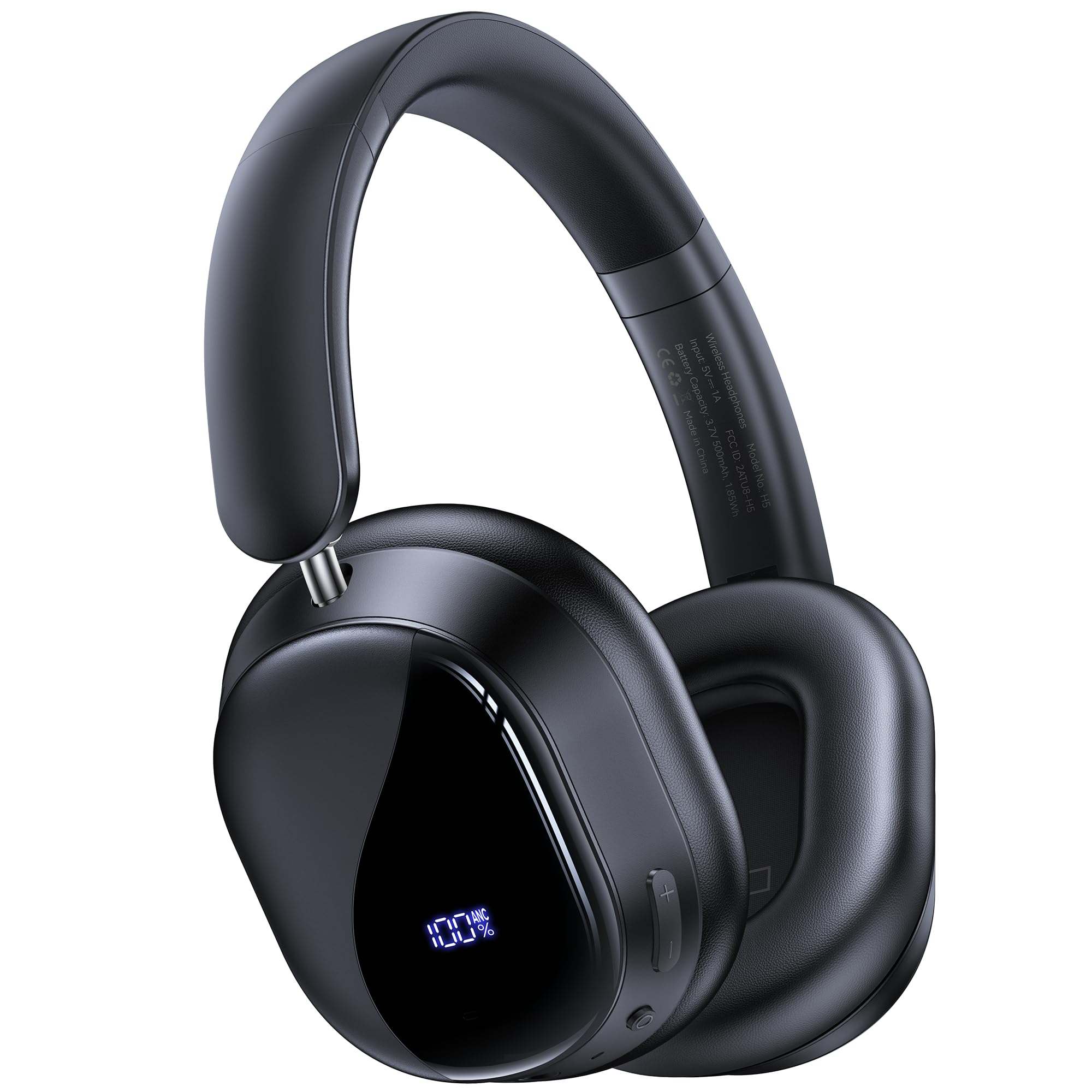
Two readouts sit on the earcup: the noise cancelling level and the battery percentage. That sounds like a gimmick until you are deciding whether to hunt for an outlet on a two-hour layover. The H5 pairs the display with a 140-hour battery claim, the longest in this group, and a 48 dB hybrid ANC figure that tops everything else here on paper.
The rest of the package points at the same traveler. Bluetooth 6.4, 40 mm drivers, six microphones with call noise reduction, a transparency mode, a folding hinge, and 0.26 kg on your head. Unusually, the cancelling is supported in wired mode too: plug into a seatback screen and it keeps working, which is not true of every pair on this list.
Controls are physical buttons, the app handles EQ, and the box includes a pouch and a 3.5 mm cable. TAGRY lists a five-year manufacturer warranty, a longer commitment than most brands here make, and the price sits in the middle of this group despite the battery advantage.
The case for the H5 is straightforward: the longest battery here, a display that answers the charging question at a glance, and cancelling that survives a cable. What it doesn’t have is a history. This is a newer model with a short track record, so buy it somewhere the return policy is easy to use.
Pros
- 140 hours of playback
- ANC works in wired mode
- Dual ANC and battery display
- Folding frame at 0.26 kg
Cons
- Short track record as a newer model
The H5 is for the traveler who wants the longest battery here and ANC that keeps working with a cable; buy it somewhere returns are easy.
How We Tested Travel Noise-Canceling Headphones
I built the shortlist from travel-focused models that kept surfacing in research and owner reviews, then narrowed it by over-ear design, active noise cancellation, battery estimates, and the features travelers actually compare: multipoint pairing, transparency modes, and app-based EQ. That left 12 pairs, which we used for six months in the places these headphones are meant to live: airplane cabins, train seats, commutes, hotel rooms, and loud lobbies.
Noise cancellation was judged on real racket, not a spec sheet. We wore each pair on a flight, beside a running HVAC vent, and in a busy coffee shop, noting whether the drone faded to a hush or merely got quieter. For sound quality, we listened to the same playlist and podcast episodes across pairs, checking bass, vocal clarity, and whether the app EQ made a useful difference or just changed the flavor. Comfort and fit got long-haul treatment: we wore them for at least three hours straight, adjusted the headband, and asked teammates with different head sizes and glasses to try them.
Battery life was timed with ANC on at a realistic volume, and we tracked how quickly the claimed hours fell away after a week of mixed use. We packed each pair into a backpack with and without its case, checked hinges and earcups for wobble, and re-paired each set repeatedly to catch dropouts when a second device was nearby. Value came down to what you get for the money: stable Bluetooth, useful controls, a case that protects the headphones, and no feature that looks good only on the box.
How to Choose Noise Cancelling Headphones for Travel
The figure that decides a travel pair isn’t the decibel rating — it’s how many hours of noise cancelling you get before you reach for a cable.
What Noise Cancelling Can and Can’t Do
Active noise cancelling samples the noise around you and plays an inverse signal into your ear, which is why it flattens steady sound — engine drone, air conditioning, the rumble of a highway — and barely touches a baby two rows back or the gate announcement. Hybrid designs with mics inside and outside the cups handle that low end best.
Don’t shop on decibel claims. A 48 dB figure from one brand and 45 dB from another aren’t measured the same way and won’t rank the products for you. Look instead for a transport or airplane setting tuned for cabin noise, like the one on the Soundcore Q30.
Count ANC Hours, Not Total Hours
A 70-hour battery headline can mean 40 hours with the cancelling switched on; the KVIDIO pair splits exactly that way. Compare on the ANC number, because that’s the mode you’ll actually live in. For a two-week trip with unreliable charging, treat 40 hours of ANC as the comfortable floor and anything beyond it as buffer.
Quick charging is the more useful feature on a layover: ten minutes on the 1Mii Y8+ is worth more than a bigger figure you’ll never drain.
The Wired-Mode Trap
Plenty of ANC headphones only cancel over Bluetooth, so the moment you plug into an older seatback screen you’re wearing a pair of ordinary passive headphones. If in-flight entertainment matters, check that the cancelling survives a cable — the TAGRY H5 explicitly supports wired ANC.
Carry the 3.5 mm cable even with a wireless pair, and remember that some seatback systems still want a two-prong airline adapter.
Weight, Clamp, and What Actually Fits
The picks here run from 8.68 ounces to 12.3, and that gap is real by hour four of a long flight. Clamp matters as much as padding: a firm band holds a seal when you lean forward but presses on glasses, while a light band is comfortable and can leave the cups sitting low on a small head.
If you wear frames or a hearing aid, put deep soft pads and a gentle clamp ahead of the deepest cancelling on the spec sheet.
Multipoint and Controls
Multipoint, which keeps two devices connected at once, is the feature we use most after ANC. It means the laptop holds the call while the phone holds the music, and it’s standard on both Soundcore picks and on the 1Mii Y8+.
Physical buttons beat touch panels in a dark cabin — you can find a volume rocker by feel without lifting your head from the seat. If you switch between a phone and a laptop all day, weigh multipoint above an extra EQ preset.
Frequently Asked Questions
Why do noise cancelling headphones make my ears feel pressurized?
The mics are generating a low-frequency signal to cancel what’s around you, and that can register as slight pressure or a swimmy feeling, especially in the first few minutes. It usually settles once your ears adjust.
If it doesn’t, switch to transparency mode for a minute to let the room back in, or choose a pair with stepped ANC levels, like the TOZO HT3, so you can run the cancelling shallower.
Are premium noise cancelling headphones worth it for travel?
Only if you’ll use what the extra money buys away from the plane. The midrange pairs here already deliver 40-plus hours of ANC, a folding frame, and sound you can tune in an app.
Premium buys one-touch switching between devices, lossless audio over USB-C, spatial sound, and better materials. If none of that comes up in a normal week, spend the difference on legroom instead.
Can I use travel headphones for calls and video meetings?
Yes, and the mic arrays are better than the prices suggest. The 1Mii Y8+ and TAGRY H5 both run six mics with noise reduction for calls, which is enough for a hotel room or an airport lounge.
At a gate or on a windy platform, no boomless headset isolates your voice completely. Take the important call before you board.
Final Verdict
The Soundcore Q20i is the pair we point most travelers to. Forty hours of noise cancelling, a 9.12-ounce frame that folds flat, and an app that fixes the tuning where you want it fixed — it covers the flight, the commute, and the hotel desk without premium money attached.
If your trips are long-haul and you want a mode built for engine drone, the Q30 is the upgrade worth paying for. If your head runs small or your glasses are thick, start with the KVIDIO instead, and accept the extra weight in exchange for a fit that holds.