This post contains affiliate links. We may earn a small commission when you buy through our links — at no extra cost to you.
The hum of a jet engine on a long-haul flight can feel relentless, and ear pressure during descent is a genuine pain. Yet the default foam earplugs from the corner shop often fall out at 3 a.m., or they simply don’t block the deep drone of the cabin. Many travellers learn the hard way that the highest noise reduction rating means nothing if the plug doesn’t fit your ear canal.
The good news is that earplugs are no longer a one-size-fits-all market. There are plugs that regulate pressure so you land without stabbing ear pain, and contoured foams that stay snug in smaller ears. The trick is matching the plug to your specific travel scenario — whether that’s sleeping through a partner’s snoring in a hostel or protecting your hearing at a European festival.
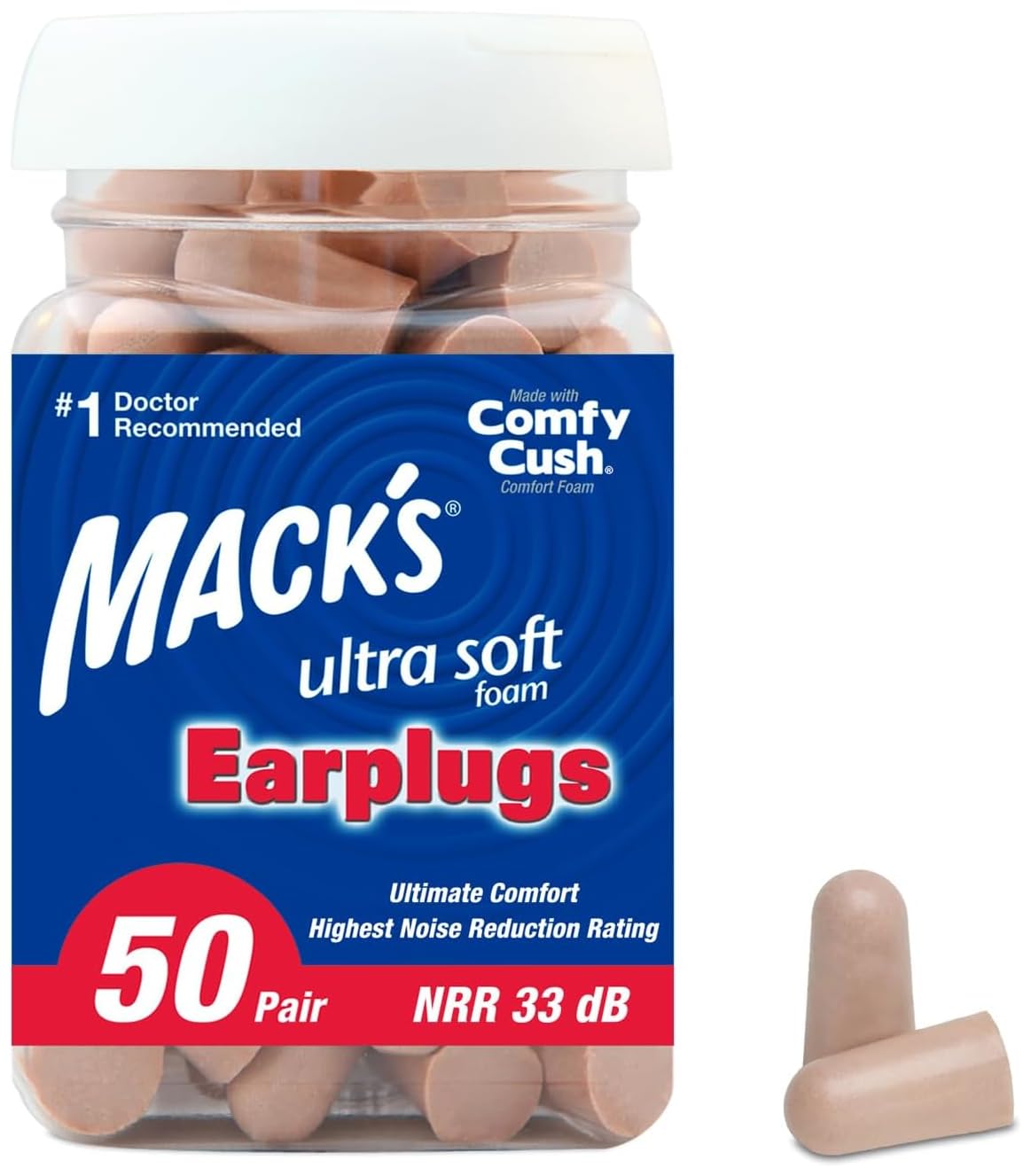
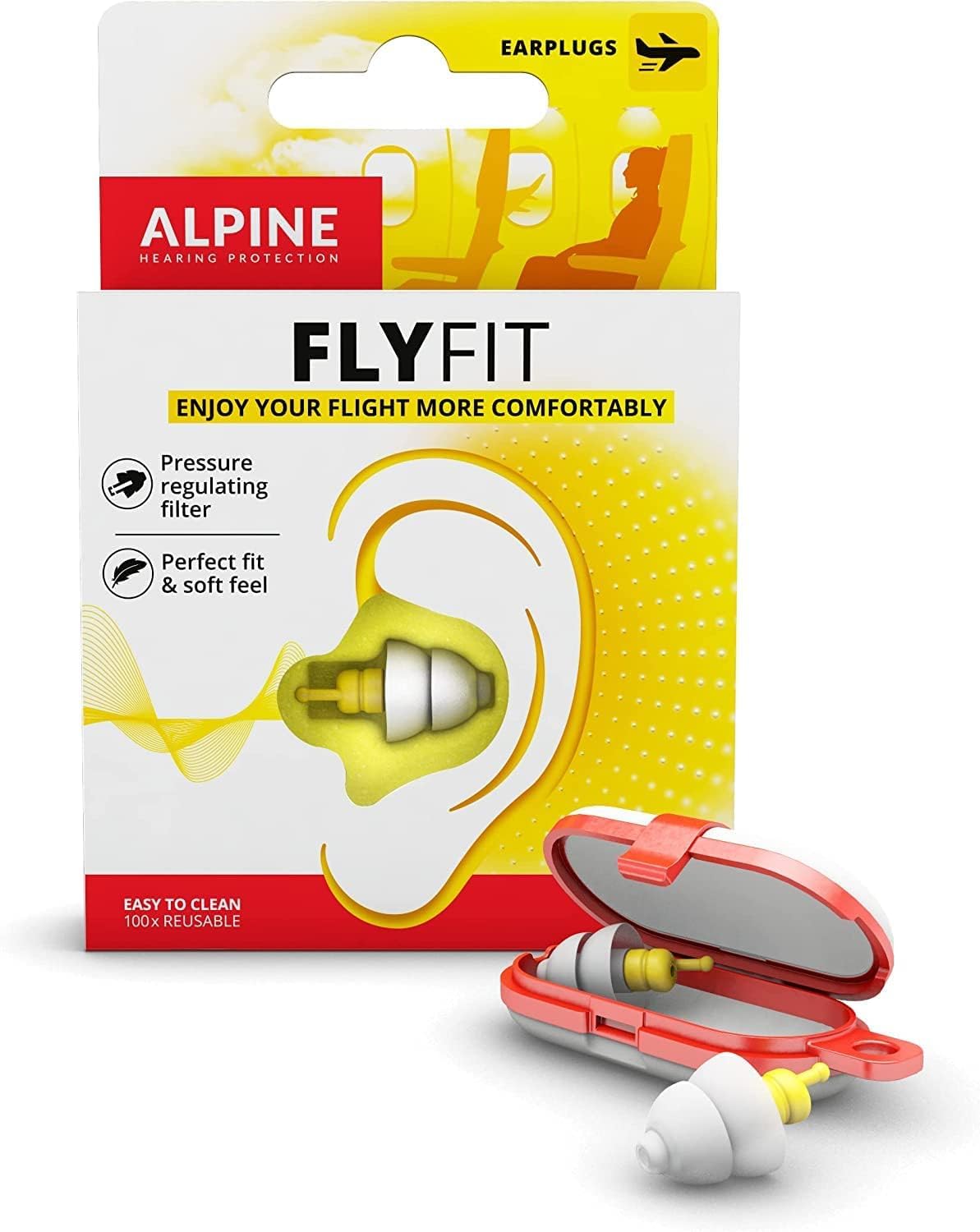


1. Mack’s Ultra Soft Foam (50 Pairs)
Best for Sleeping & Noise Blocking
Key Features
- Noise Reduction Rating: 33 dB NRR
- Earplug Type: Low-pressure foam
- Fit & Comfort: Soft, side-sleeping, skin-tone
- Reusability: Disposable (50 pairs)
- Pressure Regulation: No
- Price: Budget
Mack’s Ultra Soft Foam delivers a genuine 33 dB noise reduction rating in a low‑pressure foam that stays comfortable through a full night’s sleep. The 50‑pair jar keeps per‑use cost low, making it a practical choice for frequent travellers who go through plugs quickly. This is a straight‑forward disposable solution for quieting engine hum, snoring, and hostel noise.
Side sleepers report no ear ache or pressure points after hours of wear, and the skin‑tone colouring keeps them discreet in public. The foam expands slowly and evenly, creating a consistent seal when properly rolled. That seal depends on ear canal size: the plugs are on the shorter, slimmer side, so those with larger canals may find they slip out or fail to block low‑frequency drone during the night.
This pack is best suited for travellers who want a dependable, disposable sleep plug for planes, hostels, or urban noise without spending much per pair. Light sleepers who value maximum silence and comfort will appreciate the combination of high NRR and soft foam. If you have particularly large ear canals, the one‑size shape may not hold its seal—consider a larger foam option instead. This product is not designed for pressure equalisation during flight descent.
Pros
- Soft low‑pressure foam that remains comfortable for side sleepers through the night
- 33 dB noise reduction effectively blocks snoring, engine roar, and general travel noise
- 50 pairs in a resealable jar provide months of use at a budget‑friendly price
Cons
- Fit can be too short or slim for larger ear canals, leading to slippage and reduced noise blocking
For travellers who need a reliable, comfortable foam plug that delivers maximum silence per dollar, this 50‑pair pack is the straightforward choice.
2. Alpine FlyFit
Best for Pressure Pain Relief
Key Features
- Noise Reduction Rating: 17 dB SNR
- Earplug Type: Hypoallergenic thermoplastic
- Fit & Comfort: Comfortable, long-haul use
- Reusability: Reusable (100 flights)
- Pressure Regulation: Yes (valve filter)
- Price: Mid-Range
The Alpine FlyFit uses a patented valve filter that gently equalises ear pressure during altitude changes, preventing the sharp pain many flyers experience. Its silicone-free AlpineThermoShape material conforms to the ear canal without causing irritation, making it comfortable enough for long-haul flights.
The pressure-first design inherently limits passive noise blocking; the 17 dB SNR rating means engine hum and chit-chat remain clearly audible. This makes the FlyFit the right choice for travellers who primarily suffer from ear pain and don’t require heavy noise reduction to sleep. Frequent flyers and those with silicone allergies will value the plug’s reusability (up to 100 flights) and hypoallergenic construction. Anyone wanting to shut out cabin noise entirely should instead consider a hybrid pressure‑and‑noise plug, which pairs a softening filter with higher attenuation.
Pros
- Eliminates ear pressure pain during take-off and landing, outperforming single-use pressure plugs.
- Soft, hypoallergenic material stays comfortable throughout long-haul flights with no itching.
- Reusable up to 100 flights, offering significant savings over disposable pressure plugs and reducing waste.
Cons
- At 17 dB SNR, the plugs provide minimal noise reduction; engine noise and cabin chatter remain mostly unobstructed.
If ear pressure pain is your main concern and cabin noise does not disrupt your sleep, the FlyFit is a cost-effective, reusable specialist. When substantial noise blocking is also required, a hybrid plug that combines pressure relief with higher attenuation offers a better balance.
3. Loop Switch 2
Best for Versatile Noise Control
Key Features
- Noise Reduction Rating: 20–26 dB SNR
- Earplug Type: Silicone, acoustic filter
- Fit & Comfort: Flush fit, XS–L ear tips
- Reusability: Reusable (case included)
- Pressure Regulation: No
- Price: Premium
The Loop Switch 2’s three noise-relief modes—Quiet, Engage, Experience—let you adjust how much of the world you hear with a quick turn of the dial, no plug-swapping needed. Unlike foam plugs built for maximum silence, the Switch 2 prioritizes flexibility across environments, making it a travel companion for those who land and go straight from a loud train to a quiet co-working space.
Digital nomads who bounce between noisy cafés and quiet co-working spaces, festival-goers who want to protect hearing while still hearing music, and sensory-sensitive travelers who need to dial back background noise quickly will find the Switch 2 a single solution. However, even the strongest Quiet setting leaves low-frequency engine hum and heavy snoring audible—foam earplugs remain the deeper silence option. The premium cost is hard to justify for occasional use.
Pros
- Three adjustable modes let you shift from blocking ambient noise to engaging conversations without swapping plugs.
- Slim, flexible silicone body sits flush for all-day comfort, even under hats or motorcycle helmets.
- Includes four ear tip sizes and a durable carrying case for a secure, portable seal.
Cons
- The strongest Quiet setting still allows low‑frequency rumble through, making engine drone and snoring more noticeable than with foam plugs.
- Premium price point feels steep when foam earplugs deliver deeper silence at a fraction of the cost.
For travelers whose days shift from loud to quiet environments, the Loop Switch 2 replaces a trio of single-purpose plugs—but serious sleep on a plane demands foam.
4. Howard Leight Laser Lite
Best for Small Ear Canals
Key Features
- Noise Reduction Rating: 32 dB NRR
- Earplug Type: Contoured T-shape foam
- Fit & Comfort: Small–medium canals, soft
- Reusability: Disposable (50 pairs, wrapped)
- Pressure Regulation: No
- Price: Budget
Where standard foam plugs can feel overly bulky in petite ear canals, the Laser Lite’s contoured T‑shape and softer polyurethane expand gently to create a low‑pressure seal. The 32 dB NRR competes closely with the top pick’s noise reduction, and each pair comes individually wrapped in magenta/yellow — easy to dig out of a carry‑on.
Travelers with small‑to‑medium ear canals who want a hygienic, soft plug for flights or hotel sleep will find the Laser Lite a comfortable match. The soil‑resistant skin keeps fingertips clean during insertion. The plugs can gradually work loose overnight if not seated deeply enough; side sleepers who move a lot may need to re‑seat them once.
Pros
- Soft, low‑pressure foam feels like ‘puffs of clouds’ and minimizes irritation during extended wear.
- Contoured T‑shape and soil‑resistant skin make insertion cleaner and more hygienic for travel.
- Individually wrapped hi‑vis yellow/magenta pairs are easy to spot in a dim bag or nightstand drawer.
Cons
- Plugs can gradually work their way out overnight for side sleepers or those who move, reducing noise isolation.
For travelers with petite canals who value softness and can’t stomach the bulk of bigger foam plugs, the Laser Lite hits a sweet spot — just ensure a deep, flush insertion before settling in for the night.
5. Mack’s Flightguard
Best for Flight Pressure & Noise
Key Features
- Noise Reduction Rating: 26 dB NRR / 33 dB SNR
- Earplug Type: Silicone flanges
- Fit & Comfort: Soft flanges, stem insertion
- Reusability: Reusable (with case)
- Pressure Regulation: Yes (Aero filter)
- Price: Mid-Range
Unlike pure foam earplugs that chase total silence, the Flightguard targets the real culprit for many flyers: the rapid pressure shifts that cause searing ear pain. A small aero filter in the core slows those pressure changes, while the soft silicone flanges deliver 26 dB of noise reduction — enough to take the edge off cabin roar without leaving you unaware of a gate change or crew instruction.
Frequent travelers who dread descent headaches and want one plug that handles both pain and moderate noise will find their fix here. The flanged design stays put for hours and the firm stem makes insertion quick. The tradeoff is fit: the silicone can press too firmly in smaller ear canals, leading to soreness after a couple of hours. It is not the right pick for those seeking maximum sound blocking or with particularly narrow ear anatomy.
Pros
- Eases the stabbing ear pain of take‑off and landing, making the flight bearable for pressure‑sensitive travelers.
- Reduces cabin roar enough for comfort while letting speech and announcements come through clearly.
- Soft flanges and a firm stem make insertion easy and keep them in place for hours without readjustment.
Cons
- Can feel too tight in smaller ear canals, causing soreness during long flights.
If ear pressure pain is your main in‑flight misery and you’d rather stay aware of your surroundings than sit in total silence, the Flightguard is the right tool — just confirm your ear canals are average or larger before committing.
6. Reure High Fidelity
Best for Concerts & Festivals
Key Features
- Noise Reduction Rating: 23 dB flat attenuation
- Earplug Type: Hypoallergenic silicone
- Fit & Comfort: Low-profile, flush, 2 sizes
- Reusability: Reusable, washable
- Pressure Regulation: No
- Price: Budget
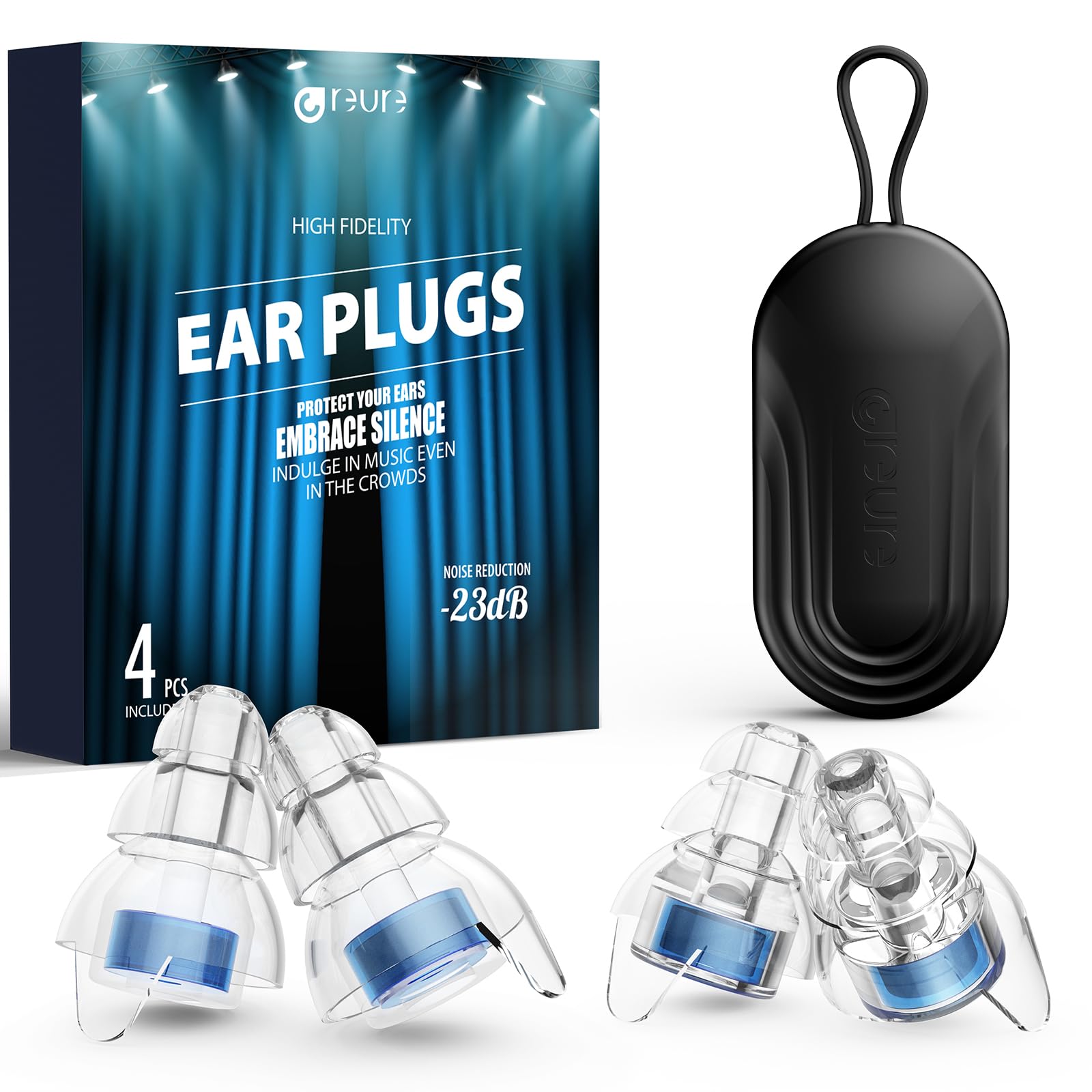
Unlike multi-mode earplugs that adapt to different environments, the Reure prioritizes concert fidelity. The acoustic filter flattens the frequency response, so 23 dB of reduction keeps guitars sharp and vocals articulate without the muffled, underwater feel of foam. A metal keychain case and a spare pair keep protection portable and ready.
This suits travelers whose itineraries include festivals, club nights, or motorcycle routes where wind roar is a concern but hearing traffic still matters. The low-profile silicone body stays secure through movement and sits nearly flush, though that flushness makes removal a little tricky — a gentle twist and pull solves it. And because it provides only 23 dB of reduction, it won’t block snoring or engine drone, a clear boundary between event protection and sleep aid.
Pros
- Preserves music clarity across frequencies so you hear songs as intended while lowering volume to safe levels.
- Comfortable, secure in-ear hold even when dancing, with no slipping or pressure points.
- Excellent value: two pairs and a sturdy metal keychain case for a fraction of premium high‑fidelity brands.
Cons
- Removal can be tricky; the flush fit sits deep and may require a slow twist‑and‑pull to avoid discomfort.
If your travel plans revolve around live music, motorcycle rides, or nightlife, these reusable earplugs deliver crisp, protected listening at a budget price — just treat them as event gear, not bedtime earplugs.
7. EarPlanes (1 Pair)
Best for Pressure Relief (Budget)

Key Features
- Noise Reduction Rating: 20 dB
- Earplug Type: Silicone with CeramX filter
- Fit & Comfort: Standard size, reusable
- Reusability: Reusable (several flights)
- Pressure Regulation: Yes
- Price: Mid-Range
The CeramX filter effectively equalizes pressure, making descents pain-free while preserving conversation clarity. The single reusable pair keeps cost low for infrequent travel, but the fit can feel too large in smaller ear canals, and a one-pair pack is less convenient than the reusable specialist in this set. Those whose ear canals accommodate the shape appreciate the pressure relief at a budget-friendly price.
Pros
- Prevents ear pain and pressure discomfort during take-off and landing.
- Comfortable enough for whole-flight wear, with clear conversation still possible.
Cons
- Fit can be too large or uncomfortable for smaller ear canals.
For occasional flyers who can get a comfortable seal, this original plug offers effective earache prevention at a budget-friendly price.
8. Ohropax Soft
Best for European Travel Sleep

Key Features
- Noise Reduction Rating: 30 dB NRR
- Earplug Type: Soft foam
- Fit & Comfort: Soft, standard fit
- Reusability: Disposable (5 pairs)
- Pressure Regulation: No
- Price: Mid-Range
With an NRR of 30 dB, these earplugs effectively silence cabin drone and snoring during overnight flights. The foam is remarkably soft, allowing hours of wear without irritation. However, the box contains just five pairs, making replacement costly for frequent flyers who go through plugs quickly. This tradeoff works well for the occasional traveler who values premium comfort over bulk value.
Pros
- Powerful noise blocking that muffles snoring and engine hum effectively
- Exceptionally soft foam that stays comfortable through long flights
Cons
- Only five pairs per box; per-pair cost rises sharply if replacing plugs daily
A high-comfort, high-attenuation option for the occasional flyer who won’t mind paying more per pair for a premium foam experience.
9. Flents Protechs (50 Pairs)
Best for Large Ear Canals

Key Features
- Noise Reduction Rating: 33 dB NRR
- Earplug Type: Slow recovery foam
- Fit & Comfort: Designed for large ear canals
- Reusability: Disposable (50 pairs)
- Pressure Regulation: No
- Price: Budget
Flents Protechs delivers 33 dB of noise reduction, effectively blanketing conversation, traffic, and snoring. The firmer, larger foam stays anchored in big ear canals — a real advantage for anyone who struggles with standard plugs shifting loose. That same bulky profile, however, can cause pressure or push out of average and smaller canals, limiting its usefulness for the broader travel crowd. For those with the right ear size, it’s a budget-friendly bulk pack with solid attenuation.
Pros
- Blocks conversations, traffic, and snoring effectively for travel and daily noise reduction.
- Comfortable for those who find typical foam plugs too firm, with minimal irritation during extended wear.
Cons
Only worth buying if standard foam plugs consistently slip out of your larger ear canals. Anyone with average or smaller ears will get a safer, more comfortable fit from the top pick.
10. Loop Quiet 2
Best for Reusable Sleep

Key Features
- Noise Reduction Rating: 24 dB SNR
- Earplug Type: Flexible silicone, tips
- Fit & Comfort: Flush, side-sleeping, XS–L
- Reusability: Reusable (with case)
- Pressure Regulation: No
- Price: Mid-Range
The Loop Quiet 2’s flush silicone body sits nearly flat against the ear, so side sleepers avoid the pressure points common with foam plugs. It smooths out mid‑range background noise — chatter, traffic hum, hotel HVAC — creating a quieter personal space. Deep snoring and engine drone still come through, and the 24 dB reduction doesn’t match disposable foam’s silencing power. At a mid‑range price, it fits moderate noise masking, not heavy‑duty travel silence.
Pros
- Flush silicone design stays comfortable for side sleepers, eliminating the ear-canal pressure of foam plugs.
- Smooths out general background noise — chatter, traffic, hotel HVAC — helping you focus or relax without total silence.
Cons
- Mid-range price; disposable foam earplugs deliver higher noise reduction for a fraction of the cost.
- Low‑frequency rumbles like snoring and aircraft engine noise cut through; 24 dB isn’t enough to mask them.
If you need a reusable, barely-there earplug for moderate hotel-room or office quiet and you sleep on your side, the Loop Quiet 2 fills that niche. For drowning out snoring or engine roar on flights, stick with high-NRR foam plugs.
11. 3M Ear Classic
Best for Industrial Foam

Key Features
- Noise Reduction Rating: 28 dB NRR
- Earplug Type: Cylindrical PVC foam
- Fit & Comfort: Standard cylindrical, firm
- Reusability: Reusable foam (50 pairs)
- Pressure Regulation: No
- Price: Budget
The 3M Ear Classic delivers consistent noise reduction that matches its industrial pedigree, taking the edge off cabin drone and engine hum. Fifty individually wrapped pairs keep things hygienic when sharing among travel partners. However, the straight cylinder shape and 28 dB NRR don’t match the contoured seal of the top pick—curved ear canals may experience a less accommodating fit and slightly lower attenuation. If you’ve worn this plug style before without discomfort, it’s a capable, no-fuss companion for group trips.
Pros
- Effective noise reduction that lives up to 3M’s industrial reputation, muffling engine hum for travel sleep.
- Stays securely in the ear through shifting and movement, avoiding the pop-out issue some tapered plugs have.
Cons
- Straight cylindrical shape can create pressure points in curved ear canals, causing discomfort after a few hours.
If you already know the straight cylindrical style fits comfortably, the 3M Ear Classic is a practical travel stash with individual wrapping and consistent attenuation.
How to Choose
Your ear canal shape and size are the hidden variables that determine whether a plug blocks noise or falls out.
Noise Reduction Rating (NRR/SNR)
A high NRR on the package doesn’t guarantee quiet sleep if the plug isn’t inserted correctly. Foam earplugs must be rolled into a tight, crease-free cylinder and inserted deeply enough to expand inside the ear canal, otherwise even a 33 dB rating drops to half that in real life. Many travellers discover this only after a restless night.
Pressure‑regulating earplugs deliberately limit noise reduction to let you hear announcements and equalise pressure, so a 20 dB rating is actually the design working as intended — not a flaw.
Earplug Type
Foam plugs offer the highest isolation and are best for sleeping through engine hum or snoring, but they require replacement every few days and block all sound. Moldable silicone putty creates a custom flush seal that’s ideal for side sleepers and swimmers, yet it picks up lint and feels sticky. High‑fidelity plugs preserve music clarity at the expense of low‑frequency blocking, which makes them useless against snoring. Pressure‑regulating plugs use a valve to slow pressure change during flight, making them lifesavers for ear‑pain suffers, but they leave you exposed to cabin roar.
Fit & Comfort for Your Ears
Standard foam plugs like Mack’s Ultra Soft fit most, but if your canals are naturally small or large, they’ll either slip out or cause aching pressure. Contoured plugs with a T‑shape (Howard Leight Laser Lite) gently seal smaller ears, while dedicated large‑size plugs (Flents Protechs) stay put for those who find one‑size options too loose. For side sleepers, any plug that protrudes beyond the ear will press painfully — only moldable silicone or flush‑fitting designs eliminate that pressure point.
Reusability vs. Disposable
Disposable foam jars cost pennies per pair and guarantee fresh hygiene on every trip, but they generate plastic waste and need repurchase. Reusable plugs made of silicone or thermoplastic reduce waste and pack smaller, yet they can lose shape or attract debris over time, and the higher per‑pair price only pays off if you fly frequently.
Pressure‑Regulation Capability
If you feel sharp pain when the plane descends, a ceramic or valve filter (found in Alpine FlyFit, EarPlanes, Mack’s Flightguard) slows the air pressure change across your eardrum. These filters inherently reduce noise blocking — you’re trading silence for comfort. Pair them with foam plugs on a tray table if you need both.
FAQ
Why do my foam earplugs fall out when I sleep on a plane?
Most likely, the plugs are too small for your ear canal, or they aren’t being inserted deeply enough. Roll them firmly into a thin cylinder, pull your ear up and back to straighten the canal, and push them in until the outer end sits flush. If they still slip out, you may need a larger‑diameter plug or a contoured T‑shape that expands more securely.
Do pressure‑regulating earplugs really stop ear pain on flights?
Yes. The ceramic or valve filter in plugs like Alpine FlyFit and EarPlanes slows the rate of pressure change across the eardrum, which prevents the sharp vacuum that causes pain during descent. The trade‑off is that you’ll still hear cabin noise clearly — these are for pain, not silence.
What’s the difference between NRR and SNR on earplug packaging?
NRR (Noise Reduction Rating) is the US lab standard; SNR (Single Number Rating) is the European equivalent. Both measure overall attenuation, but SNR numbers tend to appear higher for the same plug because of different testing frequencies. In practice, a plug with NRR 33 and one with SNR 38 can perform nearly identically.
Can I use concert earplugs to sleep on an overnight flight?
Not effectively. Concert earplugs like the Reure High Fidelity reduce volume evenly across frequencies but only attenuate around 20–23 dB, which isn’t enough to mask low‑frequency engine drone or snoring. You’ll still hear the hum, though at a slightly lower volume — fine for protecting hearing at a gig, but not for uninterrupted sleep.