This post contains affiliate links. We may earn a small commission when you buy through our links — at no extra cost to you.
It’s a familiar travel frustration: you’ve packed what the pharmacy recommended, but by midday along Edinburgh’s Royal Mile, the plaster is bunched uselessly under your arch. The blister prevention aisle isn’t one big toolkit—it’s a fork. On one side, balms and tapes that reduce friction before it starts. On the other, hydrocolloid pads that cushion and heal existing wounds. Choosing the wrong side for your moment is the real reason most products fail, not a fault in the product itself.
There’s a second layer few packaging labels explain: every adhesive demands skin that’s been cleaned with an alcohol wipe and dried completely to hold through a whole day of sweating and cobblestone pounding. Balm users need to reapply mid-walk. Get these two factors right—product type and skin prep—and you’ll walk 15,000 steps without a thought. This guide sorts the prevention from the treatment and flags the standouts that survived hard days on foot across Europe.
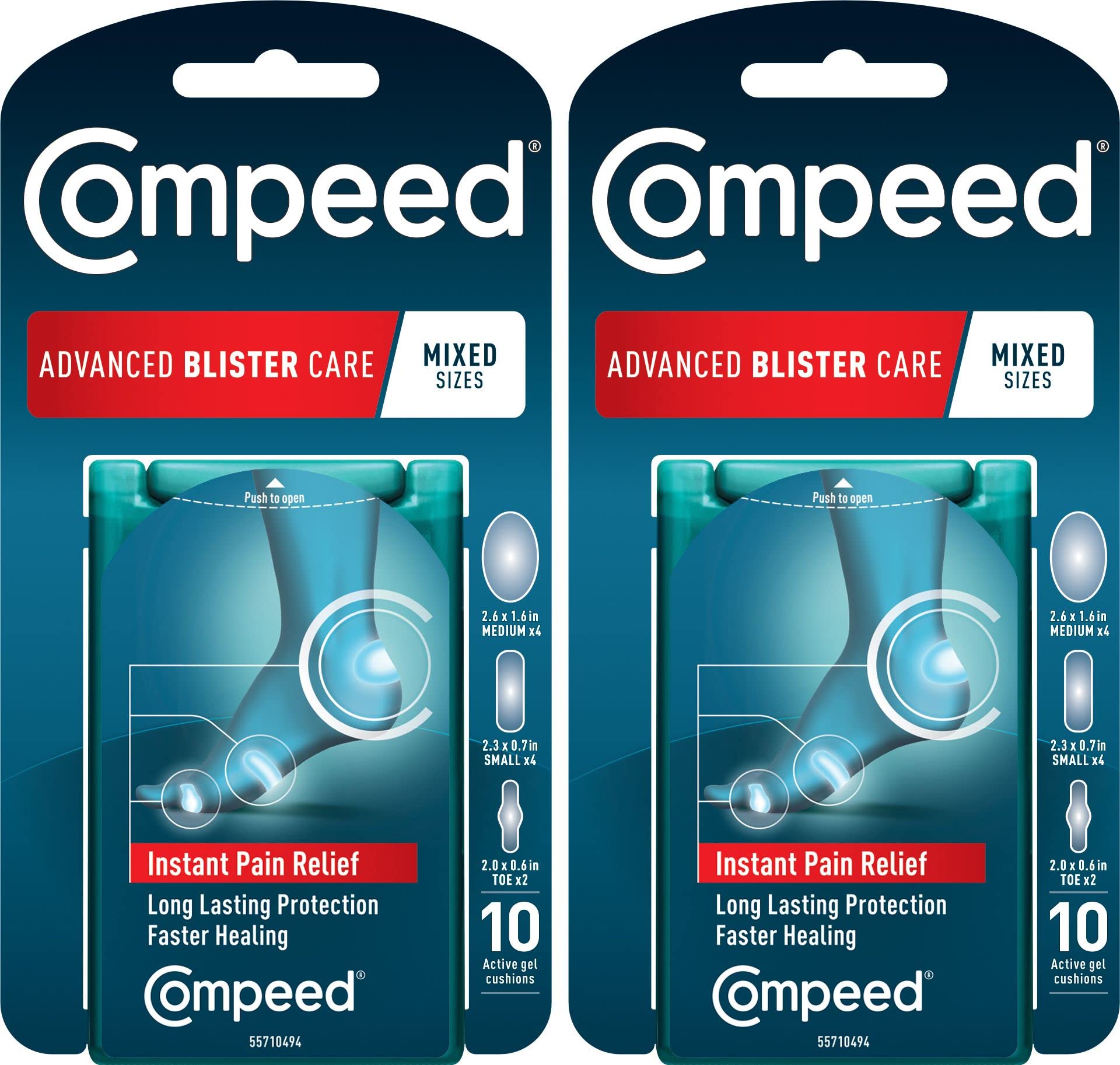


1. Compeed Blister Care Pads
Best for All-Day Travel Walks
Key Features
- Adhesion Quality & Duration: Claimed 4x longer adhesion, up to 7 days
- Product Type: Hydrocolloid gel pads
- Pack Size & Portability: 10 pads, mixed sizes
- Price: $$$
Compeed pads adhere through showers, sweat, and full days of walking—a durability no balm or tape in this comparison can match. The hydrocolloid gel immediately cushions existing blisters, eliminating friction pain so you can keep moving. Underneath, moisture creates an optimal healing environment; skin often emerges soft and intact when the pad finally lifts after several days.
These are for travelers who need guaranteed multi-day protection without stopping. If you walk 20,000 steps on a trip and can’t afford downtime, the pad’s ability to treat an already-formed blister while preventing more is unmatched. The tradeoff is visibility: the padded gel won’t hide in strappy sandals. The price per pad is premium, and adhesion demands clean, dry skin—a hasty stick on sweaty feet will likely peel. But when a blister threatens to derail your hike or vacation, that reliability justifies the cost.
Pros
- Instant pain relief on existing blisters, letting you keep walking immediately.
- Adhesion lasts through showers and heavy sweating for several days.
- Skin underneath heals softer and faster, with reduced scarring.
Cons
- Premium price per pad compared to generic hydrocolloid alternatives.
- Adhesion can fail if applied to sweaty or dirty skin; requires careful prep.
If a blister would end your vacation, packing these pads is a sensible insurance policy that balms and tapes can’t replicate.
2. Body Glide Foot Glide
Best for Prevention, Any Shoe
Key Features
- Adhesion Quality & Duration: No adhesive; friction barrier
- Product Type: Anti-friction balm stick
- Pack Size & Portability: 0.8 oz stick, pocket-size
- Price: $$
Unlike hydrocolloid pads that double as blister treatment, Body Glide Foot Glide focuses entirely on prevention—and does it invisibly. A few swipes on heels, toes, or arches leaves no residue, no stain, and no visible bandage; it works under strappy sandals and backless heels where any patch would show. The rub: heavy sweating on a long day can wear the barrier down, so tossing the compact stick into a day bag for a lunchtime re-up keeps protection intact. This suits prevention-first travelers and runners who want no evidence of a foot product at all.
Pros
- Invisible finish that won’t show in open shoes or stain socks
- A single stick lasts months of regular use, making per-application cost negligible
- Glides across sandals, heels, boots, and cleats without sticky residue
Cons
- The 0.8 oz stick can feel smaller than product images suggest—compact for travel, but less surface area than a full-size deodorant
- Protection may fade after several hours of heavy sweating, requiring a mid-day reapplication
For anyone whose priority is invisible blister prevention under strappy shoes or heels—without the bulk of bandages—this stick that has prevented blisters for thousands is a cost-effective travel essential. Just carry it for touch-ups on long, sweaty days.
3. Dr. Scholl’s Moleskin Roll
Best for Diy Custom Protection
Key Features
- Adhesion Quality & Duration: All-day hold claim
- Product Type: Adhesive moleskin roll
- Pack Size & Portability: 24" x 4-5/8" roll
- Price: $
Unlike pre-cut pads, this roll gives you complete freedom to shape protection exactly where friction hits—heels, toes, or inside the shoe itself. The thin, flexible moleskin cuts easily, delivering friction prevention without bulk. At 24 inches long, one roll provides dozens of applications, making it far more economical than single-use hydrocolloid cushions.
This roll suits DIY-oriented users who want to customize coverage for unusual blister spots or line shoe interiors. It’s not for those wanting grab-and-go pre-cut pads or for treating open blisters—that’s where hydrocolloid pads excel.
Pros
- Cut-to-fit design allows exact sizing for heels, toes, and shoe interiors—no wasted material.
- Consistently prevents blisters across dress shoes, boots, and athletic footwear.
- Outstanding value with a 24-inch roll that lasts for dozens of applications—pennies per use.
Cons
- Adhesion can weaken with heavy sweat or prolonged wear—dry, clean skin and a flat application surface are critical.
For budget-conscious hikers and travelers willing to spend a moment cutting and prepping, this roll offers the most economical friction prevention available. Those needing maximum sweat-proof adhesion will prefer a hydrocolloid pad.
4. KT Blister Prevention Tape
Best for Athletic Hot Spots
Key Features
- Adhesion Quality & Duration: Strong adhesive, dermatologist tested
- Product Type: Pre-cut fabric tape strips
- Pack Size & Portability: 30 pre-cut strips
- Price: $$
KT Blister Prevention Tape provides 30 pre-cut strips with rounded edges — no scissors, no fuss, dermatologist tested. Unlike cushioned foam tapes, this synthetic non-woven fabric tape prioritizes athletic hotspot protection during runs and lighter hikes. It also doubles as a general first aid cover for heels, toes, and arches.
Ideal for runners, light hikers, and travelers who value grab-and-go strips over cutting their own tape. Heavy sweaters or water-sport participants should look elsewhere, as adhesion is less consistent under intense moisture. Durability is lower than KT’s kinesiology tape, so multi-day treks may push its limits.
Pros
- Effective blister prevention on long hikes and athletic activities, with documented success on treks like the Camino de Santiago.
- Pre-cut strips require no cutting, ready to use straight from the box.
- Works for heels, toes, arches, and even non-foot first-aid use.
Cons
- Durability lags behind KT’s kinesiology tape; not built for extended multi-day treks.
- Adhesion can peel during heavy sweating or water exposure for some users.
A convenient pick for runners and travelers who want fast application and don’t push through heavy sweat or multi-day extremes.
5. Nexcare Blister Tape
Best for Budget Waterproof Tape
Key Features
- Adhesion Quality & Duration: Sticks after sweating
- Product Type: Foam medical tape roll
- Pack Size & Portability: 1" x 5 yd roll
- Price: $
The foam cushioning sets this tape apart: it creates a soft, flexible barrier that moves with your foot, absorbing friction before blisters develop. Unlike pre-cut strips, the full 5-yard roll lets you cut custom lengths for heels, toes, or fingers — adding value for budget-minded shoppers. The latex-free, breathable foam stays comfortable all day without aggravating sensitive skin.
This suits walkers who prioritize cushioned protection and gentle adhesion over extreme stick. For long runs or high-output sweat sessions, adhesion can falter and the foam may lift. It also tears if pulled too forcefully during application — handle with a light touch.
Pros
- Waterproof foam cushioning buffers friction-prone areas without bulk.
- Flexible material conforms to heels, toes, and fingers for all-day comfort.
- Latex-free formulation avoids skin irritation for sensitive-foot users.
Cons
- Stretching the foam too aggressively during application can cause it to tear.
- Adhesion may slip during intense exercise or heavy sweating.
The cushioned, latex-free tape for sensitive feet on moderate walks — just keep it away from marathon sweat levels.
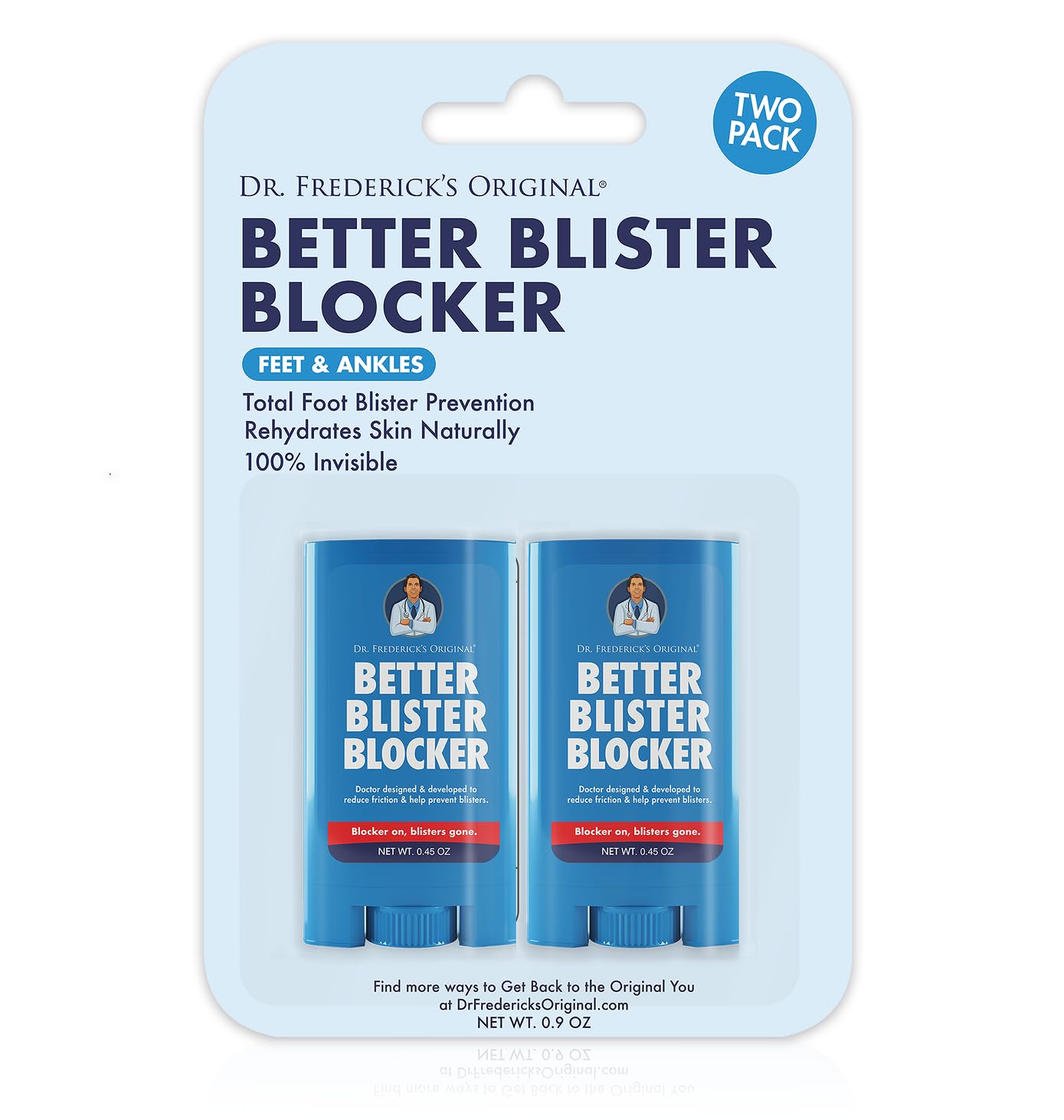
6. Better Blister Blocker
Best for Multi-Area Prevention
Key Features
- Adhesion Quality & Duration: Sweat-resistant, no adhesive
- Product Type: Anti-chafing balm stick (2-pack)
- Pack Size & Portability: 2 sticks, 0.9 oz each
- Price: $$
Unlike single-focus foot balms, this 2-pack covers hotspots from heels to bra lines, making it a single efficient purchase for travelers. The non-greasy, quick-dry formula softens skin while blocking friction, with users reporting blister-free days even in new shoes and sandals. It suits those who want a doctor-developed alternative to Body Glide for chafing prevention across multiple areas. Protection fades on very long days or during heavy sweating, so it fits anyone willing to carry the stick for a quick reapplication every few hours.
Pros
- Prevents blisters across multiple hotspots — feet, thighs, underarms, and bra lines.
- Softens skin while reducing friction, with noticeable softer feet after use.
- Compact 2-pack slips into a pocket or purse for on-the-go reapplication.
Cons
- Protection can diminish after several hours of walking or heavy sweating, requiring reapplication.
For travelers who want one balm for foot blisters and body chafing, this 2-pack is a solid, travel-friendly choice. Expect to reapply during marathon sightseeing days.
7. BAND-AID Hydrocolloid
Best for Healing, Scar Reduction
Key Features
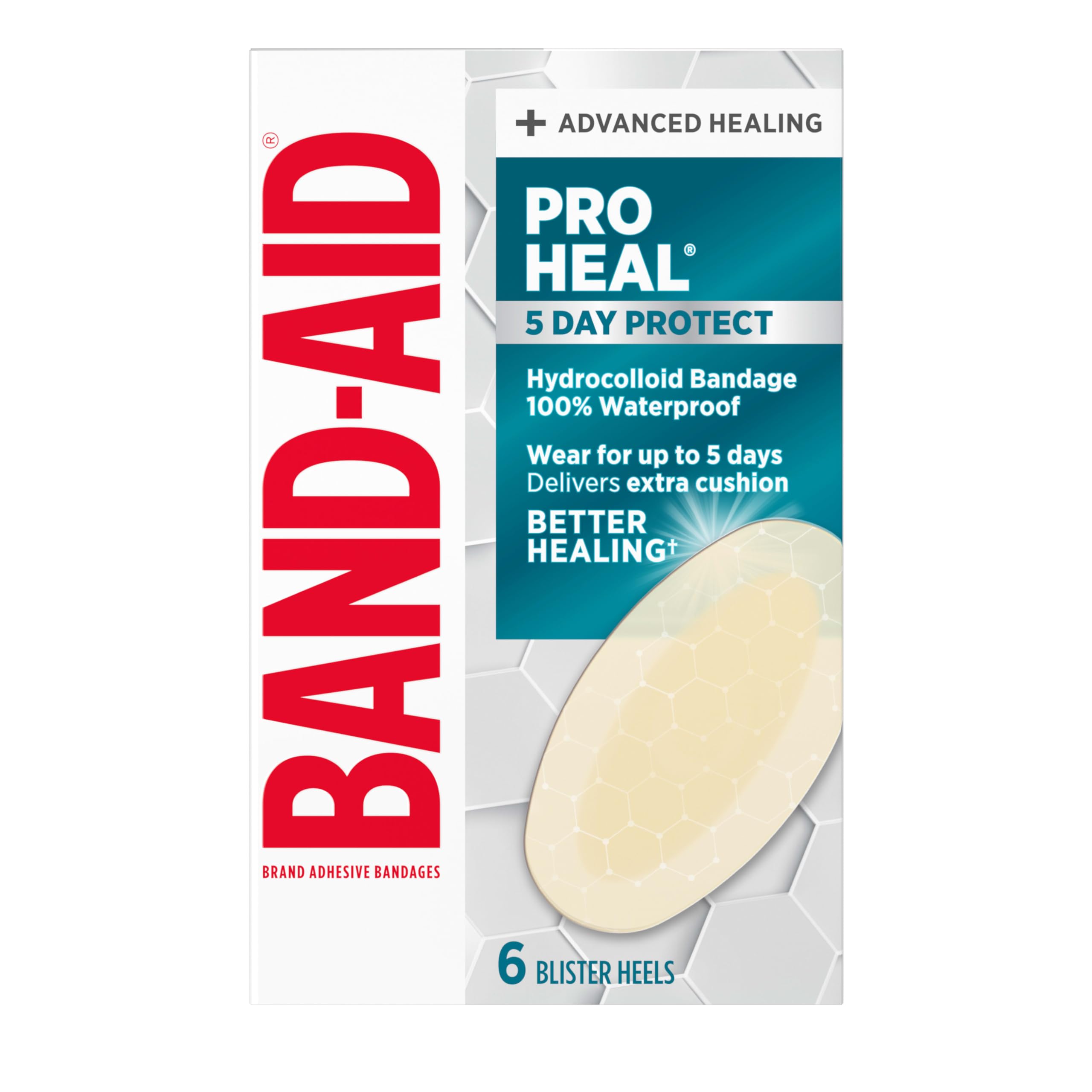
- Adhesion Quality & Duration: Up to 5 days wear claim
- Product Type: Hydrocolloid bandages
- Pack Size & Portability: 6 bandages
- Price: $$
The clinically-backed hydrocolloid gel accelerates healing and cushions painful blisters, with some users getting multi-day hold through showers. However, adhesion varies — peeling can happen if skin isn’t perfectly prepped — and the box includes just six bandages at a mid-range price. This works best for brand-loyal buyers treating existing blisters, not preventing them.
Pros
- Accelerates healing and reduces scarring compared to uncovered wounds.
- Provides immediate cushioning and relief for painful blisters.
Cons
- Adhesion can be hit-or-miss, with peeling possible even after careful skin prep.
For brand-loyal buyers seeking a healing pad for existing blisters, BAND-AID’s hydrocolloid offers trusted relief — just have a prevention-focused option on hand if you need to stop friction before it starts.
8. Wuru Wool Foot Care
Best for Natural, Adhesive-Free

Key Features
- Adhesion Quality & Duration: No adhesive; wool barrier
- Product Type: Natural wool fiber
- Pack Size & Portability: Loose wool (compact bag)
- Price: $$
Wuru’s natural wool wicks moisture, regulates temperature, and cushions friction points without adhesives or chemicals. The loose format demands precise positioning during sock changes — it’s not as grab-and-go as tapes or balms — and it’s strictly preventive, not for treating existing blisters.
Pros
- Natural friction protection without adhesives or chemicals, ideal for sensitive skin.
- Moisture-wicking and temperature-regulating wool keeps feet dry in summer, warm in winter.
Cons
- Loose wool can shift and bunch during sock changes if not placed precisely.
For hikers with adhesive allergies or those prioritizing natural materials, the extra setup time is a fair trade for its chemical-free, moisture-managing prevention.
9. SpecOps Moleskin Roll
Best for High-Adhesion Extreme
Key Features
- Adhesion Quality & Duration: Mission-grade adhesion claim
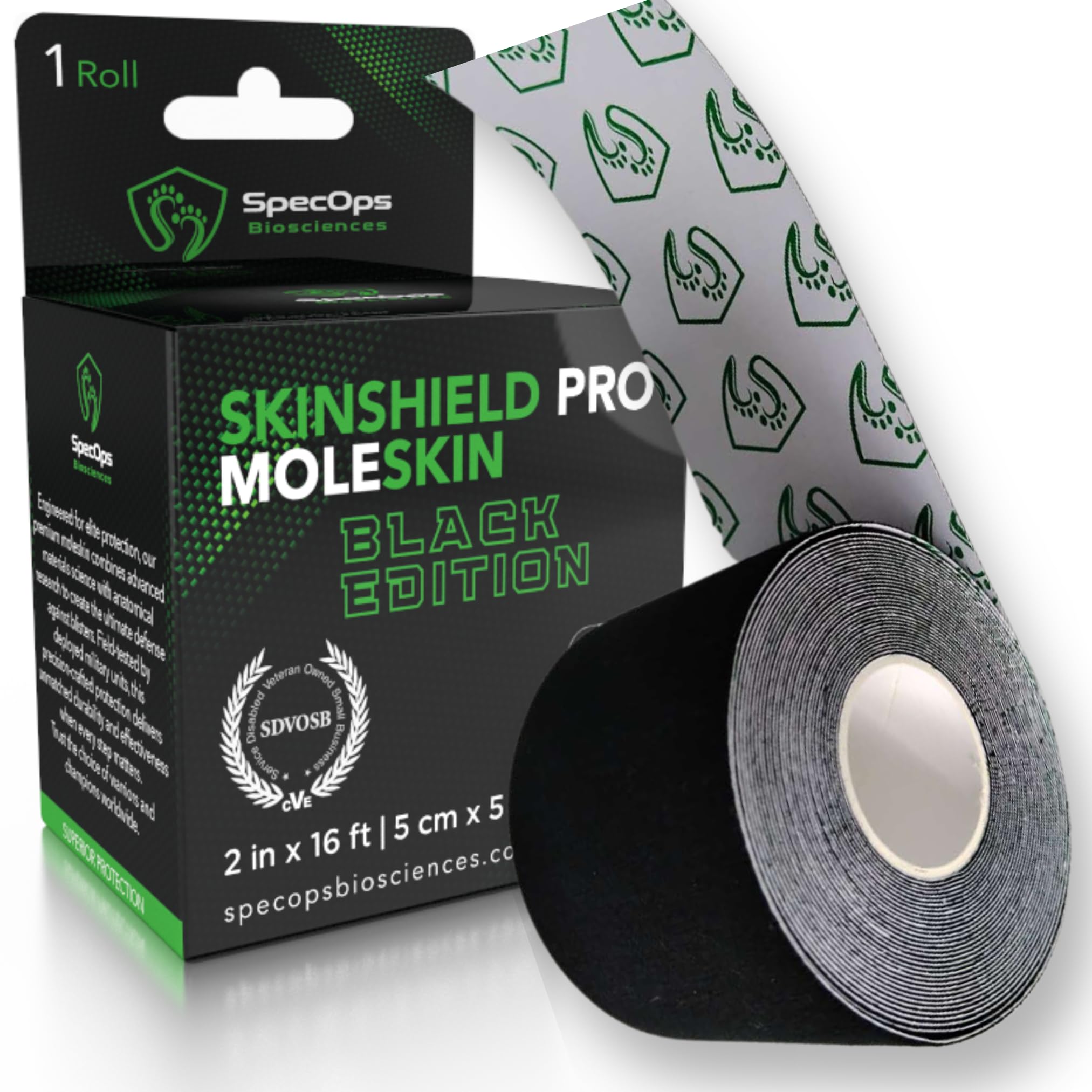
- Product Type: Ultra-thin moleskin roll
- Pack Size & Portability: 2" x 16 ft roll
- Price: $$$
SpecOps Moleskin uses adhesive that stays locked through sweat, water, and multi-day miles to prevent blisters by reducing shear stress, not by adding cushion. The thin, science-backed design can disappoint those wanting traditional thick moleskin, and the premium price reflects its specialized adhesive tech rather than bulk comfort. It is best for high-output athletes who prioritize failproof hold over padding.
Pros
- Adhesion holds through water submersion and multi-day wear far better than standard moleskin.
- Ultra-thin design targets shear stress to stop blisters before they start.
Cons
- Ultra-thin material may disappoint those seeking traditional padded moleskin cushioning.
For through-hikers, military ruckers, and water-sports athletes who need adhesion that won’t quit, this is the right choice — provided you accept that it prevents blisters by reducing shear, not by adding bulk.
10. Promifun Blister Pads
Best for Value Variety Pack

Key Features
- Product Type: Hydrocolloid gel pads (variety pack)
- Pack Size & Portability: 28 pieces, 4 shapes
- Price: $$
With four shapes across 28 pieces, this pack handles heels, toes, and hotspots in one purchase—ideal for trip prep. Adhesion may be inconsistent, so it’s less suited for high-intensity walking where a bandage can’t afford to shift. For moderate days or as a backup stash, the quantity and variety make it a sensible stock-up choice.
Pros
- Comprehensive variety pack includes 28 cushions in four shapes to cover heels, toes, and hotspots
- Cushioning stands up to long-distance city walks and hiking trips
Cons
- Adhesion can be erratic; pads may slip or roll at edges during active use
If you’re stocking up for a long trip and need shape variety more than maximum adhesion, this pack covers the bases.
11. Dr. Frederick’s Hydrocolloid
Best for Cushioning Variety

Key Features
- Product Type: Hydrocolloid bandages (variety pack)
- Pack Size & Portability: 12 bandages, variety shapes
- Price: $$
The assortment of shapes and the thicker gel cushioning provide targeted relief for existing blisters, making it easy to find a fit for a specific hotspot. Adhesion, however, is the weakest point — bandages may peel off within minutes of putting on shoes or during heavy sweating. This limits the pack to low-friction, short-wear situations where frequent replacement isn’t a dealbreaker.
Pros
- Variety of shapes covers heels, toes, and spots in one pack.
- Effective cushioning provides relief and protection during activity.
Cons
- Adhesion can falter during active use — bandages may peel off quickly.
For light-use, stationary needs where cushioning outweighs multi-hour stick, this pack lets you test different shapes with low commitment.
12. Dr. Scholl’s Blister Cushions
Best for Light Discreet Use
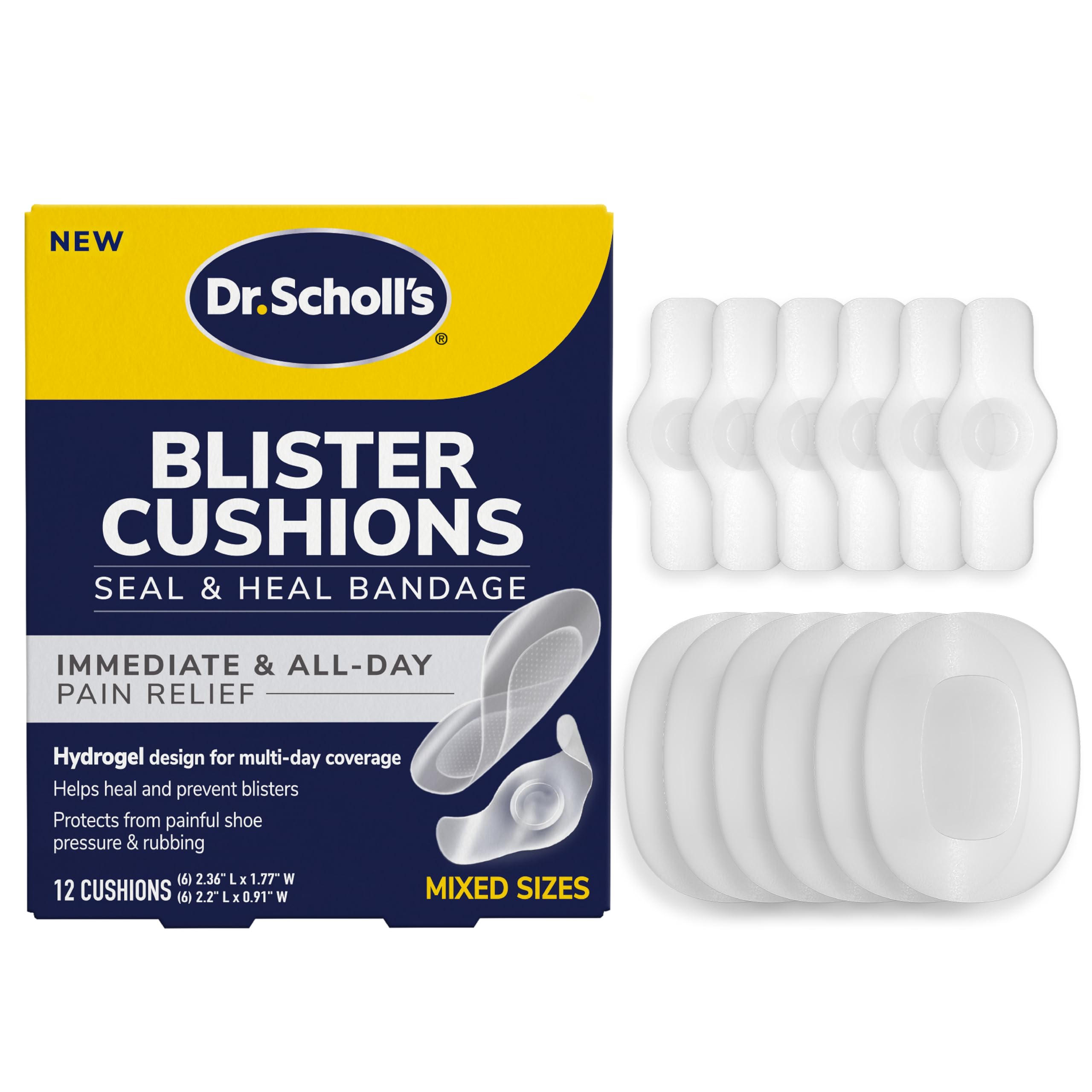
Key Features
- Product Type: Hydrogel bandages
- Pack Size & Portability: 12 cushions
- Price: $
Skin-tone, nearly invisible cushions shield heels from shoe friction with a hydrogel layer that aids healing. Adhesion is the trade-off — they can peel loose soon after wearing shoes, so they work best for light, stationary use rather than all-day walking.
Pros
- Helps heal blisters and protect raw spots from further rubbing.
- Near-invisible design blends with skin for subtle protection under socks.
Cons
- Adhesion can be unreliable — cushions may peel away shortly after putting on shoes.
These work for stationary healing at home or short office wear, but for all-day walking or hiking, look to the better-adhering options.
How to Choose
The single most important decision when buying blister prevention is whether you need to stop friction before it starts or cushion and heal a blister that’s already formed.
Adhesion: How Long It Stays Put
Hydrocolloid pads often claim multi-day hold, but real-world adhesion hinges on skin preparation. Even the strongest adhesive bandage will peel within hours if the skin wasn’t degreased with an alcohol wipe first.
Anti-friction balms and tapes avoid the adhesion gamble entirely, but they trade durability for reapplication frequency. A balm may need a fresh glide after 3-4 hours of hot city walking. The right pick depends on whether you can pause to reapply or need a set-it-and-forget-it solution.
Preventive Balms vs. Healing Pads
Balms, tapes, and wool reduce shear and friction before the skin breaks. Hydrocolloid pads create a moist environment that heals already-formed blisters. Moleskin sits in the middle—cut and placed inside shoes or on intact skin to prevent rubbing.
Using a treatment pad on unbroken skin can backfire: the pad’s edges may bunch up and create new friction. Conversely, a balm won’t do anything for an open blister except sting. Match the product to your immediate need.
Waterproof vs. Water-Resistant in Wet Weather
Truly waterproof hydrocolloid pads can survive showers and rainy-day walks. Water-resistant variants, however, often peel at the edges when moisture creeps in from prolonged wet conditions.
Balms wash away in heavy rain, while foam tapes and certain moleskins hold better because they lock onto the skin. For hiking in wet UK weather, prioritize waterproof-rated tapes or premium hydrocolloids and carry a spare.
Pack Size: What You’ll Actually Carry
Pre-cut strips and small gel pads are grab-and-go, but a limited count means you might run out mid-trip. Rolls of moleskin or tape offer dozens of applications, though you’ll need scissors or careful tearing.
For travel, compact balm sticks or slim tape rolls slip into a day bag without bulk. If your itinerary involves multiple long-walk days, a supply that can handle a fresh hotspot every morning is safer than a 6-count box.
Skin Sensitivity and Residue
Many adhesives contain latex or leave a sticky film that traps dirt. If you have sensitive skin, look for latex-free labels or natural wool alternatives that eliminate chemical contact entirely.
Residue-free removal matters as much as initial stick. Hydrocolloid pads often lift cleanly, while some generic moleskins can leave gummy traces that irritate after multi-day wear. Test a small patch before traveling.
FAQ
Do blister prevention balms work for all-day city walking on cobblestone streets?
Yes, but they require reapplication after heavy sweating—typically every 3-4 hours on a warm city walk. Carry the stick in your day bag; a quick glide before your feet get clammy keeps protection intact. For cobblestones, balm works best when paired with properly broken-in shoes.
Can hydrocolloid blister bandages stay on through multiple days of walking and showering on a Europe trip?
Some premium hydrocolloid pads stay on for 3-5 days through showers when applied to skin that’s been cleaned with an alcohol wipe. The most common cause of early peeling is skin oil or lotion residue, not a product flaw. Expect them to naturally lift after a few days and carry spares.
What’s better for preventing blisters while hiking in wet UK weather — tape, moleskin, or balm?
Waterproof foam tape or premium moleskin handles wet conditions best because it adheres directly and doesn’t wash away. Balms thin out in constant rain. Apply tape to known hotspots, and if your feet get soaked, pat the skin dry and apply a fresh strip.
How do I stop new walking shoes from giving me blisters on the first day of my trip?
If breaking them in at home isn’t possible, apply a friction-reducing balm to your heels and toes, then stick moleskin or pre-cut tape to the shoe interior where it rubs. This tackles both foot moisture and shoe friction simultaneously. Avoid wearing new shoes for a full 12-hour day out of the box.
Why do my blister bandages peel off even when I apply them to dry skin?
Skin’s natural oils and microscopic moisture create a barrier that weakens adhesive. Wipe the area with an alcohol pad and wait until completely dry before sticking the bandage down. This simple step often turns a bandage that fails in an hour into one that lasts for days.