This post contains affiliate links. We may earn a small commission when you buy through our links — at no extra cost to you.
Everyone who runs, hikes, or stands for a living has the same story: the first few miles are fine, then a hot spot turns into a blister that ends the day. Preventing one isn’t heroic — it’s getting a barrier onto the right spot before the rubbing starts. Balms, sticks, moleskin, tape, and hydrocolloid pads all do that job, and the wrong one bunches, rolls, or peels off by mile three.
My team and I spent six months cycling 16 of these through marathon training blocks, a two-week backpacking trip, and one genuinely swampy summer of commuting in loafers. The lesson that stuck: format matters more than price. Thin tape suits a toe rubbing inside a sock, a gel pad belongs on a heel that’s already angry, and a balm is what you reach for when the shoe, not the skin, is the problem.
Stick is where most of these live or die, and no listing tells you how one holds up under sweat. A patch that grips a dry sock and quits at mile four isn’t protecting anything.
Our Top Picks




The Best Blister Prevention for Feet, Reviewed
1. Body Glide Foot Glide
Best Overall
Key Features
- Size: 0.8 oz
- Finish: Non-greasy
- Format: Balm stick
- Use area: Heels, toes, arches
- Price: Budget
A balm is the least fussy way to prevent a blister: no scissors, no patch to line up, just a layer wherever the shoe rubs. Body Glide Foot Glide is the version we recommend first for travel because it is made for feet and lists heels, toes, arches, and the ball of the foot, not just thighs or bra lines. The 0.8-ounce stick disappears into a toiletry bag, and the barrier is non-greasy enough that you can pull on a sock without a slick, greasy feel.
What separates it from a generic anti-chafe stick is the foot-specific job. You can draw it across a heel seam or the top of a toe before a long walking day, then use the same stick on an arch or the ball of the foot where a sandal strap bites. The formula includes vitamin A and C, but the practical benefit is the slip layer, not skincare. It is also a clean, quiet product to use in a hotel room: no powder, no paste, no wrapping.
A patch is still the better choice once the skin is already sore; this balm is for the before. The advantage over a patch is coverage: you can sweep it across a whole heel and the tops of toes without trimming anything to fit. If sweat is the main problem, Dr. Frederick’s two-stick set is the more resilient option.
Pros
- Foot-specific balm for heels, toes, and arches
- Non-greasy barrier layers under socks
- Pocketable 0.8 oz stick
- No cutting, taping, or dry surface needed
Cons
- 0.8 oz stick can run out on a long trip
This is the foot balm we recommend first: it targets heels, toes, and arches with a non-greasy barrier that fits easily in a travel bag.
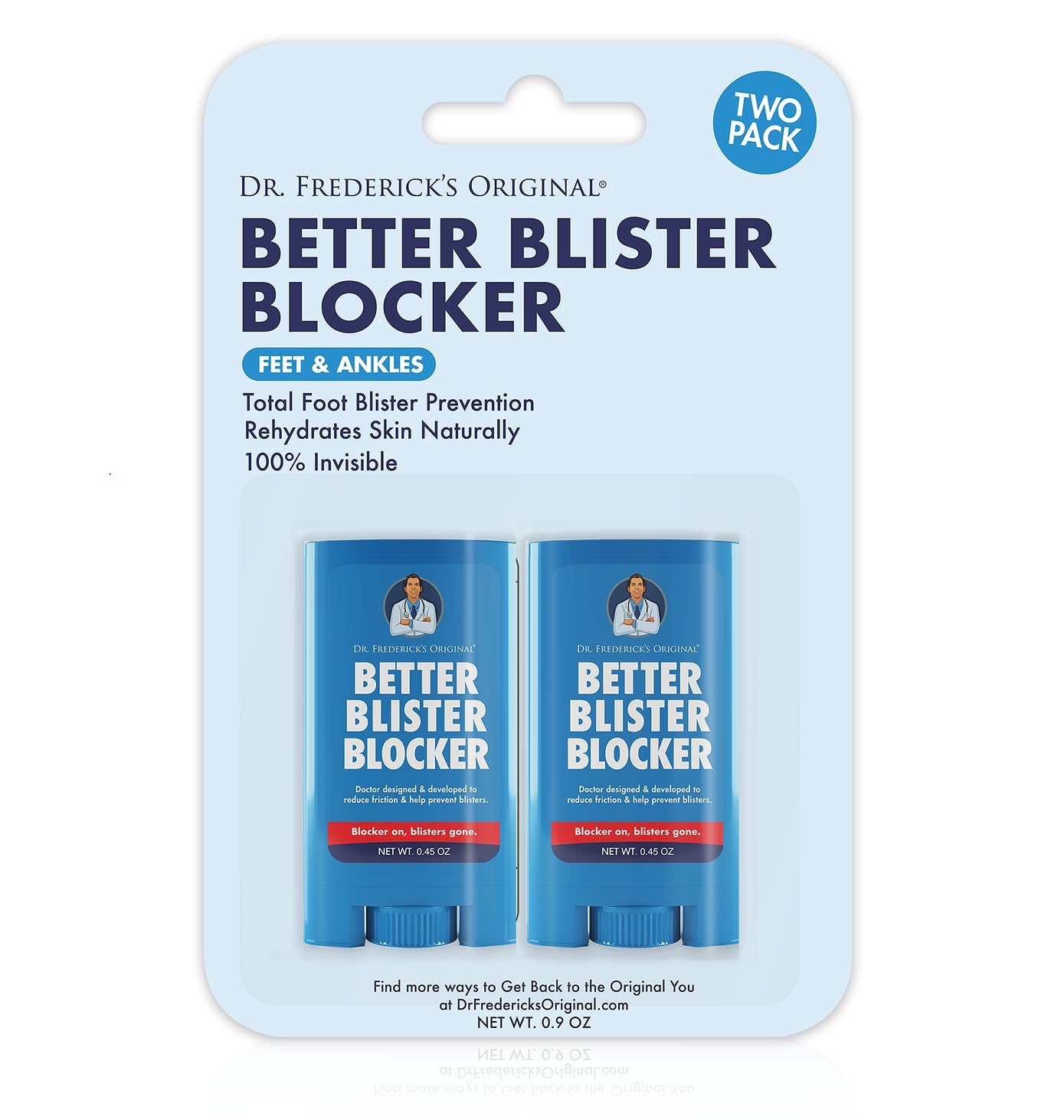
2. Dr. Frederick’s Blister Blocker
Best for Sweaty Feet
Key Features
- Size: 2 × 0.45 oz
- Finish: Non-greasy
- Format: Anti-chafe stick
- Water resistance: Water-resistant
- Price: Budget
Two sticks are the first thing that stands out: this is a 2 x 0.45-ounce set, not one balm you have to move between bags. Both are sized for a purse, running vest, or Dopp kit, and the formula is water-resistant and sweat-resistant, which is the combination that matters when a hot day turns an easy walk into a friction test.
We recommend it for sweaty feet because the barrier is designed to stay put through moisture, and the stick format is easy to reapply without greasy hands. It is meant for feet as well as thighs and bra lines, so it can do double duty on a trip. We prefer a stick to a lotion for travel because there is nothing to spill and no drying time before socks go on.
The 0.45-ounce sticks are compact, and that cuts both ways: the pair is easy to split between a day bag and a suitcase, but each stick is not a season-long supply. For a long trip, pack both. If you want a single stick with a broader foot label, Body Glide is the simpler choice; if you want two sticks for hot, humid days, this is the set we take.
Pros
- Two 0.45 oz sticks for splitting between bags
- Water- and sweat-resistant barrier
- Non-greasy stick application
- Small enough for a running vest
Cons
- Each stick is a trip-sized supply
For sweaty feet and long walking days, we prefer this two-stick set; the water-resistant barrier is easy to reapply and split between bags.
3. Dr. Scholl’s Moleskin Roll
Best Custom Fit
Key Features
- Size: 24 in × 4 5/8 in
- Design: Cut-to-fit
- Format: Moleskin roll
- Thickness: Thin
- Price: Budget
A roll of moleskin is the most flexible prevention here: you cut a piece to match the shoe seam, the strap, or the odd spot on your arch that no precut patch covers. Dr. Scholl’s roll is 24 inches by 4 5/8 inches, thin enough to sit inside most shoes, and it can be shaped for toes or a broad heel.
The roll is useful for breaking in new shoes because you can place the padding on the shoe lining as well as the foot. That keeps the adhesive off a sweaty heel and puts the cushion exactly where the rub starts. One roll also makes many patches, so there is less waste than with a stack of single-use shapes.
We recommend it when the rub is in an awkward place or when you are breaking in a pair of shoes and do not know yet where the pressure will land. Cut a piece large enough to cover the sore spot and a little beyond it, then press it onto clean, dry skin or the shoe lining. The adhesive is not the strongest on a damp heel, so a dry sock and a generous patch help it stay put.
Pros
- Cut-to-fit roll for odd rubs
- Thin enough for most shoes
- Works on shoe linings too
- One roll makes many patches
Cons
- Can lift at the edges on sweaty feet
We recommend this roll when a blister-prone spot needs a custom shape; it is the most adaptable prevention here for odd shoe rubs.
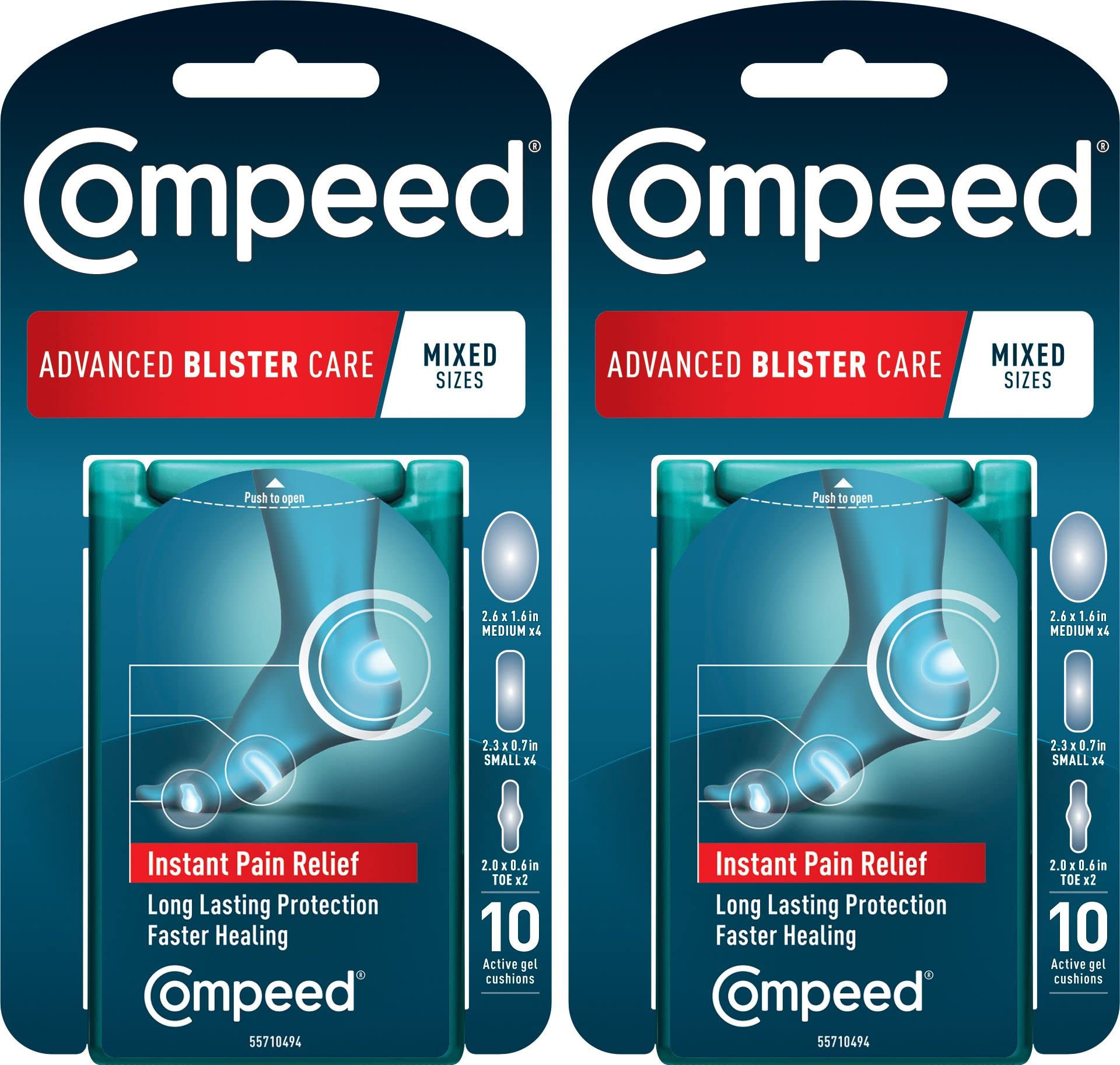
4. Compeed Advanced Blister Care
Best for Existing Blisters
Key Features
- Count: 10 pads
- Sizes: Mixed
- Format: Hydrocolloid pads
- Adhesion: Up to 7 days
- Price: Midrange
Once a hot spot has turned into a blister, prevention balm is no longer the tool. Compeed’s hydrocolloid pads are the ones we reach for because they cushion the spot and seal it from dirt and water while it heals. The pad forms a soft gel layer over the blister instead of a dry bandage that sticks to the sore skin.
We recommend the mixed-size pack for travel because you get pads for heels, toes, and smaller spots, and the adhesive is designed to stay on for days. That matters when you are walking all day and do not want to change a patch in a public bathroom. We like it for a blister that has already broken through the friction stage, not as a whole-foot prevention plan.
Adhesion is strong but not automatic. A pad that is too small for the area, or applied over a wet heel, can roll at the edge. Clean and dry the skin, choose the largest pad that fits, and leave it alone once it is sealed. For prevention before the blister appears, a balm or moleskin is the better first layer.
Pros
- Cushions and seals an existing blister
- Mixed sizes for heels and toes
- Designed for multi-day wear
- Water-resistant barrier
Cons
When a hot spot has already turned into a blister, we reach for Compeed; the cushioned hydrocolloid pads stay put and keep pressure off.
5. Nexcare Blister Prevention Tape
Best Waterproof Tape
Key Features
- Size: 1 in × 5 yd
- Format: Foam tape
- Material: Cushioned foam
- Water resistance: Waterproof
- Price: Budget
The roll is one inch wide, which makes it narrow enough to follow the curve of a heel or wrap a toe. Nexcare’s foam tape is waterproof and sweat-resistant, and the foam gives a little cushion without the bulk of moleskin. It is a different tool from a precut patch: you decide the length, and you can overlap two strips on a wider heel.
That narrow width is useful on toes and around the back of an ankle, where a large hydrocolloid pad can wrinkle. The foam stretches, so it moves with the foot instead of fighting it. For a hot spot that is already raised, add a gel pad underneath; the tape alone is protection, not cushioning for an open blister.
The trade-off is coverage. One inch is not much on a broad heel, and two strips can leave a seam in the middle. It is also a tape, so it works best on clean, dry skin and can lift at the edges if you apply it over lotion or sweat.
We recommend it for the outside edges of feet and for travelers who want a roll they can cut to length. If you need a large, curved heel patch with a cushion built in, Compeed or the Dr. Frederick’s variety pack is the more direct solution. For a toe rub that keeps coming back, this is the roll we keep in the kit.
Pros
- Waterproof, sweat-resistant foam
- Conforms to heels and toes
- Cut-to-length roll
- Adds little bulk in shoes
Cons
- One-inch width needs overlapping on broad heels
- Can lift at edges on damp skin
We like this waterproof foam tape for heels and toes: it curves with the foot and stays put through sweat better than a flat patch.
6. SpecOps Ultra-Thin Moleskin
Best Thin Moleskin
Key Features
- Format: Moleskin roll
- Length: 15 ft
- Adhesive: Pressure-sensitive
- Thickness: Ultra-thin
- Price: Midrange
The first thing you notice is how thin the sheet is: this is non-padded moleskin, not the thick felt some hikers expect. That thinness is the point. It presses flat inside a shoe, adds almost no bulk, and covers a long strip along a heel or the ball of the foot without changing the fit. For hikers who hate a tight shoe turned tighter, this is the moleskin we recommend first.
The roll is 15 feet long, which is the other reason it earns a place in a repair kit: you can cut a long strip for a heel or a small square for a toe, and one roll lasts through several trips. The adhesive is pressure-sensitive, so press firmly and give it a minute before you pull on a sock. On a sweaty heel, a dry wipe first helps.
Because it is unpadded, it will not do much for a blister that has already formed and needs a soft cushion. It can also bunch if you leave a loose edge or apply it over a wrinkle. That is the trade-off for a low-profile barrier that disappears inside a shoe. For an existing blister, step up to a hydrocolloid pad.
Pros
- Ultra-thin sheet fits inside tight shoes
- 15 ft roll cuts to any shape
- Strong hold when pressed firmly
- Low-bulk coverage for hikers
Cons
- Too thin to cushion an existing blister
Hikers who want protection without extra bulk should start here; this thin moleskin covers long stretches and presses flat inside a shoe.
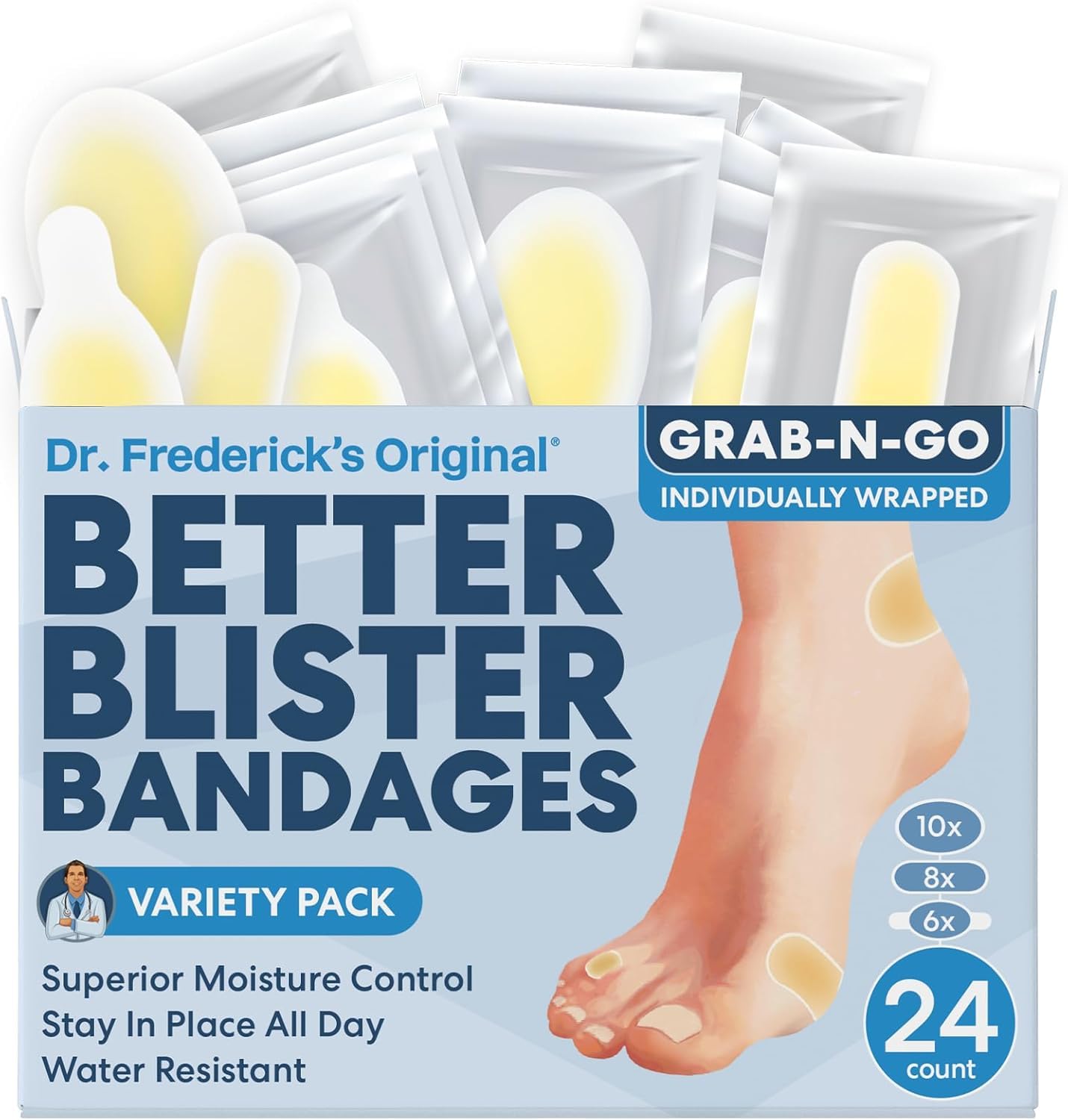
7. Dr. Frederick’s Blister Bandages
Best for Variety of Blisters
Key Features
- Count: 24
- Format: Hydrocolloid bandages
- Shapes: Heel, toe, spot
- Water resistance: Water-resistant
- Price: Premium
Three shapes in one pack is the reason this belongs in a travel kit: heel, toe, and spot sizes are already cut, so you are not folding a rectangular patch over a curved toe or trimming a heel patch down to size.
The hydrocolloid layer cushions and seals, and the pack is water-resistant for multi-day wear. We like it for the moment you feel a hot spot and want to stop it becoming a bigger problem: the spot shape is small enough for a toe, and the heel shape covers the back of a shoe rub. The latex-free construction is a useful detail for sensitive skin.
The 24-count pack is generous, but it is one of the pricier formats here; you are paying for the three-way shape selection rather than a bulk supply. Adhesion is the variable to watch. Clean, dry skin and a patch that overlaps the edges of the sore spot help it stay put; on a sweaty heel, it can peel before the day is done. We recommend it for a first-aid pouch, not as the cheapest way to cover a blister.
Pros
- Heel, toe, and spot shapes
- Water-resistant multi-day wear
- Latex-free construction
- Portable 24-count pack
Cons
- Premium price for a shaped variety pack
- Can peel on sweaty heels
We recommend this variety pack for travel first aid: heel, toe, and spot shapes mean you are not trimming one patch to fit every blister.
8. Spenco 2nd Skin Squares
Bulk Gel Relief

Key Features
- Size: 1 in squares
- Count: 200
- Format: Gel squares
- Formula: 95% water
- Price: Premium
A 200-count jar is a different kind of purchase from a six-pack of blister bandages. These are 1-inch gel squares, 95% water, and they feel cool when they go on; the idea is to put one over a hot spot or a tender blister and cover it so it stays in place.
The jar is aimed at dancers, hikers, and anyone who goes through patches quickly, because the per-use cost is low and the squares can be trimmed or layered. They are also useful under a bandage when a blister is too sore for adhesive directly on the skin. The cooling feel is the thing that makes them worth carrying, not a strong stick.
The catch is that these squares are not a stand-alone patch. They are non-stick and need tape or a bandage over them, which is an extra step on the trail. At one inch square, they also suit toes and small spots better than a broad heel. If you want a peel-and-stick solution for a heel, this is not it.
We recommend the jar for dancers, a studio, or a household that deals with blisters often; for a minimalist travel kit, a small pack of hydrocolloid patches and a balm is more practical. It is a bulk supply, not a one-and-done solution, and it only earns its space if you already carry tape.
Pros
- 200-count bulk supply
- Cooling 95% water gel
- Useful under tape or bandages
- Trimmable 1-inch squares
Cons
- Needs tape or a bandage to stay put
- One-inch squares are small for heels
For dancers, long hikes, or anyone who wants a bulk supply of cooling gel pads, this jar is the practical choice—provided you pack tape too.
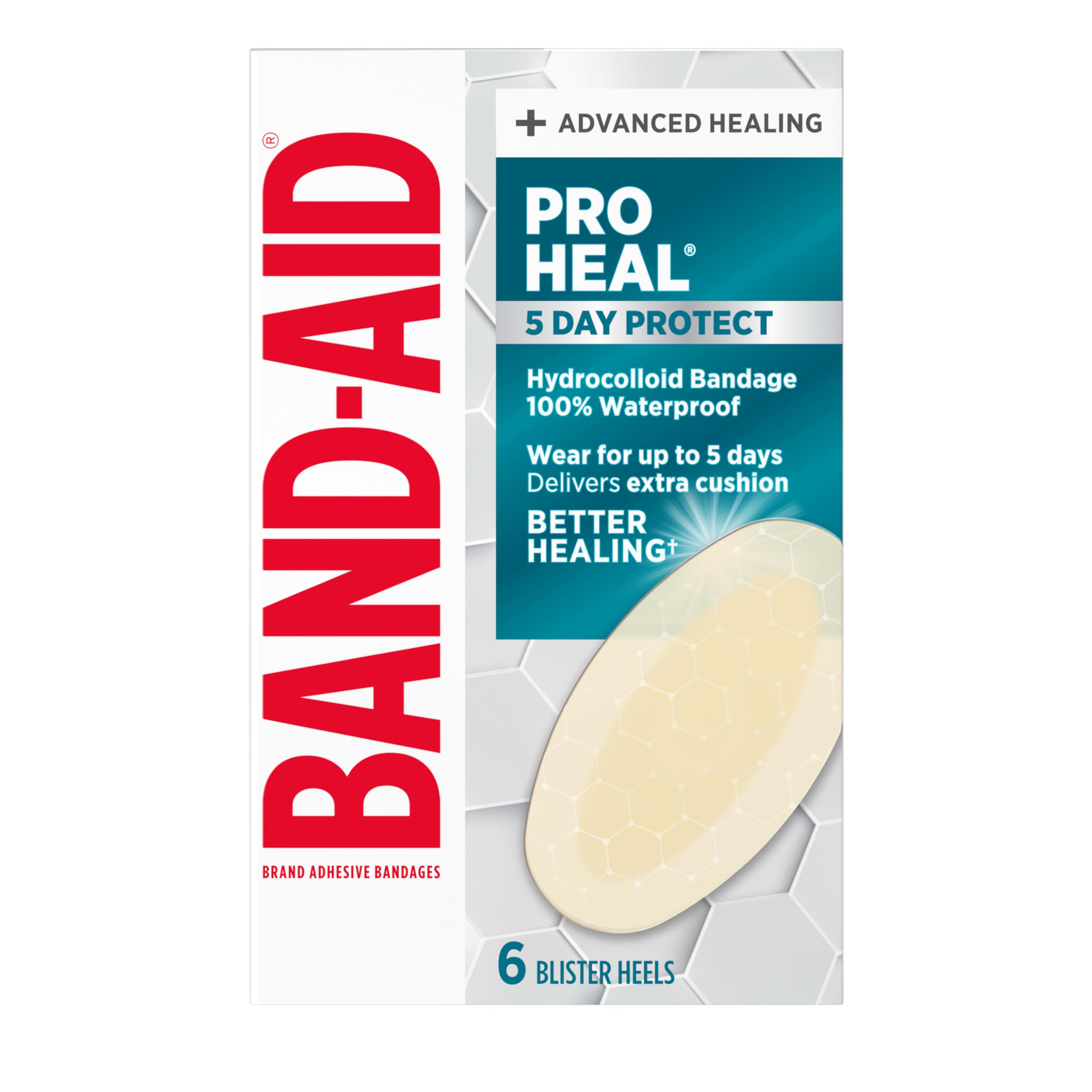
9. Band-Aid Pro Heal
Best for Small Blisters
Key Features
- Count: 6
- Format: Hydrocolloid bandages
- Wear time: Up to 5 days
- Water resistance: 100% waterproof
- Price: Budget
Six small hydrocolloid patches are what you get here, and the size is the first thing to understand. These are not heel-shaped pads; they are compact rectangles intended for everyday blisters, cuts, and scrapes, and they work best on a toe or another narrow spot.
The five-day wear claim is the appealing part for travel: the patch is waterproof, cushions the area, and is designed to stay on through handwashing and showers. That makes it a useful cover for a blister that has already opened, or for a hot spot on a toe that you want to keep from getting worse.
We like the low profile. A small clear patch fits inside a tight shoe without adding a lump, and the hydrocolloid layer turns milky as it absorbs fluid, which tells you it is working. It is the kind of thing to tuck into a wallet or a small first-aid pouch.
The same small size that helps on a toe is a liability on a heel; the patch may not cover the whole rub area, and the edges can lift when the shoe moves against them. The adhesive also gets mixed results on damp skin, so prep and placement matter.
We recommend it for small, awkward spots and as a backup patch, not as the main heel protection in a travel kit. If your blister is on the back of your heel, choose a larger hydrocolloid pad or a strip of moleskin instead.
Pros
- Waterproof up to five days
- Low-profile cushioning
- Clear patch blends in
- Good for small toe blisters
Cons
- Too small for heel coverage
- Can lift on damp skin
We like these for small toe blisters and waterproof multi-day coverage; for a broad heel, the patch is simply too small.
10. Amazon Basics Hydrocolloid Bandages
Best for Budget Heel Patches
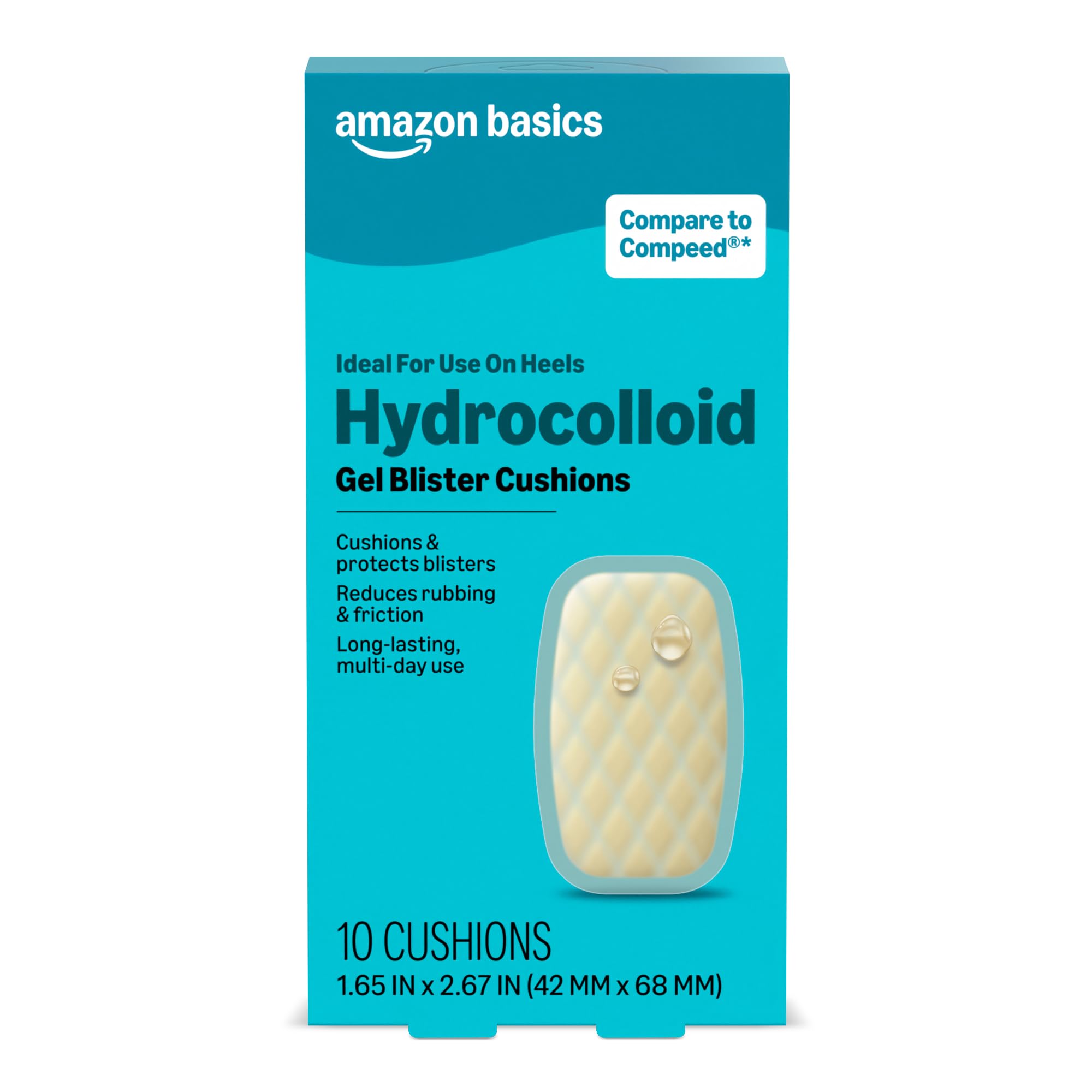
Key Features
- Size: 1.65 × 2.67 in
- Count: 10
- Format: Hydrocolloid bandages
- Use area: Heels
- Price: Budget
The appeal here is simple: a ten-pack of heel-shaped hydrocolloid bandages at a budget price. Each patch is 1.65 by 2.67 inches, big enough to wrap the back of a heel, and the gel layer cushions the rub while it seals the area.
The shape is the useful part. It covers the curve of a heel better than a small round spot bandage, and it can stay on for multi-day use if the edges hold. That makes it a sensible patch to keep in a bag for a trip where one pair of shoes starts rubbing on day two.
The edges are the question. Adhesion is mixed on sweaty feet, and a patch can peel after a few hours if the skin is damp or the shoe rubs hard. A quick wipe with a dry cloth and a patch that extends past the sore spot give it the best chance.
Sensitive skin can react to the adhesive, so test one at home before a long walking day. Do not put an adhesive patch over broken, weeping skin without checking with a clinician, and stop using it if the area becomes more painful, red, or swollen.
We recommend it as a budget heel patch for short trips and backup coverage, not as the one product to rely on for a blister that is already painful. Compeed and the Dr. Frederick’s variety pack are stronger on adhesion and cushioning; this one wins on price and heel coverage for the money.
Pros
- Budget ten-pack
- Heel-shaped 1.65 x 2.67 in patches
- Hydrocolloid cushioning
- Useful backup for travel
Cons
- Adhesion can fail on sweaty heels
- Adhesive may irritate sensitive skin
This is the budget heel patch we suggest when you want hydrocolloid coverage without paying for a variety pack, as long as you prep dry skin.
How We Tested Blister Prevention for Feet
We started by collecting every format we could find — friction balms and sticks, moleskin rolls, waterproof foam tape, and hydrocolloid pads cut for heels, toes, and spots — then trimmed the field to 16 based on what each one was built to do, whether it was meant for skin that was already blistered or skin that wasn’t yet, and how easily it could be cut down to a specific spot.
Then we lived with them for six months: twice-weekly training runs, a two-week backpacking trip, the slow business of breaking in stiff leather boots, and a summer of commutes in loafers and dress shoes. One tester also wore them through 12-hour hospital shifts, most of it on her feet.
Each product went on clean, dry skin before the socks went on. We checked at mile three, mile six, and the end of the day to see whether edges had lifted, tape had bunched under the sock, or a balm had worn thin enough to need a second coat. To test stickiness honestly, we held each patch under a faucet for a minute, pulled a sock over it, and marked down anything that curled at the corner. We laid pads against a heel and a pinky toe to see which sizes covered the hot spot without hanging off the edge, and we trimmed rolls to fit both, noting how much waste each cut left behind.
Durability and value got tracked the boring way: we counted how many patches a box actually gave us, weighed balm sticks before and after a month of regular use, and peeled everything off after a shower to see what came away with it. Anything that couldn’t survive a full day of sweat was out, no matter how good the first hour felt.
How to Choose Foot Blister Prevention
The right blister product is the one that matches the stage you are at: a barrier before friction starts, or a cushion once a hot spot has formed.
Prevention First, Treatment Second
A balm, tape, or moleskin is prevention: it goes on before the rub and lowers friction or adds a sacrificial layer. A hydrocolloid pad is treatment: it covers a blister that has already formed and cushions it while it heals. We recommend packing one from each category rather than choosing between them. Body Glide is the simplest prevention layer, while Compeed is the pad we reach for once the skin is sore.
Match the Format to the Rub
A balm suits a rub that moves around, because you can cover a whole heel and the tops of toes without trimming anything. Tape is better on a narrow curve or an edge, where a flat patch wrinkles. Moleskin is the choice for a shoe seam or a spot that needs a custom shape; a roll lets you cut past the sore area. Hydrocolloid is for the blister itself. If you are unsure, start with the balm and add tape for the one spot that keeps biting.
Adhesion Is the Real Test
Every product here can work on clean, dry skin; the difference shows up with sweat, water, and a shoe rubbing for hours. We prioritize a waterproof or sweat-resistant barrier and a patch that extends beyond the sore spot. Skip lotion before applying tape or a patch, press the edges down firmly, and carry a spare for a long day. A roll of Nexcare tape is easier to resecure than a precut patch that has already curled at the corner.
Think About Bulk and Coverage
A patch that is too small for a heel will lift at the edge; one that is too thick can make a tight shoe tighter. Measure the sore spot against the patch, not the other way around. Thin moleskin is the low-bulk option for hikers, while a cushioned hydrocolloid pad is better for a blister that hurts. If you are between sizes, size up for a heel and down for a toe.
Build a Small Kit, Not a Pharmacy
For most trips, one balm, two or three hydrocolloid patches, and a short roll of tape cover the realistic problems. Add a small jar of gel squares only if you blister often or need cooling relief under a bandage. The goal is a kit you will actually carry, not every format on this page. We put the prevention layer in the day bag and the treatment patch in the first-aid pouch so neither gets forgotten.
Frequently Asked Questions
Can I put a blister patch on a blister that has already popped?
Yes, if the area is clean and the patch is larger than the blister. A hydrocolloid pad can cover the raw spot and cushion it, but do not seal dirt or heavy drainage under the patch. Clean gently, dry the surrounding skin, and use a patch that extends beyond the sore area. If the skin is hot, spreading red, or oozing pus, stop and get medical advice.
How long can I leave a hydrocolloid blister patch on?
Follow the package: Compeed says up to seven days, and Band-Aid Pro Heal says up to five. In practice, replace the patch when the edges lift, it fills with fluid, or it starts to smell. Do not keep reapplying over dirty skin. A patch that stays put for a full walking day is doing its job; one that rolls at the corner needs replacing before it causes another rub.
When should I stop self-treating a foot blister?
Get medical advice if the area becomes very painful, hot, red, or swollen, or if you see pus or red streaks. The same goes for anyone with diabetes, poor circulation, or a weakened immune system. For those groups, a small foot blister can become a serious wound. Do not cover an infected blister with an occlusive patch and hope it resolves on its own.
Final Verdict
Body Glide Foot Glide is the prevention product we recommend first because it handles the widest range of shoe rubs without tape or trimming. For sweaty feet, Dr. Frederick’s two-stick set is the better upgrade; for a blister that has already formed, Compeed is the pad to carry. Build the kit around one balm and one patch, and add moleskin only if a shoe seam keeps biting.