This post contains affiliate links. We may earn a small commission when you buy through our links — at no extra cost to you.
Walk into any pharmacy and you’ll be met with racks of gel insoles promising all-day bliss. Spend a week pounding the cobblestones of Prague or Lisbon, though, and that initial squish often collapses into a lifeless mat, leaving your arches aching. The truth is, gel cushioning that feels magnificent on first wear can lose its resilience after just a few days of heavy walking, turning a comfortable stroll into a painful chore.
The answer lies not in more gel but in insoles engineered to maintain structural support. This article highlights designs that pair durable arch support with heel stabilization—whether you’re tackling the Louvre, hiking the Cotswolds, or simply navigating airport terminals. By matching your foot type and walking surface to the right insole, you can enjoy your trip without counting the steps until the next bench.
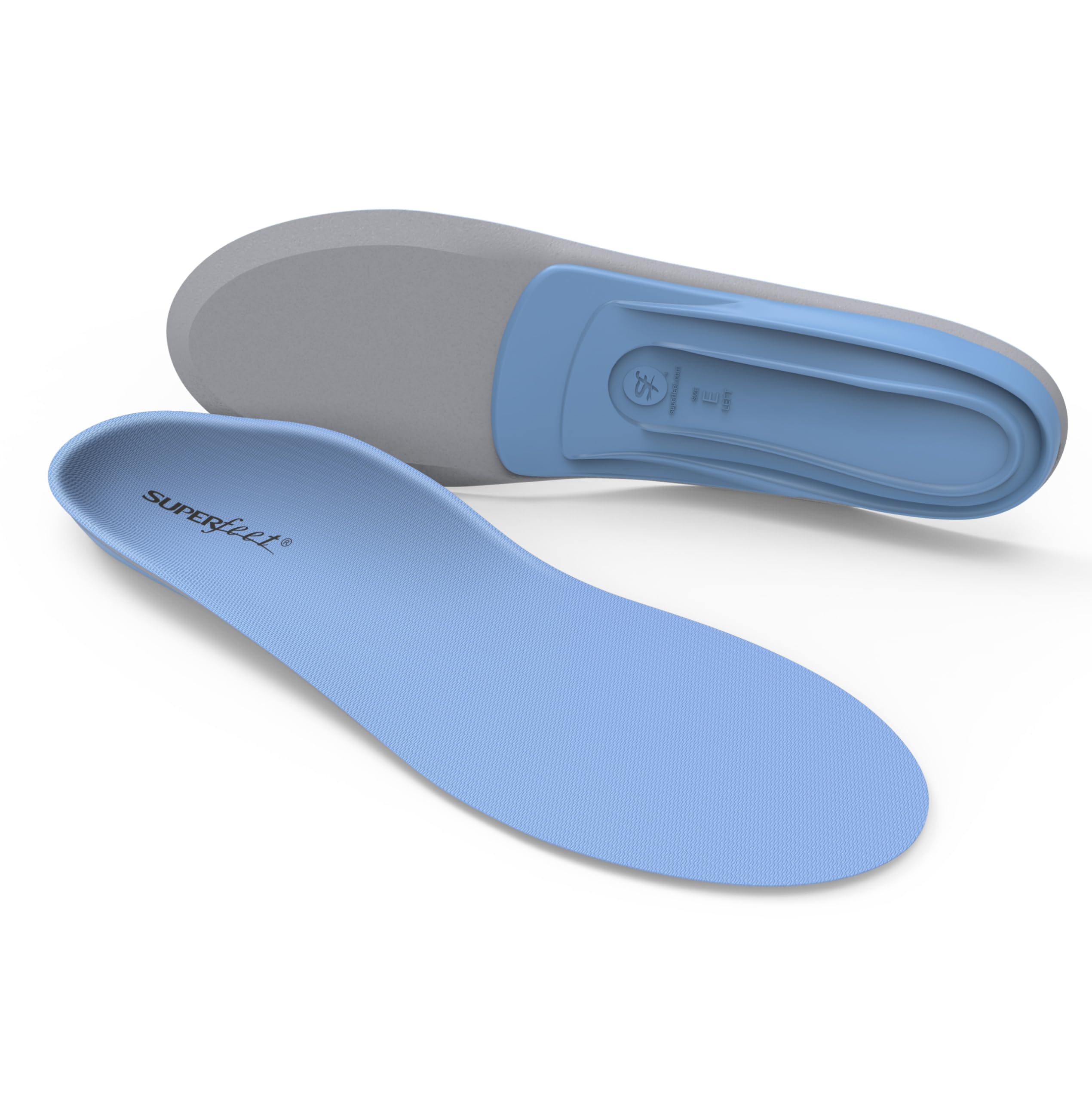



1. Superfeet Blue
Best for Long-Distance Walking
Key Features
- Arch & Support Rigidity: Medium, firm
- Cushioning & Heel Pad: Closed-cell foam, deep heel cup
- Sizing Method: Trim-to-fit
- Weight Capacity: Standard
- Price: Premium
The deep, sculpted heel cup and medium arch cradle the foot without the punishing rigidity of maximal orthotics. This design eases general foot fatigue and heel pain during long days of walking, while the closed-cell foam maintains its shape and support over hundreds of miles. Trimming is straightforward — the insoles slip into most sneakers, casual shoes, and light boots without crowding the toebox.
Travelers with medium arches who log miles on pavement will find the balanced support a noticeable upgrade over flat, unsupportive stock insoles. The dense foam resists compression for consistent support trip after trip. The firmness requires a short break-in period that can surprise anyone accustomed to soft gel inserts — a necessary tradeoff for the arch integrity. Those with flat feet seeking pliable, molding correction should look elsewhere.
Pros
- Eases general foot fatigue and heel pain during extended walks
- Well-balanced medium arch support that feels stable without excessive stiffness
- Trims down easily to fit most sneakers, casual shoes, and light boots
Cons
- Short break-in period; the firm support can feel harsh to users accustomed to plush gel insoles
For all-day walking and travel, the Superfeet Blue delivers durable arch support that outlasts gel alternatives — just budget a few days for your feet to adjust.
2. WALK·HERO Arch Supports
Best for Flat-Footed Walking
Key Features
- Arch & Support Rigidity: High, firm
- Cushioning & Heel Pad: EVA foam, deep heel cup
- Sizing Method: Sized (no trim)
- Weight Capacity: Standard
- Price: Budget
The deep heel cup and firm EVA arch cradle ease heel and arch pain for flat-footed walkers immediately. Unlike the PowerStep Pinnacle’s dual-layer cushioning, this insole uses a stiff single-layer slab to lock the heel in place, and the no-trim sizing keeps it from sliding.
This aggressive support makes it a low-cost fix for plantar fasciitis, but the lack of cushioning is a real boundary for all-day comfort seekers. If your day involves hours on hard floors without breaks, the stiffness can turn punishing after a few hours. It’s best for targeted pain relief during moderate walking, not marathon shifts.
Pros
- Cuts heel and arch pain for flat-footed walkers
- Strong, locked-in arch support that resists collapsing
- Pre-cut to shoe size, no trimming; stays in place
Cons
- Firm EVA construction can feel punishing on hard floors during all-day standing
If flat feet and heel pain are your daily reality and you can tolerate a firm footbed, this budget insole delivers meaningful relief — just plan on swapping them out before the afternoon stretch.
3. PowerStep Pinnacle
Best for Plantar Fasciitis
Key Features
- Arch & Support Rigidity: High, rigid
- Cushioning & Heel Pad: Dual-layer EVA, —
- Sizing Method: Sized (no trim)
- Weight Capacity: Standard
- Price: Premium
Where slimmer inserts sacrifice support for a low profile, the PowerStep Pinnacle leans fully into orthotic correction, with a rigid heel cradle and firm arch that lock the foot into a neutral position. For those whose primary complaint is stabbing heel pain from plantar fasciitis, that aggressive support can mean immediate relief during long shifts on hard floors. The dual-layer EVA cushioning softens the blow, but the arch is unapologetically high — casual walkers used to pillowy gel inserts will likely find it overbearing. Over time, the top fabric may peel away from the foam layer, a durability tradeoff worth noting.
Pros
- Targeted plantar fasciitis relief from the first wear
- Rigid arch and heel cradle lock in neutral foot position
- Dual-layer EVA offers enough cushion for all-day wear
Cons
- Top fabric may separate from foam after extended use
Choose the Pinnacle if your main battle is plantar fasciitis pain and you’re willing to accept a firm, unyielding arch in return. Those who mostly walk casually or prefer plush cushioning should look to the more forgiving top pick.
4. Dr. Scholl’s Heavy Duty
Best for Big & Tall Walkers
Key Features
- Arch & Support Rigidity: Firm, supportive
- Cushioning & Heel Pad: Extra heel cushioning
- Sizing Method: Trim-to-fit
- Weight Capacity: 200+ lbs
- Price: Budget
Designed for men over 200 lbs and wide feet, these orthotics prioritize firm arch support and reinforced heel cushioning over gel squishiness, helping to reduce leg fatigue and back pain during long work shifts. A sturdy build makes them a natural upgrade from flimsy stock insoles in boots.
The trade-off is that some units may develop a faint squeak, and the dense foam can compress sooner than expected. This is a non-issue in noisy job sites, but worth noting for quiet retail settings. Users with very wide feet should check the trim-to-fit shape, as the arch profile can feel snug.
Pros
- Reduces leg fatigue and discomfort for heavy individuals who stand all day.
- Eases foot and back pain for big & tall users through targeted arch reinforcement.
- Holds up under significant weight with a supportive arch that resists collapse.
Cons
- In some cases, insole may squeak after break-in and cushioning can lose resilience faster than rigid orthotics.
A budget-friendly orthotic that delivers genuine relief for plus-size walkers, provided the work environment can absorb the occasional squeak.
5. Dr. Scholl’s Work All-Day
Best for Hard-Surface Days
Key Features
- Arch & Support Rigidity: Moderate, some flat
- Cushioning & Heel Pad: Massaging gel, —
- Sizing Method: Trim-to-fit
- Weight Capacity: Standard
- Price: Budget
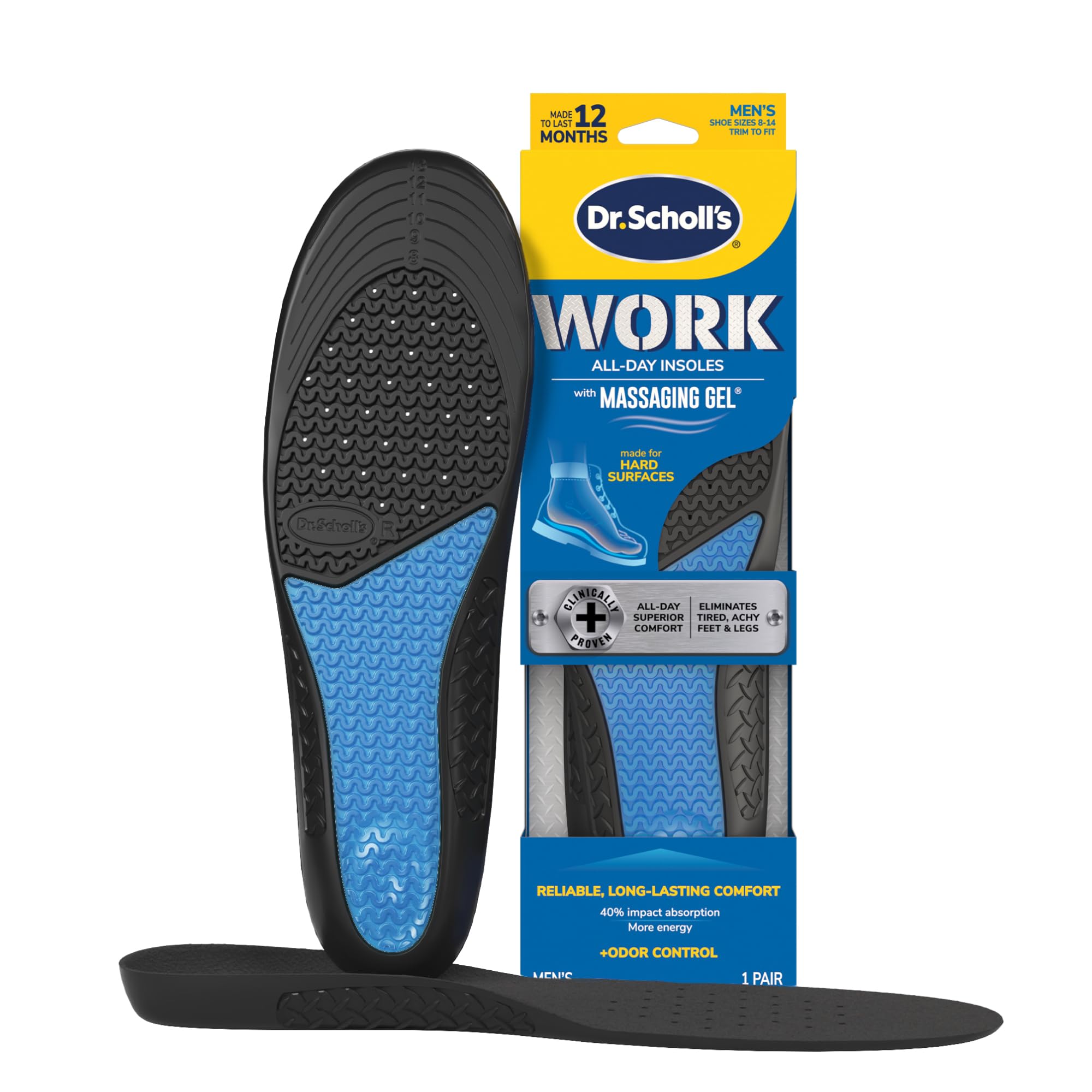
Rather than a rigid orthotic, the Work All-Day insoles use soft, massaging gel pods to cushion every step on concrete, wood, or tile. Polygiene StayFresh treatment keeps foot odor in check during long shifts — a meaningful bonus for anyone wearing the same boots daily.
They’re aimed at men who stand or walk all day on unforgiving floors — warehouse workers, retail staff, light manufacturing — and value instant gel comfort over structural support. Foot and leg fatigue is noticeably reduced by shift’s end. Just know the gel can compress and the top fabric may peel after several months of heavy use, so they’re best as a frequently replaced budget insole rather than a multi-year solution.
Pros
- Cushions concrete and wood floors for full shifts while reducing leg soreness.
- Noticeably less foot and leg fatigue after long hours on your feet.
- Moderate arch support works for most neutral foot types.
Cons
- Gel may lose resilience and top fabric can peel after months of heavy daily wear.
When instant gel cushioning and odor control matter more than long-term durability, this insole delivers solid all-day comfort at a budget price.
6. PowerStep Original
Best for Tight Shoes
Key Features
- Arch & Support Rigidity: Neutral, mild
- Cushioning & Heel Pad: EVA foam, deep heel cup
- Sizing Method: Sized (no trim)
- Weight Capacity: Standard
- Price: Premium
Unlike thicker orthotics that crowd cramped footwear, the PowerStep Original slips into tight-fitting shoes while providing neutral arch support and a deep stabilizing heel cradle. Its firm structure delivers needed alignment for mild pronation, but this rigidity can become uncomfortable during all-day walking on hard surfaces. It suits those who need a thin insole for dress shoes and casual loafers rather than extended standing on concrete.
Pros
- Relieves arch and heel pain during daily activities.
- Neutral arch structure stabilizes mild pronation without excess bulk.
- Low-profile design fits into snug dress shoes and casual footwear.
Cons
- For all-day walking on hard surfaces, the firm arch and heel can feel too rigid and cause discomfort.
A slim orthotic that resolves arch pain in tight shoes, though walkers craving cloud-like softness will find it too firm.
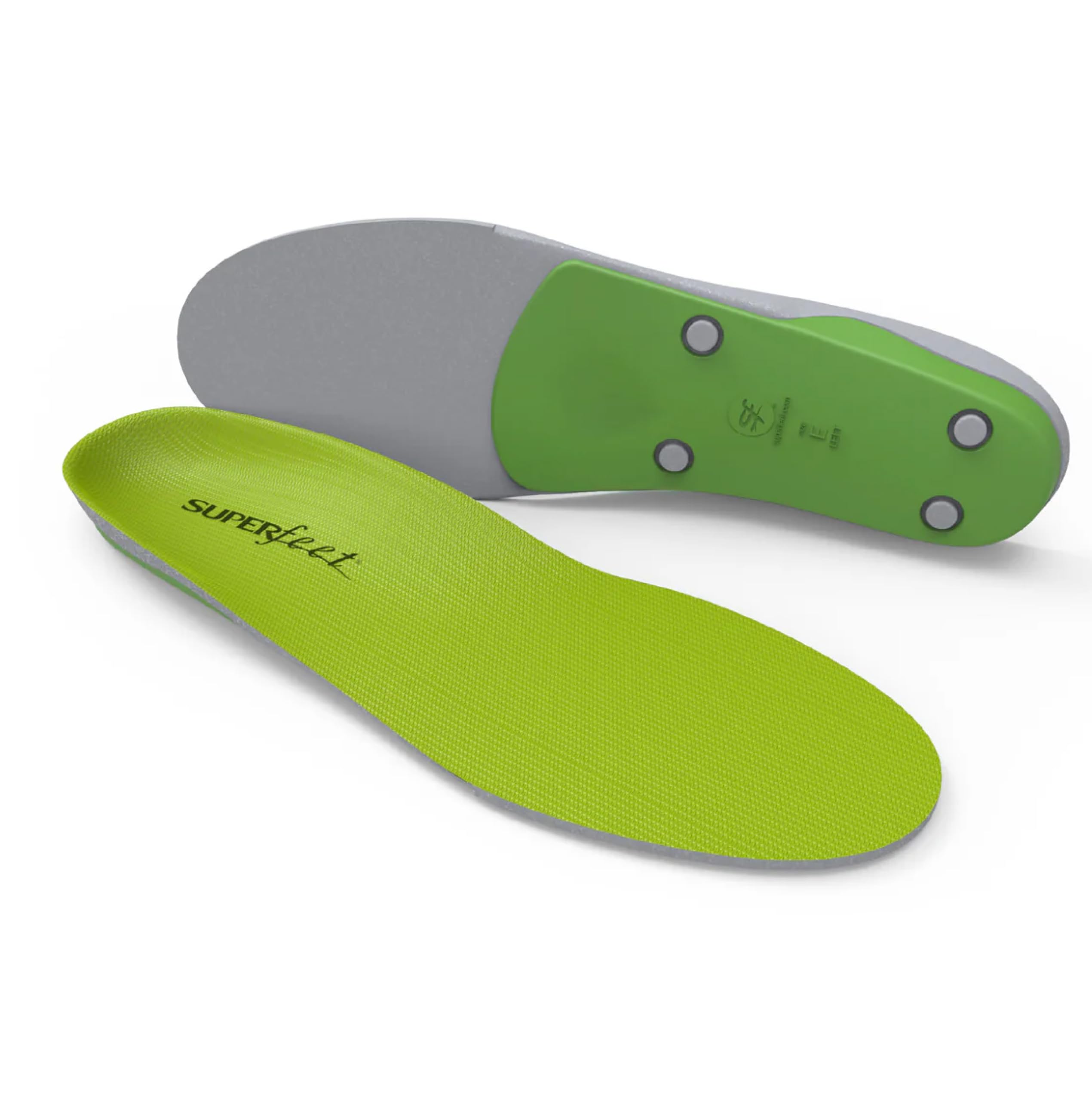
7. Superfeet Green
Best for High-Arch Hikers
Key Features
- Arch & Support Rigidity: High, rigid
- Cushioning & Heel Pad: Closed-cell foam, deep heel cup
- Sizing Method: Trim-to-fit
- Weight Capacity: Standard
- Price: Premium
The Superfeet Green provides rigid high-arch support and a deep heel cup that relieve plantar fasciitis and stabilize feet on hikes. The firm foam endures athletic use. The trade-off is a notable break-in period and hard feel, which can be uncomfortable for casual walkers. Low-arch users risk arch pain. It’s a targeted orthotic, not an all-day cushion.
Pros
- Highly effective for plantar fasciitis and heel pain
- Durable construction with solid high-arch support
Cons
- Firm feel and break-in period can cause discomfort for low-arch or flat-footed walkers
Best for high-arch hikers and athletes who can tolerate an adjustment phase; not for those seeking soft all-day cushioning.
8. VALSOLE Heavy Duty
Best for Heavy-Duty Walking

Key Features
- Arch & Support Rigidity: High, firm
- Cushioning & Heel Pad: Firm shock absorbing, —
- Sizing Method: Sized (no trim)
- Weight Capacity: 220+ lbs
- Price: Mid-Range
Firm arch support and shock absorption help heavy individuals stand and walk with less foot pain, particularly in work boots. The insoles can feel narrow, and lateral shifting may occur — this makes them less suited for those with narrow feet or a need for a glove-like fit.
Pros
- Eases plantar fasciitis discomfort with firm high-arch support for users over 220 lbs.
- Reduces foot fatigue during long hours of standing and walking, especially in work boots.
Cons
- Insoles can feel narrow and shift laterally inside some shoes, compromising stability.
Best suited for heavy walkers over 220 lbs in roomy footwear; narrow-footed buyers will likely experience an imprecise fit.
9. Timberland PRO Insole
Best for Work Boot Cushioning

Key Features
- Arch & Support Rigidity: Low/moderate
- Cushioning & Heel Pad: Anti-fatigue foam, —
- Sizing Method: Trim-to-fit
- Weight Capacity: Standard
- Price: Mid-Range
The Timberland PRO Anti-Fatigue insole uses conical foam to dampen impact in heavy work boots, noticeably easing leg strain on concrete. The trade-off: arch support is minimal and the insole runs thick, making it a poor fit for everyday sneakers or casual walking shoes.
Pros
- Cushy conical foam noticeably reduces leg fatigue during long shifts on hard floors.
- Durable construction withstands heavy daily use in boots.
Cons
- Arch support is minimal — those needing moderate to high arch support for all-day standing may find it lacking.
If you’re replacing the insoles in heavy work boots and don’t need pronounced arch support, the Timberland PRO is a durable anti-fatigue option. For everyday sneakers or all-day walking without boots, look elsewhere.
10. CURREX RunPro
Best for Runners & Walkers

Key Features
- Arch & Support Rigidity: Medium dynamic
- Cushioning & Heel Pad: PORON foam, —
- Sizing Method: Trim-to-fit
- Weight Capacity: Standard
- Price: Premium
Zero-drop PORON foam and a medium dynamic arch provide responsive, low-volume support for runners. The thin forefoot cushioning can cause discomfort on hard surfaces during all-day walks, making this insole better suited to short pavement stints or mixed-terrain use.
Pros
- Dynamic arch adapts to foot movement for responsive run support.
- Medium arch offers comfortable support for running and light walking.
Cons
- Thin forefoot cushioning can cause discomfort on hard surfaces during long walks.
For trail runners or those mixing runs with short pavement walks, this insole delivers dynamic support without excess bulk.
How to Choose
The most critical spec for all-day walking comfort isn’t the brand or price—it’s whether the insole’s arch support and rigidity match your foot type and the typical surface you’ll walk on.
Arch Type and Support Rigidity
Arch height dictates how rigid an insole you should choose. High arches need a firm, high-profile orthotic to fill the gap and prevent supination, while flat feet require a stiff arch to reduce overpronation. A medium arch walker often does best with moderate support—too much rigidity can create pressure points on long walks.
The hidden trade-off: a rigid arch that feels corrective during a short test may cause aching after 10 miles if your feet don’t require that degree of control. Match the insole’s arch to your actual foot shape, not to an ideal you wish you had.
Cushioning Material and Heel Pad Depth
Gel cushioning provides immediate softness but compresses under body weight after repeated impact, especially on hard surfaces like stone or concrete. Closed-cell foam and EVA retain their shape longer, delivering consistent shock absorption over multi-day trips.
Heel pad depth matters: a deep, cupped heel stabilizes the rear foot and reduces lateral motion on uneven cobblestones, whereas flat or shallow heel beds offer little protection against rolling. For travel, prioritize a deep heel cup over plush forefoot gel.
Trim-to-Fit vs. Sized Inserts
Trim-to-fit insoles offer versatility across multiple pairs of shoes but require careful cutting; a millimeter too short and the insole slides, too long and it bunches at the toe. Sized inserts eliminate cutting, fitting precisely right out of the box, but they work only in shoes with the same internal shape.
The real-world consequence: if you plan to swap insoles between walking boots and casual sneakers, a trim-to-fit design is more adaptable, but only if you trace the factory insole meticulously before cutting.
Weight Capacity
Insoles engineered for heavy individuals use denser foams and reinforced arches to resist collapsing under loads over 200 lbs. A standard insole may feel fine for a lighter person but will bottom out quickly under a heavier walker, leading to heel pain and fatigue.
If you weigh under 180 lbs, avoid heavy-duty models—their firmness can feel punishing because the foam never compresses enough to be comfortable. Stick to the weight rating listed by the manufacturer.
Insole Thickness and Shoe Compatibility
Thick, high-volume insoles work best in boots or roomy sneakers, but cramming them into slim dress shoes or performance trainers crowds the toes and alters your gait. Low-profile orthotics (under 5 mm) slip into tighter shoes without forcing you to size up.
Check whether your travel shoes have removable factory insoles; many lightweight sneakers have glued footbeds, which means adding a thick insert will make the shoe unbearably tight. If you favor sleek city shoes, prioritize a slim, sized orthotic.
FAQ
Will these insoles help with foot pain from walking on cobblestones all day?
Yes, if you choose an insole with adequate shock absorption and arch support. Gel or closed-cell foam cushions can reduce impact on uneven surfaces, but a deep heel cup and rigid arch prevent the foot from overpronating on unstable terrain. Avoid thin, unsupportive inserts—they’re useless on cobblestones.
How long do shoe insoles last when walking 10+ miles a day during a European holiday?
Budget gel insoles often flatten noticeably after 80–100 miles of walking, while premium orthotics made of closed-cell foam or EVA can last 300 miles or more before losing resilience. Heavy use on hard surfaces like marble floors or granite pavements accelerates wear, so inspect insoles for collapsed arches or thinned heel pads after two weeks of intense walking.
Do I need to break in arch support insoles before a big trip?
Yes. Rigid arch supports like those in Superfeet or PowerStep typically need 5–15 hours of wear to mold to your arches and feel comfortable. Wear them for short walks around your neighborhood for a week before traveling to avoid blistering or foot fatigue on day one of your holiday.
Can I put heavy-duty work boot insoles into my travel sneakers?
It’s possible but often impractical. Work boot insoles are thicker and designed for the spacious toe box of boots; cramming them into slim sneakers can crowd your toes and alter gait. For travel sneakers, stick to low-profile orthotics like PowerStep Original or trim-to-fit insoles that don’t bulk up the shoe.