This post contains affiliate links. We may earn a small commission when you buy through our links — at no extra cost to you.
If you’ve ever limped through a European city with a blister bandage bunched up in your sock, you know the problem isn’t the bandage’s healing claim—it’s that it didn’t stick. Hydrocolloid pads promise waterproof wear for days, but on hot, sweaty feet navigating cobblestone streets, those promises often peel away at the edges. The real difference between a ruined walk and a salvaged holiday often comes down to adhesion, not just cushioning.
This guide focuses on the blister bandages that actually stay in place through showers, hikes, and 15,000-step sightseeing days. We’ll explain why some brands hold fast while others fail, and how something as simple as an alcohol wipe can be the deciding factor. No single bandage is perfect for everyone, but the right one for your travel style—combined with proper prep—can keep you walking comfortably.
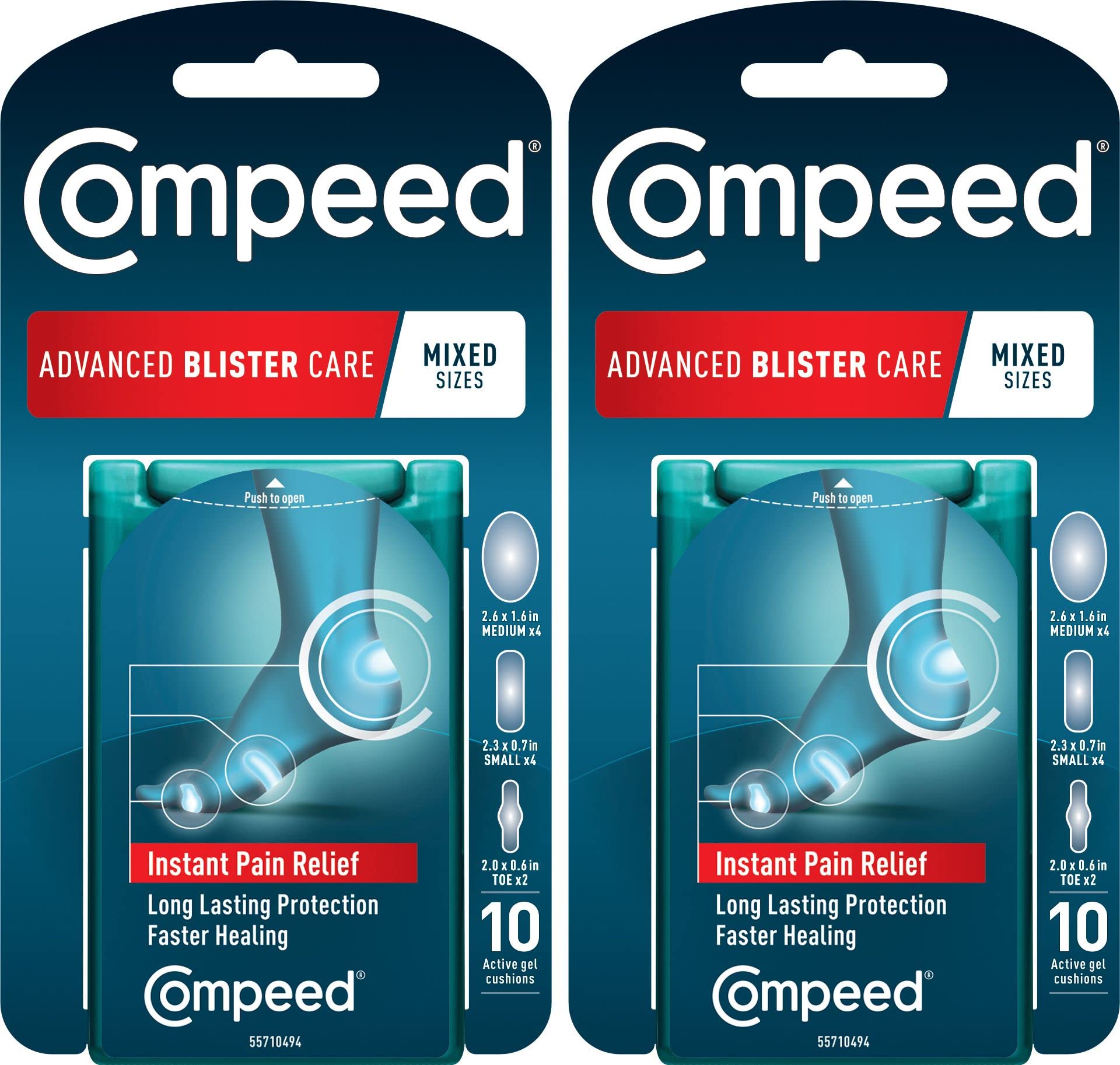


1. Compeed Mixed Sizes 10 ct
Best for Long Walking Tours
Key Features
- Pad Count: 10 pads
- Waterproof Level: Waterproof
- Shape Variety: Mixed: 5 large, 5 small
- Cushioning & Flexibility: Second-skin, flexible
- Price: $$$
Compeed pads bond with a tenacity that outlasts other blister bandages under socks, sweat, and water. The hydrocolloid adhesive forms a lasting seal that survives multiple showers and all-day city walks without edges lifting—a stark advantage over typical plasters that start peeling after a few hours.
The gel layer absorbs exudate and creates a cushion that removes the sting of a raw blister almost instantly. Despite that padding, the pad stays thin and nearly invisible under dress socks or running gear, with beveled edges that don’t catch on fabric. Comfort remains consistent from morning coffee walks to late-evening sightseeing.
Active travelers who can’t risk a bandage failure will find the adhesion justifies the premium per-pad price. The pack contains 5 large and 5 small pads, enough to handle a short trip, but long treks where blisters pop up frequently may require more. For wounds needing deeper padding, a thicker hydrocolloid from another brand can help, though it won’t match this level of stick. Those on a strict budget or who need a high pad count for daily changes will feel the cost more sharply.
Pros
- Adhesion holds for days through showers, hikes, and nonstop walking.
- Instant pain relief turns a painful blister into something easily ignored.
- Protective cushioning prevents friction from worsening blisters during heavy activity.
- Thin profile disappears under socks and feels like a second skin.
Cons
- Higher cost per pad compared to budget hydrocolloid alternatives.
- Ten pads total may not cover extended multi-week travel without a resupply.
When a single blister can derail a day of sightseeing, Compeed pads are a worthwhile investment—provided you can accept the premium per-pad price and modest pack size.
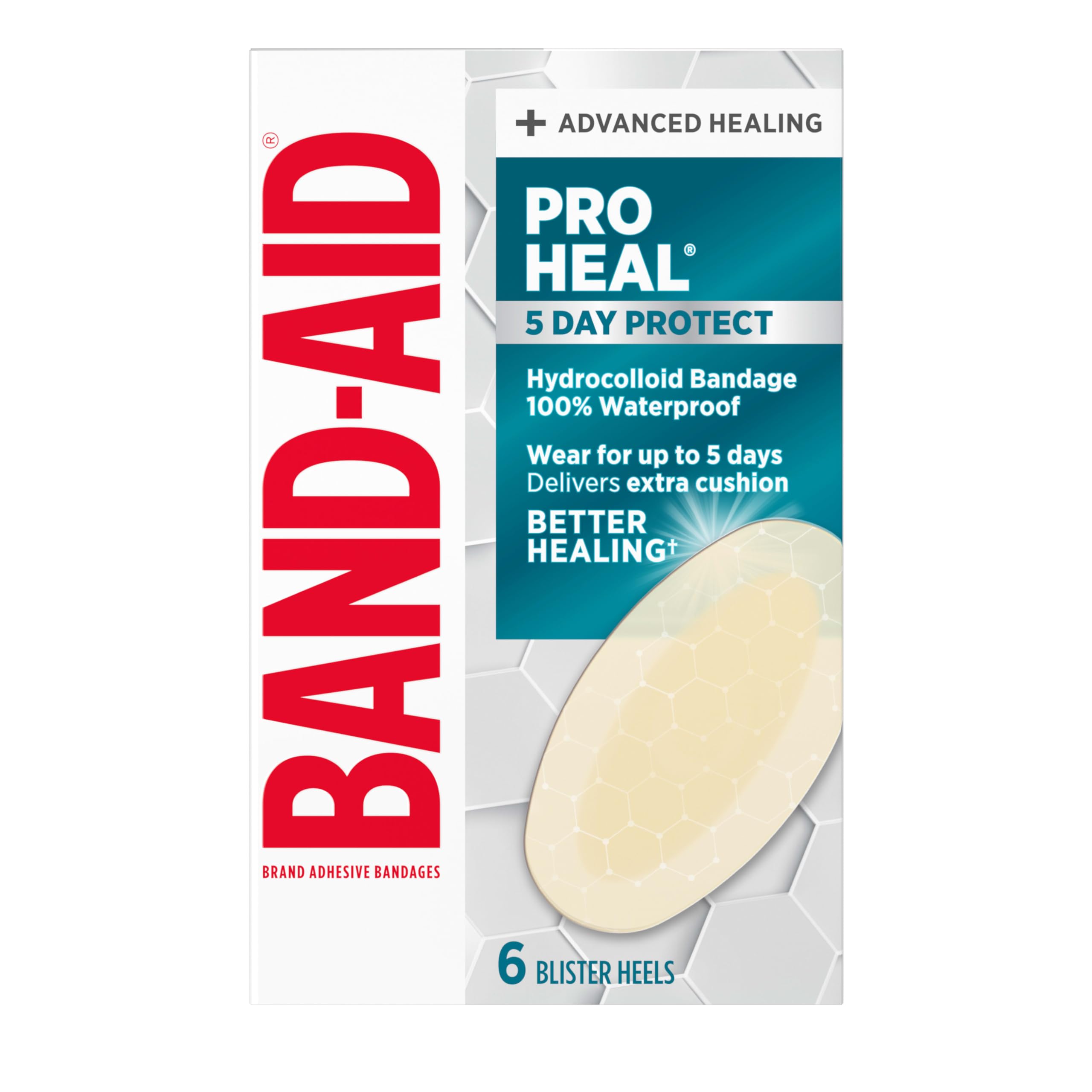
2. Band-Aid Pro Heal 6 ct
Best for Deep Blisters, Fast Healing
Key Features
- Pad Count: 6 pads
- Waterproof Level: Waterproof (5 days)
- Shape Variety: Single (oval)
- Cushioning & Flexibility: Extra cushioning
- Price: $$
Unlike the slimmer hydrocolloid option in this lineup, the Pro Heal adds a thick cushion layer that promotes 60% better healing and less scarring. The gel absorbs wound fluid while providing all-day comfort, even on sensitive skin. It stays put for up to 5 days and slips easily into a small dopp kit, making it a practical travel item.
These bandages are ideal for travelers who know exactly where blisters form and want a few high-performance pads for deep, painful spots. The extra cushioning noticeably speeds recovery, but adhesion can be inconsistent under sock friction; some pads lift prematurely despite careful skin prep. For a short trip, packing a spare and placing a backup bandage avoids any risk. Choose this set when healing quality and compact size are more important than a guarantee of perfect stick every single time.
Pros
- Accelerates blister healing and helps prevent new ones
- Offers noticeable relief and comfort during long walks or hikes
- Thick cushion layer surpasses traditional moleskin for deep blister care
Cons
- Adhesion can be inconsistent under socks; some pads may lift prematurely despite skin prep
For travelers prioritizing deep cushioning and healing over sheer pad count, these bandages deliver — just pack an extra to cover the occasional adhesion hiccup.
3. Promifun Variety 28 ct
Best for Multi-Destination Trips
Key Features
- Pad Count: 28 pads
- Waterproof Level: Water-resistant
- Shape Variety: 4 shapes (heel, toe, sides)
- Cushioning & Flexibility: Soft gel, cushioned
- Price: $$
This 28-count kit packs four shapes — contoured heels, toes, and other tricky edges — all with a residue-free hydrocolloid adhesive that’s gentler on sensitive skin than many alternatives. Compared to the purely adhesion-focused pick in this lineup, it delivers nearly triple the pad count and much broader shape variety, a real advantage for long vacations where you want a single kit to handle unpredictable hot spots. The generous count also means you can supply multiple family members or carry backups without worry. Adhesion consistency varies; corners may lift if edges aren’t pressed onto completely clean, dry skin.
This kit suits travelers who prioritize skin-friendly removal and the ability to cover different blister spots, and who don’t mind a quick test application before a full walking day. If a pad peeling at the edge would derail your plans, the higher-adhesion option elsewhere in this set is worth the per-pad premium.
Pros
- Prevents blisters and cushions hot spots during long walks and hikes.
- Variety of shapes fits heels, toes, and tricky edges for travel.
- Cushioned gel provides all-day comfort without bulk.
Cons
- Adhesion can be hit-or-miss — edges may start to lift from socks or friction on curved toes and heels.
For travelers who want gentle, residue-free removal and more shapes per pack over guaranteed all-day stick, this kit covers more blister scenarios with fewer skin complaints — just double-check adhesion before a day of heavy walking.
4. Spenco 2nd Skin Kit
Best for Severe Blister Care
Key Features
- Pad Count: 24 pieces (gel squares, covers)
- Waterproof Level: Not waterproof
- Shape Variety: Multi-component system
- Cushioning & Flexibility: Cooling hydrogel squares
- Price: $$
The Spenco 2nd Skin kit takes a different approach from standard hydrocolloid bandages: hydrogel squares drenched in water-based gel that cool on contact and cushion deep blisters. Marathoners and long-distance hikers reach for it when a blister has already reached the fiery stage, and the instant relief can make the difference between finishing a trail and calling it quits. Where adhesive pads form a single barrier, this kit layers a moist gel square with a separate adhesive knit cover, which spreads pressure away from the wound.
The tradeoff is that it’s a system, not a stick-on patch. Application requires a clean, dry surface, peeling a gel square from its backing, positioning it, then covering it with the fabric layer—no second chances once the adhesive knit touches skin. During heavy sweating or long days, the fabric edges can lift, potentially shifting the gel. This kit suits travelers who carry a small first-aid kit and don’t mind spending a minute on wound care to trade pain relief for simplicity. For a simple grab-and-go solution, the top pick’s all-in-one design is a better match.
Pros
- Provides near-instant cooling and pain relief for hot, swollen blisters.
- Gel pads prevent friction exceptionally well during long runs and hikes.
- Compact kit easily fits into travel first-aid pouches.
Cons
- Multi-piece assembly requires more time and a clean surface than a single adhesive bandage.
- Adhesive knit cover can roll or peel at edges during activity, leaving gel exposed.
If you’re dealing with a hot, angry blister and need immediate cooling above all else, the Spenco kit delivers relief that standard adhesive pads can’t match. Those valuing speed and one-step application should stick with the top pick.
5. Amazon Basic 10 ct
Best for Budget Casual Use
Key Features
- Pad Count: 10 pads
- Waterproof Level: Water-resistant
- Shape Variety: Single (oval)
- Cushioning & Flexibility: Hydrocolloid gel
- Price: $
At roughly a dollar per blister treatment, this 10-count bundle offers genuine hydrocolloid cushioning at a price that’s hard to find from big-brand alternatives. Compared to the Hydro Seal 10-pack, the per-pad cost runs noticeably lower, making it a natural pick for travelers watching their wallet. The bandages are single-size ovals, which simplifies pack-and-go use, but the main draw remains the accessible entry point to hydrocolloid protection.
This set is built for occasional use — think a weekend trip where you want a few protective pads for a new pair of shoes, not a multi-day trek where a failed bandage derails the day. Adhesion varies between units; some pads stay put through a day of sightseeing, others may lift at the edges after a few hours of walking. The entire backing is adhesive, so removal requires slow, careful peeling. If you have sensitive or broken skin, the adhesive can tug uncomfortably or even reopen healing tissue — a tradeoff that makes this less suitable for anything beyond intact skin and mild hot spots.
Pros
- Effectively cushions hot spots and prevents friction blisters on heels and toes.
- Build quality on par with more expensive brands for basic hydrocolloid protection.
- Very low per-pad cost compared to name-brand hydrocolloid bandages.
Cons
- Adhesion can vary; some bandages may lift prematurely under friction or moisture.
- The entire adhesive pad can pull at skin or healed wounds on removal, occasionally causing discomfort.
For light travel and occasional hot spots, this pack delivers genuine hydrocolloid cushioning at a price that lets you test the format without much risk. Just be ready to swap a pad if edges lift early, and avoid using it on anything but intact skin.
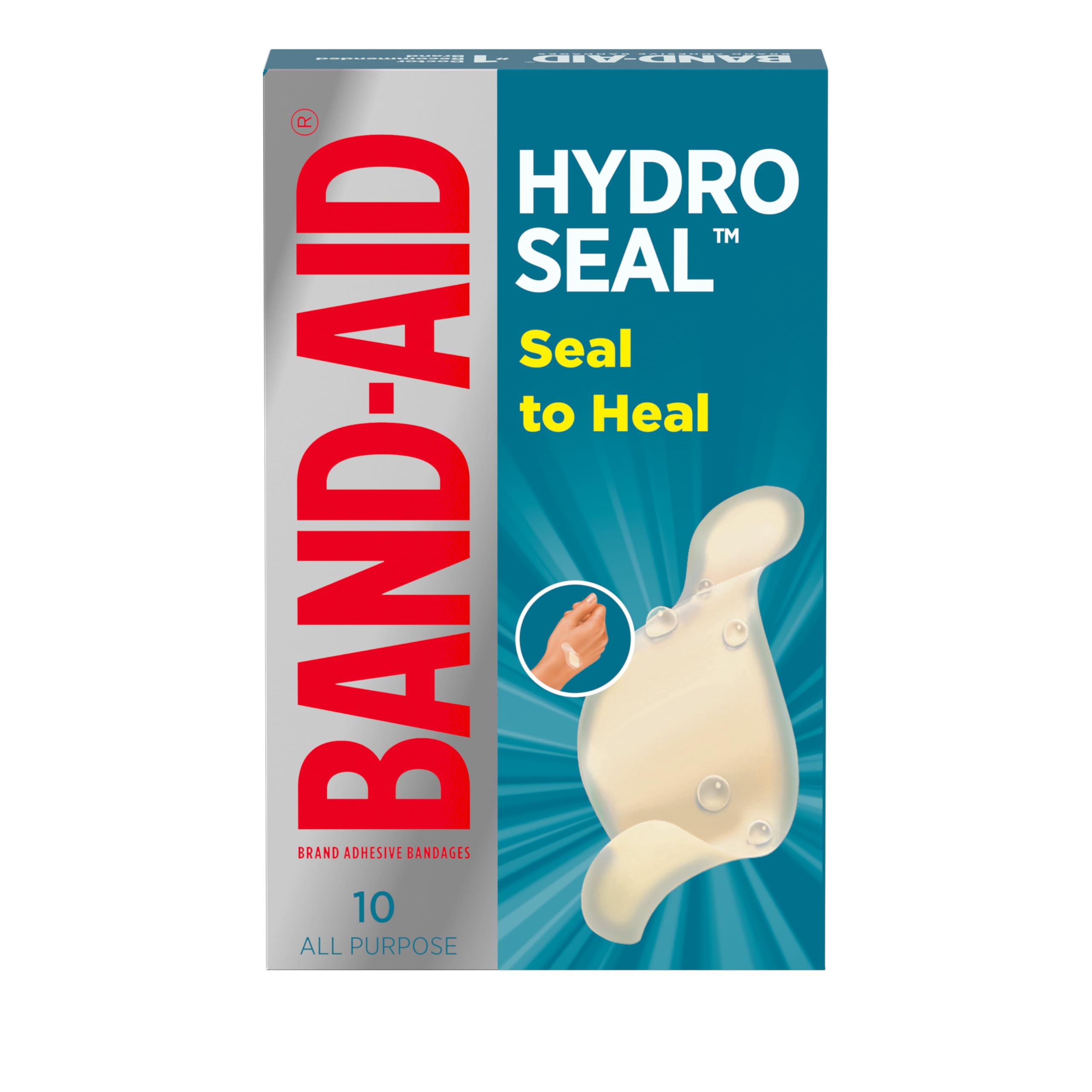
6. Band-Aid Hydro Seal 10 ct
Best for Everyday Minor Blisters
Key Features
- Pad Count: 10 pads
- Waterproof Level: Waterproof (7 days)
- Shape Variety: Single (oval)
- Cushioning & Flexibility: Thin gel, flexible
- Price: $$
The thinner hydrocolloid gel makes these bandages flexible enough to disappear under socks, and the waterproof seal holds for days while displaying a white bubble when absorbing fluid. The gel layer may be too thin for deep blisters, and adhesion can be fickle on curved areas—some pads may lift within hours. That makes these best for early hot spots and minor blisters, not severe wounds. For travelers willing to monitor adhesion, the 10-count pack offers good value and brand familiarity.
Pros
- Effectively cushions and promotes healing of minor blisters and small cuts.
- 10-bandage pack provides good per-pad value for travelers dealing with multiple hot spots.
Cons
- Adhesion can be inconsistent—some pads may lift within hours on curved heels or under socks.
Practical for minor blisters and early hot spots, especially if you value having 10 pads per box and don’t mind checking adhesion—but skip it if you need deep cushioning.
7. Dr. Scholl’s Hydrogel 8 ct
Best for Thin Invisible Feel

Key Features
- Pad Count: 8 pads
- Waterproof Level: Water-resistant
- Shape Variety: Single (oval)
- Cushioning & Flexibility: Very thin hydrogel
- Price: $
These ultra-thin hydrogel cushions provide rapid pain relief and a barely-there feel, ideal for dress shoes or quiet days. The moisture-based healing handles early hot spots well, but the hydrogel adhesive lacks the grip of hydrocolloid—bandages can lift when you pull on socks or after a short walk, and water resistance is minimal. This makes them a smart disposable for low-friction areas, not a multi-day companion on long travel days.
Pros
- Provides rapid blister pain relief and promotes healing for hot spots.
- Ultra-thin, flexible feel is barely noticeable under socks and shoes.
Cons
- Adhesion can give way when pulling on socks or during longer walks, especially on heels.
Best used as a fast-acting, discreet cushion for minor irritation in low-friction areas—pack a few for dress-shoe days, but leave the long-haul duty to a tackier hydrocolloid.
8. Dr. Frederick’s Variety 12 ct
Best for Cushiony Variety Pack

Key Features
- Pad Count: 12 pads
- Waterproof Level: Waterproof
- Shape Variety: 3 sizes (heel, toe, spot)
- Cushioning & Flexibility: 40% more cushioning
- Price: $$
Dr. Frederick’s variety pack includes thick, cushioned bandages in three shapes that stay comfortable for all-day wear, making it a convenient travel kit. The range of sizes covers heels, toes, and small hot spots effectively. Adhesion is inconsistent—some pads lift within minutes despite careful skin prep. For multi-day trips where a fallen bandage could sideline a walking day, that risk is hard to ignore. This kit works best for shorter excursions or as a backup supply where reapplication is easy.
Pros
- Thick hydrocolloid cushioning helps prevent blister pain during long walking days.
- Assortment of heel, toe, and spot shapes covers common friction points.
Cons
This variety pack suits shorter walks or hotel-use where re-sticking is easy, but for long travel days where a lifted bandage could ruin comfort, the adhesion inconsistency makes it a backup option at best.
9. Welnove Variety 21 ct
Best for Residue-Free Bulk

Key Features
- Pad Count: 21 pads
- Waterproof Level: Water-resistant
- Shape Variety: 4 shapes
- Cushioning & Flexibility: 25% more cushioning
- Price: $$
A 21-piece kit with four shapes and 25% more gel cushioning provides comfortable coverage for heels, toes, and hot spots. The hydrocolloid backing removes cleanly without residue, a plus for sensitive skin. Edge adhesion can be inconsistent — corners may curl within minutes on curved areas, which makes them a riskier choice for all-day sightseeing. This kit works best when you can periodically check and replace a pad; couch-surfing, casual errands, or hotel downtime where friction is lower will yield the most value.
Pros
- Prevents and treats blisters effectively during hiking and extended walking.
- Gel cushioning adds noticeable comfort against shoe pressure.
Cons
- Corner adhesion may give way quickly on heels or toes, even after firm application.
Suited for trips where you can monitor and swap bandages between outings, or for low-friction hotel days rather than nonstop walking tours.
How to Choose
The single most important factor when choosing a blister bandage for travel is adhesion, but it only works if you start with clean, dry skin—an alcohol wipe is as crucial as the pad itself.
Pad Count: Portability vs. Value
A 6-pack slips easily into a day bag but might leave you without a backup if one peels. A 28-piece kit covers a multi-week holiday, but a single large pack adds weight and you may not use all shapes. Match count to trip length and the likelihood of blisters—if you’re prone, pack at least two per day in your walking shoes.
Waterproofing: Shower-Proof or Swim-Ready
Many bandages claim waterproof protection, but heel friction and prolonged water exposure degrade adhesive differently. For city trips with quick hotel showers, most quality hydrocolloids hold. If you plan to swim or walk in the rain for hours, choose pads specifically tested for submersion (like Compeed or Band-Aid Hydro Seal) and still have a spare ready.
Shape Variety: Covering Every Hot Spot
A single oval size works for most heel blisters, but toes and the ball of the foot often need smaller rounds or teardrops. If you’ve ever had a toe blister ruin a walking day, you’ll appreciate a variety pack that covers edges and tips. For first-time travelers unsure of their blister pattern, a mixed pack prevents the frustration of having the wrong shape.
Adhesion Longevity: What ‘Multi-Day’ Really Means
Adhesion claims like ‘stays up to 7 days’ assume ideal conditions—cool, dry feet and minimal friction. In reality, sweaty socks and miles of pavement cut that life short. Look for bandages with ample gel surface area and a reputation for sticking to heel curves; often, a slightly thicker pad with strong initial tack outperforms thinner, minimalist designs.
Cushioning and Flexibility: Comfort vs. Bulk
Extra cushioning protects deep blisters from pressure but can feel bulky inside snug walking shoes, creating new hot spots. Thinner hydrogel pads disappear under socks but offer less shock absorption. For travel, consider your shoe fit: if your walking boots have room, a cushioned pad adds comfort; if dress shoes are tight, a barely-there gel may be the only option that fits.
FAQ
Why do my blister bandages peel off as soon as I put on socks?
Most early failures happen because the skin wasn’t fully clean and dry. Oils and moisture prevent the hydrocolloid from bonding. Additionally, some brands have adhesive that curls at the edges when stretched over curved heels. Before applying, wipe with an alcohol pad, let dry, and press firmly for 30 seconds. If you still get peeling, try a brand known for secure heels like Compeed.
Can you really shower with a hydrocolloid blister bandage without it falling off?
Yes, if the bandage is fully adhered and the edges are sealed. Hydrocolloid gel forms a seal that resists water, but hot water and soap can weaken it over repeated exposure. For a quick shower, most stay put; for long baths or swimming, keep the foot out of the water as much as possible and dry the bandage afterward. Bring a spare in case the edges lift.
How many blister bandages should I pack for a 10-day walking holiday in Europe?
For a blister-prone traveler, pack 2–3 per day in high-friction zones, plus a few extras for unexpected hot spots. A 10-count pack might be enough if you rarely blister, but if you’ve had issues before, a variety pack of 20+ with different shapes gives you flexibility. Reapplication after showers or heavy sweating may be needed.
Do I need different sizes of blister bandages for toes vs heels when travelling?
Yes. Heel blisters are often large and round, needing a broad oval or heel-shaped pad. Toes blister on the tops or tips, so smaller teardrop or round patches are essential. A pack with mixed sizes prevents you from wasting a large pad on a tiny toe blister, and a small pad will not cover a raw heel. If you’re unsure, bring a variety pack.