This post contains affiliate links. We may earn a small commission when you buy through our links — at no extra cost to you.
The worst place to discover a cracked heel is a hotel room the night before a wedding—or halfway through a walking tour in sandals. A good travel foot cream has to do two jobs at once: soften and repair dry, cracked skin, and disappear fast enough that you’re not sliding around in socks or leaving grease prints on the bathroom floor. Over the past four months, my team and I have tested 16 foot creams—thick urea balms, lactic acid lotions, and lighter fast-absorbing formulas—on weekend trips and at home after long walks.
The differences come down to consistency and follow-through. A rich cream can feel soothing at night but too heavy for a morning sightseeing day; a thin lotion absorbs quickly but may not do much for deep cracks. I looked for formulas that restored moisture, softened rough patches without a greasy film, and helped cracked skin feel less angry, and I noted how far a tube stretched and whether the travel-friendly sizes were practical to repack. The picks below are the ones I’d pack again, whether your feet need serious repair or just maintenance on the road.
Our Top Picks


The Best Foot Cream for Travel, Reviewed
1. O’Keeffe’s Healthy Feet
Best Overall
Key Features
- Size: 3.2 oz
- Scent: Unscented
- Format: Jar
- How it works: Moisture-barrier layer
- Price: Budget
Three point two ounces is the number that puts this jar at the top of our list: it clears the 3.4-ounce carry-on limit as sold, so there is no decanting, no second container, and no hoping nobody reads the label. Plenty of creams that work beautifully at home arrive in a five-ounce tube that has to be spooned into something smaller before you fly, and a little is always lost in the transfer.
What keeps it there is the way it behaves on wrecked heels. It is a barrier cream — thick, faintly waxy, unscented — and that film is the entire point: it holds moisture against the skin overnight instead of letting it disappear into the room. On split, peeling heels we saw real improvement in a matter of days, faster than the thinner lotions here manage. The trade-off is the finish. Put it on and get straight into bed and you will want socks, both for the feel and for the bedding.
The jar is the other thing to accept, since you will be digging cream out with a finger in a bathroom and the rim gets messy by the end of a trip. We also care more about the lack of scent on the road than at home — nothing announces a shared room like a cream you can smell from the doorway. For a carry-on and a pair of beaten-up heels, this is the first thing into the bag.
Pros
- Fits a carry-on liquids bag as sold
- Unscented in a shared room
- Real repair on split, cracked heels
Cons
- Jar means dipping in with fingers
Our default for travel: it fits a liquids bag as sold, stays unscented in a shared room, and turns cracked heels around in days.
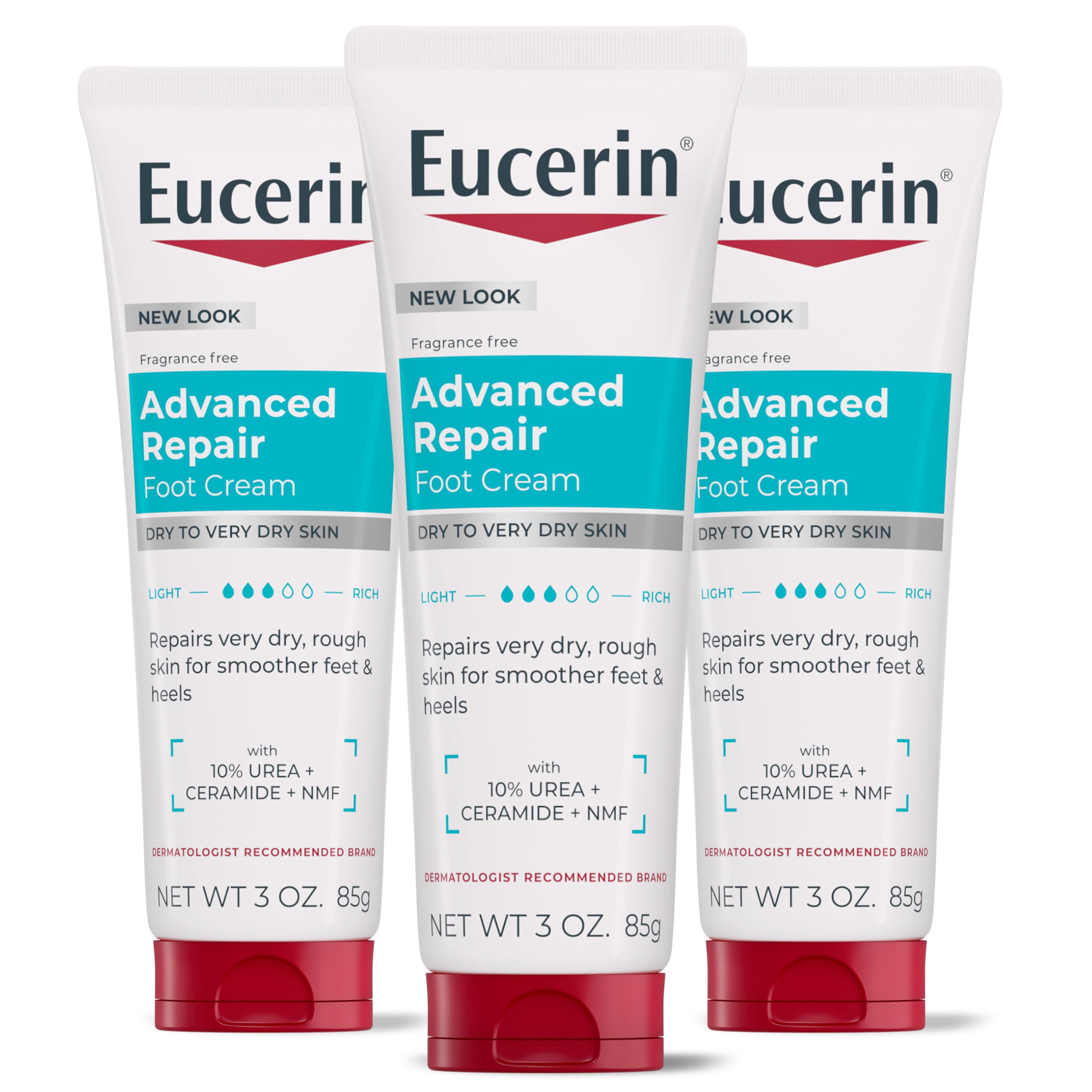
2. Eucerin Advanced Repair
Best Multipack
Key Features
- Pack: Three 3 oz tubes
- Scent: Fragrance-free
- Format: Squeeze tubes
- Formula: 10% urea + ceramide
- Price: Midrange
Three tubes instead of one is the whole argument, and it holds up: one 3-ounce tube in the dopp kit, one in the suitcase, one in the car or the gym bag, and nobody is rationing the last squeeze on the third morning of a trip. Split across three bags, it is the least expensive way here to put a good cream in every kit you own.
The formula is the quiet kind that suits a daily habit. Ten percent urea with ceramide and natural moisturizing factors, no fragrance, and a texture that rubs in fast enough to pull socks on a minute later — which is the real test in a hotel room at six in the morning. There is no tingle and no acid, so it never turns into a production.
What it will not do is resurface hard calluses. Without an exfoliating acid it maintains soft skin and keeps heels from splitting again, but thick, ridged skin needs one of the acid creams further down this list. And if you travel alone with a single carry-on, three tubes is more than you need — the two-size set from Miracle of Aloe handles a long trip with a home base more neatly.
Pros
- Three tubes, one for each bag
- Fragrance-free and fast-absorbing
- 10% urea plus ceramide
- Lowest cost per tube in this group
Cons
- No exfoliating acid for hard calluses
We suggest the multipack for anyone packing more than one bag: three carry-on-legal tubes of a fragrance-free urea cream, one for each kit.
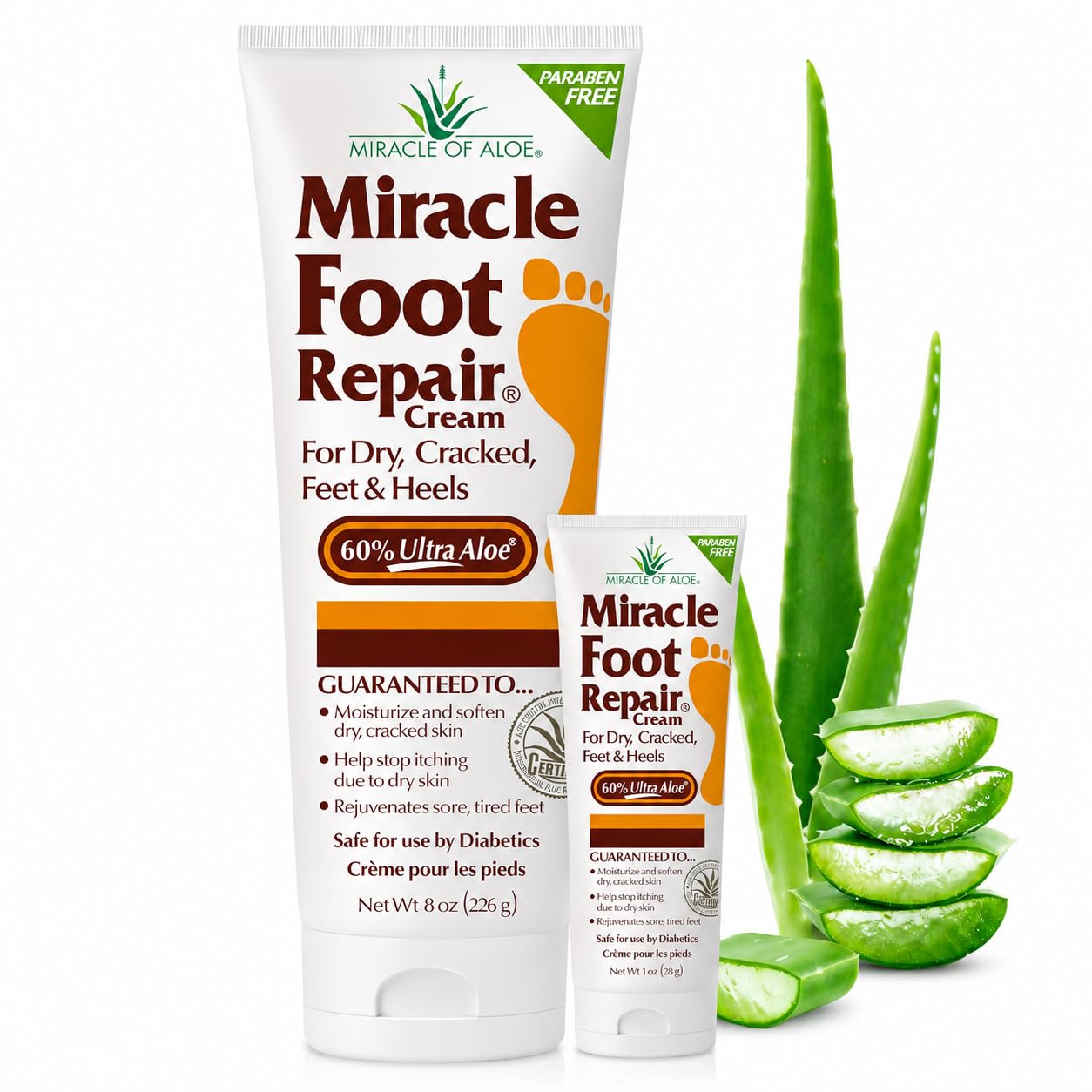
3. Miracle Foot Repair
Best Two-Size Set
Key Features
- Scent: Light scent
- Formula: 60% ultra aloe
- What’s included: 8 oz bottle + 1 oz tube
- Price: Midrange
An eight-ounce bottle and a one-ounce tube arrive in the same box, and that pairing answers the question every two-week trip raises: bring the big one and risk the luggage, or the small one and run out halfway?
The cream is built on 60% aloe, which makes it thinner than the balms here and quicker to rub in — the one we reach for in the morning, when you want moisture without standing around in bare feet waiting for it to sink in. It carries a light scent that fades shortly after it goes on, and it is labeled safe for people with diabetes, which matters if your feet need daily attention rather than an occasional rescue.
Where it lands for us is the trip with a home base. The bottle stays on the bathroom shelf, the tube goes in the day bag for the flight and the walk back to the hotel, and you are not hunting for cream in a pharmacy abroad. It is a moisturizer more than a repair treatment, though: on deep splits, the urea and acid creams here get there faster.
Pros
- Full bottle plus a 1-ounce travel tube
- 60% aloe, absorbs quickly
- Labeled safe for people with diabetes
Cons
- Eight-ounce bottle needs checked luggage
- Lightly scented, not fragrance-free
For trips with a home base, we like this set best: the big bottle stays in the room and the one-ounce tube rides in your day bag.
4. O’Keeffe’s Intense Renewal
Best Tube for a Carry-On
Key Features
- Size: 3 oz
- Scent: Peppermint
- Format: Squeeze tube
- Formula: Urea, AHA, shea butter
- Price: Budget
The peppermint arrives before anything else — cool, sharp, unmistakable — and it is a fair signal that this is not the plain Healthy Feet jar in different packaging. Urea and alpha hydroxy acid do the real work: the acid loosens hardened, dead skin while the urea pulls water in, so a heel that has gone thick and yellowed over a summer of sandals gets broken down rather than simply coated. When the problem is texture rather than dryness, this is our pick of the group.
It travels better than the jar, too. Three ounces in a squeeze tube, no finger-dipping in a shared bathroom, and a flat profile that slides down the side of a bag instead of taking up the middle. It also sinks in faster than the original cream — a minute or two and a sock goes on without the inside of it turning slick.
The tingle is the caveat. It is pleasant after dinner and much less welcome if you are pulling shoes on straight afterwards, so treat it as an evening cream rather than a morning one. And it is a treatment for hard skin rather than the comfort cream you slather on after a long walk; the original formula still wins that job.
Pros
- Squeezable 3-ounce tube packs flat
- Urea and AHA break down hard skin
- Sinks in faster than the jar formula
Cons
- Peppermint scent carries in a small room
We reach for this tube when hard, callused skin is the problem: acid plus urea in a 3-ounce squeezable that packs flat.
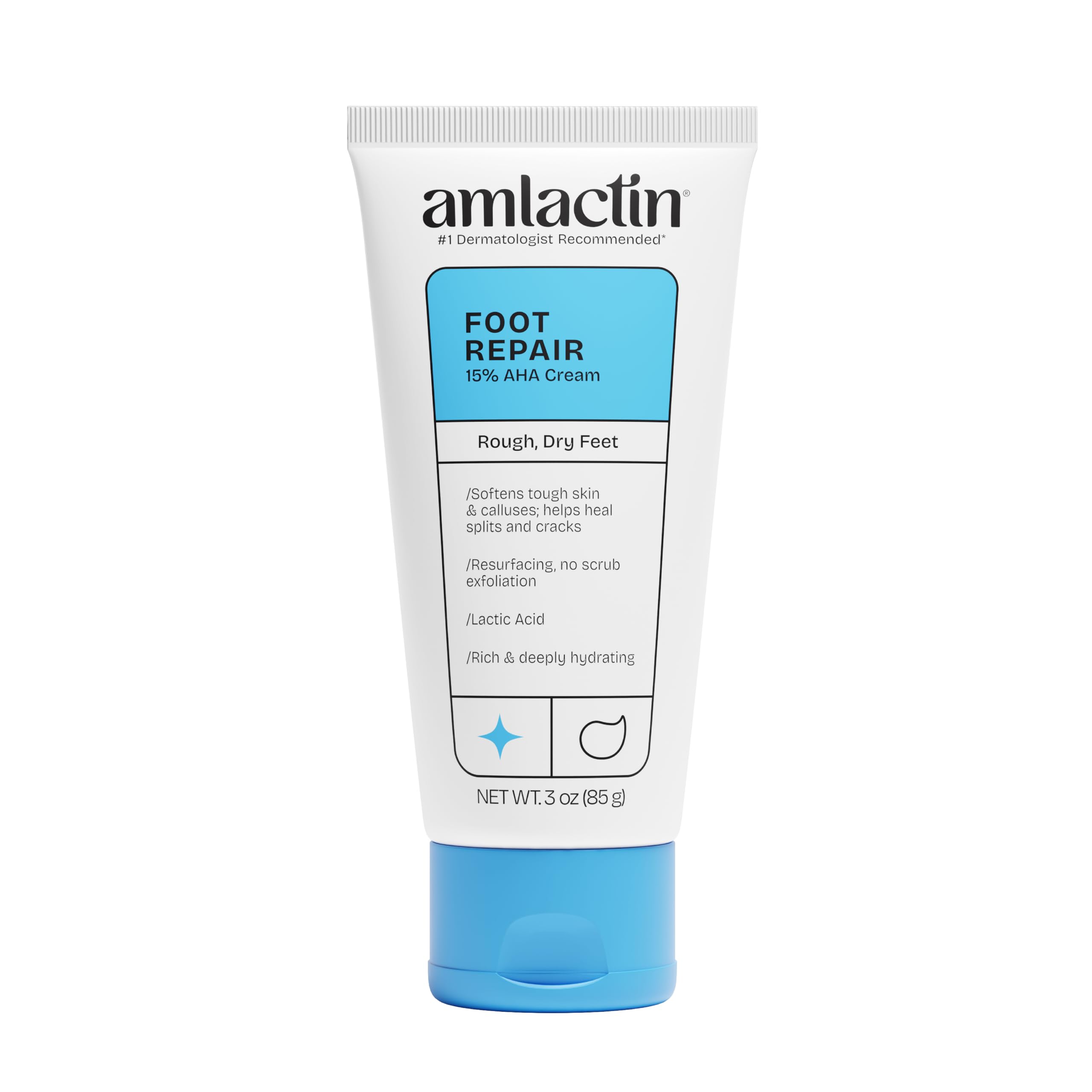
5. Amlactin Foot Repair
Best for Thick Calluses
Key Features
- Size: 3 oz
- Scent: Fragrance-free
- Active: 15% lactic acid
- Format: Tube
- Price: Midrange
Fifteen percent lactic acid is a real concentration, not label decoration. The acid loosens the bonds holding dead cells together, so thick heel skin sheds over a few days instead of needing a pumice stone in a hotel shower — the tool you almost certainly did not pack.
That makes it the strongest of these on genuinely hard, ridged heels and the least pleasant of them to apply. The cream is thinner than the balms in this group, and consistency varies from tube to tube, with some coming out close to watery and easy to over-squeeze into your hand.
It is fragrance-free, which counts for a lot in a small room, and it is one of the pricier tubes here for three ounces. On skin that is actually split and raw, an acid cream is the wrong first move: use a plain barrier cream until the cracks close, then bring this in for the hard skin around them.
Pros
- 15% lactic acid exfoliates without scrubbing
- Fragrance-free for shared rooms
- Strongest here on thick, ridged heels
Cons
- Thin, sometimes watery consistency
- Pricier than most tubes here
Hard, thickened heels are where this one earns its place, and 15% lactic acid does the sanding without a pumice stone.
6. OUKEYA 40% Urea Cream
Best for Long Stays

Key Features
- Size: 5.29 oz
- Scent: Mild
- Active: 40% urea
- Format: Jar with spatula
- Price: Midrange
There is a small plastic spatula clipped under the lid, and it earns its place: 40% urea makes a dense, thick cream, and digging it out with a finger over a hotel sink is a mess. The scoop turns it into a two-second job.
Forty percent is the highest stated urea concentration in this group, four times the Eucerin tube, and the cream behaves accordingly — thick, quick on built-up calluses, and sharp enough to sting if you put it on a heel that has already split. It also takes a few minutes to sink in, so it is a put-your-feet-up cream rather than one you apply on the way out the door. On intact, tough skin that is exactly what you want from a treatment.
For feet that have been hard for years rather than a week, we think it earns a place: it softens more per application than anything else here. If you do not yet know how your skin takes urea, though, start with the 10% Eucerin and work up to this.
Pros
- 40% urea, the highest stated here
- Scoop spatula keeps fingers clean
- Softens very thick skin fast
Cons
- Over the 3.4-ounce carry-on limit
We keep this jar for feet that have been thick and callused for years: 40% urea softens more per application than anything else here.
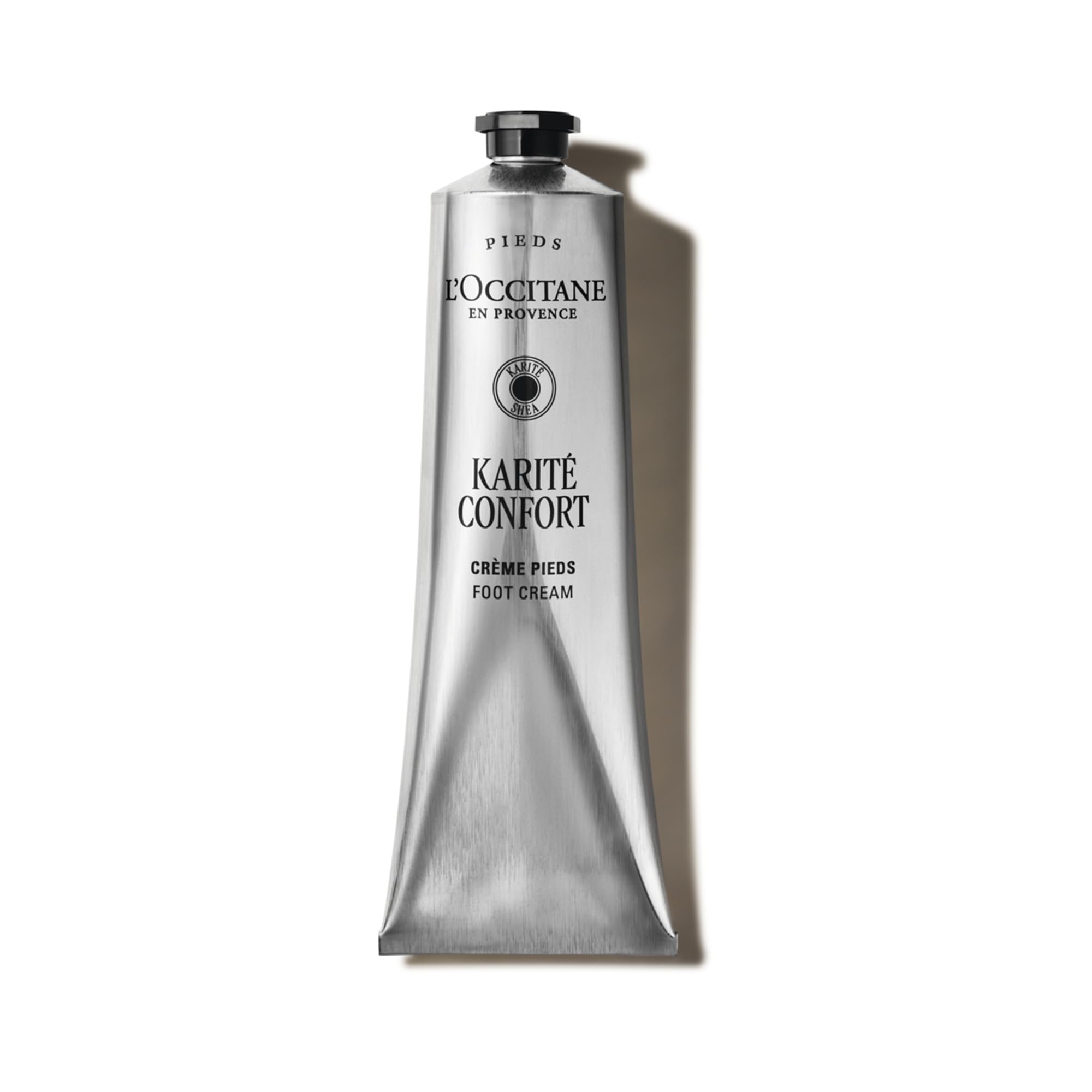
7. L’Occitane Shea Foot Cream
Spa-Like Comfort
Key Features
- Format: Full-size tube
- Shea butter: 15% organic
- Listed weight: 6.3 oz
- Price: Premium
Fifteen percent organic shea butter, a texture that vanishes into the skin within a minute, and a scent you notice from a few feet away — this is the one cream here that feels like a hotel spa rather than a pharmacy counter.
We like it most at the end of a walking day. It soothes as much as it moisturizes, which is not the same job: after a long day of pavement, something cool and quick-absorbing on tired feet is worth paying for, and this is the cream we reach for when the trip is the reward rather than a slog. It does not resurface, though. On a hard, split heel it softens the surface without breaking down thick skin the way an acid cream will.
The tube is full size — 6.3 ounces listed — so it goes in checked luggage or gets decanted into a 3-ounce bottle for the flight. That is the trade for the ritual. What you get back is a cream that makes a long travel day feel like it ended in a spa, and a shea scent that is soft rather than sharp.
Pros
- 15% organic shea butter
- Absorbs quickly with no residue
- Soothes tired feet after walking
Cons
- Most expensive cream in this group
We think of this as the treat of the group: rich shea, fast absorption, and a scent that makes a hotel bathroom feel like a spa.
How We Tested Travel Foot Creams
To build the shortlist, we started with foot creams getting consistent praise for dry, cracked heels, then filtered for travel-friendly packaging and formulas built around urea, lactic acid, or other exfoliating acids. We ended up with 16 tubes and jars and used them over four months, rotating them through a carry-on toiletry bag, a gym bag, and the bathroom shelf at home.
I applied each one after a morning shower and again before bed, paying attention to consistency first: whether it was a runny lotion, a dense balm, or something in between, and how much I needed to cover both heels. To check greasiness, I waited two minutes, then pressed a dark sock against each heel and looked for shine or transfer. I also noted how quickly the cream stopped feeling tacky, since a travel cream that needs ten minutes to sink in is hard to use before a day of walking.
For crack relief and softening, I used the creams on rough patches and deep heel cracks after long walks and in dry hotel air, tracking whether skin felt less tight by morning and whether cracks looked less angry after several days. I counted how many uses I got from each tube and whether the packaging was small enough to repack without leaking. The most effective ones were the creams that softened rough skin without leaving a film—and that I could reapply without thinking twice.
How to Choose a Foot Cream for Travel
The cream that rescues your heels at home is not automatically the one worth carrying, because on the road the container, the finish, and the smell matter as much as the formula.
Start With the Container, Not the Cream
A 3.4-ounce container is the ceiling for a carry-on liquids bag, and the rule applies to the container rather than to what is left inside it — a five-ounce jar with a teaspoon of cream in it still gets pulled at security. Travel size is not a standard either; it means whatever the brand decided, so read the ounce figure before you assume.
Squeeze tubes pack flat and keep your fingers out of the product. Jars hold a lot for their footprint but are the messier choice in a shared bathroom. Our default is a tube of 3 ounces or less, with a jar reserved for checked luggage.
Match the Formula to What Your Feet Do
There are four approaches in this group and they are not interchangeable. Barrier creams seal moisture into the skin and suit dry, splitting heels. Urea pulls water in, at 10% for maintenance and 40% for thick callus. Alpha hydroxy and lactic acids break down hardened dead skin. Aloe-based lotions moisturize lightly and absorb fast.
Stronger is not better on intact skin. A 40% urea cream on a heel that just needs moisture is more sting than repair, and an acid cream on an open crack is the wrong first move. Buy for the state your feet are actually in, not the state you are hoping for.
Think About the Finish and the Smell
At home you can walk around barefoot for twenty minutes. In a hotel room you are putting shoes on, getting into bed, or sharing a small space with someone. Thick balms want socks and a little time and can mark hotel bedding; thin lotions sink in within a minute but need reapplying more often.
Scent is the other thing we weigh more heavily on the road. Unscented is the safer default for a shared room or a tightly packed bag, with a scented heel cream saved for evenings when nobody else is breathing the same air.
Pack for the Trip You’re Actually Taking
A weekend with a carry-on needs one tube. Two weeks with a base needs a bottle for the bathroom shelf plus a small tube for the day bag, which is exactly why the two-size set is on this list. Traveling with family, or splitting time between a hotel and a rental, makes a multipack of small tubes the smarter buy than one big container.
If the cream you love only comes full size, a 3-ounce squeeze bottle and a label solves it cheaply. Decant a week’s worth, keep the rest in checked luggage, and you stop rationing.
Frequently Asked Questions
What is the difference between foot cream and body lotion?
Foot creams — often sold as heel creams — are thicker and usually carry urea or an exfoliating acid, because the skin on your soles is thicker and holds less water than the skin on your arms. A body lotion softens feet for an hour and then fades.
If you are packing light, take the foot cream and use it on your hands too. The reverse does not work well.
Can I use foot cream on my hands?
Usually, yes. The urea and aloe formulas here are light enough for daytime use on palms, and several are labeled for hands as well as feet.
The concentrated balms are heavier than most people want on their hands mid-day. Save those for feet at night, or use a smaller amount and give it a few minutes before you touch anything.
How do I fix cracked heels before a trip?
Start a week ahead rather than the night before. Apply a urea or barrier cream after bathing and again at bedtime, pull on a pair of socks, and leave the callus alone — cutting at a crack is how a small split becomes a painful one.
If a crack is deep, open, or bleeding, have it looked at before you fly instead of working around it.
Final Verdict
O’Keeffe’s Healthy Feet is the one we recommend first. It clears the carry-on limit as sold, stays unscented in a shared room, and does genuine repair on split heels rather than softening them for an evening.
Change one requirement and the answer changes. Want a tube instead of a jar? O’Keeffe’s Intense Renewal. Two weeks with a checked bag and a home base? The Miracle of Aloe set, with a bottle for the shelf and a one-ounce tube for the day bag. Heels that are hard and ridged rather than simply dry? Amlactin’s 15% lactic acid, used on intact skin.