This post contains affiliate links. We may earn a small commission when you buy through our links — at no extra cost to you.
Checked luggage gets rained on. Most tracker tags aren’t built for that. An IP67 rating and a replaceable battery turn a cheap tag into a reliable travel companion, especially when you rely on Apple’s dense Find My network in European airports.
The category’s real dividing line is precision finding: you pay extra for Ultra Wideband that guides you straight to your bag, or you save significantly with basic-map-and-sound locating. For families checking multiple suitcases, a multi-pack of waterproof tags that cover every bag often beats one premium tracker that only covers one.
Avoid non-waterproof tags and networks that thin out outside city centres; those are the ones that fail when your bag ends up on a wet runway in Stansted.

1. Ultrbeka Tag 4-Pack
Best for Budget Waterproof Multi-Pack
Key Features
- Tracking network: Apple Find My
- Compatibility: iOS only
- Battery type and lifespan: Replaceable CR2032, 12–24 mo
- Water resistance: IP67
- Precision finding: No
- Price: Budget
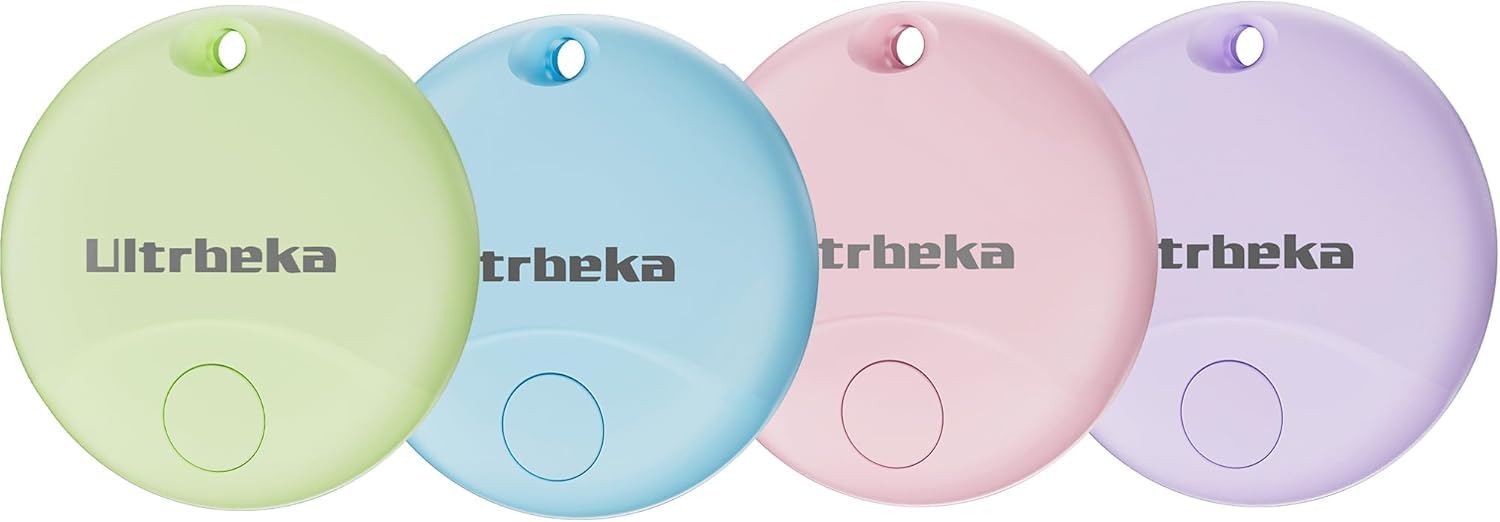
Pairing takes seconds: hold the Ultrbeka tag near an iPhone, and Apple Find My recognizes it instantly without downloading an extra app. Location updates appear on the same map as AirTags, and the built-in speaker emits a clear tone when you trigger it from the Find My app. The tracking network is identical to Apple’s own – a dense global crowd-sourced grid that pinpoints a bag at airports, train stations, and city streets alike.
IP67 waterproofing means a tag can survive a rain-soaked tarmac or a luggage hold flooded with de-icing fluid. The replaceable CR2032 battery lasts 12–24 months, so you are not throwing away the whole device when the power runs out – a practical advantage for bags that travel only a few times a year. Multiple color options help family members tell their tags apart at a glance.
This four-pack suits iPhone travellers who want to tag every checked bag without spending AirTag money. Families sharing a single Apple ID can drop a tag in each suitcase and track them all from one phone. The tradeoff is precision finding: there is no UWB arrow guiding you to the exact bin in a baggage hall. Instead you rely on the speaker’s tone and the last known map location – fine for locating a bag in a hotel room or a lost-luggage office, but slower when the bag is buried under others.
Pros
- Instant Apple Find My setup with no app download required
- Location tracking accuracy matches AirTag on Find My’s crowd network
- Build quality and value consistently praised by owners
- IP67 waterproof rating protects against rain and luggage-hold moisture
- Loud built-in speaker makes audible locating easier inside bags
Cons
- In a crowded baggage hall, locating a bag relies on sound rather than an on-screen arrow – less precise for close-range finding
For iPhone travelers who need waterproof trackers across multiple suitcases at a fraction of Apple’s price, this is the straightforward choice – no app fuss, replaceable batteries, and a four-pack that covers the whole family.
2. Apple AirTag 2nd Gen
Best for Precision Finding
Key Features
- Tracking network: Apple Find My
- Compatibility: iOS only
- Battery type and lifespan: Replaceable CR2032, >1 yr
- Water resistance: No rating (IP67 design)
- Precision finding: Yes (UWB)
- Price: Premium
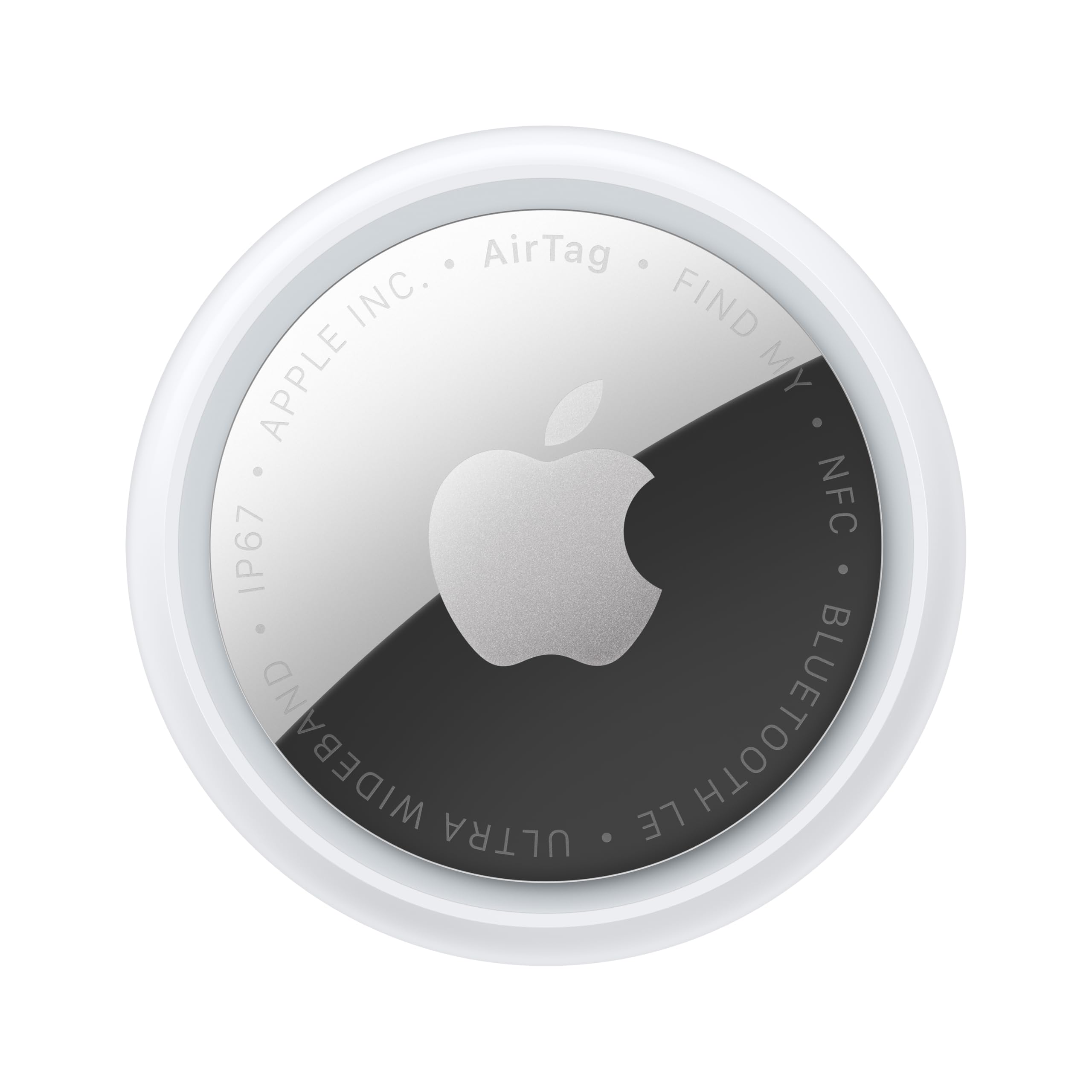
The AirTag’s Ultra Wideband precision finding sets it apart: it guides you with an on-screen arrow and distance reading, right down to the exact shelf or corner where your bag sits. This works seamlessly with iPhone and Apple Watch, leveraging the Find My network’s dense crowd coverage—especially strong in UK and European airports. For travelers who want to walk up to their checked suitcase and know it’s there without hunting through a pile, this is a distinct advantage over standard Bluetooth tags that only show a map pin.
That said, luggage tracking demands water resistance and affordability for multi-bag families. The AirTag lacks an official IP67 certification—its case is designed to resist splashes but hasn’t been tested to formal submersion standards. And at a premium per tag, covering a full set of suitcases gets expensive. The top-pick Ultrbeka 4-pack offers certified IP67 protection and a replaceable battery at a fraction of the cost, though without the arrow-guided locating.
Pros
- UWB precision finding with arrow guidance works inside crowded terminals.
- Louder speaker than the first generation, easier to hear inside a suitcase.
- Integrates with Apple Watch for quick bag location without pulling out a phone.
- Vast, reliable Find My network with strong coverage across Europe and the UK.
Cons
- No official IP67 water resistance certification, so exposure to heavy rain or baggage handling spray carries some risk.
- Some units can exhibit pairing faults or connectivity glitches that require resetting.
- Battery life may drop after only a few days in isolated cases, possibly due to the included CR2032 quality variance.
For iPhone travelers who want to pinpoint their bag’s exact spot in a baggage hall and already own Apple devices, this delivers a locating experience no other tag matches—just budget for a separate holder and accept the premium per tag.
3. KIUP Seektag 4-Pack
Best for Cross-Platform Tracking
Key Features
- Tracking network: Apple Find My, Google Find Hub
- Compatibility: iOS, Android
- Battery type and lifespan: Built-in 2 yr (service unclear)
- Water resistance: IP65
- Precision finding: UWB visualization
- Price: Mid-Range
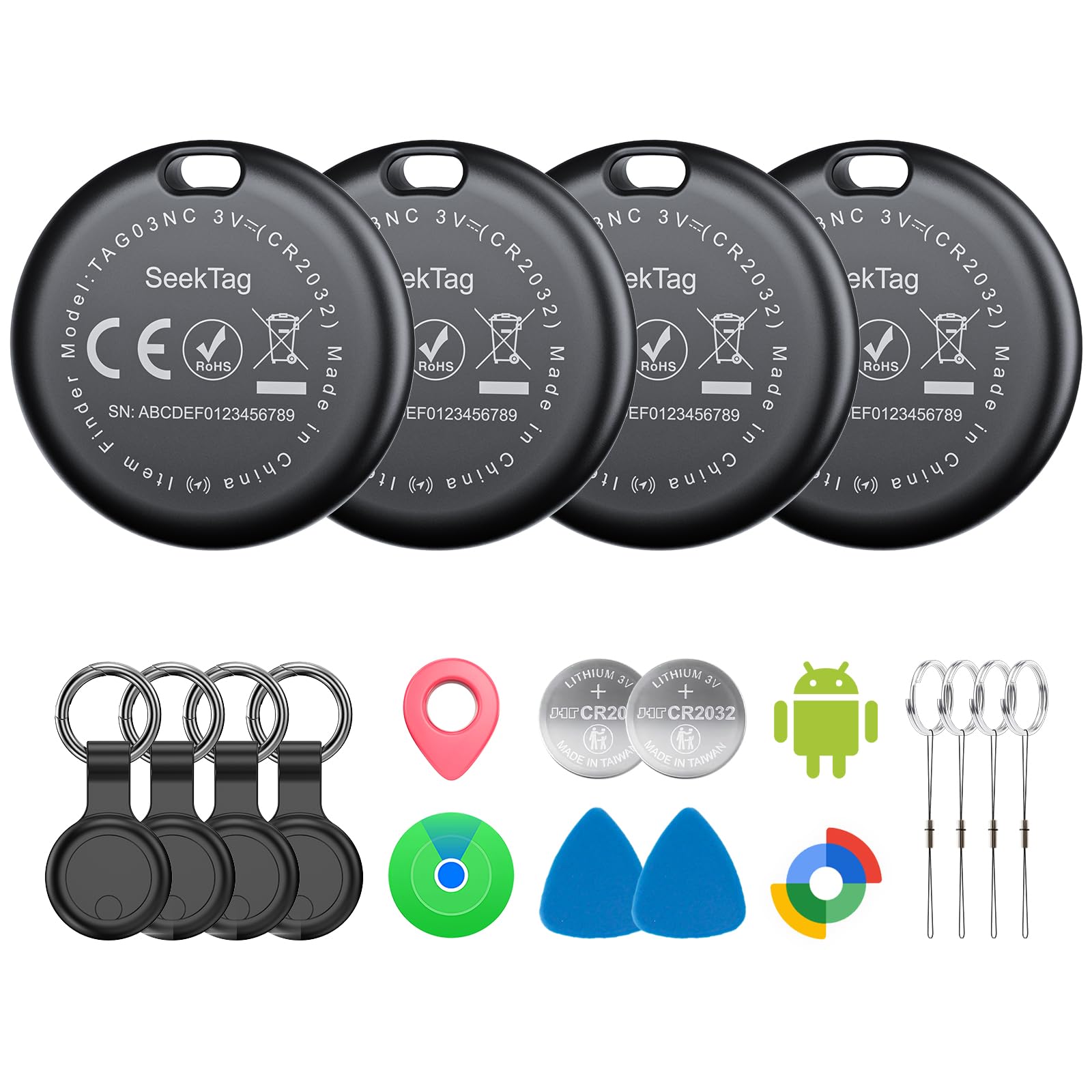
The Kiup Seektag unifies Apple and Google finding networks in a single tag, filling a gap left by iOS-only alternatives like the top pick. Setup is quick on either platform, and the included cases and lanyards attach directly to luggage with zero fuss. A 100 dB speaker cuts through baggage-claim noise, and UWB visualization nudges you within Bluetooth range when precision matters.
Families or travel groups mixing iPhones and Androids get the most out of this kit — one set of trackers covers everyone’s device without juggling two ecosystems. The tradeoff is that location updates can become less precise in areas where Google’s crowd network is thin, so tracking a bag in a rural train station may feel less assured than in a dense airport. The battery situation also demands attention: the listing describes a non-serviceable 2-year cell, yet some packages include spare batteries. This ambiguity means you may be holding a disposable tag that turns into e-waste after two years — a boundary to weigh before committing to long-term luggage use.
Pros
- Works as a single tracker for both iPhone and Android, no need for two separate ecosystems.
- Setup on Google Find Hub and Apple Find My is straightforward and quick out of the box.
- The 100 dB speaker is loud enough to hear inside a busy baggage hall.
- Includes four protective cases and lanyards, ready to attach directly to luggage handles.
Cons
- Location accuracy can dip when relying on the Google Find Hub network, particularly in areas with sparse Android device density.
- Battery replacement policy is ambiguous: the listing states non-serviceable, yet spare cells appear in some packages — the tag may become disposable after two years.
The Kiup Seektag 4-pack simplifies luggage tracking for families with mixed phones, accepting a two-year lifespan and potential Google-network positioning gaps in exchange for true cross-platform harmony.
4. Samsung SmartTag2
Best for Samsung Uwb Tracking
Key Features
- Tracking network: Samsung SmartThings
- Compatibility: Samsung Galaxy only
- Battery type and lifespan: Replaceable CR2032, up to 500 days
- Water resistance: IP67
- Precision finding: Compass View (UWB)
- Price: Mid-Range
Where the top pick blankets a family’s suitcases with affordable IP67 tags, the SmartTag2 adds UWB compass guidance for Samsung phone owners who want to pinpoint a single bag in a crowded arrival hall. Compass View overlays a directional arrow onto the camera feed, guiding you to within a few feet of the tag — a level of precision the top pick’s sound-and-map approach cannot match. The replaceable CR2032 cell and IP67 rating match the durability a luggage tracker demands, and SmartThings Find ties into Samsung’s vast own-device network to report location silently.
This tracker fits only travelers with a Samsung Galaxy phone running Android 11 or later. Anyone carrying an iPhone, Pixel, or other Android device cannot use it — there is no workaround. For those already inside Samsung’s ecosystem, that exclusivity brings a smooth one-tap setup and tight SmartThings integration, but it means family members on different platforms need a separate solution. Battery life can also vary; low-battery warnings may appear months before the 500-day claim, so checking the indicator before a trip is essential. Accuracy can suffer in regions where Samsung device density is thin, potentially leaving location updates stale during transit through smaller airports.
Pros
- Effortless one-tap pairing with a Samsung Galaxy phone — no extra app needed
- Compass View uses UWB to show an on-screen arrow pointing straight to your bag
- IP67 water resistance shields against rain and wet tarmac at the baggage ramp
- User-replaceable CR2032 battery avoids e-waste and is sold at airport convenience shops
Cons
- Battery may need replacement sooner than the 500-day claim, with early low-battery alerts possible
- Location tracking can stagnate when passing through areas with a sparse Samsung device crowd
A luggage tracker with UWB arrow guidance that only makes sense if your phone is a Samsung Galaxy — everyone else should look at the top pick or cross-platform alternative.
5. SPOTMINDERS PRO
Best for Stealth Wallet Tracker
Key Features
- Tracking network: Apple Find My
- Compatibility: iOS only
- Battery type and lifespan: Rechargeable, 8 mo per charge
- Water resistance: IP68
- Precision finding: No
- Price: Premium
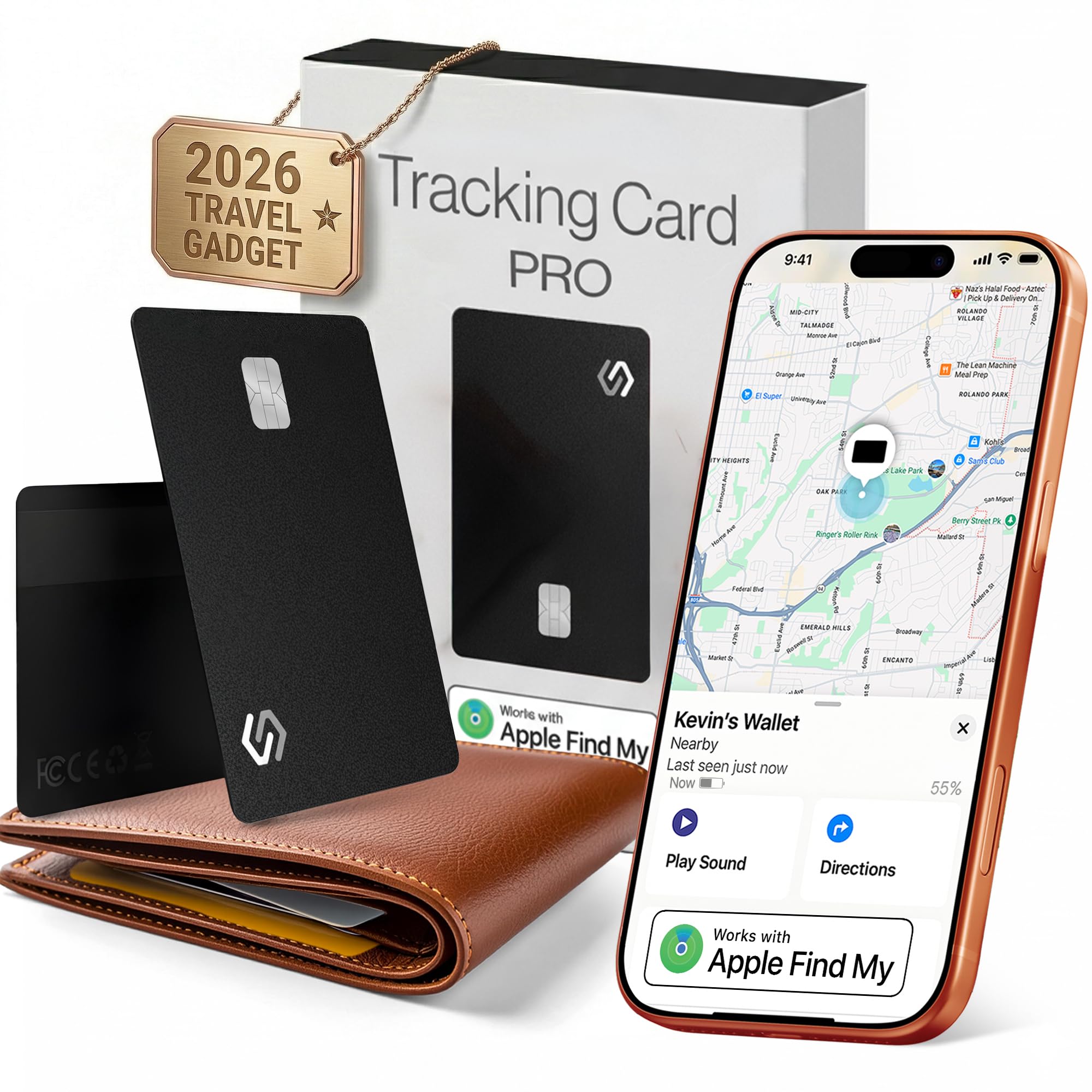
The SPOTMINDERS PRO takes a completely different form from typical luggage trackers: it’s a 1.8mm-thick wafer that looks exactly like a normal credit card. Slip it into a wallet, passport holder, or the card sleeve on a luggage tag and it vanishes. The 100 dB speaker is loud enough to cut through airport noise, and IP68 waterproofing means even a drenched checked bag won’t silence it.
That waterproof toughness and rechargeable battery (wireless Qi top-up every few months) eliminate disposable cell waste and survive immersion. The trade-off is locating precision. Without UWB, finding a checked bag relies entirely on the Apple Find My map dot and that loud beep — effective inside a hotel room or small terminal, but in a sprawling baggage hall you may need to walk the carousel perimeter until you’re within earshot. The card form factor also means you’re not going to attach it to the outside of a bag; it lives hidden inside.
This tracker suits travelers whose primary concern is wallet or passport protection and who only occasionally toss the same card into checked luggage as a secondary locator. Eco-conscious users will appreciate the rechargeable design, but anyone with a dedicated luggage-tracking mission should consider the top pick multi-pack — it provides replaceable batteries and arrow-guided finding at a much lower cost per tag. Android owners are out entirely; this works only with Apple Find My.
Pros
- Ultra-thin credit card design slips into a wallet, passport holder, or luggage tag sleeve almost invisibly.
- Rechargeable battery via wireless charging avoids disposable coin cells and lasts up to 8 months.
- 100 dB speaker cuts through background noise to help locate a bag inside a terminal or hotel room.
- IP68 waterproofing withstands complete immersion, so a soaking wet suitcase won’t damage the tracker.
Cons
- Bluetooth connection can drop, potentially delaying location updates when you need to track a bag in transit.
- No UWB precision finding — you rely entirely on sound and a map dot, which can be tricky in a crowded baggage hall.
If wallet stealth and rechargeable convenience are your first priority and you only occasionally need a backup tracker for checked luggage, the card form factor and loud alarm make this a discreet companion — but for dedicated luggage locating, the top pick’s directional finding and lower per-tag cost are hard to beat.
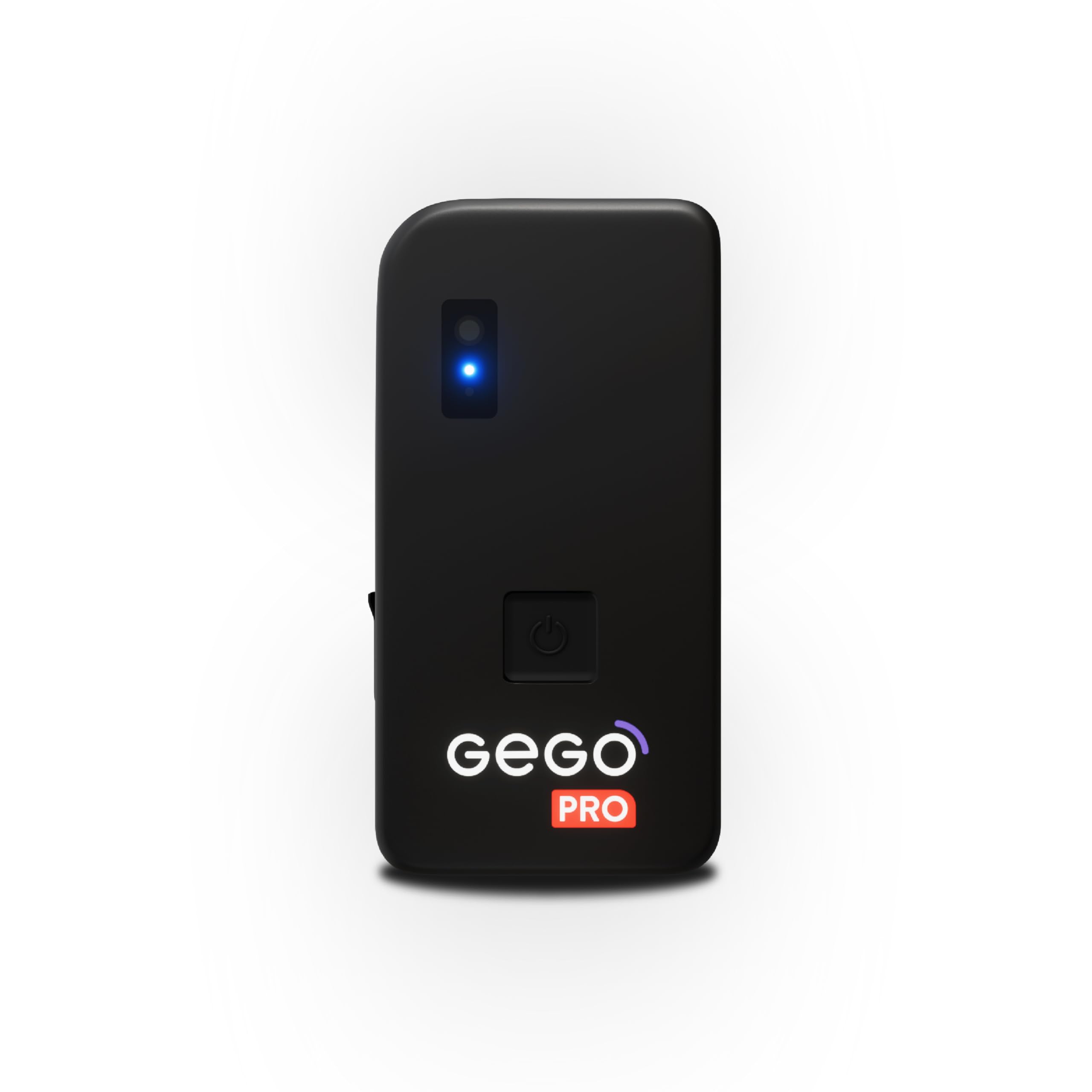
6. GEGO PRO GPS Tracker
Best for Gps Worldwide Tracking
Key Features
- Tracking network: 4G GPS (no crowd)
- Compatibility: iOS, Android
- Battery type and lifespan: Rechargeable (USB-C)
- Precision finding: No
- Price: Premium
The GEGO PRO places its own 4G LTE connection inside your suitcase, reporting location anywhere without relying on nearby phones. A built-in light sensor detects when the bag is opened and sends a tamper alert — a capability no other luggage tracker currently offers. Its flight mode automatically respects TSA and FAA regulations and can push landing notifications.
GPS connectivity requires a paid monthly subscription after the trial, which adds an ongoing cost that casual travelers won’t recoup over Find My-based tags. Battery capacity may not last a full multi-day journey without a recharge between flights, so you’ll need to manage power during layovers. For a checked bag holding camera bodies, instruments, or irreplaceable items traveling through regions with sparse phone coverage, that overhead is acceptable. For a standard holiday suitcase, the subscription and charging logistics are an unnecessary layer of management.
Pros
- Reports location via 4G LTE GPS, working where crowd networks can’t reach
- Light sensor alerts you the moment a bag is opened, adding security for sensitive gear
- Smart flight mode automatically complies with FAA/TSA regulations and signals landing
Cons
- Ongoing subscription fee required for GPS connectivity, adding to long-term cost
- On extended multi-leg trips, battery may need a recharge between flights — carrying a power bank becomes necessary
A focused tool for travelers carrying camera gear, instruments, or medical equipment into regions with unreliable Bluetooth coverage. For a standard checked bag, the subscription and charging cadence tip the balance toward crowd-powered Find My tags.
7. Tile Slim
Best for Thin Cross-Platform
Key Features
- Tracking network: Tile
- Compatibility: iOS, Android
- Battery type and lifespan: Non-replaceable, 3 yr
- Water resistance: IP68
- Precision finding: No
- Price: Mid-Range
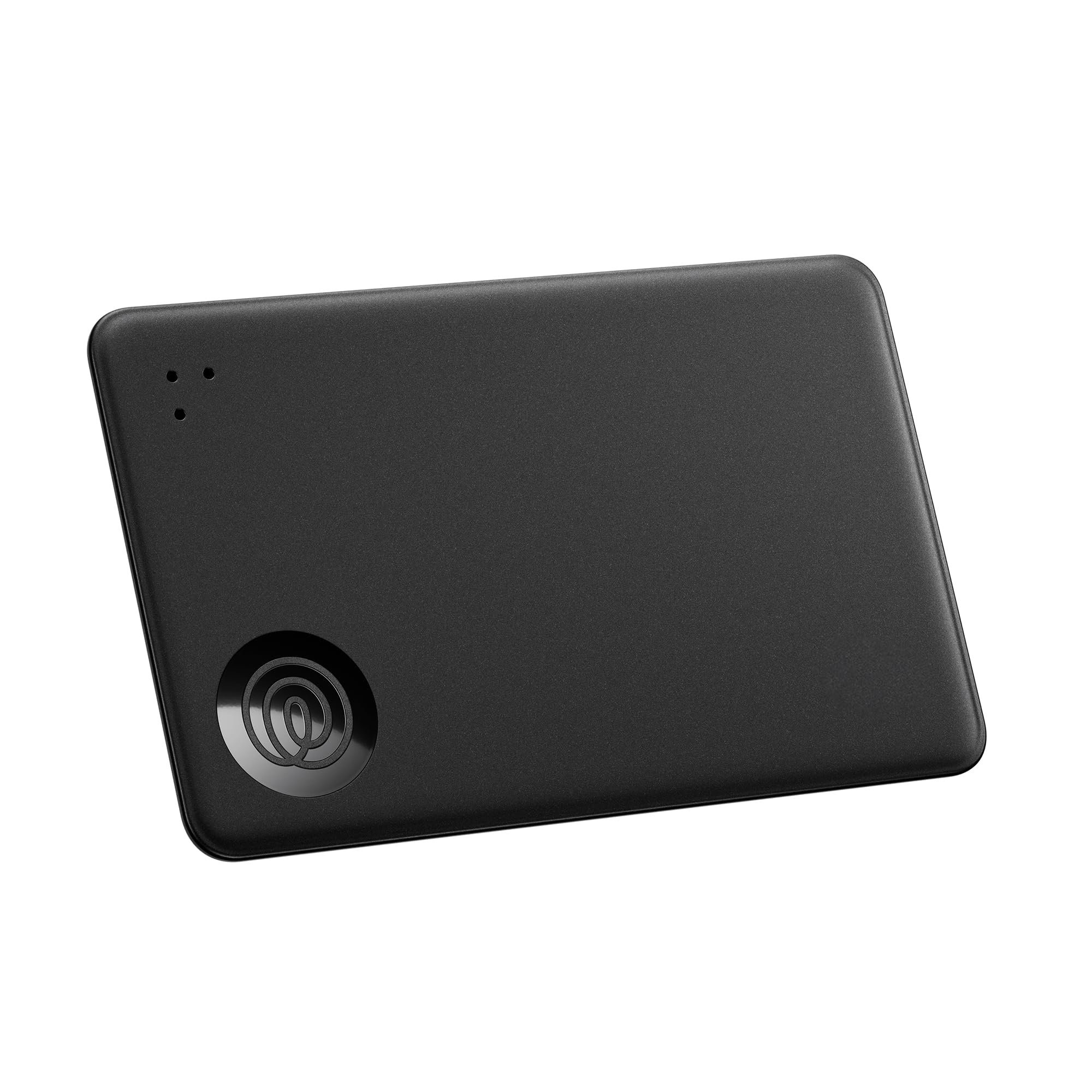
At 0.1 inches thick, the Tile Slim slides into luggage tag sleeves and passport wallets without bulging. It pairs with both iOS and Android devices through the Life360 app, so a mixed-device family can all track a checked bag. An IP68 rating keeps it safe from condensation and splashes inside cargo holds.
The non-replaceable battery locks you into a roughly three-year ownership cycle before the whole unit becomes e-waste. Tile’s crowd network is thinner than Apple’s Find My, particularly in European airports, which can mean fewer location pings when your bag is out of Bluetooth range. In loud baggage claim areas, the internal speaker may be too faint to hear, making the app’s map view more dependable than sound-based searching.
Pros
- Credit-card profile slips into luggage tag sleeves without adding bulk
- Works natively with both iOS and Android, avoiding ecosystem lock-in
- IP68 rating handles dust and water, surviving condensation inside checked luggage
Cons
- In loud airport terminals, the speaker may be too quiet to hear; rely on the app’s map location instead
- Non-replaceable battery turns the tracker into disposable e-waste after its roughly three-year life
The Tile Slim fits where thick fobs can’t—passport wallets and luggage tag sleeves—provided you’re comfortable replacing it every few years and relying on the app’s map when the speaker gets drowned out.
8. QUICKHORSE Card
Best for Affordable Card Tracker
Key Features
- Tracking network: Apple Find My
- Compatibility: iOS only
- Battery type and lifespan: Rechargeable, 4 mo
- Water resistance: IP68
- Precision finding: No
- Price: Mid-Range
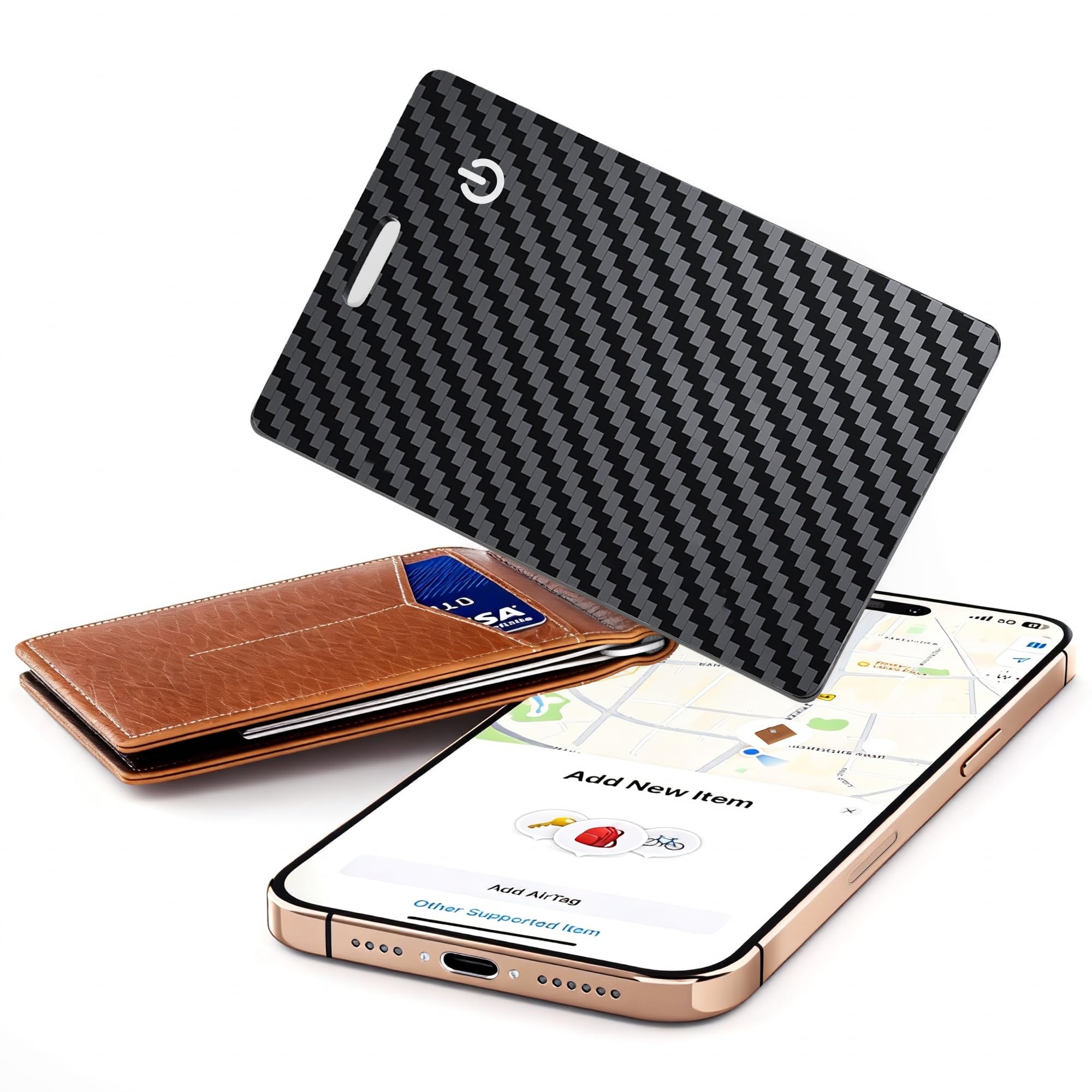
The QUICKHORSE Card’s 1.7 mm thickness disappears into a passport wallet or luggage tag sleeve, surviving full submersion with its IP68 rating while tracking via Apple’s Find My network. Its wireless rechargeable battery holds months of charge, sidestepping disposable coin cells. The 80 dB chime can get lost in busy terminals, and there’s no UWB arrow to guide you the last few feet. For those who pack passports and boarding passes in a thin tracker sleeve, it adds a backup layer to Find My tracking without the bulk or battery anxiety of thicker tags.
Pros
- Pairs with iPhone in seconds.
- Credit-card thickness slides into passport holders and luggage tags.
- Rechargeable battery lasts months per wireless charge, no disposable cells.
Cons
- Lacks UWB precision finding; you locate the bag by map and sound, without an on-screen arrow.
- 80 dB chime may be masked by crowd noise in a baggage hall; best confirmed via phone map.
If you’re adding a secondary waterproof tracker to a passport case or document organizer for Find My coverage, the QUICKHORSE Card eliminates disposable batteries — but plan to locate it by map rather than relying on the faint tone in a busy baggage hall.
9. ANNNWZZD Tag 4-Pack
Best for Dry-Use Budget Pack
Key Features
- Tracking network: Apple Find My
- Compatibility: iOS only
- Battery type and lifespan: Replaceable CR2032, 12 mo
- Precision finding: No
- Price: Budget
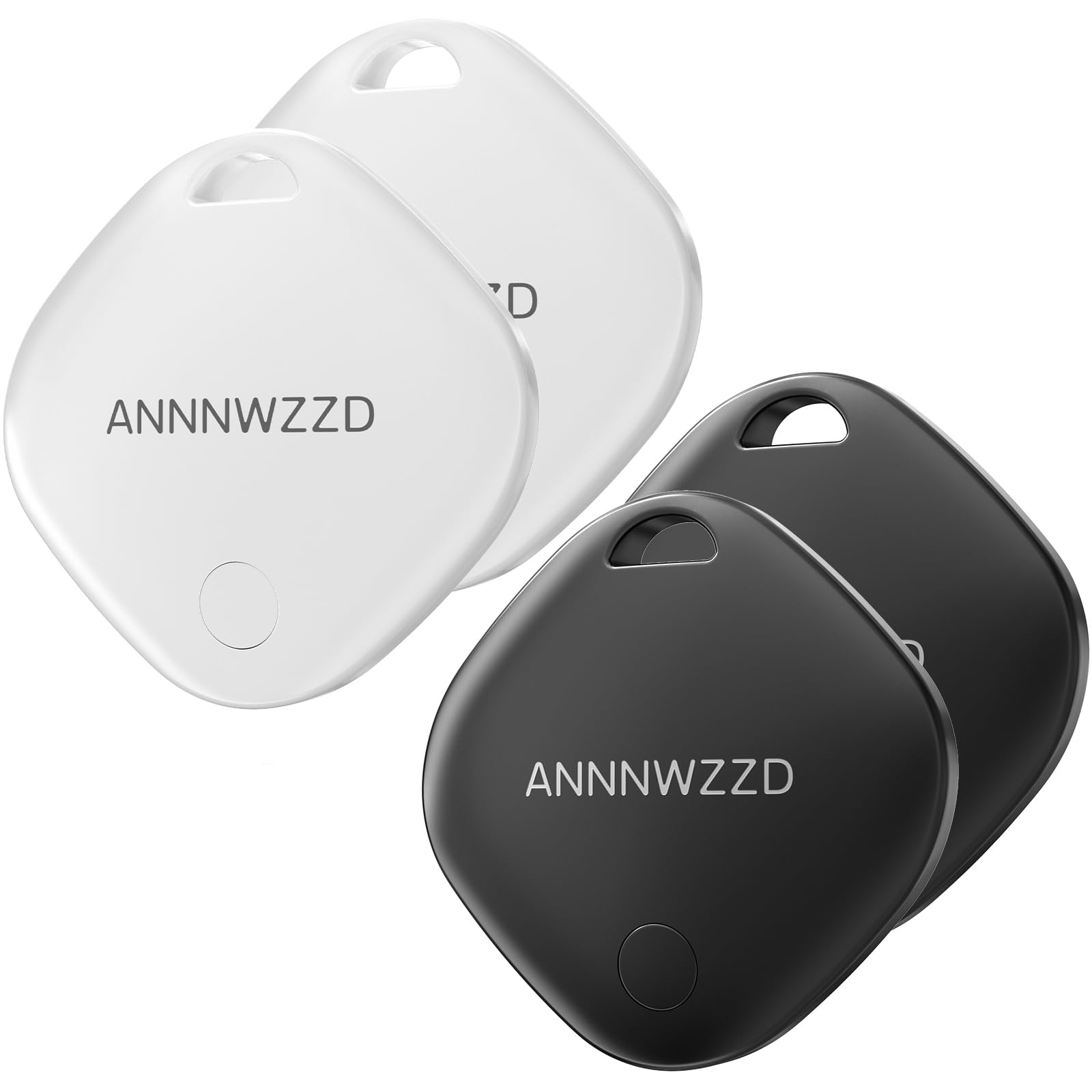
Setup with an iPhone takes seconds—just bring the tag near the phone and it pairs with Find My. Day-to-day tracking for keys, wallets, and carry-on luggage is seamless; location updates through Apple’s network are fast and dependable. The four-pack includes replaceable CR2032 batteries and delivers build quality that feels more substantial than its price suggests. For dry, indoor environments or bags that never see rain, it works like an AirTag without the premium cost.
The tradeoff is moisture: these tags carry no IP rating. Placing one in checked luggage that sits on a wet tarmac or gets rained on during loading can cause the tag to stop working. They also lack UWB precision finding, so you won’t get an arrow pointing to your bag—just a map dot and a speaker chime. That’s manageable inside a dry hotel room or apartment but less reassuring when searching a baggage carousel among dozens of identical suitcases.
Pros
- Near-instant iOS setup—pairs to Apple Find My in seconds, no app required beyond the built-in one.
- Consistent location updates and a dependable Find My connection for carry-on and indoor item tracking.
- Exceptional value in a 4-pack; replaceable CR2032 battery and build quality that feels above its price tier.
Cons
- Lacks UWB precision finding; you get a map dot and audible chime instead of an arrow-guided search.
- No IP water-resistance rating; exposure to rain or wet surfaces can render the tag inoperable inside checked luggage.
For luggage that stays dry—as carry-on or secured inside a waterproof liner within a checked bag—the ANNNWZZD tag delivers reliable Find My tracking at a fraction of the cost of an AirTag. Skip it if your suitcase ever sits on a wet tarmac.
How to Choose
A checked-luggage tracker survives or fails based on two overlooked details: water resistance and the ability to swap a battery on the road.
Tracking Network
Crowd-sourced tracking uses nearby phones to ping your tag. In major UK and European airports and city centres, Apple’s Find My network is densely populated, so an iOS-only tag updates location reliably every few minutes. Google’s Find Hub is growing but remains thinner on the ground, which can mean large gaps between location pings—frustrating if your bag is sitting on a rainy tarmac in a smaller regional airport.
Dedicated GPS with a 4G radio works anywhere, independently of other phones, but demands a monthly subscription and frequent recharging. For most holiday luggage, Apple’s crowd network is more than sufficient; save GPS for remote-area adventurers carrying irreplaceable gear.
Compatibility
A tracker tied to a single platform (iOS only or Samsung-only) locks you into that ecosystem. If anyone in your travel group uses a different phone, that person can’t check the bag’s whereabouts. Dual-network tags that bridge Apple and Google remove that friction, letting a mixed-device family monitor the same set of suitcases—at the cost of slightly less polished integration.
Battery Type and Lifespan
Replaceable CR2032 coin cells let you carry spares and swap a dead battery in seconds at any airport newsagent. Sealed, non-replaceable batteries doom the tracker to a landfill death after its 2–3 year life, and they can fail prematurely if the ping frequency is high. Rechargeable models eliminate disposable waste but demand that you remember to top them up before a trip.
The real world rarely matches advertised longevity: constant motion and airport pings drain cells faster. A tag that claims 12 months might realistically need a new battery after 6–8 months of heavy travel. Replaceable batteries are the traveller-friendly choice because you’re never stranded without tracking.
Water Resistance
Checked suitcases are exposed to rain on open baggage carts, condensation in holds, and occasional spills from neighbouring luggage. A tag without an IP rating can short out when moisture seeps in, leaving you blind mid-trip. Look for IP67 or higher: it ensures the tracker withstands temporary immersion and heavy splashes, which is exactly what luggage encounters.
Precision Finding
Ultra Wideband (UWB) adds an arrow-guided on-screen compass that points directly to your bag when you’re within Bluetooth range—invaluable in a chaotic baggage reclaim. Without UWB, you rely on the built-in speaker and a map dot. In busy terminals, a quiet speaker may be drowned out, so if you skip UWB, prioritise a tag with a loud alarm (90 dB or above) to compensate.
FAQ
Why does my luggage tracker battery die after only a few months when it’s supposed to last a year?
Constant pinging from airport crowds, temperature swings, and the quality of the factory battery can drain it far faster than the idealised spec. A tag that pings frequently to update location chews through the cell. Choose a tracker with a user-replaceable CR2032 so you can swap a fresh Duracell in and keep going mid-trip, rather than being left with a dead sealed unit.
Can I use an Apple AirTag alternative for checked luggage in Europe?
Yes, and many third-party Find My tags actually add features Apple omits, like IP67 water resistance and an integrated keyring loop. As long as the tag is MFi certified, it taps into the same vast Find My network that blankets European airports. Just confirm it has an IP67 or higher rating, because non-waterproof variants are a gamble with checked luggage.
Do I need a subscription to track my luggage with GPS?
Most Bluetooth crowd trackers (all Find My, Google Find Hub, and Tile tags) require no subscription. Only dedicated GPS trackers like the GEGO PRO, which use their own 4G chip to report location independently, demand a monthly fee after a short trial. For the typical European holiday, the free crowd networks are enough.
How reliable is Bluetooth crowd tracking for luggage in European airports compared to GPS?
In a busy terminal like Heathrow or Schiphol, an Apple Find My tag updates its location within 2–5 minutes because hundreds of iPhones pass by. GPS works everywhere but sacrifices battery life and adds a subscription; Bluetooth crowd tracking is the far more practical choice for checked suitcases, unless you travel to remote areas with hardly any phones nearby.
Can I find my bag quickly in a crowded baggage hall without precision finding?
Yes, but you’ll rely on the speaker and the map dot. In a noisy reclaim area, a quiet speaker makes locating your bag slower. Tags without UWB should have a loud alarm—90 dB or above—and a design that stays audible inside a closed suitcase. Playing the sound repeatedly while watching the map pings works, but arrow-guided UWB is undeniably faster when you’re standing a few metres away.