This post contains affiliate links. We may earn a small commission when you buy through our links — at no extra cost to you.
Nothing punctures the post-flight calm like staring at an empty baggage carousel. A Bluetooth tracker promises to cut that anxiety, but pop one in a suitcase without understanding a few blunt realities and you’ll likely end up staring at a phone that says “last seen 6 hours ago.” These are not live GPS units; they lean on nearby phones to whisper a location back to you, and that network is wildly different depending on the tracker you pick.
The fallout is a market carved in half by phone operating systems. Apple’s Find My network has become an almost invisible helper across European airports and train stations, while Android’s equivalent is still stitching together coverage. Pick the wrong one for the phone in your pocket and that tracker becomes dead weight the moment your bag leaves Bluetooth range. This guide cuts through that divide and the marketing noise to show which models reliably shout loud enough to be heard inside a packed roller bag, and which ones leave you refreshing a map that never updates.
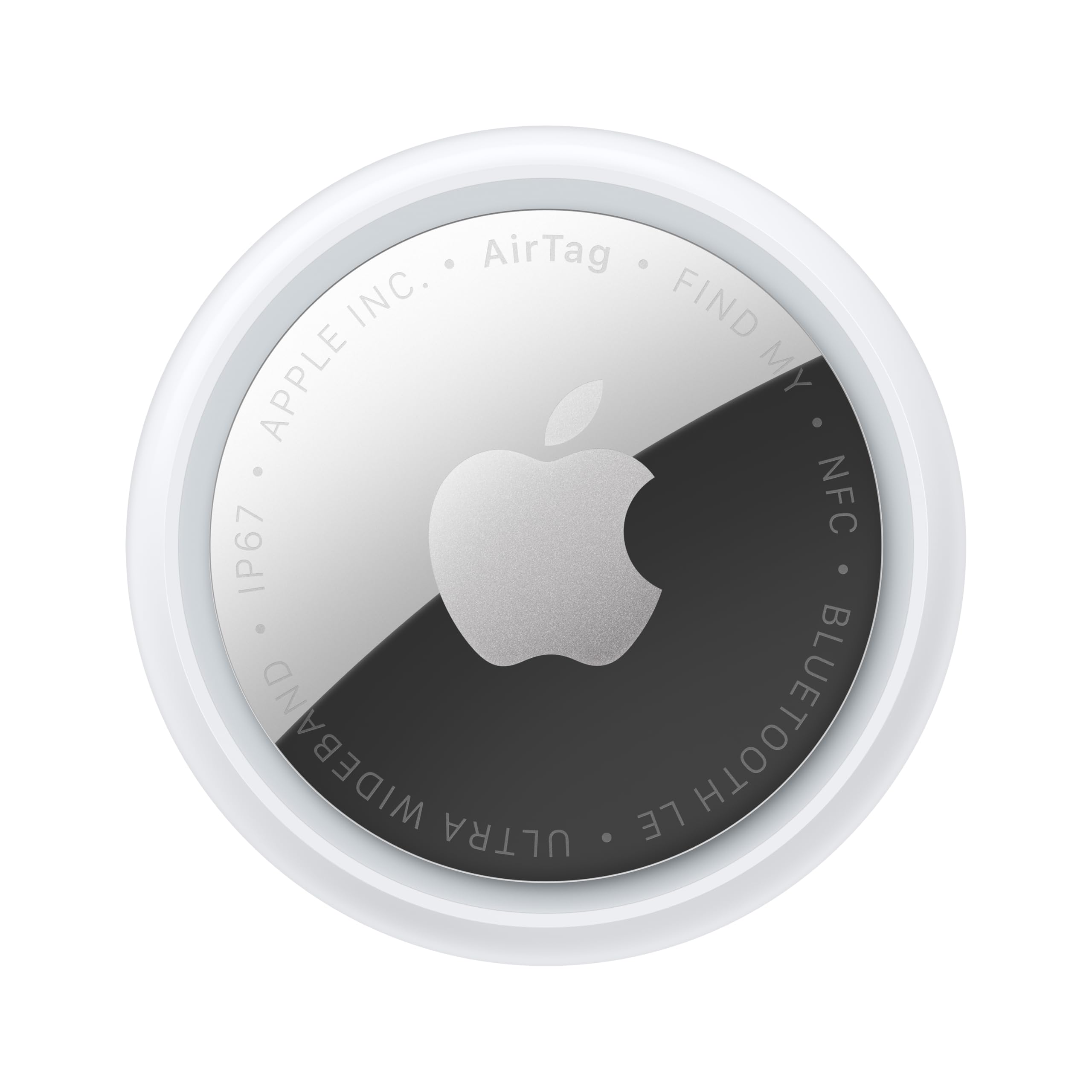
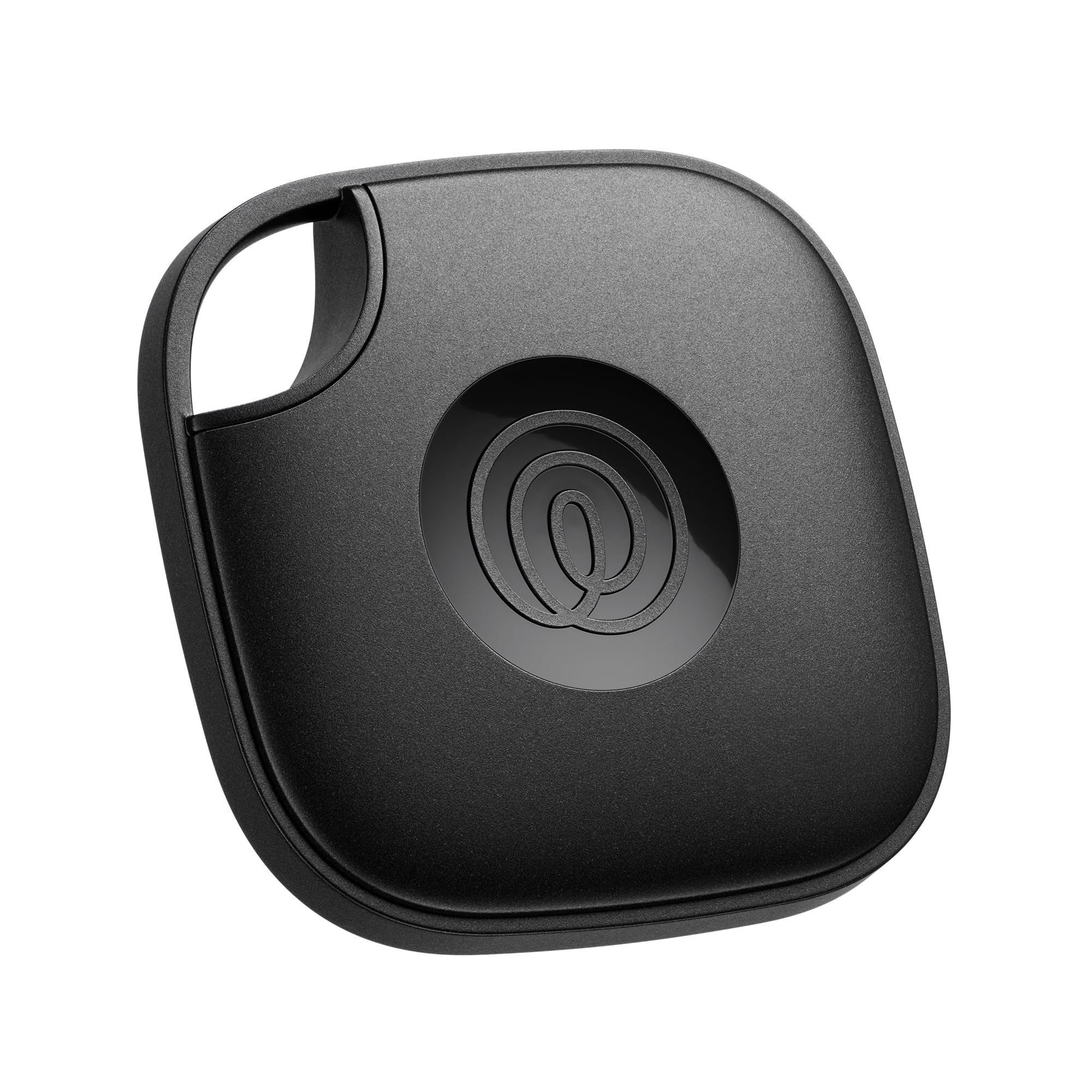


1. Apple AirTag 2nd Gen
Best for Iphone Travelers
Key Features
- Compatible Platform: iPhone/iPad (iOS)
- Battery: Replaceable CR2032
- Form Factor: Standard tag
- Price: Mid-Range
The second-generation AirTag uses Ultra Wideband to show you exactly where your luggage is—directional arrows and a distance meter appear on your iPhone or Apple Watch as you get close. This precision finding works up to the limit of UWB range (roughly 10–15 metres in clear air), and beyond that the vast Find My network takes over, using nearby iPhones to report the tag’s location.
When a bag goes missing at an airport, the AirTag’s louder speaker—50% more volume than the first generation—makes it easier to hear among the rumble of conveyor belts. The crowd-sourced map update is fast: within seconds of a passing iPhone, the last known location appears. For travellers, the airline-sharing feature is a standout: you can generate a temporary link to share the AirTag’s location with airline staff, so they can track the bag without needing an Apple device.
The AirTag is designed for iPhone users who want the best possible tracking network for luggage. It is not compatible with Android devices, and there is no way to use it with a non-Apple phone. The price sits in the mid-range, but the replaceable CR2032 battery (over a year of life) and 85% recycled plastic construction make it a more sustainable long-term choice than cheaper sealed alternatives.
Where other Bluetooth tags rely on smaller networks (Tile, Life360), the Find My network’s sheer density means your luggage is far more likely to be seen by a passerby in a busy European travel hub. Accuracy within UWB range also reduces the frantic searching through overhead bins or baggage carousels.
Pros
- Step-by-step directions on your iPhone let you walk directly to your luggage, even in a busy terminal.
- One-tap pairing with Find My—no app to download or account to create.
- The 50% louder speaker makes the audible ping cut through baggage noise.
- Replaceable CR2032 battery lasts over a year, avoiding the need to replace the entire tag.
Cons
- The pre-installed CR2032 battery may be depleted during shipping, requiring immediate replacement.
- Initial pairing may occasionally fail, requiring a manual reset or repeated attempts to connect.
For iPhone users who travel regularly, the AirTag 2nd Gen provides the most consistent luggage-tracking network and precision tools available—just keep a spare CR2032 handy for the first use.
2. Tile Mate (Life360)
Best for Mixed Devices
Key Features
- Compatible Platform: iOS & Android (Life360)
- Battery: Replaceable CR2032
- Form Factor: Standard tag
- Price: Mid-Range
A 100 dB speaker makes this Tile easy to locate even when buried in checked luggage, and the replaceable CR2032 battery extends the device’s usable life beyond a single cycle. Unlike the top pick, this tracker works across iOS and Android through the Life360 app — a key advantage for families with mixed phone types.
This suits households where members use different phone ecosystems, ensuring everyone can locate shared items like luggage. The Tile crowd network is smaller than Apple’s Find My, so if a bag goes missing in a rural area, location updates may take hours or never arrive. Battery life can vary between units, with some reports of sudden depletion well before the 3-year mark — worth checking before extended travel.
Pros
- Loud 100 dB speaker is audible even inside packed luggage.
- Replaceable CR2032 battery allows the tracker to last beyond a single battery cycle.
- Cross-platform support via Life360 works with both iOS and Android devices.
Cons
- Battery life can be unpredictable — some units may not reach the advertised 3 years.
- Location updates rely on the Tile network, which is smaller than Apple Find My, leading to slower or missed updates in rural areas.
Best for mixed-device households that need a loud, replaceable tracker; less suitable for travelers relying on Apple’s dense Find My network for lost luggage recovery.
3. Samsung SmartTag2
Best for Samsung Owners
Key Features
- Compatible Platform: Samsung Galaxy only
- Battery: Replaceable CR2032
- Water Resistance: IP67
- Form Factor: Standard tag
- Price: Mid-Range
Setup on a Samsung Galaxy phone takes under a minute — the SmartTag2 appears in SmartThings Find with no extra steps. The UWB Compass View points an arrow directly toward your tag, making it easy to pinpoint a suitcase behind a hotel luggage cart. Unlike the top pick for iPhone users, this tag is locked to Samsung Galaxy devices; it won’t work with other Android phones or iPhones.
The travel-history log is a practical addition for frequent flyers — it records locations where the tag was detected, so you can retrace where your bag went. Battery life is rated at 500 days, but some users find the low-battery alert can trigger within weeks of installation, and actual battery duration may fall short of the claim. The IP67 rating means accidental rain or a splash won’t cause issues.
This tracker makes sense for travelers who already own a Samsung Galaxy phone and want the tightest integration available for luggage tracking. If you share baggage with someone using a different phone brand, the device lock-in becomes a real limitation. The sporadic battery warnings may require you to keep a spare CR2032 handy — a minor inconvenience for the UWB precision the tag offers.
Pros
- Instant pairing and deep integration with Samsung Galaxy phones via SmartThings Find.
- UWB Compass View gives directional guidance to your tag, speeding up close-range searches.
- Stores a travel-history log of detected locations, helpful for retracing luggage transit.
- IP67 waterproof rating handles rain or brief submersion during travel.
Cons
- Only works with Samsung Galaxy phones — no support for other Android or iOS devices.
- Low-battery warnings may appear shortly after installation, and actual battery life can be less than the 500-day estimate.
For Samsung Galaxy owners who want UWB precision and a built-in travel log, the SmartTag2 is the natural choice — just keep a spare battery on hand and accept the platform lock-in.
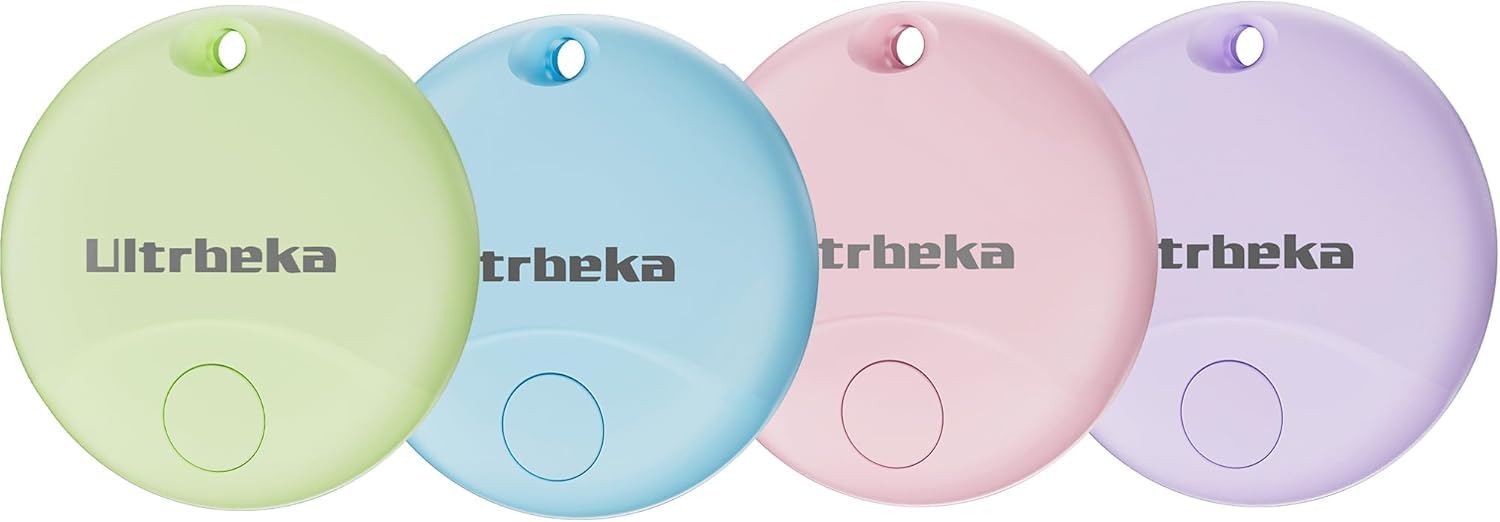
4. Ultrbeka Air Tracker 4-Pack
Best for Families
Key Features
- Compatible Platform: iOS (Apple Find My)
- Battery: Replaceable CR2032
- Water Resistance: IP67
- Form Factor: Standard tag
- Price: Budget
Pairing the Ultrbeka trackers with an iPhone is a matter of seconds — the Find My integration is immediate and consistent. The IP67 water resistance, replaceable CR2032 battery, and a choice of fun colours give it a polished feel that matches its attractive price. Each tag broadcasts a clear ring when activated, and the crowd-sourced network updates location from nearby Apple devices.
This 4-pack is a cost-effective choice for iPhone-owning families who want to tag luggage, backpacks, and keys without the premium cost of Apple’s own AirTag. The trade-off is the lack of Ultra Wideband (UWB) precision finding — instead of a directional arrow directing you to the lost item, you get a proximity-based chime that grows louder as you get closer. If you frequently need to locate items in cluttered spaces like a hotel room or a packed suitcase, the absence of step-by-step guidance may slow you down.
In daily use, the trackers maintain a stable connection within typical Bluetooth range, and the Find My network updates location consistently when other iPhones pass by. The sound from the built-in speaker is loud enough to hear from inside a zipped bag, though not as piercing as some competing models. Battery life aligns with the stated 12–24 months; replacing the coin cell is easy and requires no tools.
Pros
- Effortless pairing with Apple Find My network
- IP67 water resistance protects against rain and splashes
- Tracking accuracy is dependable for the price
Cons
- Lacks UWB precision finding — you only get a ringing sound, not directional arrows
For iPhone users who don’t need compass-style precision, this 4-pack offers the core Find My experience at a fraction of the cost — a smart buy for tracking everyday luggage and bags.
5. UGREEN FineTrack 4-Pack
Best for Long Battery
Key Features
- Compatible Platform: iOS (Apple Find My)
- Battery: Replaceable CR2032
- Form Factor: Standard tag
- Price: Budget
A two-year CR2032 battery puts the UGREEN FineTrack ahead of most Find My alternatives in sheer runtime, while still providing full access to Apple’s crowd-sourced location network. Unlike the top-pick AirTag, there’s no precise arrow or distance readout to guide you — you get a proximity ring and a sound, so spotting your suitcase among similar bags takes more manual scanning. Clean Find My integration means the tag appears in your devices list after a short button press, no separate app needed.
Families sharing a few tags across luggage, backpacks, and carry-ons get four-tracker coverage at a cost-effective price. This is for iPhone users who can tolerate a brief audio search rather than step-by-step instructions. If luggage is buried in a terminal, you’ll rely on the speaker and the ring’s signal strength. Tag reconnection can be finicky — toggling the Bluetooth permission in Find My usually resolves it, but it’s a small extra step when you’re in a hurry.
Pros
- Four-pack value covers luggage, keys, and bags without buying individual tags.
- The replaceable CR2032 battery lasts up to two years, minimizing maintenance.
- Setup is simple: a button press adds the tag to Apple’s Find My app with little fuss.
- Uses the same Find My network as Apple AirTag for global luggage tracking.
Cons
- Paired tags may occasionally require a manual reconnect if Bluetooth drops.
- Tracking precision is limited to Bluetooth proximity — no UWB arrow guidance for locating luggage inside a terminal.
For iPhone users who prioritize low-cost, multi-bag tracking and a battery that lasts years, the UGREEN FineTrack 4-Pack delivers the core Find My experience without the premium. Expect to hunt by ear, not arrow.
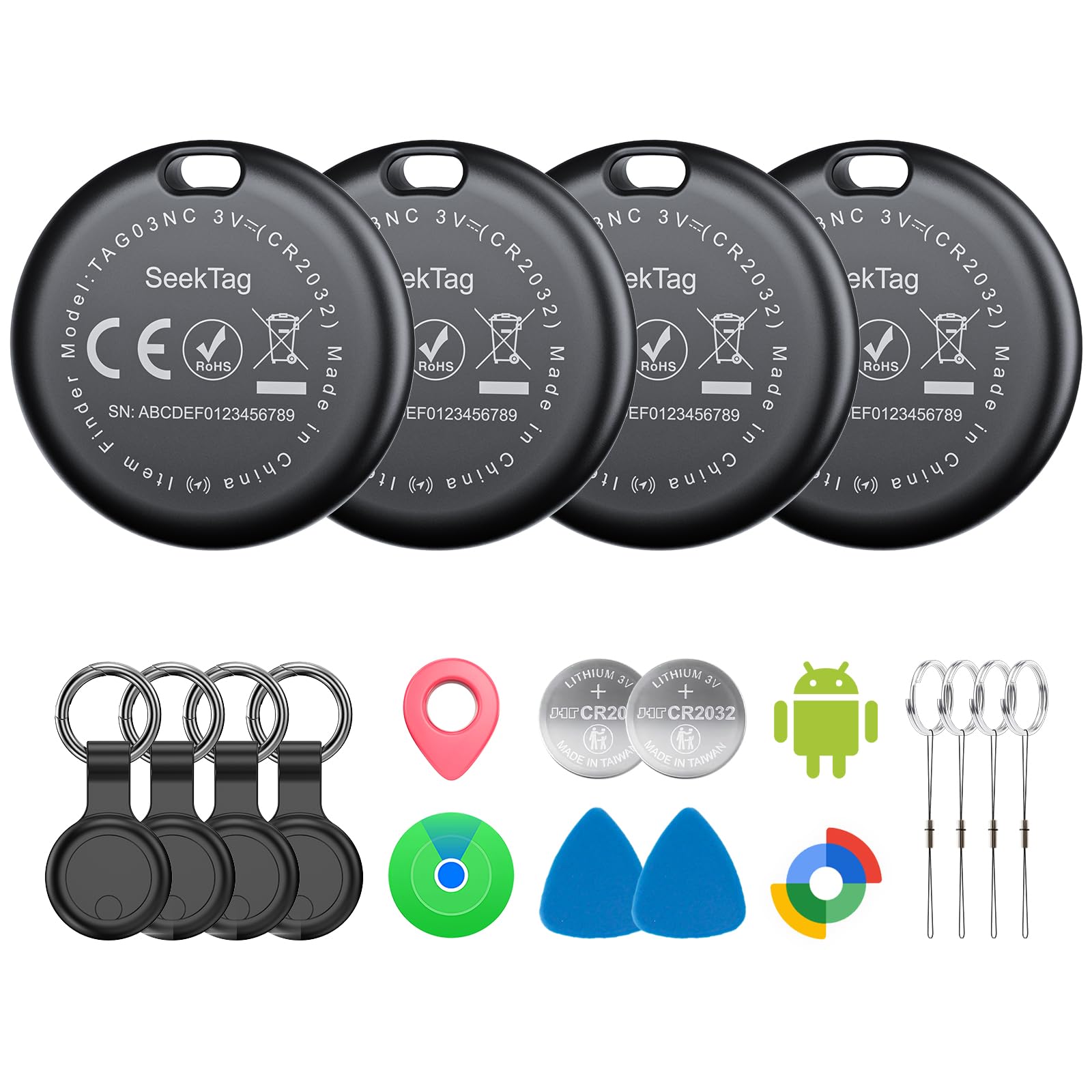
6. KIUP SeekTag 4-Pack
Best for Dual Platform
Key Features
- Compatible Platform: iPhone & Android
- Battery: Non-Replaceable
- Water Resistance: IP65
- Form Factor: Standard tag
- Price: Premium
The KIUP SeekTag solves a specific problem that native tags can’t: one tracker that works across both Apple Find My and Google Find Hub networks. Out of the box you get four tags, spare CR2032 batteries, and a warranty period that adds peace of mind for mixed-device households.
This 4-pack suits households where some family members use iPhones and others use Android phones, or for travellers who switch between platforms during a trip. The trade-off is a sealed battery that lasts roughly two years – when it depletes, you replace the whole tag. Location updates are sufficient for recalling the general area of a bag, but not for pinpointing it inside a room; the reading can be coarser than what AirTag or SmartTag2 deliver on their native networks.
The 100 dB speaker is loud enough to hear across a hotel room or under a seat, and IP65 water resistance handles light rain during outdoor stops. Range is advertised at 100 metres in open air, though real-world performance depends on the density of nearby phones running the respective finder network. In areas with sparse coverage, the tag may only show its last-known location rather than live updates.
Pros
- Cross-platform compatibility works with both Apple Find My and Google Find Hub networks.
- Spare CR2032 batteries and a generous warranty are included in the box.
- Loud 100 dB speaker makes it audible across a typical hotel room or under luggage.
Cons
- In a home or hotel room, location updates may show only a general area rather than a precise spot.
- The non-replaceable battery means the entire tag must be discarded after about two years – not ideal for those prioritising low e-waste.
For mixed-device households who prioritise platform flexibility over lifetime longevity and pinpoint accuracy, the SeekTag 4-pack offers functional tracking without locking into one ecosystem.
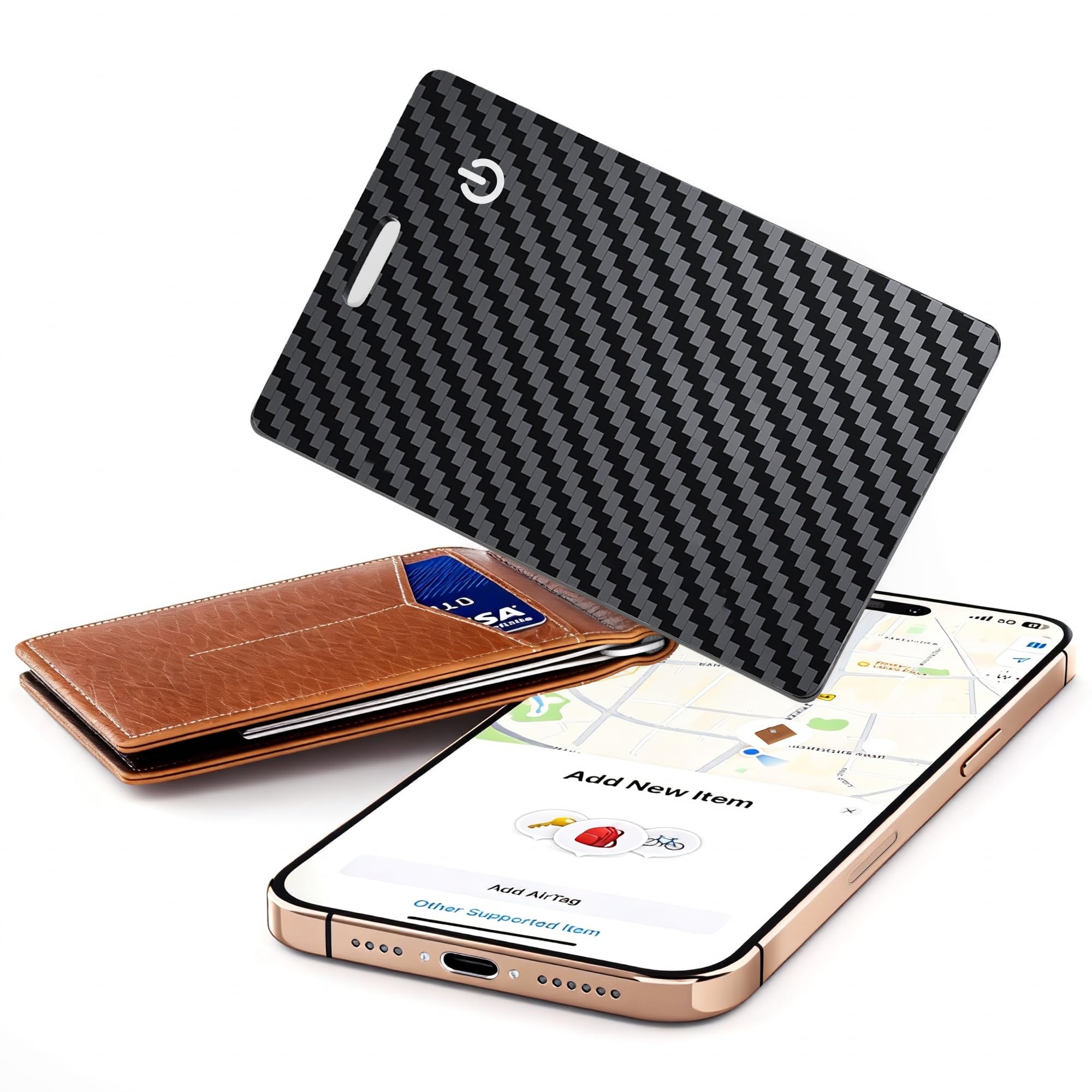
7. QUICKHORSE Wallet Card
Best for Wallet Tracking
Key Features
- Compatible Platform: iOS (Apple Find My)
- Battery: Rechargeable
- Water Resistance: IP68
- Form Factor: Wallet card
- Price: Budget
The QUICKHORSE card slides into any wallet or passport cover without adding thickness—it’s barely noticeable until you need to find it. IP68 waterproofing and a surprisingly loud speaker help you locate it even in a buried bag pocket. Wireless charging tops up the battery with a Qi pad, so you never hunt for a coin cell. For a passport holder or slim clutch, this is a clever, unobtrusive tag.
The four-month battery life is the trade-off for that thinness. If you’re expecting a set-and-forget luggage tracker that lasts a year, this will disappoint—you’ll need to recharge before every trip and mid-holiday if the trip runs long. It’s also an Apple-only device, leaving Android users out. But for an iPhone owner who packs a passport cover and can commit to a quick pre-trip charge, it’s a discreet secondary tracker that hides in plain sight.
Pros
- Ultra-thin credit-card profile slips into any wallet or passport holder without adding bulk.
- Wireless charging eliminates replacing coin cells, and the alarm is loud enough to hear in a noisy room.
Cons
- Works only with Apple Find My, leaving Android users completely out.
- Battery lasts roughly four months per charge, requiring pre-trip recharges that are easy to forget.
This tracker suits iPhone owners who need a slim card for passports or wallets and can charge every few months, but it’s not a maintenance-free luggage tag.
8. eufy SmartTrack Link
Best for Basic Tracking

Key Features
- Compatible Platform: iOS (Apple Find My)
- Battery: Replaceable CR2032
- Water Resistance: Water-resistant
- Form Factor: Standard tag
- Price: Budget
The eufy SmartTrack Link strips the price of entry to Apple’s Find My down to its essentials. It adds a couple of eufy app conveniences that even Apple’s own tag skips — a scannable QR code anyone can use to contact you, and left-behind notifications that ping your phone when you walk away from a bag. The replaceable CR2032 keeps running costs low.
The trade-offs at this price point relegate it to tracking non-essential items like keys left in a café, a gym bag, or a secondary tag on a daypack — not the luggage you’d be frantic to recover. For critical travel tracking, the top pick in this set delivers a more robust safety net.
Pros
- Works with Apple Find My and adds eufy app perks like left-behind alerts and QR code contact sharing.
- Costs less than most single tracker tags while using a replaceable CR2032 battery.
Cons
- In a noisy terminal, the tag’s alarm can be too quiet to locate your bag among the din.
- A tag may lose its pairing to the Find My network and not reappear until you manually reset it.
For an iPhone user tracking a daypack or jacket where a missed alert or a lost connection won’t disrupt a journey, this is a sensible budget entry into Find My.
How to Choose
The most important decision when buying a Bluetooth tracker for luggage isn’t about features — it’s about which phones will be looking for it.
Compatible Smartphone Platform
Bluetooth trackers don’t connect to satellites; they rely on a crowd-sourced network of phones running the same tracking service. Apple’s Find My network includes hundreds of millions of iPhones silently updating locations across airports and train stations, making it the densest coverage in the UK and Europe. Google’s Find Hub network is newer and far less populated, so an Android-only tracker may stay invisible for longer stretches outside busy city centres.
A tracker mismatched to your phone is useless. If anyone in your household uses both iOS and Android, you either buy two platform-specific sets or accept the compromises of a rare dual-platform model like the KIUP SeekTag, which sacrifices battery replaceability and location precision for flexibility.
Battery Type and Replaceability
Many trackers ship with a coin-cell CR2032 that lasts a year or more and can be swapped in seconds. Others, especially slim card-style models and some KIUP designs, seal the battery inside — forcing you to replace the entire device once it dies. Real-world failure often comes sooner than the advertised two or three years, turning ‘sealed’ into ‘disposable’ and creating e-waste.
Rechargeable trackers like the QUICKHORSE Wallet Card side-step cell replacements but demand a recharge every four months. Forgetting to top up before a trip can leave you without tracking on arrival. For a luggage tracker that lives in a suitcase, a replaceable battery you change once a year is the lower-friction choice.
Water Resistance Rating
An IP67 or IP68 rating means the tracker can survive a dunk in a puddle or a spill inside a toiletry bag, which is realistic for luggage. IP65 only protects against jets of water, not full immersion. Models with no IP rating may handle light rain but can fail if condensation builds up in a damp suitcase hold. For peace of mind on drizzly platforms and ferry boots, IP67 or higher is the safer bet.
Form Factor
Standard key-fob trackers have a hole for a lanyard or clip, making them easy to loop inside a suitcase lining or attach to a luggage tag. Card-shaped trackers slide into wallets and passport holders but often lack speaker grilles that project sound effectively when buried under clothes. If you mainly want luggage tracking, the standard chunky tag is easier to attach and hear.
Speaker Loudness
When you’re trying to pinpoint which black roller bag is yours at the carousel, a loud ring can cut through background noise. A 100 dB speaker is noticeably more audible inside luggage than the 85 dB output common on budget models, which can be muffled completely by a folded jacket. Devices without a dB spec can be a gamble, but Apple’s newest AirTag deliberately amplified output by 50% over its predecessor for this very reason.
FAQ
Why does my Tile tracker battery die after only a few months?
Tile’s own spec sheets advertise up to three years, but real-world drain varies sharply — especially if the tracker frequently broadcasts at maximum power when separated from your phone. The Tile Slim has a sealed battery, so early death means replacing the whole unit; the Tile Mate uses a CR2032 you can swap, but some batches have inconsistent voltage sag that triggers false ‘low battery’ warnings.
Can I use a Samsung SmartTag with an iPhone?
No. Samsung SmartTags pair exclusively with Samsung Galaxy phones running the SmartThings Find service. They are completely invisible to iPhones and to non-Samsung Android handsets. If you carry a Galaxy device, the Compass View UWB guidance works well, but anyone in a mixed-device travel group needs a different tracker.
Do these Bluetooth trackers provide real-time GPS tracking for luggage?
They do not. Bluetooth trackers have no cellular or satellite connection; they update their location only when a phone in the same tracking network passes within Bluetooth range — roughly 100 to 120 meters. In a busy airport, that might be minutes. On a rural train platform or quiet ferry, it can be hours. For true live tracking, you’ll need a purpose-built GPS tracker with a cellular data plan, which is a different product category entirely.
Is the Apple AirTag 2nd generation loud enough to hear inside a suitcase?
Yes, Apple raised the speaker output 50% over the first-generation AirTag, and most luggage fabrics and shells don’t block the ring enough to silence it in a quiet baggage hall. In noisy settings you may still need to lean closer, but the combination of a louder speaker and precision finding arrows on your screen makes locating a buried AirTag significantly faster than with quieter or directionless budget tags.
Is there a tracker that works well with both Android and iPhone?
The KIUP SeekTag is the only model with genuine dual-platform support, connecting to both Apple Find My and Google Find Hub. The trade-off is a sealed, non-replaceable battery and occasionally vague location updates compared to platform-native alternatives. The Tile Mate also works with both operating systems through Life360’s own app, avoiding the sealed-battery problem but relying on a smaller community network.