This post contains affiliate links. We may earn a small commission when you buy through our links — at no extra cost to you.
Searching for a ‘toddler airplane bed’ floods you with inflatable cubes, foot hammocks, and seat extenders that all claim to help your child sleep. But most lack the one thing that transforms an economy seat into a safe sleep surface: an integrated child safety belt and raised side bumpers.
Airlines themselves are inconsistent—some crews allow any inflatable, others refuse them outright regardless of design. The models that work best pair that secure restraint with quick, quiet inflation and compact packing size, so you aren’t wrestling with a pump in the aisle while your toddler melts down.
This guide separates genuine toddler airplane beds from the footrests and hammocks, so you can pick a product that truly gives your 1- to 4-year-old a protected, lie-flat spot to rest.
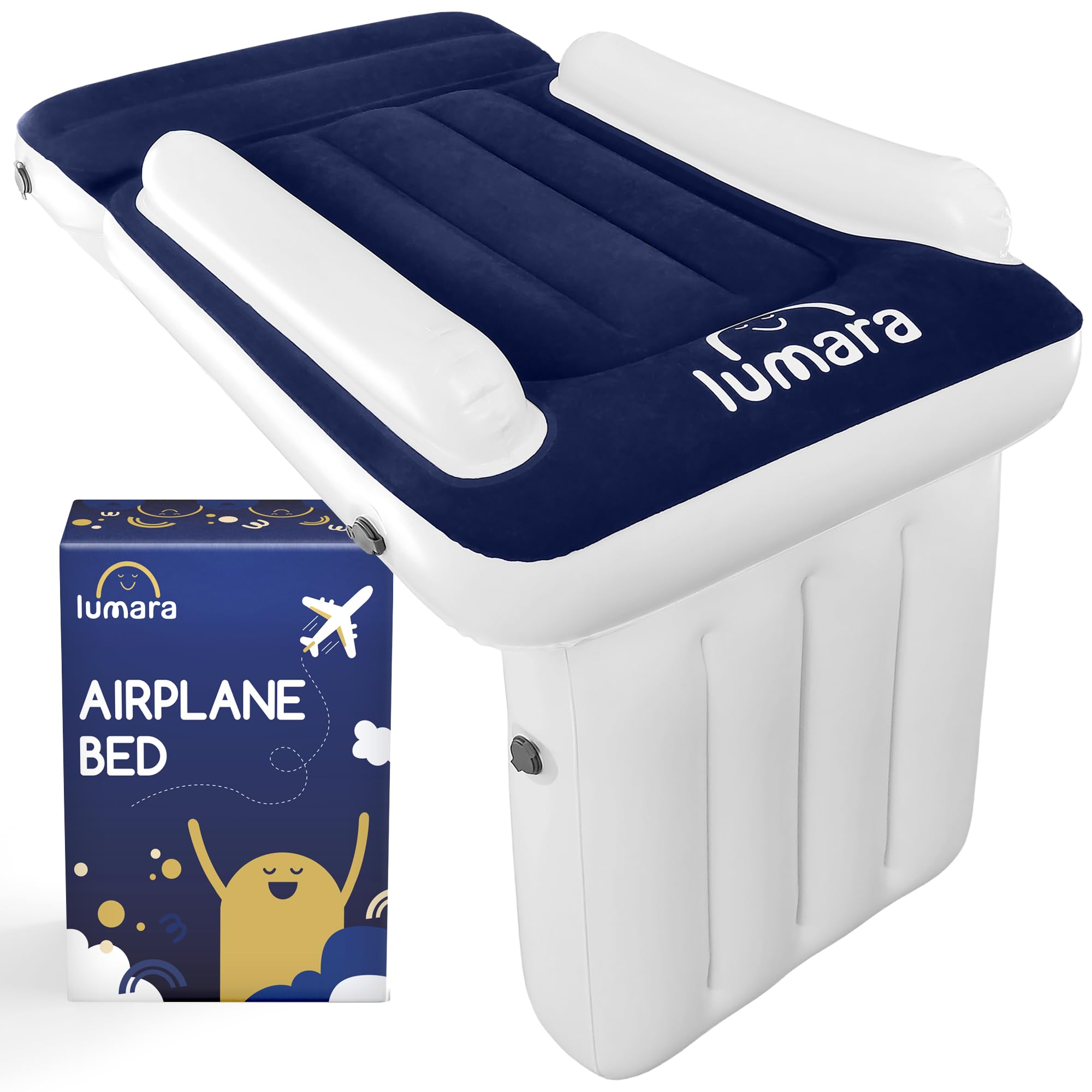
1. LUMARA Toddler Airplane Bed
Best for Safe Lie-Flat Bed
Key Features
- Safety Features: Integrated belt, raised bumpers
- Inflation Method: Mouth-inflatable, no pump, quick deflate
- Weight & Packed Size: 2 lbs, carry bag
- Material & Durability: Flocked PVC, polyester cover
- Price: Mid-Range
The LUMARA Toddler Airplane Bed converts an economy seat into a flat sleep surface for a toddler using quiet mouth inflation that takes under five minutes. No pump to carry, no assembly — just blow it up, secure the built-in safety belt around the child, and the raised side bumpers keep a sleepy toddler from rolling off. Multiple reports of kids sleeping through entire red-eye flights confirm the soft flocked surface provides genuine comfort for long-haul travel.
This bed fits snugly into standard economy seats and the legroom area, staying in place once the seat belt is fastened. The 2‑lb weight and included carry bag make it easy to pack alongside other toddler gear. Parents who fly airlines that permit inflatable seat extenders will find this a complete sleep solution without extra accessories to manage.
Best suited for families who want a self-contained inflatable bed with a child restraint system — not just a footrest or hammock. The valve cover can occasionally detach during flight, which may cause deflation in one section; inspecting and securing it firmly before use eliminates that risk. For travelers on airlines with strict bans on inflatable devices (e.g., Emirates, Korean Air), check policy first.
Pros
- Extremely portable for long-haul flights; fits in a carry-on.
- Soft flocking keeps toddlers comfortable and sleeping for hours.
- Fast, quiet mouth inflation — no pump needed, sets up in under 5 minutes.
Cons
- Valve cover can loosen during flight, leading to partial deflation in rare cases.
- Not usable on airlines that prohibit inflatable seat devices (e.g., Emirates, Korean Air).
The lightest complete inflatable bed with integrated safety belt and bumpers — no pump to carry and a repair kit included for peace of mind on long-haul flights.
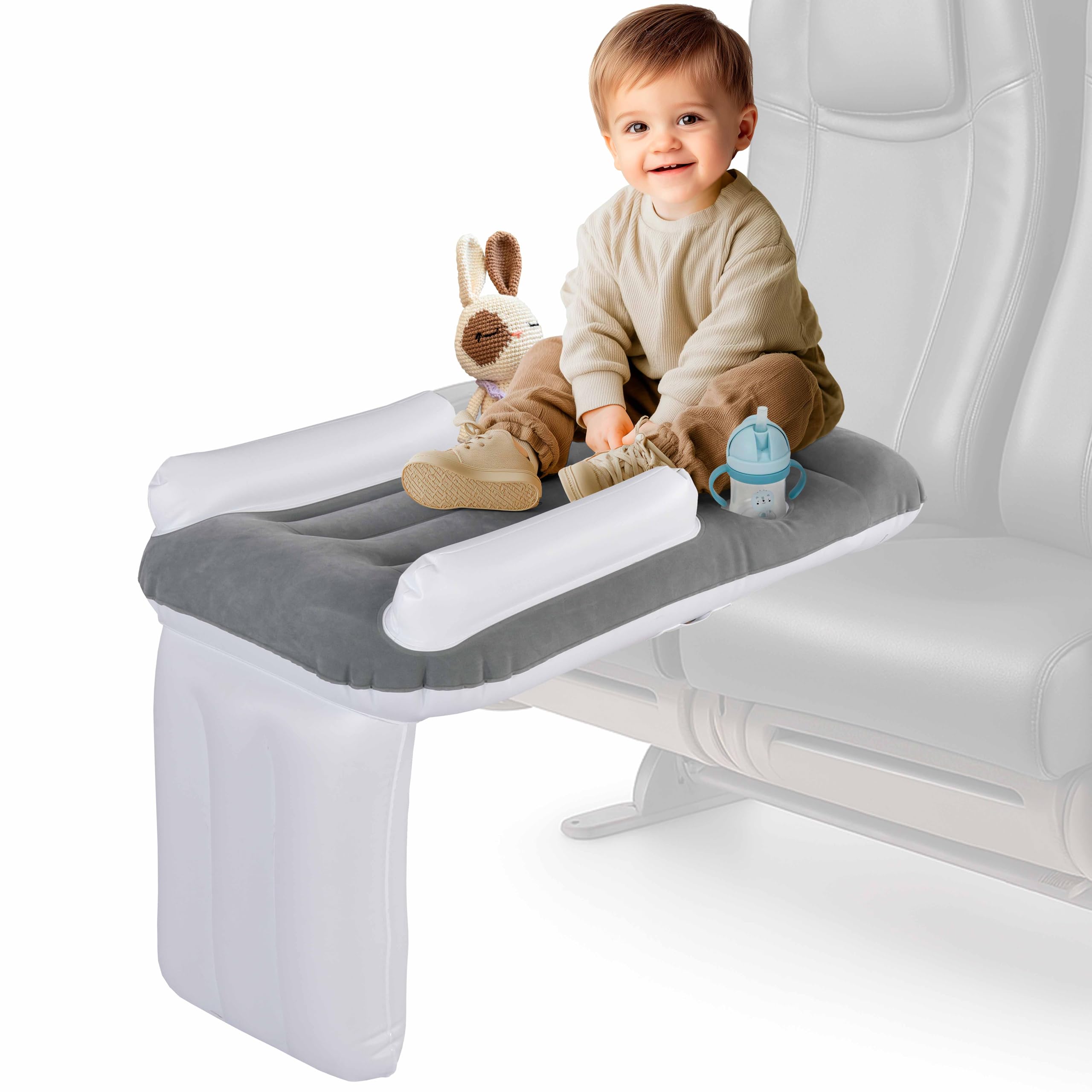
2. Sittina Toddler Airplane Bed
Best for Complete Budget Kit
Key Features
- Safety Features: Child belt, side bumpers
- Inflation Method: Mouth-inflatable, hand pump backup
- Weight & Packed Size: 2.2 lbs, includes blanket & pillow
- Material & Durability: PVC with cotton layer
- Airline Compatibility: Rejected by some airlines
- Price: Mid-Range
Unlike the top pick, where silent mouth inflation is the draw, the Sittina kit includes a hand pump, blanket, and inflatable neck pillow — useful if you want a backup or prefer not to blow it up by mouth. The safety belt and side bumpers keep a toddler secure, and the bed inflates quickly with either method. Turkish Airlines and Delta in some rows have denied use, so call ahead. This set suits families who appreciate a complete bundle and don’t mind verifying policies before flying.
Pros
- Toddlers sleep comfortably on long flights
- Fits well in standard economy seats (tested Delta, LATAM)
- Inflates quickly with mouth or included pump
Cons
- The included travel bag may show wear with repeated packing
- Some airlines (Turkish Airlines, Delta in certain seating) may prohibit use — always confirm before flying
For families who want an all-in-one sleep kit with safety restraints and don’t mind a quick check of airline policies, the Sittina bundle delivers solid value.
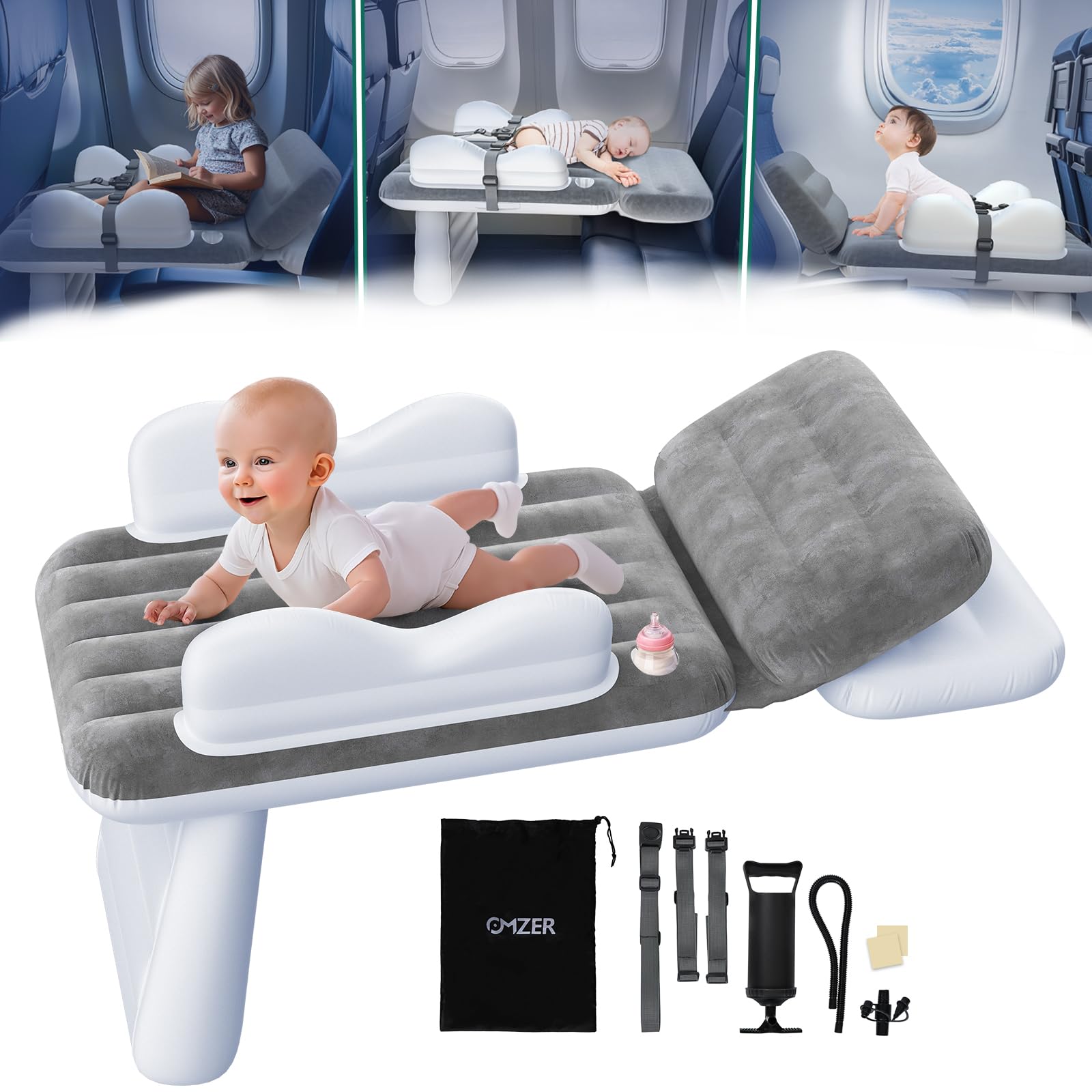
3. Omzer Toddler Airplane Bed
Best for Extra Safety Features
Key Features
- Safety Features: Three-point belt, butterfly guardrails
- Inflation Method: Hand pump, dual air chambers
- Weight & Packed Size: 4.64 lbs, cup holder
- Material & Durability: Thick flocked PVC
- Price: Budget
The Omzer sets itself apart with a three-point child safety belt and raised butterfly guardrails — features that boost side-to-side containment beyond what bumpers alone provide. A cup holder and dual air chambers let you adjust head and foot support independently. At 4.64 lbs, it’s significantly heavier than the lightest inflatable beds, but the weight reflects a chunkier, more supportive build that toddlers find comfortable for long-haul naps. This suits budget-conscious families who want full-featured protection and can accept the extra heft in their carry-on. On particularly smooth seat surfaces, the bed can slide forward, so it’s best paired with seats that have some texture or grip.
Pros
- Sturdy, well-made construction stands up to active toddlers and holds air without re-pumping.
- Fluffed, flocked surface keeps children comfortable and sleeping soundly for hours.
- Folds compactly into a carry-on-friendly size despite its heavier build.
Cons
- May slide forward on bulkhead or very smooth seat materials when the child shifts position.
- At 4.64 lbs, weighs over twice as much as the lightest options — noticeable when already carrying toddler gear.
For families that want a substantial-feeling bed with a three-point harness and cup holder, the extra pounds buy peace of mind and a sturdier sleep surface. Plan for the weight, and check if your airline’s seat fabric will help keep it in place.
How to Choose
The most important decision is choosing a bed that secures your child in place, not just a cushion that fills the legroom gap.
Integrated Safety Belt and Side Bumpers
A proper toddler airplane bed uses a belt that loops around the child’s waist or chest and attaches to the seat structure, preventing them from sliding off during turbulence or sleep. Without this restraint, even a wide inflatable pad can shift, leaving your child on the floor or wedged against the seat.
Mouth-Only vs. Hand Pump Inflation
Mouth-inflatable models with double-lock valves let you set up silently in under three minutes without carrying extra accessories. Hand pumps take longer and can wake a sleeping toddler, but some travelers like having a backup in case the valve fails.
On a dark cabin, fumbling with a pump while your child fusses is a real test—mouth inflation with no pump keeps the process quiet and discrete.
Why Weight and Packed Size Matter
A 2-lb bed disappears into a daypack, whereas a 4.6-lb bed adds noticeable bulk when you’re already hauling a car seat, nappies, and snacks through the terminal. Choose the lightest option that still has the safety features you need.
Flocked PVC vs. Plain PVC
Flocked surfaces feel softer and reduce slipping, but they can trap moisture if the bed gets wet. Plain PVC is easier to wipe clean and usually lighter, though it may feel stickier against skin. Check that seams are reinforced and a repair kit is included if you’re flying long-haul.
Airline Policies: Verify Before You Fly
No inflatable toddler bed is universally accepted. Emirates, Korean Air, and some Delta crews have banned them outright, while others permit them in economy seats but not bulkhead rows. Always contact your airline in advance and have a screenshot of their written policy ready to show the cabin crew.
FAQ
Which airlines allow inflatable toddler airplane beds?
No single list covers all airlines because policies change frequently. Airlines like Emirates and Korean Air often prohibit any inflatable seat extender, while British Airways and Virgin Atlantic may permit them if they don’t block the aisle or tray table. Always check your carrier’s specific policy online and call ahead, as decisions can rest with the cabin crew on the day.
How do I stop my toddler’s inflatable airplane bed from deflating during the flight?
First, fully seat all valve caps and ensure the double-lock mechanism clicks closed. Inflate the bed at gate slightly less than maximum pressure, because cabin pressure differences can cause overinflation and stress the seams. If a slow leak develops, repair patches (included with some models) can fix small punctures temporarily.
Can I use a footrest pillow instead of a toddler airplane bed?
Footrest pillows lack a safety harness and raised side bumpers, so they cannot prevent a sleeping child from rolling off the seat when turbulence hits or they shift in their sleep. They are fine for leg support, but not a substitute for a secure lie-flat bed on a long-haul flight.
Why won’t cabin crew let me use my airplane bed for my toddler?
Crew may refuse inflatable beds that extend into the aisle, block tray tables, or conflict with evacuation procedures. Even if your bed is technically compliant, a crew member can deny it for safety reasons. Always have a backup plan, like a lightweight travel blanket to cushion the seat in case the bed is not permitted.