This post contains affiliate links. We may earn a small commission when you buy through our links — at no extra cost to you.
A travel umbrella’s hardest job isn’t opening into a downpour — it’s staying intact when a sudden gust catches the canopy on a London side street or a windswept Cornish coastal path. Most automatic compact umbrellas make bold windproof claims, yet flimsy ribs and overextended springs mean they invert or break just when you need them most.
What makes a travel umbrella actually useful across UK and European seasons is a stable frame that sheds water quickly, a mechanism that won’t jam after a few cycles, and — if you’re hopping between trains and cafés — a design that traps the wet side so your seat and bag stay dry. This guide cuts through the inflated wind ratings to highlight umbrellas that balance portability with real-world toughness and those clever water-containment features commuters love.




1. LANBRELLA Reverse Umbrella
Best for City to Car Commute
Key Features
- Weight: 0.79 lbs
- Wind Resistance: 8 fiberglass ribs
- Auto Open/Close: Auto open/close, reverse folding
- Price: Mid-Range
The LANBRELLA’s reverse-folding canopy is the defining feature — when you collapse it, the wet side wraps inward, so water stays off your car seat, bag, or clothes. The 46-inch canopy provides more coverage than many compacts, and at 0.79 lbs, it’s light enough for daily carry. Auto open and close works smoothly, though the final compression needs a firm hand. That minor effort is the tradeoff for a design that really does contain the wet mess.
This umbrella is built for commuters, not storm chasers. It handles everyday rain well, but in sustained high winds or rough handling, the frame may not hold up — the gust-proof option in this set is a better fit for windy regions. For anyone hopping between cars, trains, and offices who wants to keep their belongings dry, the LANBRELLA is a practical choice.
Pros
- Reverse-folding canopy keeps water from dripping when you close it, ideal for cars and buses.
- Generous 46-inch canopy fits in a compact bag or purse.
- One-button auto open and close works smoothly for most situations.
Cons
- The last inch of closing requires a strong push; not fully one-hand operation.
- In high winds, the frame can suffer structural damage.
If dry seats matter more than windproofing, the LANBRELLA’s reverse fold makes it the standout compact umbrella for the daily commute.
2. QWB Inverted Umbrella
Best for Blustery Conditions
Key Features
- Weight: 0.8 lbs
- Wind Resistance: 10 ribs
- Auto Open/Close: Auto open/close, reverse folding
- Price: Mid-Range
While the top pick uses reverse folding to keep water off seats, the QWB focuses on staying upright in gusts where other compact umbrellas collapse. Its carabiner handle clips to a belt loop or backpack and forgets, and reflective edging adds visibility on dark commutes.
At 12.8 oz, it’s not the lightest, and closing it fully requires a deliberate push. Quality control can be spotty; inspecting the umbrella immediately for smooth operation is wise. Hikers and backpackers who want wind confidence and hands-free carry will find it a fitting match.
Pros
- 10-rib frame holds shape in gusts that invert lighter umbrellas
- Carabiner handle clips to backpack straps or belt loops for effortless carry
- Reflective trim on canopy edges increases visibility for night safety
Cons
- Closing the umbrella fully requires more force than expected — not a one-push deal
- Some units may have structural defects out of the box; inspecting immediately is prudent
For travelers and hikers who prize wind resistance and a clip-on handle over ultralight designs, this is the compact umbrella to grab — just give it a quick test before you head out.
3. Balios Travel Umbrella
Best for Business Travel
Key Features
- Wind Resistance: Windproof frame
- Auto Open/Close: Auto open/close
- Price: Premium
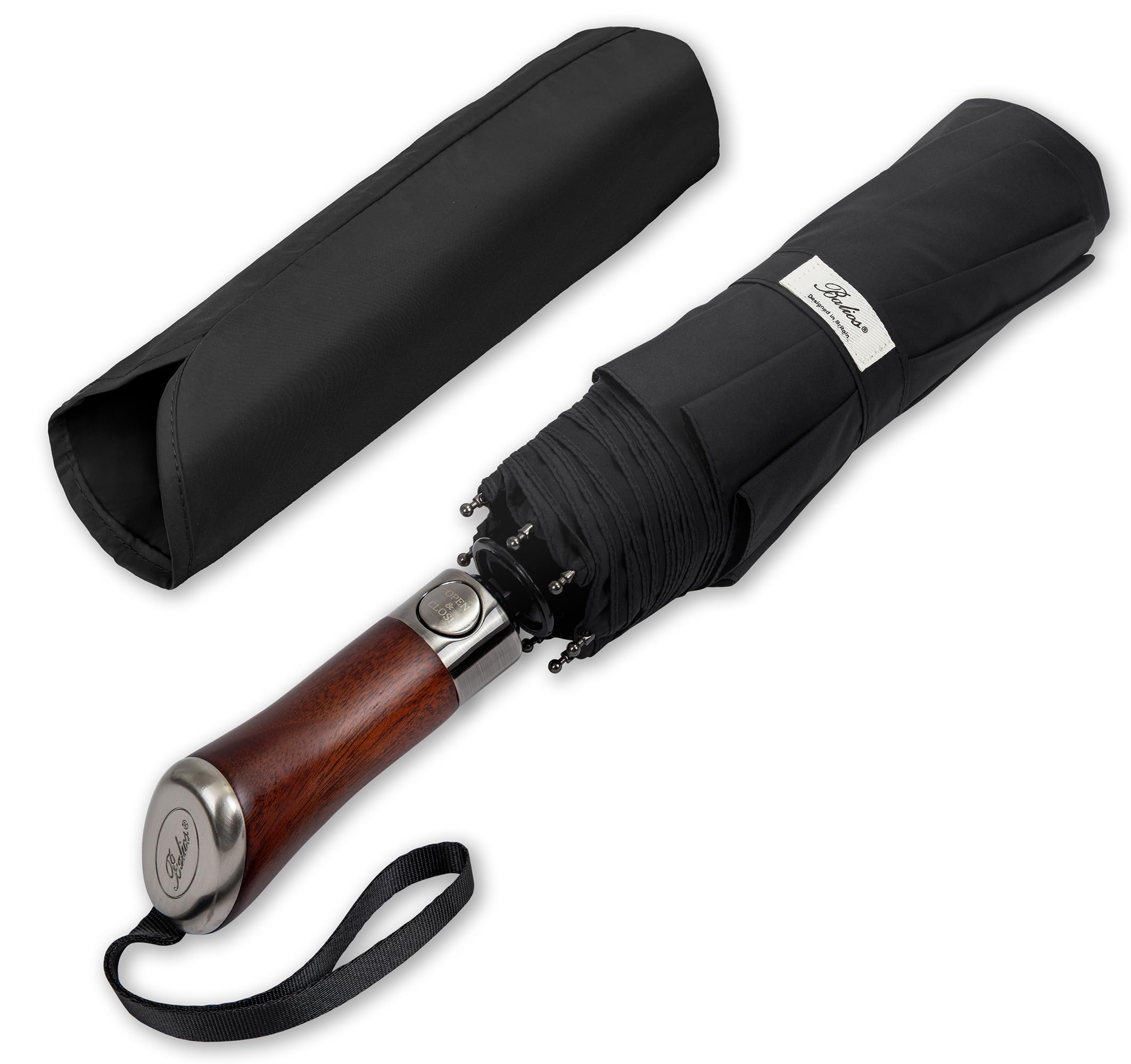
The Balios distinguishes itself with an elegant hardwood handle and a polished appearance that pulls consistent praise. The auto open/close mechanism delivers a tactile, quality feel rather than a clunky spring-action snap. The tradeoff for this premium build is a bulkier folded profile that can be harder to slip into small handbags or tightly packed carry-ons. It’s a better match for business travelers wanting a distinguished accessory or gift buyers prioritizing style over ultralight packing — those needing maximum portability will find slimmer models in this set more forgiving of tight spaces.
Pros
- Elegant hardwood handle and refined styling stand out from generic compacts.
- Smooth, premium-feeling auto open/close mechanism functions reliably.
- Robust frame construction handles gusty conditions better than typical travel umbrellas.
Cons
- Bulkier folded length limits how easily it fits into small handbags or tightly packed travel bags.
- Fully locking the folded shaft closed requires a deliberately firm push.
Choose the Balios for its high-end feel and smooth mechanics, but make sure your bag has the room for its larger folded size.
4. Bodyguard Inverted Umbrella
Best for Night Commuters
Key Features
- Weight: 0.96 lbs
- Wind Resistance: 12 resin-reinforced fiberglass ribs
- Auto Open/Close: Auto open/close, reverse folding
- Price: Mid-Range
The reflective stripe paired with a sturdy 12-rib frame sets this umbrella apart for low-light safety and wind resistance. Its inverted closure contains the wet side after you fold it, so rain doesn’t spread to your bag or car seat — a practical advantage over the slimmest daily carry options.
This suits nighttime walkers and commuters who value high visibility and a canopy that covers two people. At 435 g, it’s heavier than ultralight travel umbrellas and the auto-close demands noticeable hand strength. Those with limited grip or who count every gram in their pack should look elsewhere.
Pros
- Inverted closure prevents water from dripping onto seats and bags after use.
- 12-rib frame offers better structural integrity than typical 8-rib designs.
- Reflective stripe boosts visibility for safer walks in dark, wet conditions.
Cons
- Auto-close requires considerable force, which can be difficult for those with weak hands.
- Weighs 435 g and has a bulkier folded shape, making it less suited for ultralight packers.
For night commuters who want reflective visibility and generous coverage without the drippy mess of a standard umbrella, the heft is a fair trade.
5. Seniny Travel Umbrella
Best for Sun & Light Rain
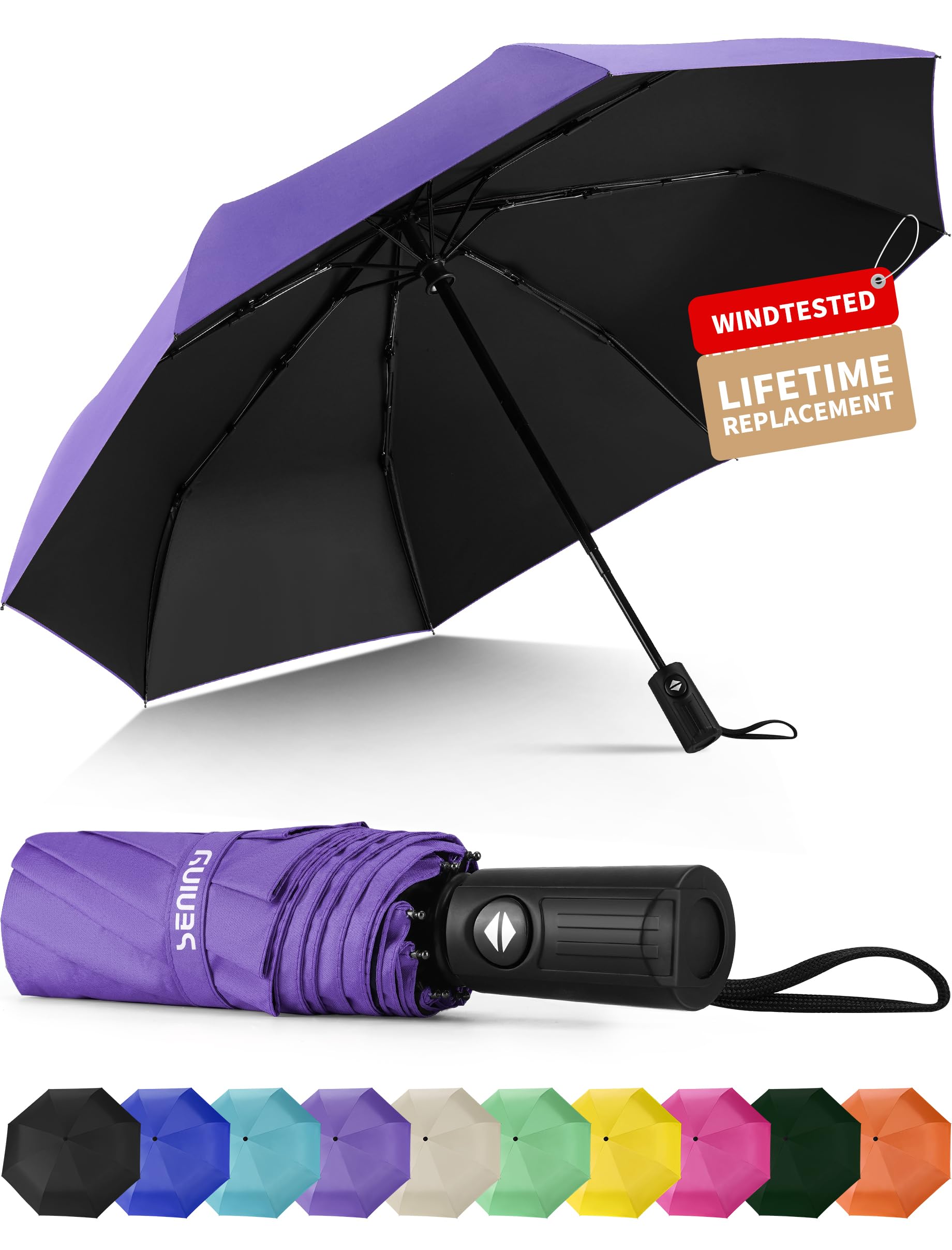
Where other compact umbrellas prioritize wind resistance, the Seniny leans into cheerful aesthetics and sun-blocking performance. Its auto open/close responds promptly, and the umbrella collapses to a size that slides into most bags. The canopy noticeably cuts heat during bright sun, a genuine perk for warm-weather travel.
This umbrella suits sun-conscious commuters and travelers who want a colorful accessory for sporadic drizzles. But if you face frequent heavy rain or gusty conditions, durability may falter — the frame and fabric aren’t built for rough weather. It’s best treated as a fair-weather companion rather than a daily workhorse.
Pros
- UPF-rated canopy blocks sun and reduces heat during warm-weather walks.
- Cheerful patterns and colors inside add a stylish touch, often drawing compliments.
- Budget-friendly price delivers solid sun protection and acceptable light-rain coverage.
Cons
- Closing the umbrella can be stiff, requiring a two-handed push to collapse the shaft fully.
- Some units may develop canopy or frame weaknesses after repeated use, especially in windy or rainy conditions.
For sunny-day travelers who only need occasional light rain coverage, this cheerful umbrella delivers UV protection and style without straining the wallet.
6. GORILLA GRIP Travel Umbrella
Best for Daily Bag Carry
Key Features
- Weight: 0.82 lbs
- Wind Resistance: 8 ribs, 23mph tested
- Auto Open/Close: Auto open/close
- Price: Mid-Range
At 11.5 inches folded and 0.82 pounds, the Gorilla Grip slides into purses, backpacks, and car consoles with room to spare — a clear edge over the reverse-folding top pick when every inch of space counts. The auto open/close button works smoothly one-handed, and the canopy looks sleek in a range of colors. Urban commuters who face mostly calm, drizzly days will appreciate the tidy carry. Wind resistance is a real boundary; the canopy flips in modest gusts, so coastal walkers and anyone in breezy regions should look elsewhere.
Pros
- Slim folded profile fits easily into day bags, purses, and carry-ons without bulk.
- One-button auto open/close enables one-handed operation when juggling bags and doors.
- Solid build and attractive finish that looks more premium than its mid-range price suggests.
Cons
- Closing mechanism may stick, and occasional rib breakage can limit longevity.
- Wind resistance is limited; the canopy may invert in modest breezes, making it unsuitable for gusty days.
A practical everyday umbrella for light rain and tight bag space — just don’t expect it to hold up when the wind picks up.
7. Repel Windproof Travel Umbrella
Best for Car Storage
Key Features
- Weight: 1.85 lbs
- Wind Resistance: 100MPH wind claim
- Auto Open/Close: Auto open/close
- Price: Mid-Range
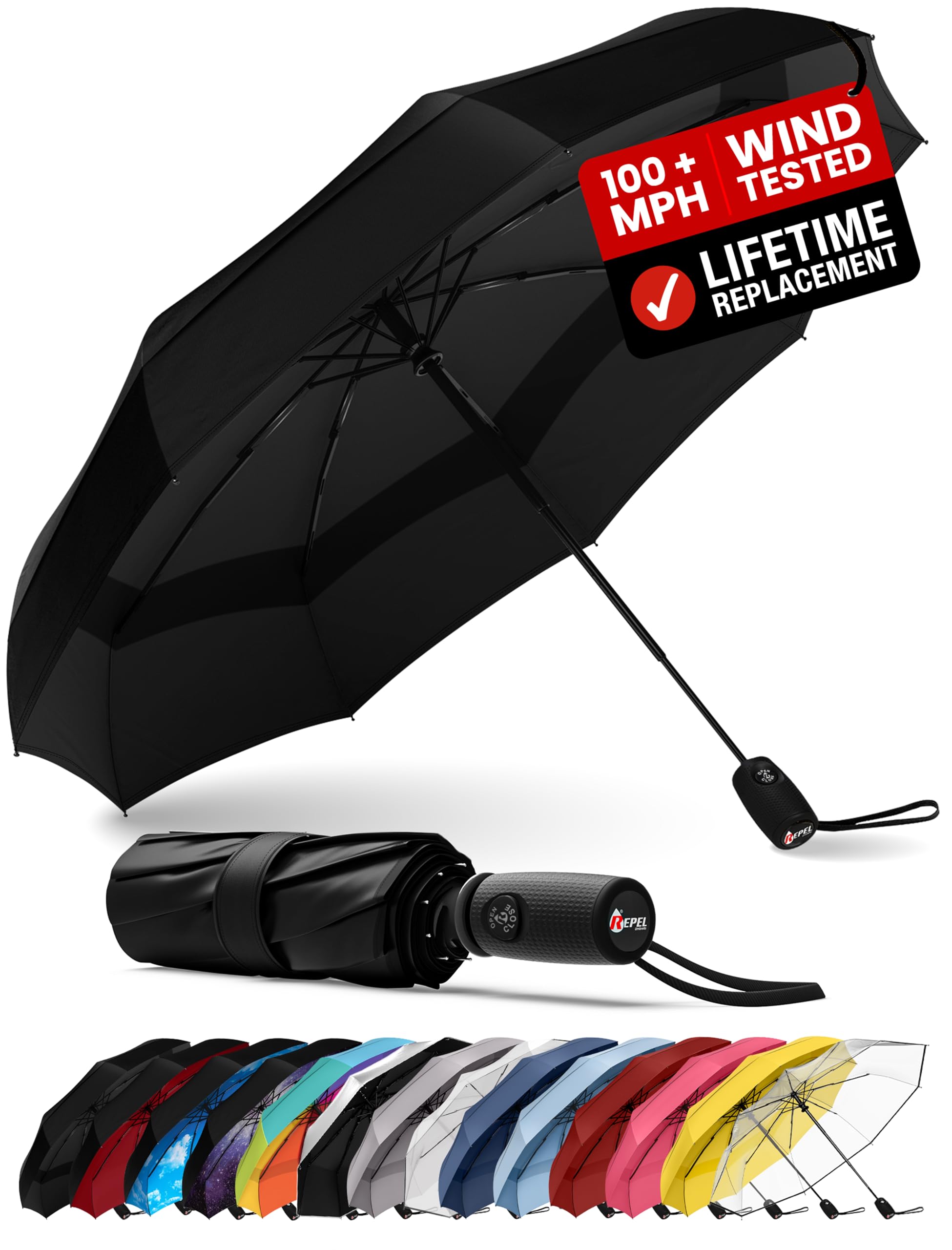
The Repel Windproof Travel Umbrella delivers outstanding build quality and a sturdy frame that stands up to occasional downpours, making it a strong car-storage option. Its 1.85 lb weight and stiff closing mean it’s less practical for daily backpack or purse carry.
Pros
- Premium build quality that feels sturdy and well-constructed.
- Smooth auto open and a close mechanism that works reliably when operated firmly.
Cons
- Ribs or mechanism may give out under strong wind or repeated use.
Best for drivers who want a durable umbrella always in the trunk for occasional downpours, not for those needing a lightweight backpack companion.
8. TUMELLA Windproof Travel Umbrella
Best for Style-Conscious
Key Features
- Weight: 1.06 lbs
- Wind Resistance: 100MPH claim
- Auto Open/Close: Auto open/close
- Price: Mid-Range
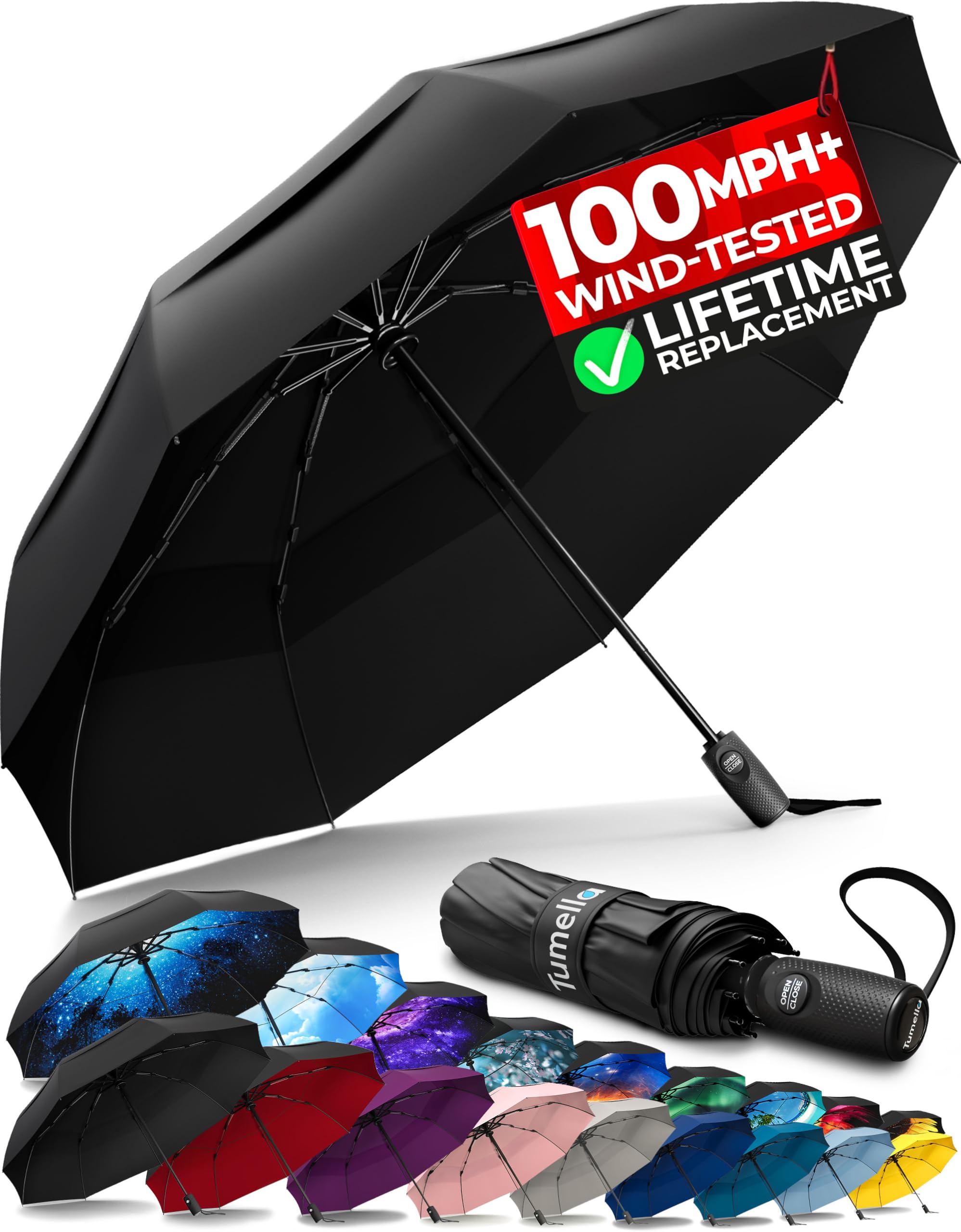
Its sleek design and robust frame give it a premium feel that stands out among compact umbrellas. However, the windproof claims underdeliver—canopy inversion can occur in moderate gusts, and closing the shaft requires a firm two-handed push. For stylish commuters facing mostly drizzle, the trade-off is manageable.
Pros
- Premium materials and sleek design make it one of the best-looking compact umbrellas available.
- Reinforced ribs and solid construction give it a substantial, durable feel in hand.
Cons
- Windproof claims are overblown; canopy may invert in moderate wind gusts, limiting its use to calm conditions.
A stylish choice for urban commuters who face mostly light rain and value appearance over all-weather performance.
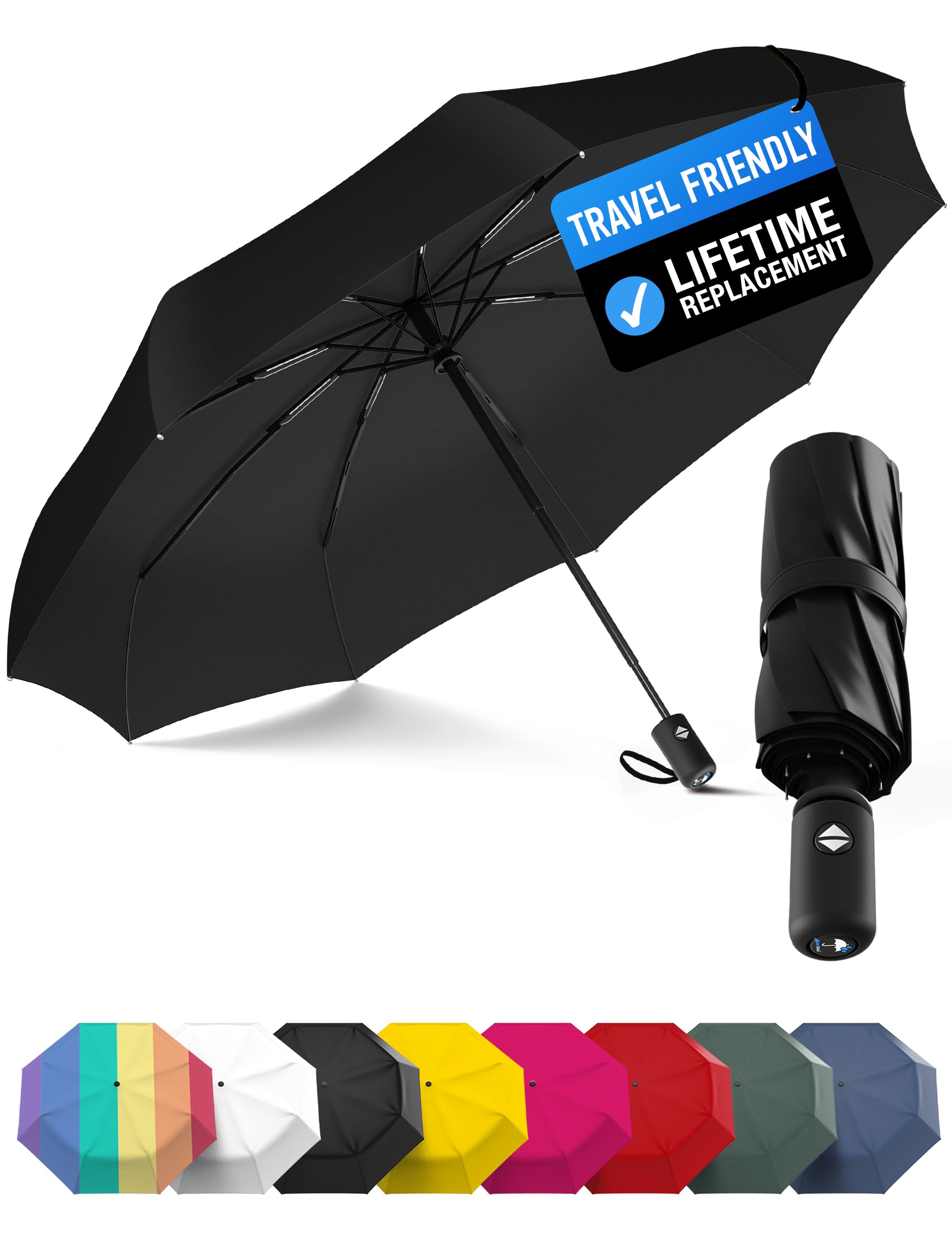
9. Rain-Mate Compact Umbrella
Best for Daily Drizzle
Key Features
- Weight: 0.72 lbs
- Wind Resistance: Reinforced fiberglass ribs
- Auto Open/Close: Auto open/close
- Price: Mid-Range
The Rain-Mate feels sturdy and opens smoothly at the push of a button, folding down to a size that slips into a tote or glove box. A small subset of units may develop rib or mechanism issues with repeated use — a fair trade-off for a tidy automatic umbrella meant for gentle rain commutes.
Pros
- Auto open/close mechanism deploys and retracts with one button press.
- Compact folded size fits easily in purses, backpacks, and car glove boxes.
Cons
- Closing requires firm force — may be tough for smaller or weaker hands.
For commuters who want a compact, well-built umbrella with quick auto-open at a fair price, the Rain-Mate fits the bill in light-to-moderate rain; just don’t expect it to laugh off heavy gusts.
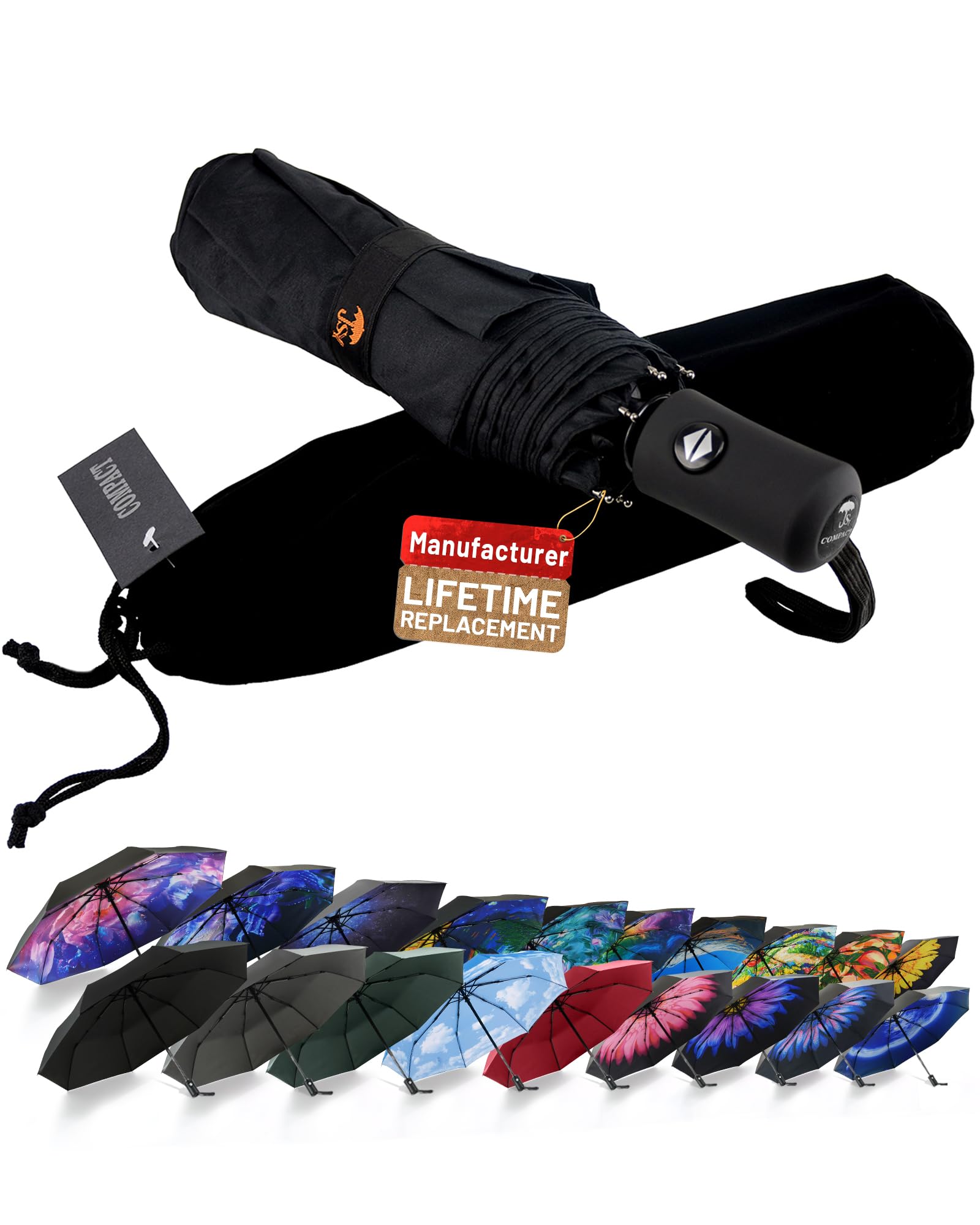
10. SY COMPACT Travel Umbrella
Best for Budget Lightweight
Key Features
- Weight: 0.73 lbs
- Wind Resistance: 8 fiberglass ribs
- Auto Open/Close: Auto open/close
- Price: Budget
Weighing only 330g and folding small, it tucks easily into a backpack or glovebox. The canopy’s UPF50+ coating and cheerful patterns make it handy for sun protection. Frame durability is a known trade-off: the aluminum-and-fiberglass structure can develop rib fractures after limited use, so it’s best treated as a backup or occasional-use option.
Pros
- Ultralight 330g build slips into any bag unnoticed.
- Bright, fade-resistant patterns and multiple color choices.
Cons
- Closing the umbrella requires a firm, two-handed push — awkward when holding groceries or a phone.
A low-cost choice for the traveler who mostly wants sun protection and light drizzle coverage, with the understanding it may need replacement sooner than heavier, sturdier umbrellas.
11. Conlun Inverted Umbrella
Best for Car Storage

Key Features
- Wind Resistance: 10 ribs
- Auto Open/Close: Auto open/close, reverse folding
- Price: Budget
Inverted design keeps the wet side inside when closed, preventing drips on car seats. It folds compact for a glovebox. However, closing is stiff and may require two hands or jiggling. Durability under repeated heavy rain isn’t guaranteed. This is an occasional-use, budget-friendly way to try the reverse-folding style.
Pros
- Water-retention design keeps wet canopy contained, preventing drips on car seats and clothes.
- Folds compactly for stashing in a glovebox or bag.
Cons
- Closing mechanism can stick or jam, sometimes requiring two hands to collapse.
Grab this if you want to test the reverse umbrella concept on a minimal budget and can tolerate a stubborn close. It’s an occasional car backup, not an everyday companion.
12. Yoobure Travel Umbrella
Best for Backup

This umbrella pops in fun colors and stows away in a backpack or purse without bulk. The auto open/close is convenient for quick dashes. However, its lightweight frame can falter in strong gusts, so it’s best treated as a spare for occasional showers rather than a daily workhorse.
Pros
- Excellent value for a stylish and compact umbrella.
- Folds small enough to slip into car door pockets or a small purse.
Cons
- Construction can be fragile; ribs and mechanism may break under regular use.
A bright, pocketable spare for sunny commutes with just-in-case rain, but not for those who face frequent downpours.
How to Choose
The most useful travel umbrella isn’t the one with the highest wind-speed claim on the box — it’s the one that fits your daily carry, stays open in average gusts, and keeps water off your seat when you close it.
Weight
For a travel umbrella, weight determines whether you’ll actually carry it every day. Anything over 1 pound (0.45 kg) becomes noticeable in a bag, especially if you’re already toting a water bottle and daily essentials. Heavier umbrellas often pair with sturdier frames, so the trade-off is between packability and all-day robustness.
Travelers in the UK and Europe who walk between stations, hop buses, or explore cities for hours will appreciate a lighter umbrella that doesn’t add fatigue. Reserve heavier models for car storage or occasional use where weight matters less.
Folded Dimensions
A slim folded profile lets you stash the umbrella in a handbag’s side pocket or a backpack’s water bottle sleeve. Shorter lengths (under 12 inches) slide neatly into glove boxes, but very compact folding often compresses the canopy into a smaller arc, which can reduce coverage or make the frame more liable to snap if the umbrella opens abruptly.
Measure the pocket or compartment where you plan to store it — a difference of two inches can mean the umbrella juts out annoyingly or fits flush.
Canopy Diameter
A 38-inch canopy keeps one person just covered, while a 46-inch arc gives generous space for two, but the bigger canopy catches more wind. Travel umbrellas with reverse-folding designs can offer wide coverage without becoming unwieldy because the struts fold the wet side inward, making the closed package roughly the same thickness.
Think about whether you often share an umbrella. If not, a 40- to 42-inch canopy is the sweet spot for solo travelers who want decent coverage without excess sail area.
Wind Resistance
Wind resistance in compact umbrellas depends more on rib count and frame material than on marketing phrases like ‘up to 100MPH.’ Umbrellas with 8 to 10 fiberglass ribs can flex rather than break when caught by a gust, but even the best will eventually invert in a strong blast — the difference is that a well-built one bounces back without permanent damage.
For exposed coastal or high-moor walking, choose an umbrella with 10 or more ribs and a flexible shaft. In city centres where buildings break the wind, an 8-rib frame is usually sufficient, provided the mechanism locks solidly.
Auto Open/Close Reliability
An auto open/close mechanism relies on a spring-loaded shaft that must compress firmly when you push the canopy shut. That final closure click takes more force than many expect, and over time, a flimsy button or weak internal catch can strip or jam. Look for umbrellas where the auto-close lock is a metal rather than plastic component, and test the closing force before packing it for a trip — if it strains your hand, it’s likely to frustrate you on a wet commute.
If you have limited hand strength or will be using the umbrella one-handed, a design with a reverse fold (where you pull the canopy back toward you) can reduce the strain, as the compression step is partly assisted by the inverted canopy.
FAQ
Why is my travel umbrella so hard to close?
Travel umbrellas use a spring-loaded shaft that you must compress completely to lock. The force required can be high, especially for smaller hands. To make it easier, brace the handle against your hip and push straight down on the canopy hub — this distributes effort and reduces strain. If the resistance is a daily annoyance, consider a reverse folding model, which often requires less final compression.
Can a compact travel umbrella really handle strong European winds?
Most compact umbrellas will invert in gusts over 25–30 mph, regardless of marketing claims. A frame with 10 or more fiberglass ribs and a flexible shaft can survive inversion without breaking. In the UK and Europe, spring and autumn squalls demand that you point the canopy into the wind and accept that occasional flipping is normal — the key is that the umbrella bounces back.
What is the difference between a reverse folding umbrella and a normal one?
A normal umbrella folds inward toward the canopy, trapping wet fabric against the outside when closed. A reverse umbrella folds outward, so the wet side ends up inside a sort of cup, keeping water off your hands, bag, and car seat. This design also makes it easier to enter a vehicle without dripping.
How long should a £15 automatic umbrella last before it breaks?
A £15–£20 automatic umbrella with reinforced ribs typically lasts one to two years of regular commuter use before the spring weakens or a rib cracks. Ultra-budget models under £10 often fail within a few storms. Treat a heavily used travel umbrella as a consumable item — expect to replace it every couple of seasons.