This post contains affiliate links. We may earn a small commission when you buy through our links — at no extra cost to you.
European city streets funnel wind around corners, and a compact umbrella that flips inside-out at the first gust can ruin a day of sightseeing. Many travel umbrellas labeled “windproof” rely on flimsy ribs that snap or invert in moderate breezes—the star ratings on their listing pages often mask high early failure rates. That’s a real headache when you’re navigating cobblestone lanes or waiting for a bus in a downpour.
Heavier umbrellas with reinforced fiberglass frames shrug off gusts much better, but that sturdiness adds weight and packed size, making them a drag on long walks. Lighter alternatives save ounces but may falter when a true squall hits. The difference often comes down to whether you prioritize a pound saved or a gust resisted.


1. Repel Windproof Umbrella
Best for Wind Resistance
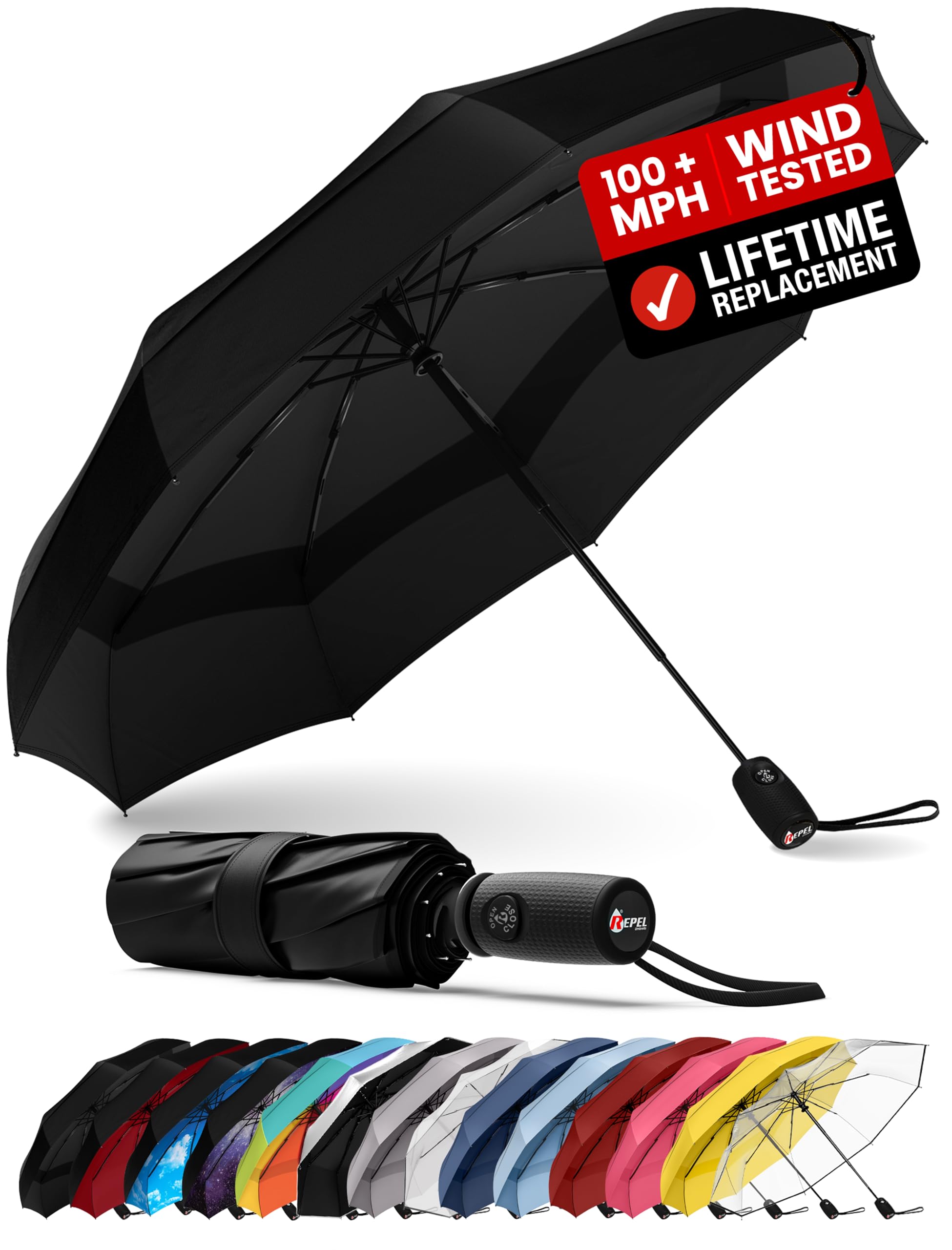
The Repel Windproof Umbrella uses a fiberglass-reinforced frame that resists inversion even in strong gusts. The one-button auto open and close works smoothly, and the handle and shaft feel solid. A lifetime warranty provides a safety net against the occasional defect.
At 1.85 lbs, it’s notably heavier than most travel umbrellas – a deliberate tradeoff for wind resistance. The closed length of 11.77 inches fits side pockets of backpacks, making it easy to stash when not in use. The closing mechanism requires a firm push; those with reduced hand strength may need to use two hands.
This umbrella suits travelers who prioritize stability over portability, car commuters who can leave it in the vehicle, and anyone who wants robust wind protection without sacrificing build quality. It’s less ideal for ultralight backpackers or users who find firm hand motions difficult.
Pros
- Sturdy frame withstands strong wind
- High-quality materials with a premium feel
- Compact folded size fits backpack pockets
Cons
- Heavier than typical travel umbrellas (1.85 lbs)
- Closing requires significant hand strength
If wind resistance is your top priority, the Repel delivers – the extra weight and firm closure are the tradeoffs for that performance.
2. TUMELLA Windproof Umbrella
Best for Lightweight Sturdiness
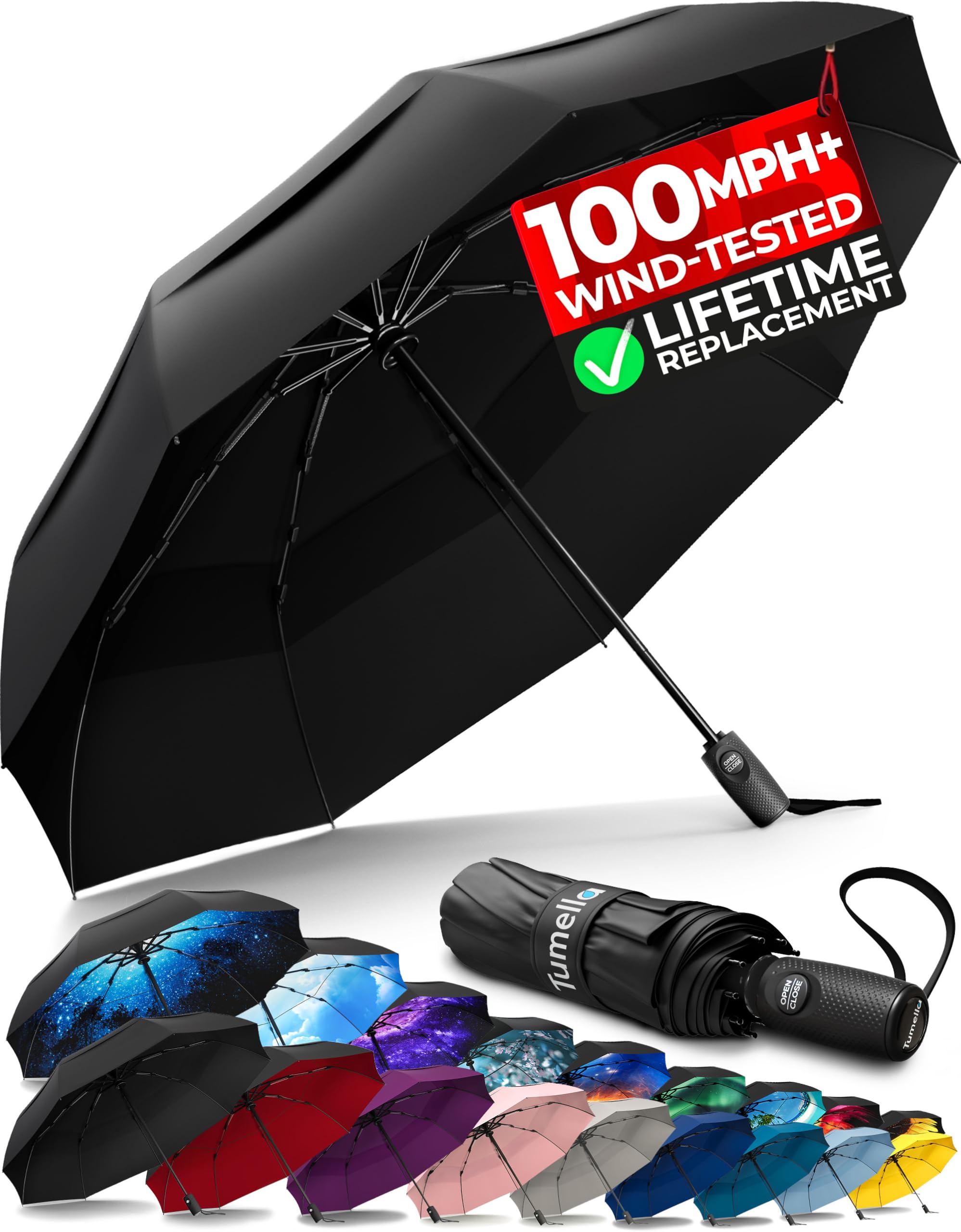
At 1.06 pounds, the TUMELLA is nearly half a pound lighter than the benchmark windproof travel umbrella, yet it claims 100MPH wind resistance and includes the same auto open-close mechanism. The folded size is compact enough for any bag or car door pocket, and the build quality feels substantial for the weight — materials and finishes appear well-executed.
The weight savings appeal to daily commuters and travelers who pack light. In moderate winds, the reinforced frame holds its shape, though in strong gusts the canopy can invert — the windproof claim has limits. For buyers who prioritize easy portability and don’t face relentless high winds, this umbrella trades some windproof consistency for noticeably less bag weight.
Pros
- Build quality feels premium, with attractive finishes that belie the price.
- The frame holds up in typical rain and wind, providing real sturdiness for its weight class.
- Folds down to a compact size that fits easily into backpacks, glove boxes, and door pockets.
Cons
- Closing the umbrella requires two hands and a firm push — users with limited grip strength may struggle.
The TUMELLA is a well-made, lighter alternative to the benchmark travel umbrella, best for commuters and travelers who value easier carrying and accept that windproof performance may fall short in extreme gusts.
3. LANBRELLA Reverse Umbrella
Best for Dry Car Entry
The LANBRELLA’s inverted design catches the wet side inside when you close it, so water doesn’t drip onto clothes or car seats. This compact travel umbrella weighs under a pound and collapses small enough for a backpack, making it a more portable choice than bulkier inverted alternatives. Its 46-inch canopy provides generous coverage for one person, and the auto-open mechanism engages smoothly.
This umbrella suits drivers, commuters, and anyone tired of puddles at the doorstep. The inverted convenience is its standout feature, but long-term durability can be inconsistent — choose this if the clever design matters more than buying a workhorse that lasts.
Pros
- Inverted design catches water inside, preventing drips on clothes or upholstery.
- Generous single-person coverage with a 46-inch arc.
- Smooth auto-open and a well-made feel out of the box.
Cons
- Closing the umbrella requires firm pressure, which can be a struggle for users with limited grip strength.
For drivers and commuters who want an umbrella that doesn’t drip on them when they get in the car, the LANBRELLA’s inverted design solves that specific annoyance — just not a choice for high-mileage daily use.
4. Bodyguard Inverted Umbrella
Best for Night Visibility
Unlike typical inverted umbrellas that just trap water, this one wraps the 46-inch canopy in a 360° reflective stripe — a genuine boost when you’re crossing dark streets in the rain. The 12-rib frame holds up to gusty conditions, and the wet side folds inward so you can slip into a car without dumping water on the seat.
At 0.96 pounds, it’s no ultralight travel piece, and the shaft demands two hands and firm grip strength to collapse — a real hurdle for anyone with limited hand force. This suits nighttime commuters who value high-visibility coverage over easy one-hand closing. If minimal effort matters more, the lighter windproof option in this set is a better fit.
Pros
- Large 12-rib canopy provides solid wind resistance and generous coverage for two.
- 360° reflective stripe increases visibility in dark, rainy conditions.
- Inverted fold keeps car seats and clothing dry when you get in.
Cons
- In strong wind, ribs can snap or the frame may get damaged on some units.
- Closing requires two hands and considerable strength — poorly suited for those with grip issues.
If night visibility and big coverage outweigh the need for featherlight packing and one-hand close, this is a sensible choice for dark commutes.
5. Totes Windproof Golf Umbrella
Best for Big Coverage
The Totes Auto Open/Close umbrella expands to a 55-inch canopy, one of the widest in this set. UPF 50+ fabric means two people stay dry or protected from harsh sun without huddling. Its fiberglass frame holds steady in moderate gusts — the 75MPH windproof rating is credible for everyday storms. The auto-close button can hesitate, sometimes needing a manual slide to fully retract.
At 15 inches closed and 1 lb, it’s bulkier than standard travel umbrellas. Backpackers and ultralight travelers will feel the extra length. It fits golfers, day-trippers, and sun-sensitive users who prioritize coverage over compactness.
Pros
- Wide 55-inch canopy shields two people or golf gear from rain.
- UPF 50+ fabric blocks harsh sun, keeping you cooler and protected.
- Holds up in moderate wind, with fiberglass ribs adding resilience.
Cons
- Auto-close button may need manual assistance to fully collapse.
- Can struggle or sustain damage in gusts near or above its 75MPH rating.
Pick this if a sun-blocking two-person canopy matters more than ultra-compact stowability.
6. QWB Inverted Umbrella
Best for Clip-On Carry
The built-in carabiner handle lets you clip this inverted umbrella to a backpack strap or bag loop, freeing both hands — a practical choice for hikers and bike commuters. The 10-rib frame handles typical gusts without inverting, and the reverse fold keeps water off car seats. It’s nearly half a pound lighter than the sturdier top pick, but the spring-loaded closing requires firm force, and durability under sustained high wind may vary between units. For those who frequently attach an umbrella to their gear, this clipping advantage outweighs the modest compromise in storm toughness.
Pros
- Carabiner handle attaches securely to backpacks and bag loops for hands-free carry.
- 10-rib frame resists inversion in moderate wind, holding its shape better than many compact umbrellas.
Cons
- Closing the umbrella takes a firm push; the spring mechanism can feel stiff until broken in.
- Some units may develop rib or hinge problems after repeated heavy-wind use.
If clipping an umbrella to your pack is a daily necessity, the QWB’s hands-free design more than compensates for a slightly stiffer close and variable storm performance.
7. Rain-Mate Compact Umbrella
Best for Daily Commute
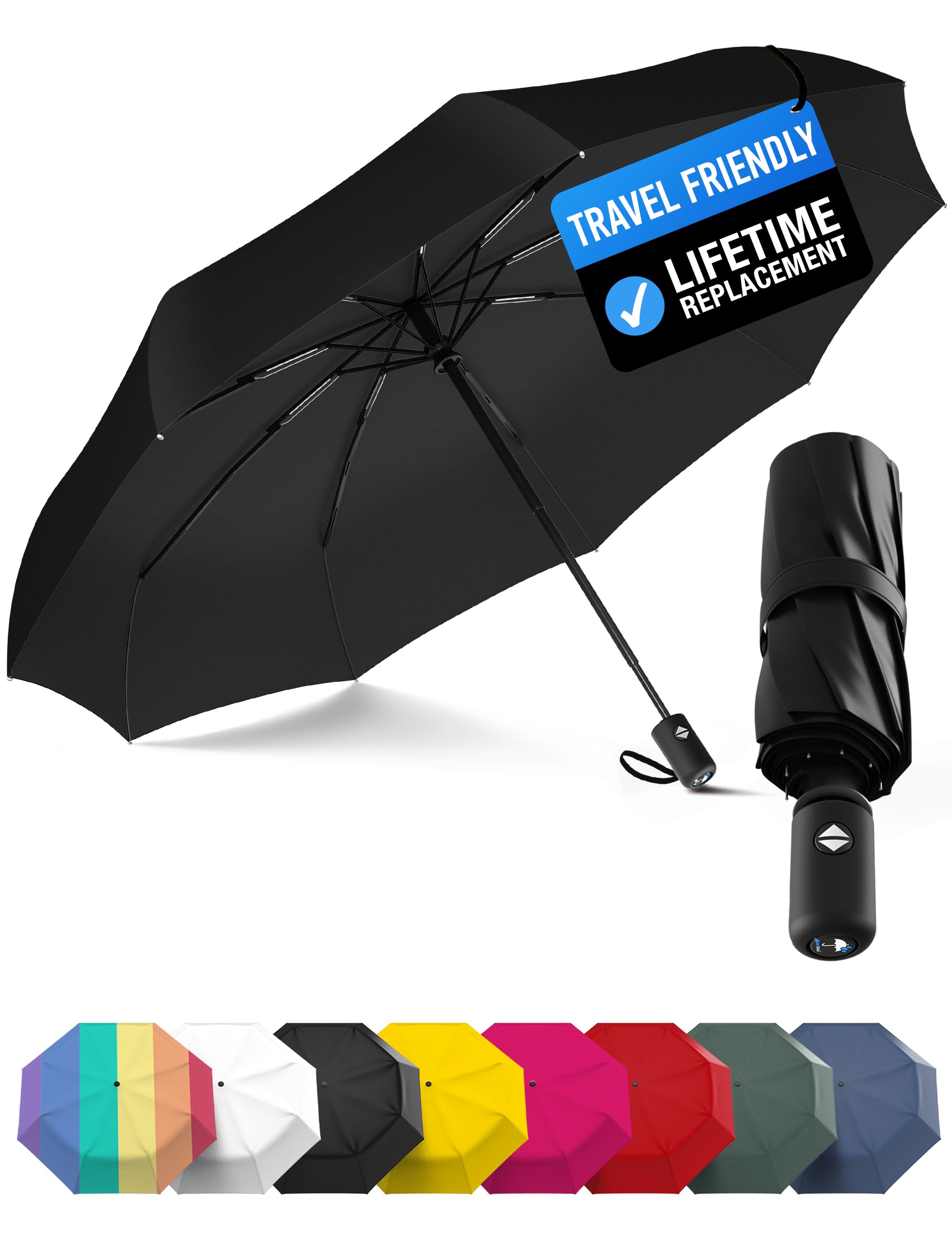
The Rain-Mate Compact Umbrella delivers smooth one-button open/close and folds into a 12-inch package that slips into daypacks and glove boxes. At 0.72 lb, it’s an easy everyday carry. Wind resistance is average — the ribs can give way in gusty weather — so it’s better for light to moderate rain than for wind-swept commutes.
Pros
- Smooth one-button auto-open/close deploys and retracts the canopy quickly.
- Folds to just 12 inches and weighs 0.72 lb, tucking away in bags or glove compartments.
Cons
- Rib durability may be compromised in strong gusts — not built for blustery storm conditions.
Ideal for the daily commuter who faces predictable rain and wants a no-fuss, compact umbrella; not the choice for windy coastal commutes.
8. Raintrend Travel Umbrella
Best for Larger Canopy
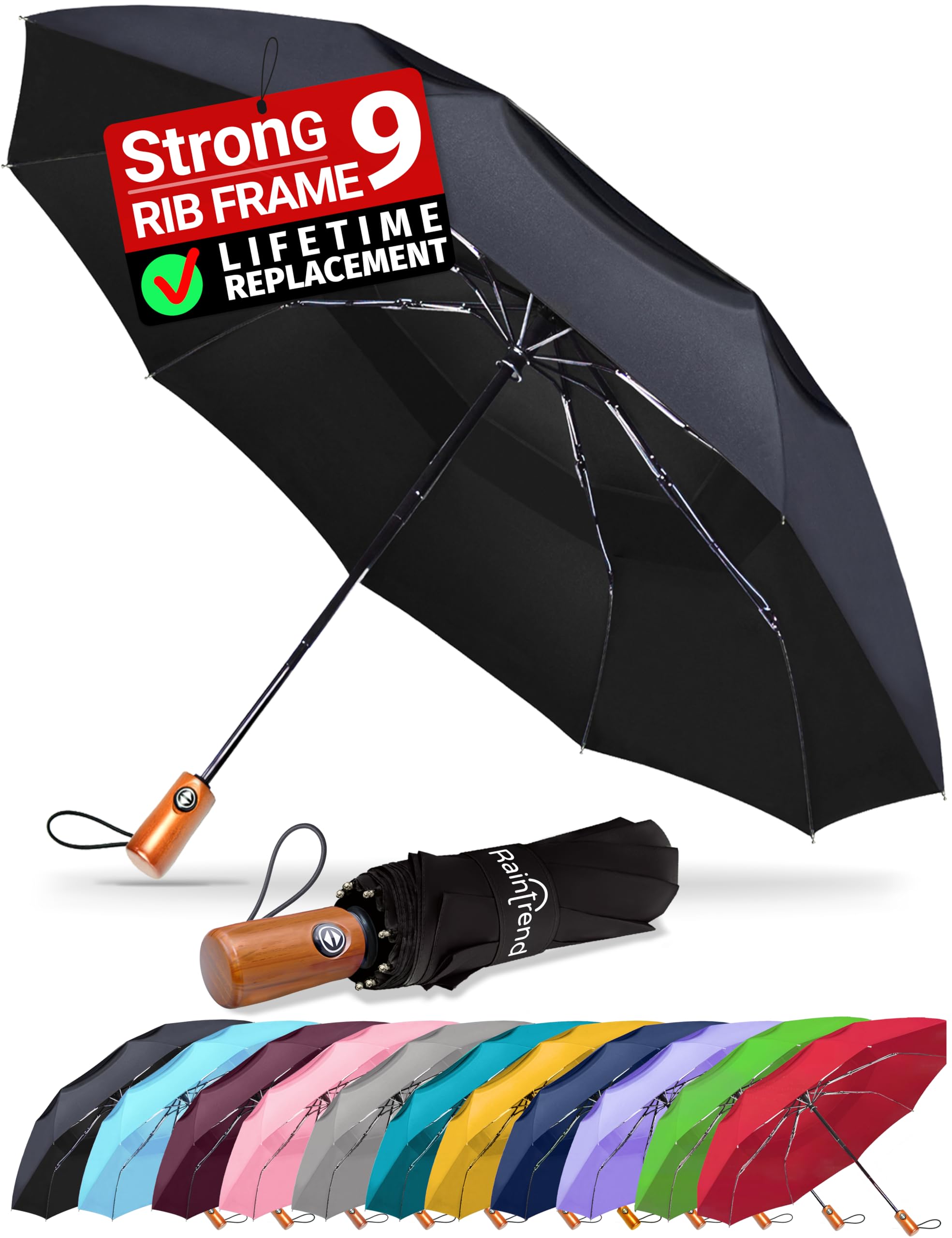
Larger-than-average canopy coverage and a handsome wooden grip set this umbrella apart in a sea of generic compacts. It feels more premium than its mid-range price suggests, making it a solid value for non-demanding commutes. However, quality consistency is a known concern—the auto open/close mechanism can become unreliable, and the umbrella lacks the vented ribs or reinforced frame needed to handle gusty conditions. It’s an elegant choice for light rain in the city, not a storm-ready travel partner.
Pros
- Noticeably larger canopy than typical travel umbrellas keeps shoulders dry without extra bulk.
- Premium wooden handle and refined finish elevate the look beyond standard compact options.
Cons
- Automatic open/close mechanism may become unreliable, leaving it stuck open or closed.
Consider this if you value style and a bit more dry coverage for light, short outings where wind isn’t a factor. For blustery travel days, pick one of the genuinely wind-resistant alternatives.
9. SY COMPACT Travel Umbrella
Best for Emergency Backup
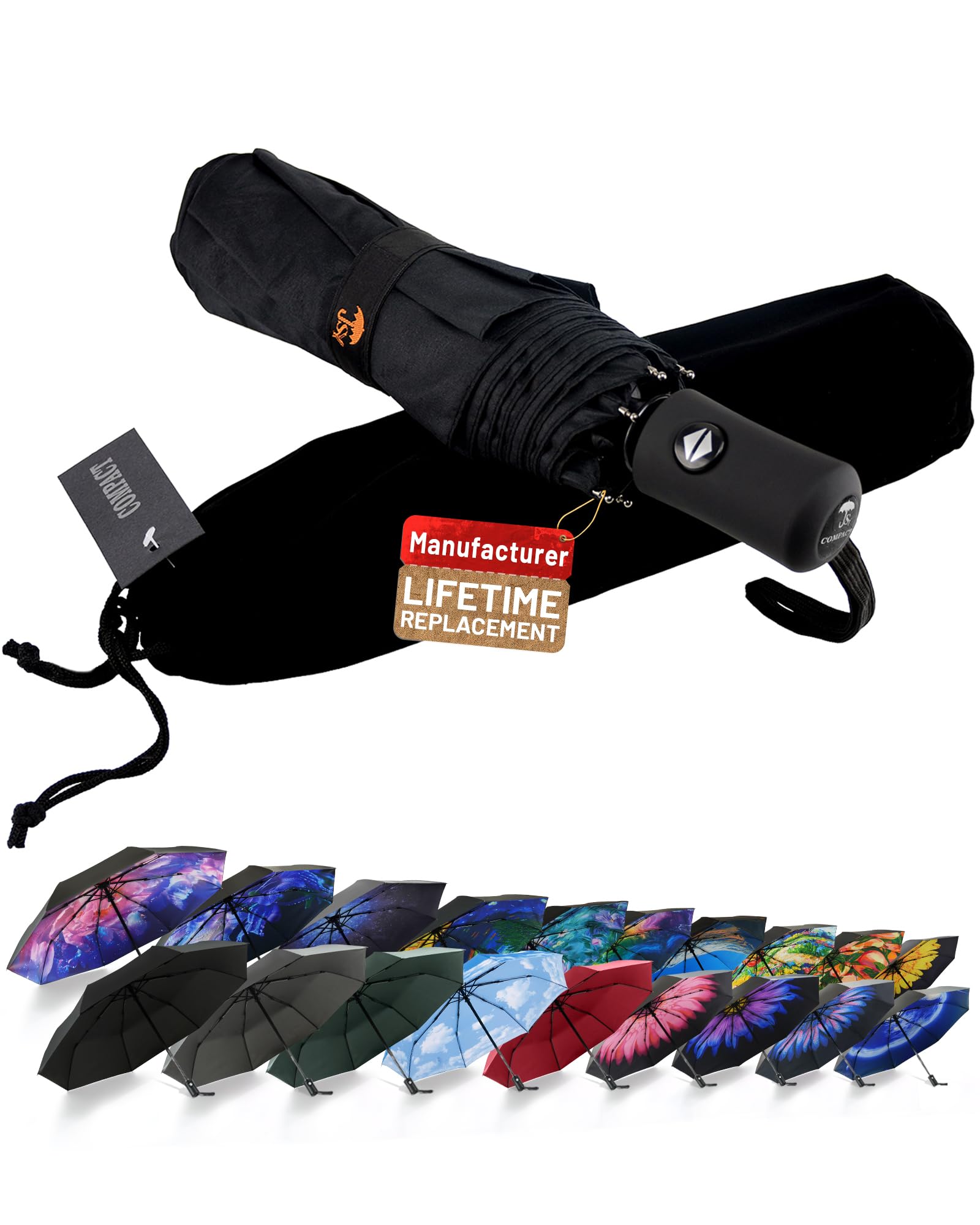
Ultra-light at 0.73 lbs and with a 38-inch canopy, this umbrella is a budget-friendly backup. UV options and a tiny pack size suit glovebox or bag carry. Durability is a known tradeoff—ribs and mechanism can falter, making it unsuitable for regular commutes. Accept that risk for infrequent, lightweight rain coverage.
Pros
- Weighs under a pound and packs down small for effortless travel carry
- Affordable price with optional UV coating and attractive color choices
Cons
- Auto-close demands firm pressure, making one-handed operation difficult
For those who need a tiny, cheap umbrella to stash in a car or bag for the unexpected sprinkle—and won’t rely on it daily—this ultra-light option delivers.
10. NPCQUN Travel Umbrella
Best for Pocket Sized

The umbrella’s 4-inch folded footprint makes it the most pocketable option in the lineup — ideal for a tiny purse or glove box. That extreme portability comes at the cost of wind resistance and durability; the lightweight frame may bend or invert in breezy conditions. Think of it as an emergency spare, not a daily driver.
Pros
- Folds to roughly 4 × 2 × 0.4 inches — small enough to slip into a front pocket or a tiny clutch.
- At 2 ounces, it adds virtually no weight to your daily carry or travel kit.
Cons
- The auto-close mechanism can bind, requiring a firm push to fully collapse the shaft.
Use this as a disposable, just-in-case umbrella stashed in a handbag or glove compartment — not as a reliable windbreaker.
11. PFFY 2-Pack Umbrellas
Best for 2-Pack Spare

These micro umbrellas slip into a purse, glovebox, or backpack with ease, giving you two backups for the price of one. The build is thin, and one unit may fail after a handful of uses, which makes them suited for occasional showers rather than regular protection.
Pros
- Two compact umbrellas at a budget-friendly price cover multiple bags or family members without a large spend.
- Each weighs about 2 oz and folds down to a size that fits in a slim purse or glove compartment.
Cons
- Closing the umbrella requires two hands and a firm push — not the effortless auto-close some expect.
If you want a pair of disposable backups to scatter in cars and bags for the rare downpour, these are a practical, low-cost option.
12. umenice UPF50 Travel Umbrella
Best for Sun Shield

The umenice UPF50 Travel Umbrella delivers noticeable cooling and sun protection that makes summer walking far more comfortable. It also sheds rain effectively when needed. However, its frame can buckle or invert even in moderate gusts, so it’s best reserved for calm, sunny days or light drizzle — not for the wind resistance the search might imply.
Pros
- Blocks UV rays and noticeably reduces heat under the canopy on sunny days.
- Performs adequately as a rain shield during light showers.
Cons
- Can buckle or invert in moderate wind — not suited for gusty conditions.
If your travels seldom encounter wind and you prioritize heat relief and sun protection, this umbrella is a solid companion for sunny destinations.
13. Yoobure Windproof Umbrella
Best for Style & Uv

The Yoobure umbrella combines UV protection and a compact, lightweight build at a budget-friendly price. However, durability inconsistency and mediocre windproofing mean it’s better for short trips or occasional use, not as a daily commuter in gusty weather.
Pros
- Good value with a quality feel for the price
- Compact and easy to stash in a work bag or backpack
Cons
- Closing the umbrella requires some force; the auto-close mechanism isn’t entirely smooth
A sensible grab-and-go umbrella for light rain and sun protection during occasional outings — just don’t expect heavy-wind reliability or daily-use longevity.
14. Seniny Windproof Umbrella
Best for Budget Sun

A compact umbrella with UV-blocking benefits and smooth auto open/close, fitting easily into a backpack. Durability varies between units, and wind resistance tops out at light breezes—it’s not for gusty conditions. Best as a sun-and-light-rain companion for budget-minded travelers.
Pros
- Smooth automatic open/close for one-handed operation
- Compact folded size fits easily in backpack or bag
Cons
- Canopy may require extra force to close fully
This umbrella suits sun-conscious commuters and travelers who need a compact, affordable option for mild weather — it’s not built to wrestle strong winds.
15. Gorilla Grip Compact Umbrella
Best for Light Rain

The Gorilla Grip Compact Umbrella deploys and collapses with a single-button press, and its water-repellent coating sheds light rain without soaking through. At just 0.82 lbs and an 11.5-inch folded length, it slips easily into a backpack or purse. However, this umbrella is not built for wind. Despite marketing language, its canopy inverts in gusts above 23 mph — the manufacturer’s own tested rating — so it’s only suited for calm, mild-weather days.
Pros
- Smooth one-button open and close for quick, one-handed use.
- Lightweight and compact, fitting easily into a bag without added bulk.
Cons
- Canopy flips inside-out in gusts above ~23 mph, contradicting wind-resistant marketing.
This umbrella handles short walks in light rain or serves as a discreet backup in your bag, but anyone who regularly encounters breezy or gusty conditions should choose a genuinely wind-resistant model instead.
How to Choose
The most important factor in a windproof travel umbrella isn’t the advertised mph rating—it’s how the canopy and frame hold up under gusting side winds.
Canopy Size
A larger canopy keeps more of your body dry but creates more sail area in wind, making the umbrella harder to control in gusts.
Travel umbrellas usually have arcs between 38 and 46 inches, enough for one person. Compact models sacrifice coverage for packability; wider canopies are better for couples but add bulk.
Weight
Heavier umbrellas often use denser shafts and more fiberglass ribs that resist snapping. But carrying even an extra half-pound gets tiresome on long walking tours.
A 0.8-lb umbrella feels barely there, while a 1.8-lb one demands a dedicated bag pouch. Consider whether you’ll carry it all day or only for quick errands.
Wind Resistance Ratings
Marketing claims of 100 mph are common, but real-world survivability depends on venting canopies and flexible rib design. An umbrella that flips out in a 30 mph gust will likely break.
Look for double-canopy or vented designs that let wind pass through. Even then, an inverted umbrella can be twisted back into shape if it flips, while a rigid frame may snap.
Rib Count and Material
More ribs (10 or 12) distribute wind pressure evenly, reducing stress points. Fiberglass ribs flex without snapping, whereas cheaper steel ribs bend permanently.
8-rib umbrellas are lighter but less stable. Fiberglass is the material to look for; resin-fiber adds durability.
Auto Open/Close
Auto-open buttons are convenient when you’re carrying bags, but auto-close usually only retracts the canopy—you still need to push the shaft down manually.
That push can be firm, requiring two hands. If you have limited hand strength, a manual folding umbrella with a simple button may be less frustrating.
FAQ
Why is my windproof travel umbrella so hard to close?
Auto-close buttons typically only collapse the canopy; compressing the shaft against strong spring tension requires firm downward pressure. Try placing the umbrella tip on the ground and pushing down if grip is weak. If it remains a struggle, an umbrella without auto-close or one designed for one-handed folding will be easier.
Can a compact travel umbrella really withstand 100 mph wind?
Most compact umbrellas cannot survive sustained 100 mph winds—they may flex and flip without breaking at lower speeds. A 100 mph rating usually means it can return to shape after flipping, not that it stays rigid. For real storms, choose a vented canopy and a solid frame, and base your choice on wind speeds you actually encounter.
Do inverted umbrellas actually keep you drier when getting into a car?
Yes, the wet side folds inward when closed, trapping water inside the fold rather than dripping on seats and clothes. You must hold it vertically while closing; water can still spill if tipped. The advantage is most noticeable when entering a vehicle quickly during heavy rain.
Is a heavier travel umbrella better for windy conditions?
Generally yes, added weight often means thicker ribs and a sturdier shaft that resists buckling. But a well-designed lighter umbrella with fiberglass ribs can also handle wind well. Focus on rib material and count rather than weight alone—a 1.5-lb umbrella with cheap steel ribs may be worse than a 0.9-lb fiberglass model.