This post contains affiliate links. We may earn a small commission when you buy through our links — at no extra cost to you.
A travel umbrella that collapses at the first gust is worse than no umbrella at all. Yet many compact models, despite bold windproof claims, invert or break after a few uses. This isn’t rare — it’s a recurring buyer frustration, especially along the blustery UK and European coasts.
The real divide isn’t between cheap and expensive, but between light and tough. Picking a winner means knowing where you’ll use it: a lighter umbrella that stashes in a purse but tolerates only gentle breezes, or a heavier one that stands up to crosswinds but adds bulk to your daypack.
This guide highlights umbrellas that match specific travel styles, from city hoppers to coastal walkers. The goal is not an unbreakable umbrella — that doesn’t exist — but one that gives you the best odds of staying dry and keeping the frame intact trip after trip.
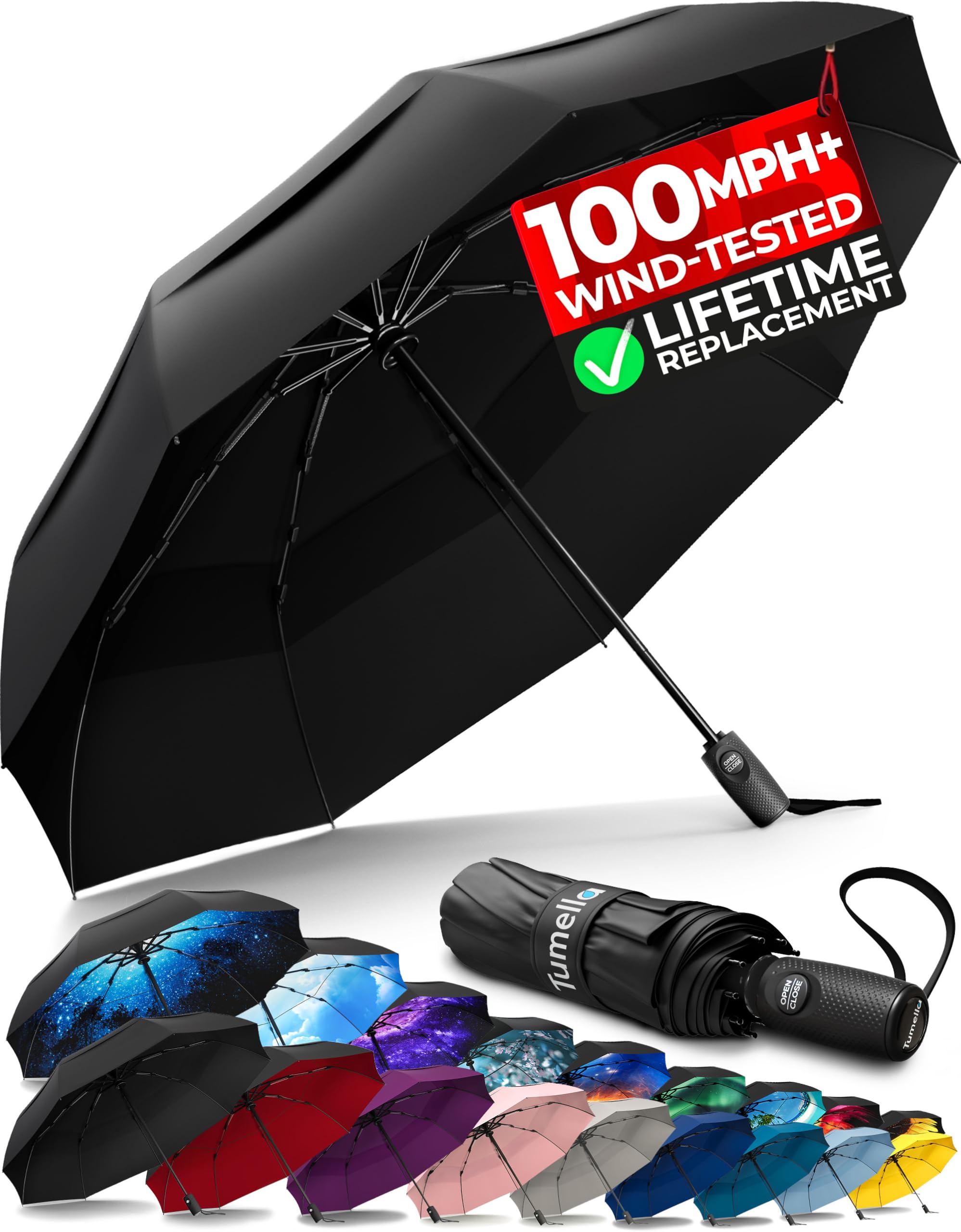


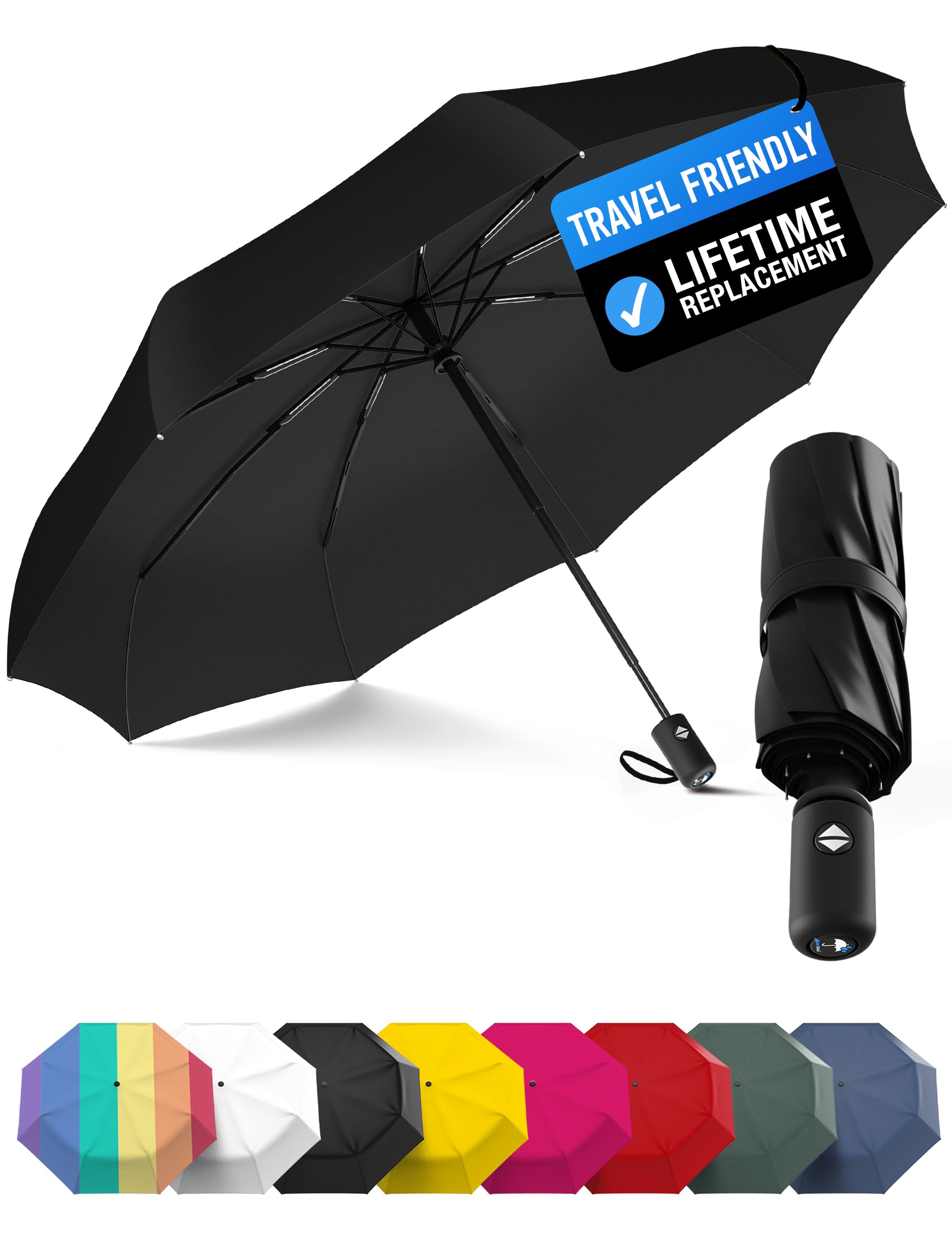
1. TUMELLA Windproof Umbrella
Best for Everyday City Travel
The TUMELLA pairs a sleek, premium aesthetic with sturdier-than-average build quality for an everyday compact. It shrugs off moderate downpours and daily handling, folding into a neat package that slips into a car pocket or backpack side pouch. The auto-open is snappy, and the rib construction feels robust through repeated use — a clear step above many travel umbrellas.
Unlike the heavier, wind-hardened competitor that dominates blustery commutes, the TUMELLA prioritizes a lighter carry and more refined look. That trade-off means less wind armor but a noticeably less burdensome everyday companion.
City travelers and daily commuters who value style and moderate rain protection will find a faithful companion here. The canopy covers one person well, and the weight stays low enough to forget you’re carrying it. If your trips include strong coastal winds or you need one-button closing that works with minimal effort, the heavier flagship in this lineup will serve you better.
Pros
- Premium look and finish that stands out in an urban setting.
- Durable construction holds up well in everyday rain, outperforming many rival compacts.
- Compact folded size fits car cup holders and backpack pockets effortlessly.
Cons
- Closing takes a firm push; one-handed operation may be a struggle for those with weaker grip.
- Canopy can invert in strong gusty winds, falling short of the wind resistance some buyers expect.
For the traveler who wants an umbrella that looks sharp and handles city rain reliably while packing light, the TUMELLA delivers. Pass only if you regularly face heavy winds.
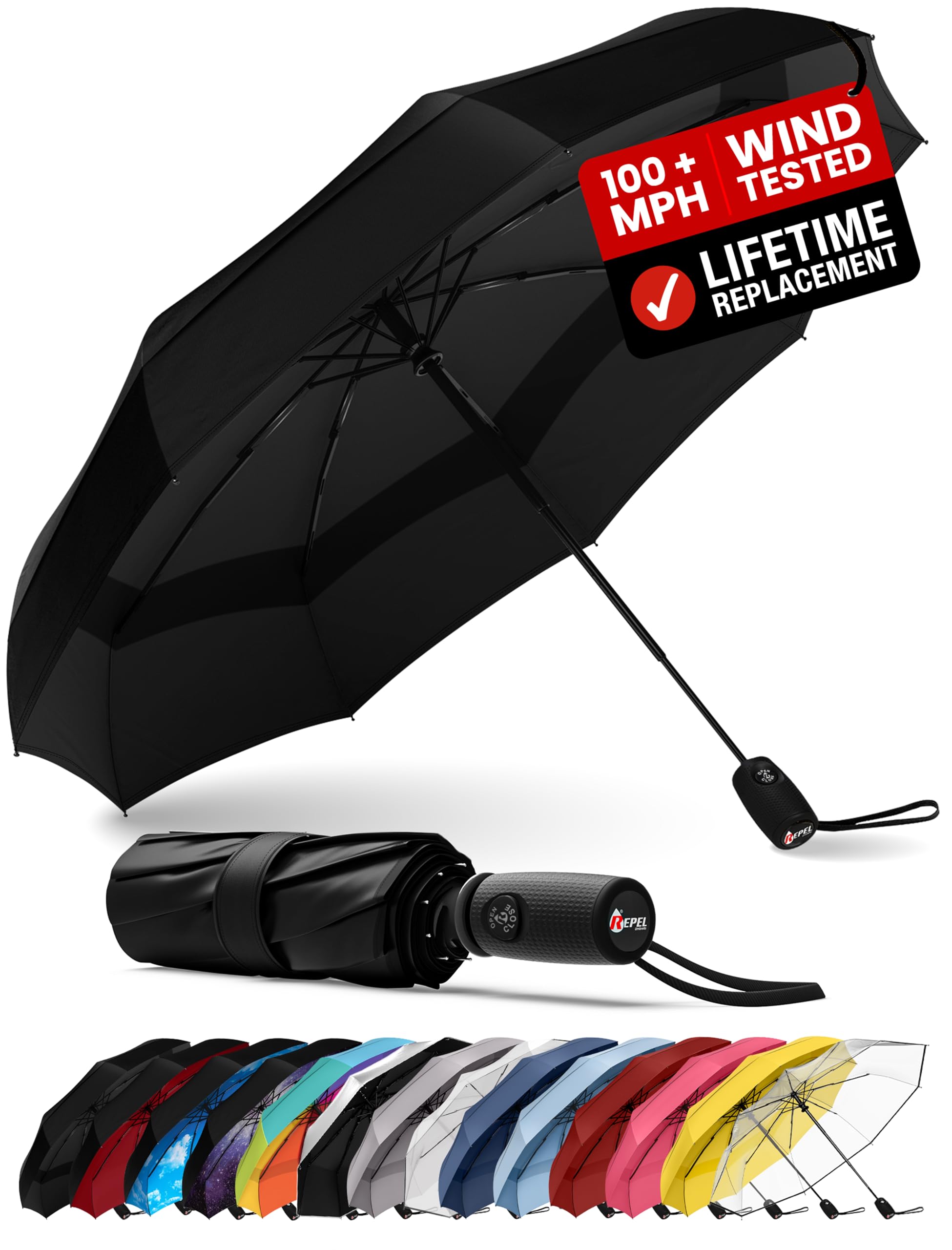
2. Repel Windproof Umbrella
Best for Windy Coasts
This umbrella stands up to coastal gusts without inverting, making it a solid choice for travelers who face blustery conditions. The trade-off is a higher weight and a stiff auto-close mechanism that demands two hands and some force. For ultralight packers counting every gram, the heft will be a drawback; for commuters or storm-chasing travellers, the wind performance justifies the extra ounces. While the frame holds up well in strong winds, occasional reports of rib breakage after limited use reflect typical category variance.
Pros
- Withstands strong wind gusts without flipping, suitable for exposed routes.
- Canopy repels water and dries quickly between downpours.
- Folds compact enough to stow in a backpack or car side pocket.
Cons
- Weighs over 12 ounces, noticeable when packed in a purse or lightweight bag.
- Auto-close mechanism may require significant force and two hands to collapse fully.
Choose this if wind resistance is your top priority and you can accept a heavier build with a two-handed close. For a lighter everyday carry, the top pick offers better portability.
3. LANBRELLA Inverted Umbrella
Best for Car-To-Street
The inverted design flips the script on typical umbrellas: the wet side folds inward, keeping water off your clothes and car interior as you close it. This pays off most when hopping between a taxi and a restaurant, or sliding into a driver’s seat while it’s still raining.
Travelers who make frequent short stops in wet weather will appreciate that dry-entry convenience. It’s less suited to ultralight packers or slim pockets — the folded shape is thicker than a standard compact, and closing still takes a deliberate push. For the car commuter who values a larger canopy and can accept a few extra ounces, those tradeoffs fade into the background.
Pros
- Inverted fold keeps the wet surface contained, preventing water from dripping onto you or your belongings when closing.
- Solid build quality gives a reassuring feel in hand, even in gusty conditions.
- Folds small enough to fit into most everyday bags and purses.
Cons
- Closing requires a firm final push; the locking mechanism may feel stiff on first use.
- Occasional structural issues at the ribs can appear after extended heavy use.
For car commuters and travelers who prioritize a dry entry over an ultra-slim pack, the inverted design earns its place beside the carry-on.
4. LifeTek Premium Umbrella
Best for Business Travel
The Teflon-coated fabric sheds water instantly, leaving the canopy dry enough to stow straight into a bag — a performance edge over the top pick’s standard water resistance. The substantial build feels polished and professional, ideal for business commuters. The closing mechanism requires a firm two-handed push, and the umbrella is heavier than many travel compacts. These trade-offs suit those who value fast drying and a high-end feel over ultralight packing. Long-term frame durability can vary, so occasional use rather than daily storm duty is a better fit.
Pros
- Exceptional water resistance: Teflon coating repels water, canopy dries almost instantly.
- Sturdy construction stands up to heavy rain without feeling flimsy.
- Premium materials give a polished, high-end look and feel.
Cons
- Closing requires a firm push — using both hands is common.
- Heavier than many compact umbrellas; may feel bulky in minimalist packs.
For business travelers who prize a dry, tidy pack-up and a luxury feel, the LifeTek delivers — provided you don’t mind the extra weight and a stiff closing.
5. EEZ-Y Compact Umbrella
Best for Budget Windproof
It packs a 55 MPH wind rating and a fiberglass/steel frame into an 11-inch collapsed package that disappears into bags — wind protection at a price point that usually offers far less. Where the wind-focused flagship in this lineup pushes 100 MPH for storm-chasers, this model dialled back extreme resistance to keep weight and cost low, making it a practical choice for sudden downpours rather than sustained gales.
It’s best as a stashed-in-the-car umbrella or for infrequent travelers who only deploy it a few times a year. The trade-off: you get wind defence at a low price, but not the everyday resilience of pricier alternatives. For a backup that can handle a surprise gust on a short trip, it fits the brief.
Pros
- Sturdy fiberglass/steel frame resists heavy gusts without inverting.
- 55 MPH wind rating holds firm in sudden squalls.
- Folds to 11 inches and slips into backpacks and work bags with ease.
Cons
- Closing demands a decisive push; tough for users with limited hand strength.
- Build quality can vary; a unit may not hold up beyond occasional travel.
For infrequent travel and car storage where wind protection matters but daily reliability doesn’t, the EEZ-Y delivers credible gusts defence at a budget price — just don’t expect it to outlast a commuting season.
6. Rain-Mate Compact Umbrella
Best for City Commutes
For those who value looks and one-handed operation over extreme weather defense, this umbrella brings a refined everyday carry. The canopy unfurls with a single press, and it packs down neatly enough to disappear into a briefcase or purse. It fits urban travelers who dash between subway and office, though it’s not the tool for blustery coastal walks — wind resistance is moderate, and the frame is happier under awnings than in open gales.
Pros
- One-button auto-open deploys the canopy quickly and reliably.
- Canopy covers one person comfortably and folds into a packable, compact size.
- Sleek design and a range of color options make it an attractive accessory.
Cons
- Durability can be a gamble — a unit may hold up for years of light use, while another might develop a loose rib after a few storms.
- The auto-close mechanism needs a firm manual push to fully collapse the shaft; one-button closure is only partial.
A good-looking, easy-to-pack umbrella for light urban rain, so long as you don’t expect it to battle coastal winds.
7. Raintrend Bigger Umbrella
Best for Extra Coverage
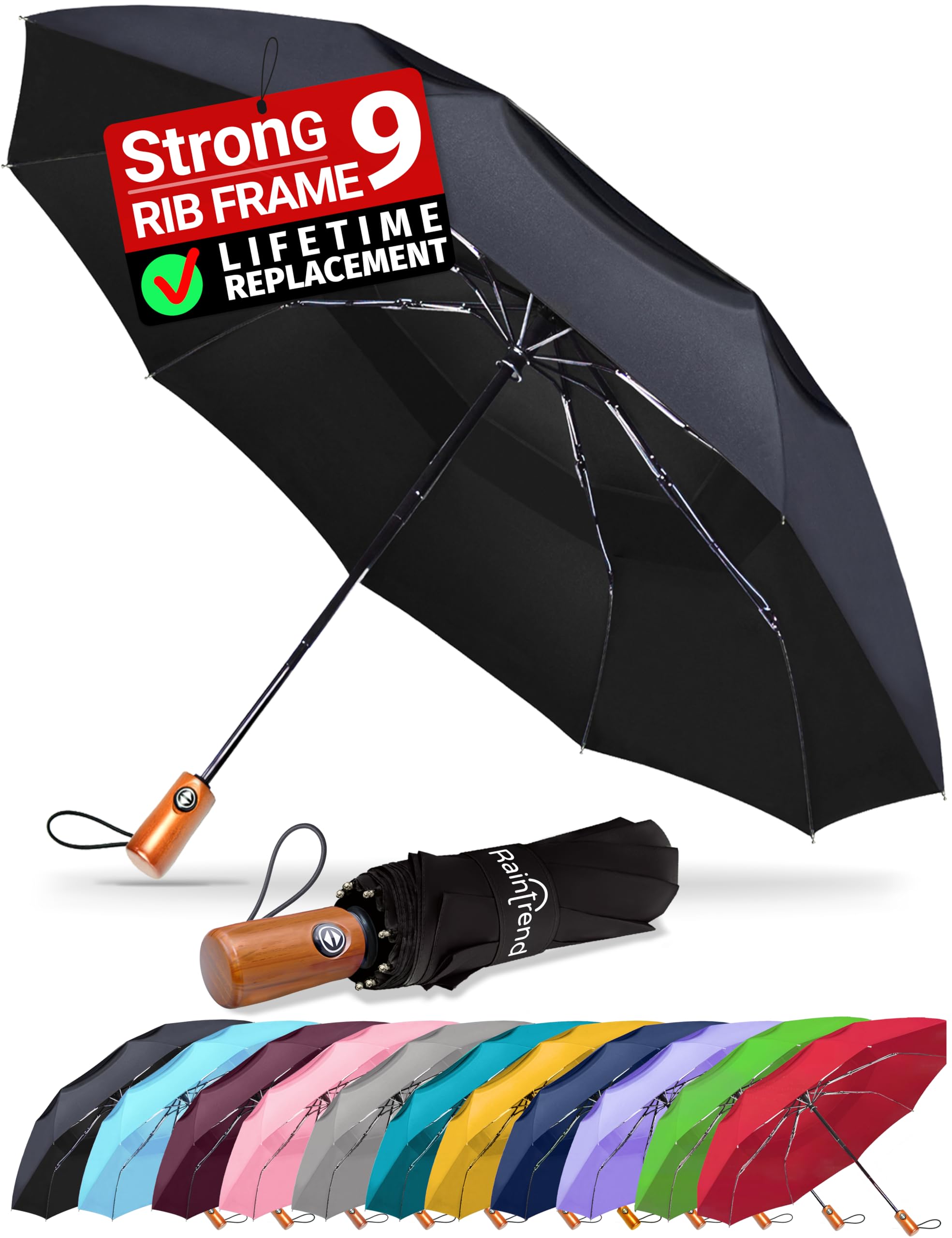
The Raintrend’s canopy offers a noticeable 10% more coverage than average compacts, keeping more of you dry without bulk. The auto-open works smoothly and build quality looks good. Wind resistance, however, can be inconsistent — in gusty conditions, inversion is possible. This suits city commuters and travelers in calm-weather climates who prioritize coverage over storm performance.
Pros
- Larger canopy provides extra coverage without stepping up to a full-size umbrella.
- Auto-open button responds quickly for one-handed operation.
Cons
- Closing requires a firm manual push despite the auto-open feature.
If calm-day coverage is your priority, the extra canopy space makes this a practical travel companion. For blustery destinations, the wind-tested models in this guide hold up better.
8. Gorilla Grip Umbrella
Best for Calm Weather

The Gorilla Grip umbrella is ultra-lightweight and compact, sliding easily into purses and backpacks, with a one-click mechanism that feels smooth. However, its wind rating tops out at 23 mph, and it can flip inside out in even mild breezes. This makes it a poor fit for unpredictable travel weather, but for calm, rainy days it sheds water well and won’t weigh you down.
Pros
- Ultra-lightweight under 1 lb and compact enough for any purse or carry-on.
- Smooth one-click open and close operation for quick rain coverage.
Cons
- Canopy can invert in light breezes; limited to calm, windless conditions.
If you only need a light shield for calm, drizzle-filled days and value minimal weight and packability, this umbrella fits. For any travel where windy conditions are possible, look to models rated for higher gusts.
9. Bodyguard Inverted Umbrella
Best for Couples & Night

The broad canopy shields two people from rain or sun and the reverse-folding design traps water inside, keeping car seats dry. At 15.4 oz and with a closing mechanism that demands a firm two-handed press, it shifts away from ultralight solo carry — a deliberate tradeoff for shared coverage and the reflective stripe’s added visibility on dark walks.
Pros
- Room for two with a 46-inch canopy that still folds down compactly.
- Inverted fold and reflective stripe reduce drips and improve nighttime visibility.
Cons
- Requires a strong two-handed push to close, which can be awkward for those with limited grip strength or when hands are full.
Suited to car-commuting duos or evening walkers who’ll trade ultralight packability for full two-person coverage and the reflective safety detail.
10. QWB Inverted Carabiner Umbrella
Best for Clip & Go

The carabiner handle and inverted fold make this umbrella easy to clip to packs and keep drips off seats. However, durability can be a gamble, making it best for occasional use and short city trips where a potential breakage won’t disrupt your plans.
Pros
- Inverted design with carabiner clips easily to backpacks, keeping wet surfaces contained.
- Stands up reasonably well to breezy conditions for such a compact umbrella.
Cons
- Closing mechanism requires a firm push to latch; may be awkward one-handed.
Worth consideration if you want a clip-on umbrella for short commutes and don’t mind the occasional firm close.
11. UMENICE UV Umbrella
Best for Sun Protection

The Umenice provides genuine cooling relief under strong sun — that’s where it excels. For light rain showers in warm climates, it works as a hybrid, but the frame durability falls short of what you’d expect at this price. It’s built primarily as a sun umbrella, so wind resistance and long-term rain use are not its strong suits. Best viewed as a sun-first accessory for beach getaways and Southern Europe city strolls.
Pros
- Keeps you noticeably cooler under hot sun thanks to UPF 50+ fabric.
- Compact and light enough to stash in a daypack or purse.
Cons
- Closing requires two hands and firm effort — a design tradeoff to keep the canopy tight for UV blocking.
This umbrella makes sense for travelers prioritizing sun protection over rain durability. In blazing Mediterranean sun, it delivers — but don’t count on it through a season of storms.
12. Seniny UV Umbrella
Best for Budget Uv

The Seniny umbrella punches above its price for sun protection, with a compact fold that slips easily into a daypack. On rainy days, it doubles as a basic shield, though the frame can give way in forceful wind and the auto-close needs a firm push. That makes it a fair-weather travel companion, not a wind-fighter.
Pros
- Offers effective UV protection and works in rain
- Folds small enough for backpacks and purses
Cons
- Frame may give way under rough handling or strong gusts
A budget-friendly UV shield for sunny travel and light daypack carry; leave it home when wind or daily use is on the forecast.
How to Choose
The most important decision is whether you prioritise wind survival or lightweight portability, because no travel umbrella excels at both.
Weight and Folded Size
A folded length under 12 inches and a weight below 1 lb make an umbrella easy to slip into a daypack or handbag, but ultra-light models often trade away rib strength. The lighter the umbrella, the more likely it is to use thinner fiberglass or fewer ribs, which can fold in a sudden gust. If your trip involves unpredictable weather, aim for the upper end of that weight range — around 12 to 15 ounces — to retain structural integrity without becoming a burden.
Canopy Diameter for One-Person Coverage
A canopy between 38 and 46 inches gives full shoulder coverage for one person without turning into a bulky windsail. Smaller canopies keep the folded package slim but can leave your arms and backpack exposed in sideways rain. A 42-inch arc is the sweet spot for most solo travellers, providing enough shelter without dramatically increasing resistance to wind.
Wind Resistance: Real-World vs. Marketing
Manufacturers often cite ratings like ‘100MPH tested’, but those lab conditions don’t replicate the swirling gusts of a city street or coastal path. In practice, umbrellas with flexible fiberglass ribs and a double-canopy venting system handle real wind better because they can flex and release pressure instead of snapping. Look for at least 8 ribs and a vented canopy if you regularly face breezy conditions, and treat any compact umbrella as unreliable above 40 mph.
Auto Open/Close Force
Nearly every auto-close umbrella demands a hard manual push to fully collapse and lock the shaft, because the spring-loaded mechanism only retracts the canopy, not the telescopic pole. The force needed can be 15–20 pounds, which is a dealbreaker for anyone with arthritis or limited hand strength. Test the closing action before you travel; if it already feels stiff in a shop, it will be worse in cold, wet conditions.
Inverted vs. Traditional Fold
Inverted umbrellas fold outward so the wet surface stays inside when closed, preventing water from dripping onto car seats or floors. The trade-off is a bulkier wrapped shape and often a heavier frame, making them less suited for slim coat pockets. Choose inverted only if you frequently dash between car and street, and can tolerate the extra folded girth.
FAQ
Why is my travel umbrella so hard to close after opening it?
The auto-close button only retracts the canopy; you still need to push the shaft down against a stiff spring to lock it. This requires significant hand strength, often 15 pounds or more. If closing is painful, look for a manual-fold umbrella or one with a sliding runner rather than a push-button lock.
Do windproof travel umbrellas actually work in strong wind?
They work up to a point. Even top-rated compact umbrellas can invert or break in gusts above 40 mph, despite lab ratings of 55 or 100 mph. The best defence is a vented double canopy with flexible fiberglass ribs that allow wind to pass through rather than flipping the frame. For truly stormy coastal days, a fixed-frame golf umbrella is more reliable.
What is the difference between an inverted umbrella and a regular folding umbrella?
An inverted umbrella folds outward, trapping the wet surface inside when closed so you don’t shake water onto your clothes or car. It’s bulkier when wrapped and often heavier, but the no-drip convenience is worth it if you frequently hop in and out of vehicles. A regular umbrella folds inward, making it sleeker to pack but messier when stowed.
How much does a good lightweight travel umbrella weigh?
A well-built compact travel umbrella typically weighs between 11 and 15 ounces (310–425 grams). Models under 10 ounces often sacrifice rib durability and wind resistance. If weight is critical, aim for around 12 ounces with at least 8 reinforced fiberglass ribs for a balance of portability and toughness.