This post contains affiliate links. We may earn a small commission when you buy through our links — at no extra cost to you.
Cobblestones photograph beautifully and punish your feet by mile three. The surface is uneven in two directions at once, so every step lands a little differently, and a shoe that feels fine on a treadmill can bruise you by mid-afternoon. What this ground asks for is a shoe that cushions without going mushy, grips wet stone, and leaves room for toes to spread when your feet swell. Get those three right and a long walking day stops being something you have to recover from.
I’ve worn through plenty of sneakers on trips where walking was the entire point, and over the past six months my team and I have logged long days in 12 pairs of walking shoes, knit slip-ons included, on ground that is anything but smooth. Softer isn’t the answer, by the way: a pillow-soft midsole feels wonderful in the store and then lets every cobble poke through by hour four. The picks below are the ones that stayed comfortable, stayed grippy, and still looked presentable at dinner.
Our Top Picks
The Best Walking Shoes for Cobblestone Streets, Reviewed
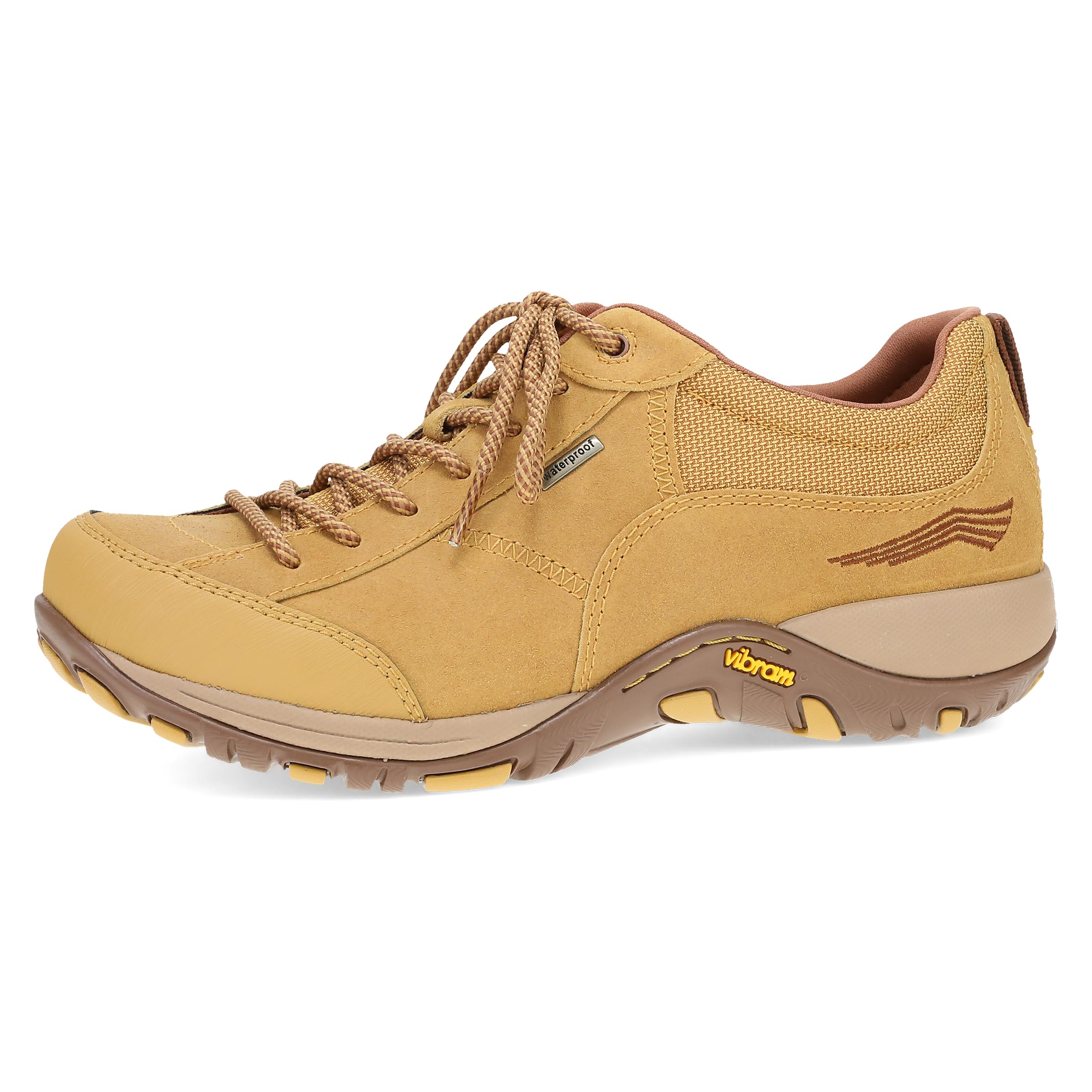
1. Dansko Paisley
Best Overall
Key Features
- Style: Outdoor sneaker
- Weight: 13.4 oz
- Waterproof: Yes
- Price: Premium
Cobblestones ask two things of a shoe at once. The surface is uneven enough to roll an ankle, and after rain it is slick enough to slide your foot out from under you. The Paisley is the shoe in this guide that answers both. It is the only waterproof pair we included, the arch support is the most convincing of the five, and the toe box is deep and wide enough that an orthotic drops in without a fight.
What separates it from the softer picks is how the sole behaves when the ground is not flat. A deep, squishy midsole feels wonderful on a sidewalk and passes every cobble edge straight up into your arch; the Paisley cushions just as well but stays planted, so your foot does less work staying upright. We noticed it most at the end of a long day, when the other shoes had us thinking about our feet and this one did not.
The number worth knowing is 13.4 ounces a shoe. That is more to pack than the knit slip-ons here, and if you are carrying a second pair in a carry-on you will feel it; worn onto the plane, the weight pays you back on the first stretch of wet stone. It is also the priciest pick in this group, and that is the one place the case gets thinner. If your trip is a dry-weather city break, that is money you do not have to spend. If the forecast reads grey for a week, the waterproofing stops being a specification and becomes the reason you packed them.
Pros
- Waterproof upper for wet stone
- Strongest arch support in this group
- Roomy toe box takes orthotics
- Cushioned for ten-hour days
Cons
- Grip fades on polished, wet surfaces
- The most expensive pick here
For wet, uneven streets and long days, this is the pair we recommend: waterproof, genuinely supportive under the arch, and roomy enough for an orthotic.
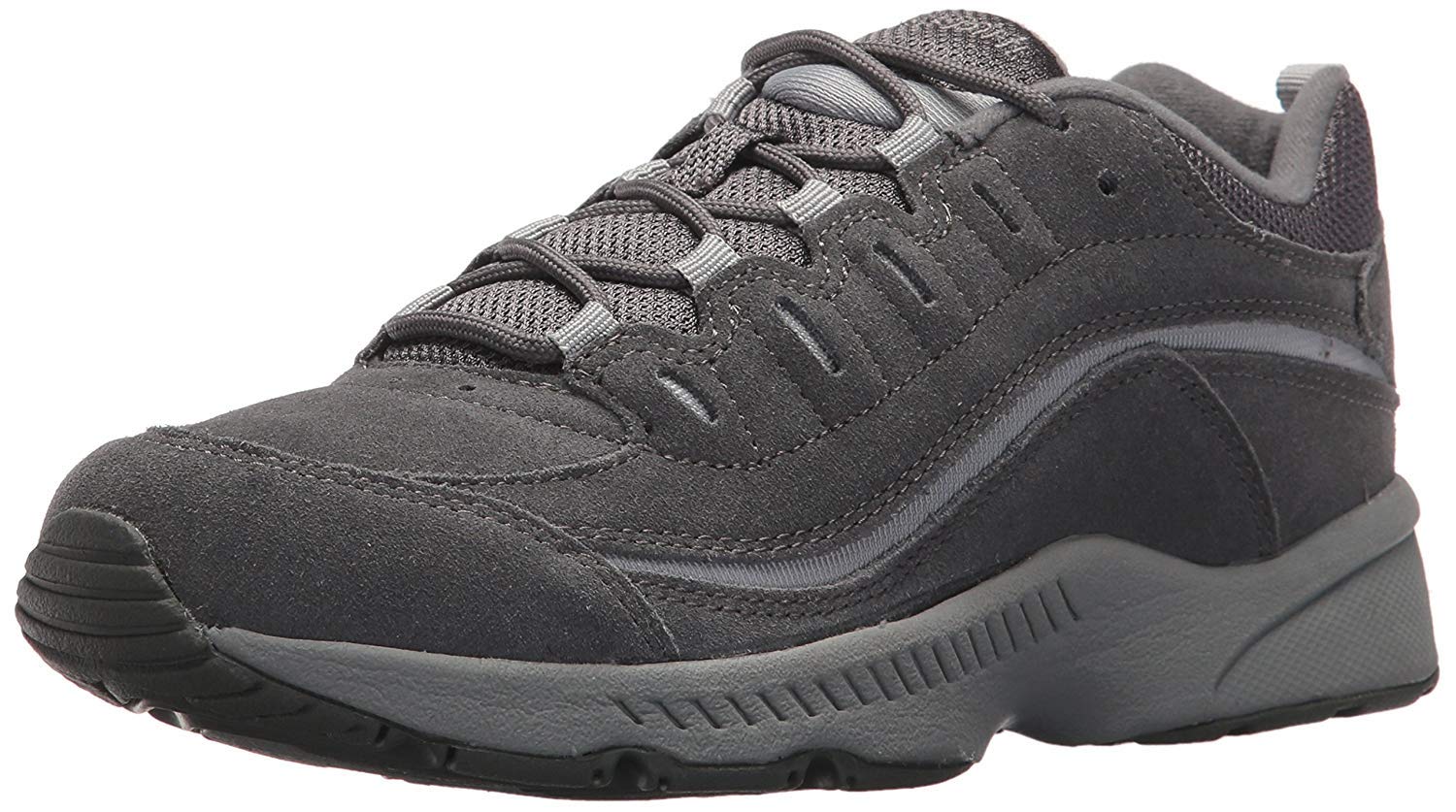
2. Easy Spirit Romy
Best for All-Day Walking
Key Features
- Style: Walking sneaker
- Department: Women’s
- Width options: Wide available
- Price: Budget
If the Paisley is more shoe than you want to pay for, the Romy is the budget answer to the same problem. It gives up the weatherproofing and the planted feel. What it keeps is a wide, forgiving toe box, a genuinely light ride, and a shape that suits feet needing room without going up a whole size.
We like it best on flat ground and long days. The shoe is light enough to disappear on your foot, the heel does not dig in, and the toe box lets your toes spread when you push off, which is the thing that keeps mile six from turning into a hot spot. On cobblestones the softer, more flexible sole is the trade you make: you feel more of the stone through the shoe than you do in our top pick. For a traveler who walks two or three miles at a stretch rather than eight, that is a fair swap for the weight and the price.
The thing to watch is longevity. The sole and the toe are the parts that give out first on hard-worn pairs, and a shoe this light has less material to lose in the first place. For a two-week trip it is a smart buy. For a daily five-mile commute, plan on replacing them sooner than you would the heavier picks here, and treat them as a consumable rather than an investment.
Pros
- Light enough to forget you are wearing them
- Roomy toe box with wide sizes
- Cushioned for long days on your feet
Cons
- Sole and toe wear faster than heavier shoes
Our pick if you want a light, roomy walking shoe without spending much: comfortable for hours, though the sole will not outlast a heavier pair.
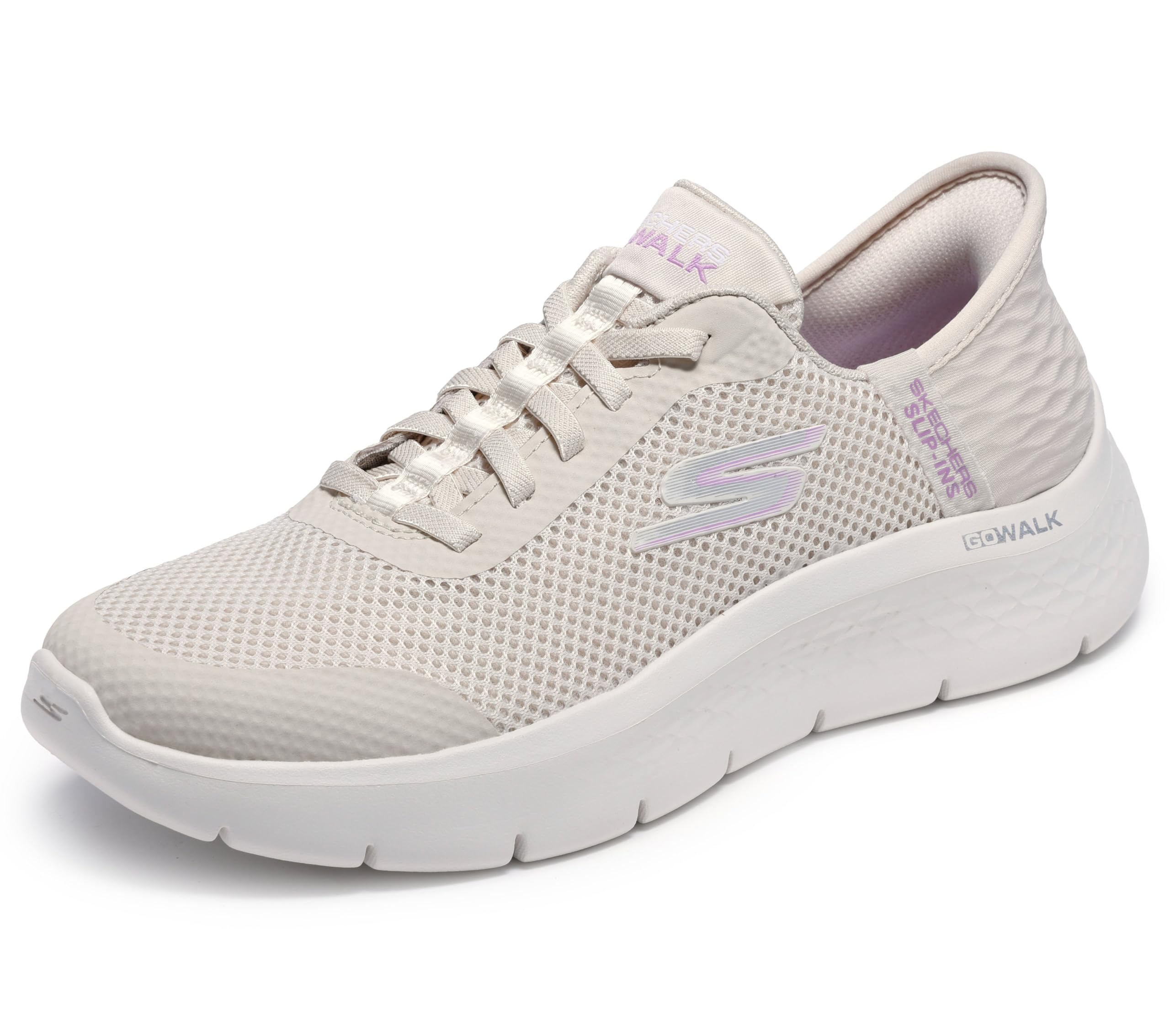
3. Skechers Go Walk Flex Grand Entry
Best Slip-On for Travel
Key Features
- Style: Walking sneaker
- Closure: Slip-on
- Width options: Wide available
- Price: Budget
A shoe you can step into without touching a lace earns its keep in two places on a trip: the security line, where you are hopping on one foot with a tray in your hands, and the hotel room, where bending over after twelve miles feels like a chore. This Skechers handles both better than anything else here, and it does it without looking like a house slipper.
What surprised us is how much support the step-in design keeps. The arch insert is substantial without becoming a lump under the midfoot, and the upper holds across the instep rather than letting the foot slide forward, which is what separates a slip-on you can walk a mile in from one you merely stand in. Sizing is the catch: the shoe runs small and narrow for some feet, high insteps especially, and a knit upper cannot be loosened the way laces can. Take the wide if you normally do, go up half a size if you sit between sizes, and you get a travel shoe that dries fast after a puddle and needs no breaking in.
Pros
- Steps on without hands
- Real arch support in a slip-on
- Light and quick to dry
Cons
- Runs small and narrow for some feet
For flights, security lines, and short walking days, this is the slip-on we reach for: supportive enough to walk in, easy enough to kick off.
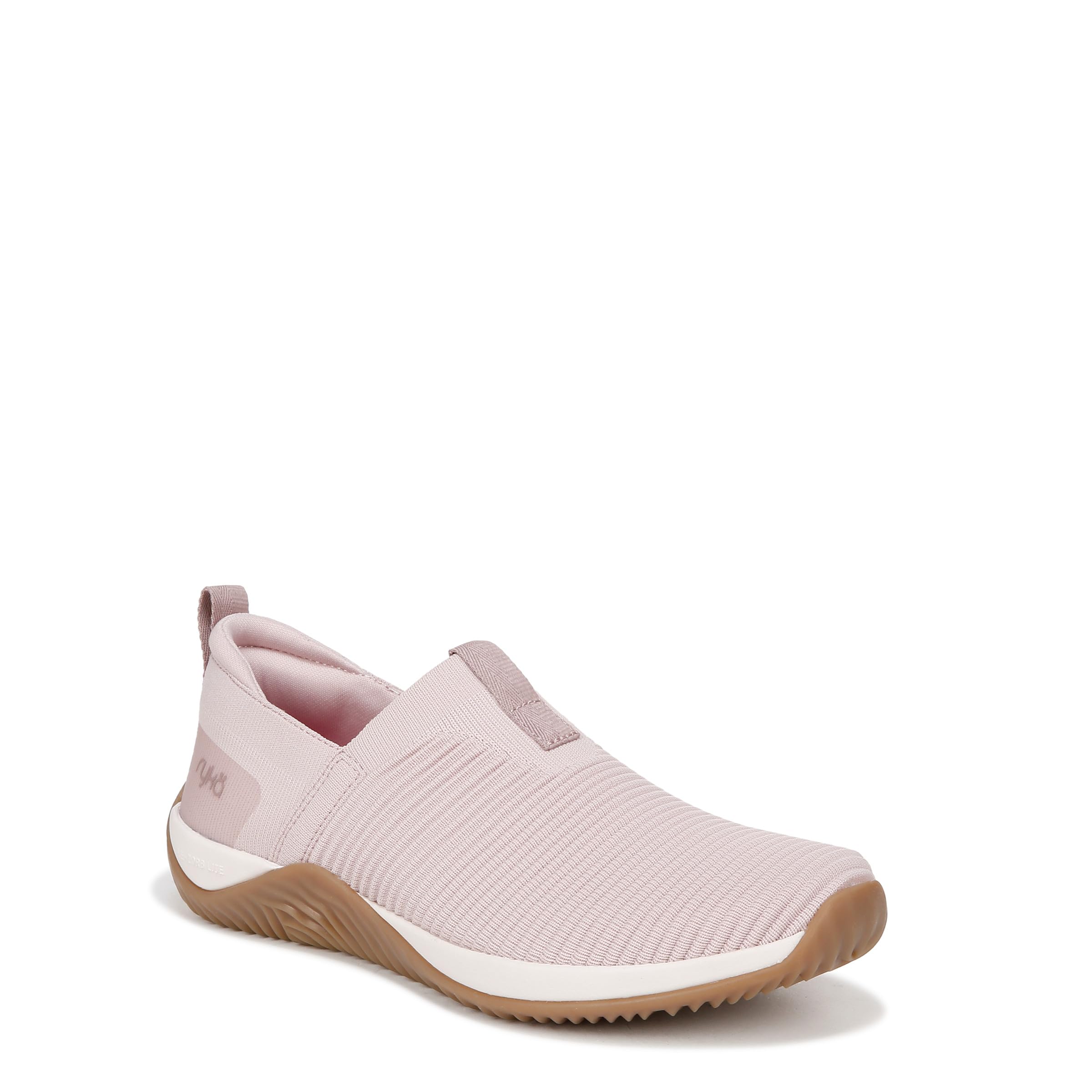
4. Rykä Echo Knit
Best for Swelling Feet
Key Features
- Sole: Rubber
- Upper: Stretch knit
- Closure: Slip-on
- Arch support: Built in
- Price: Midrange
A stretch-knit slip-on is the most forgiving thing you can put on a foot that swells over a long flight, and the Echo Knit is the best version of that idea in this group. The upper gives over a bunion and across a high instep, the footbed is cushioned, and there is a real arch built into the shoe rather than a flat slab. It is a gentler ride than the lace-ups above it, which is either exactly what you want or a reason to keep reading.
Where it earns its place is the end of a travel day. Step in, no laces, no bending, and enough support under the midfoot that a walk to dinner and back does not leave you hobbling. The knit also does something a structured shoe cannot: it accommodates the foot you have at hour ten rather than the one you laced up at hour one. If you want a firm, planted platform under a long day of stone, a lace-up serves you better; if you want to keep your shoes on through the airport and off the minute you reach the room, this is the pair.
The one part to keep an eye on is the lining at the heel, which is the first thing to go before the sole shows much wear. That is a nuisance rather than a dealbreaker for a shoe in this price range, but it is the reason we would not make it the only pair in the bag for a month-long trip.
Pros
- Stretch knit fits bunions and swelling
- Built-in arch support
- True step-in ease
Cons
- Heel lining wears through early
Our pick for feet that swell on flights: stretch knit, real arch support, and no laces to deal with at the end of a travel day.
5. NORTIV 8 Walking Shoes
Best for Dry-Weather Cushioning

Key Features
- Style: Walking sneaker
- Upper: Breathable knit
- Cushioning: Cushioned midsole
- Price: Budget
Cushioning is where this shoe punches above its place in the group. The midsole is deep and soft in a way that usually costs considerably more, and it is the pair here that feels closest to a dedicated running shoe underfoot.
That softness is an asset on flat ground and a mixed one on stone. On pavement the shoe disappears under you, and it is the one we reach for when the day involves standing rather than walking. On rough cobbles the same softness means you feel the shape of the road, and the outsole’s grip gets inconsistent once the stone is wet or polished.
Plan on sizing up. The shoe runs small and narrow, and going half a size bigger is what turns a snug fit into a comfortable one; a wide forefoot has no easy answer here. Set against the rest of these picks, it is the cushion-first, dry-weather choice, the one for long airport days and city pavement rather than wet granite. For a summer trip with a lot of standing in museums and markets, that is a good trade.
Pros
- Running-shoe-level cushioning
- Comfortable for long standing days
- Breathable knit upper
Cons
- Runs small and narrow
- Grip weakens on wet, smooth floors
If cushioning matters more to you than grip, this is the plushest shoe in the group: size up half and keep it for dry, flat walking days.
How We Tested Walking Shoes on Rough, Wet, and Uneven Ground
We started with about 60 pairs, reading specs and customer reviews and filtering hard: a rubber outsole with actual tread, a cushioned footbed with genuine arch support, half sizes available, and a weight that wouldn’t drag after ten miles. Anything with a narrow, high heel or a smooth bottom got cut before it ever reached our feet. That left 12 pairs, which we wore in rotation for six months.
Every pair walked the same half-mile stretch of granite setts, first dry and then again after we ran a hose over the stone, because grip on wet cobbles is a completely different test than grip on dry pavement. We also wore them through train stations, museum floors, and long days on our feet that ran eight to twelve miles, and we slipped each pair on and off at the door with and without socks to see how much work it took.
After each wearing we checked for heel slip, pressed a thumb into the footbed to feel whether the cushioning had packed down, and asked whether our toes felt crowded by the end of the day. Every 50 miles we flipped the shoes over to inspect outsole wear and the seams where the upper meets the sole, and we compared each labeled size against a measured foot to see which ones ran small. We also wore each pair with jeans and with a skirt, since a shoe you’ll only wear on trails is a shoe you won’t pack.
How to Choose Walking Shoes for Cobblestone Streets
On old stone, the question is less how soft a shoe feels than how its sole behaves when the ground underneath it is not flat.
Cushioning Is Not the Same as Stability
A deep, soft midsole absorbs the jolt of hard pavement, which is why it feels so good in the store. On cobblestones the same softness lets every edge of stone press up into your arch and lets your foot roll further than it should. What you want is depth with some resistance.
Here is a test you can run in ten seconds: hold the shoe at the heel and toe and try to twist it. If it folds like a sock, it will be lovely on a sidewalk and tiring after an hour on setts. Our top pick and the knit sneakers here sit at opposite ends of that scale. For two miles a day, soft is fine; for eight, buy structure.
Grip Matters Most When the Stone Is Wet
Dry cobblestones are loud but forgiving. Wet ones are the reason people come home from a walking trip with a bandaged wrist. Look for real tread depth and a rubber that feels slightly tacky rather than hard and shiny, and treat polished strips — worn marble, smoothed granite, painted crossings — as the actual hazard rather than the cobbles themselves.
Weatherproofing belongs in the same decision. A waterproof upper earns its keep in a drizzly week, and the Dansko Paisley is the only shoe here that has one. Traveling in high summer? A breathable knit is the better trade, because a shoe that soaks through from sweat is no more comfortable than one that soaks through from rain.
Fit for the Foot You Have at Hour Six
Feet swell through a long walking day, so the shoe that fit at breakfast is snug by mid-afternoon. Shop late in the day, leave a thumb’s width between your longest toe and the front of the shoe, and take the wide option if the standard width pinches across the ball of your foot.
Laces let you loosen a hot spot in a second; a slip-on cannot. That is why a knit step-in works best for feet that do not need much adjustment, and why a lace-up is the safer choice if you plan to tighten for a downhill stretch. A removable insole is worth seeking out if you wear an orthotic, since it gives the insert somewhere to sit.
Weight, Packing, and the One-Pair Question
If you are packing a single pair, its weight matters more than any figure on the box. The Paisley at 13.4 ounces a shoe is the heaviest thing in this guide; a knit slip-on adds almost nothing to a carry-on. Neither is wrong — they serve different trips.
Our rule when walking is the point of the trip: wear the heaviest, most supportive pair onto the plane and let it do the work, and pack a lighter pair only if you have room and a reason. Two pairs also give each one a day to air out, which counts for more than cushioning in a damp climate.
Frequently Asked Questions
How should I break in new walking shoes before a trip?
Give them two or three short walks and one long one at home before they go in a suitcase. What you are testing is not the cushioning but the seams: a hot spot at the heel or across the instep usually shows up in the first three miles, and a shoe is far easier to return in your own city than from a hotel lobby.
Wear the socks you plan to travel in. A thicker sock changes the fit more than most people expect, and it is the cheapest way to find out that the pair you bought is a half size off.
How many pairs of walking shoes should I pack?
One on your feet and one in the bag is right for most trips of a week or more, and the second pair should be the lighter of the two. Alternating gives each pair a full day to dry out, which matters more than extra cushioning if you are walking daily in a damp climate.
For a long weekend, one pair is enough. Wear the supportive pair onto the plane and leave the backup at home rather than carrying weight you will not use.
What should I do if my shoes get soaked?
Pull the insoles out, stuff the shoes with newspaper or a towel, and let them dry at room temperature, away from radiators and hairdryers. Heat is what kills a shoe: it shrinks the upper and softens the adhesive holding the sole on. Swap the paper after an hour or two.
Do not put a damp shoe back on to speed things along. Blisters come from friction, and a wet lining is friction. If you have only one pair and it is still wet at breakfast, a thin dry sock buys you a morning.
Are walking shoes or running shoes better for a city trip?
Running shoes are shaped for forward motion on smooth surfaces, with a rockered sole and a soft foam that rolls you onto your toes. Cobblestones reward the opposite: a flatter, more stable platform that does not tip you forward when the ground shifts under your heel.
That does not make running shoes unusable. It means a cushioned walking shoe like the NORTIV 8, which feels close to a running shoe underfoot, is a better bet for standing and strolling than a race-day trainer is.
Final Verdict
On a trip where the streets are old and the forecast is uncertain, the Dansko Paisley is the shoe we recommend. It is the only waterproof pair here, it has the firmest and most supportive platform of the five, and it swallows an orthotic without complaint. It is also the most expensive, and that is the one honest argument against it.
If your week looks dry, the Easy Spirit Romy is the lighter, cheaper way to cover the same pavement, with the caveat that its sole is the first thing to go. If your feet swell on flights, add the Rykä Echo Knit for the travel days at either end, and keep the lace-up for the miles in between.