This post contains affiliate links. We may earn a small commission when you buy through our links — at no extra cost to you.
A shoe can feel like a cloud in the store and like a punishment by 3 p.m. That’s the tradeoff nobody warns you about: the softer the midsole, the harder your feet work to stay stable, and the stiffer the sole, the more your calves pay for it. What you actually want for a day that runs from a dog walk to a grocery run is cushioning that doesn’t turn to mush and a sole that bends where your foot bends. Get the fit wrong by half a size, though, and even good arch support becomes a hot spot by lunchtime.
We’ve spent the past eight months walking in 12 pairs to sort that out, across commutes, airport terminals, school pickups, and one very long museum afternoon. Comfort was the baseline; we also weighed fit, arch support, sole stiffness, durability, appearance, and value. And we paid attention to the things reviews mention that spec sheets don’t, like whether a shoe goes on easily when your hands are full and whether a washable upper is worth the trade. A couple of pairs surprised me. The ones that made the cut are below.
Our Top Picks
The Best Shoes for Walking All Day, Reviewed
1. Skechers Go Walk Joy
Best Overall
Key Features
- Type: Walking sneaker
- Closure: Slip-on
- Cushioning: 5GEN with Goga Max insole
- Machine washable: Yes
- Price: Midrange
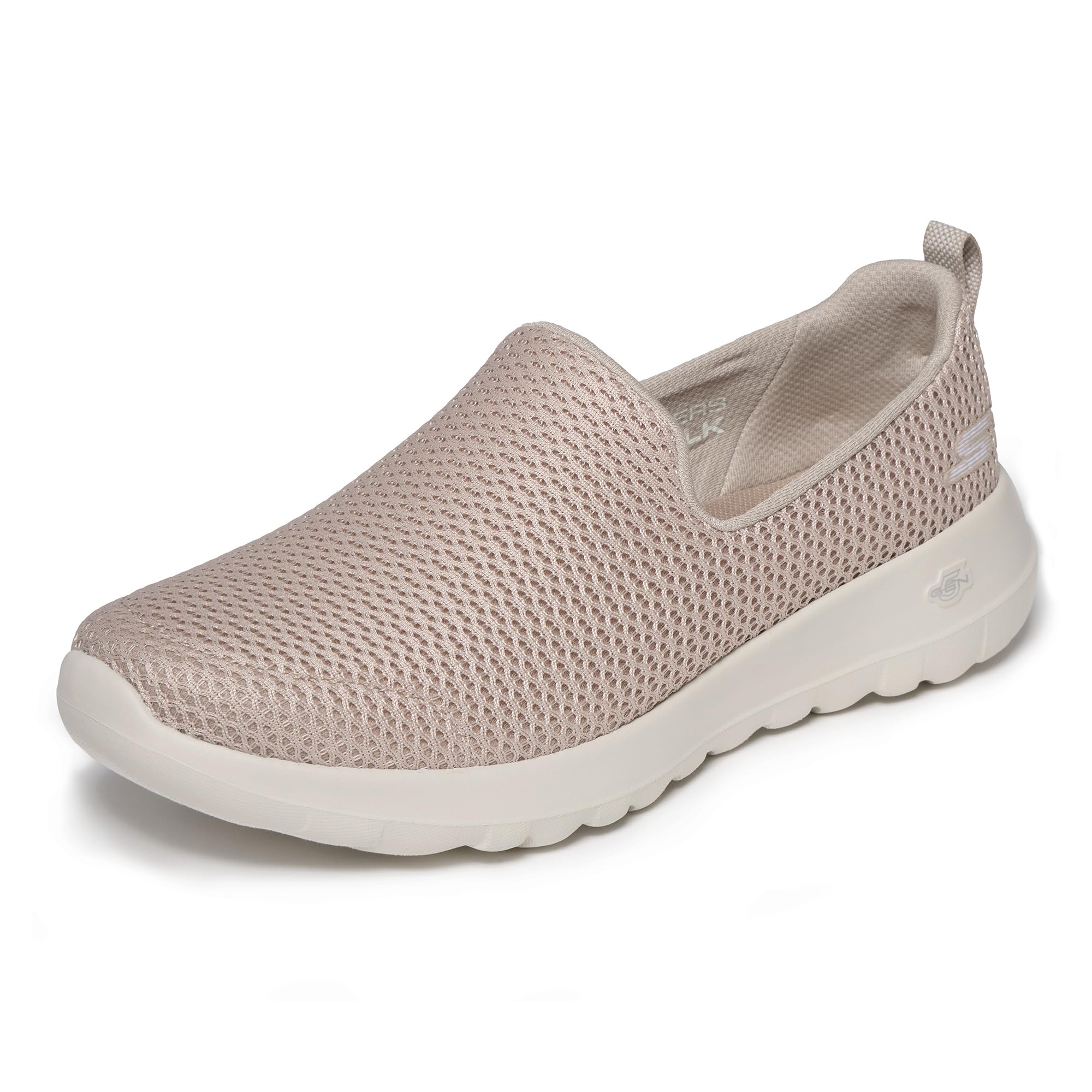
The Go Walk Joy is the one we reach for first for a full day on your feet. It’s a dedicated walking shoe, not a running shoe pressed into service, and the difference shows in the flexible 5GEN midsole and the Goga Max insole. In our testing, the no-tie upper was easy to get on and off at security, and the machine-washable build is a practical bonus when you’re packing light. We also like that it doesn’t feel bulky under a casual outfit, which is more than we can say for some cushioned walkers.
The Goga Max insole gives it a little more spring than a flat foam footbed, and the outsole flexes with your foot instead of fighting it. The ride is soft and flexible rather than firm and propulsive, which is what we want for pavement, museum floors, and long airport walks. It’s not a stability shoe, so if you pronate heavily or spend a lot of time on uneven ground, look for more structure. Sizing is the other thing to sort out: the shoe can run large for some feet and narrow through the middle for others, so order from a seller with easy returns and start with your usual size. If the heel slips, go down half a size; if the upper pinches, try a wide width. The machine-washable build is the detail that makes it easy to pack for a trip.
Pros
- Soft, flexible all-day cushioning
- Easy slip-on upper for travel
- Machine washable and vegan
- Lightweight enough to pack
Cons
- Arch support is modest
For women who want one shoe for long city days, the Go Walk Joy gives you a soft, flexible walking ride with an easy slip-on upper and a machine-washable build.
2. Skechers Go Walk Flex Slip-Ins
Best for Men
Key Features
- Type: Walking sneaker
- Closure: Hands-free slip-in
- Cushioning: ULTRA GO with memory foam
- Machine washable: Yes
- Price: Midrange
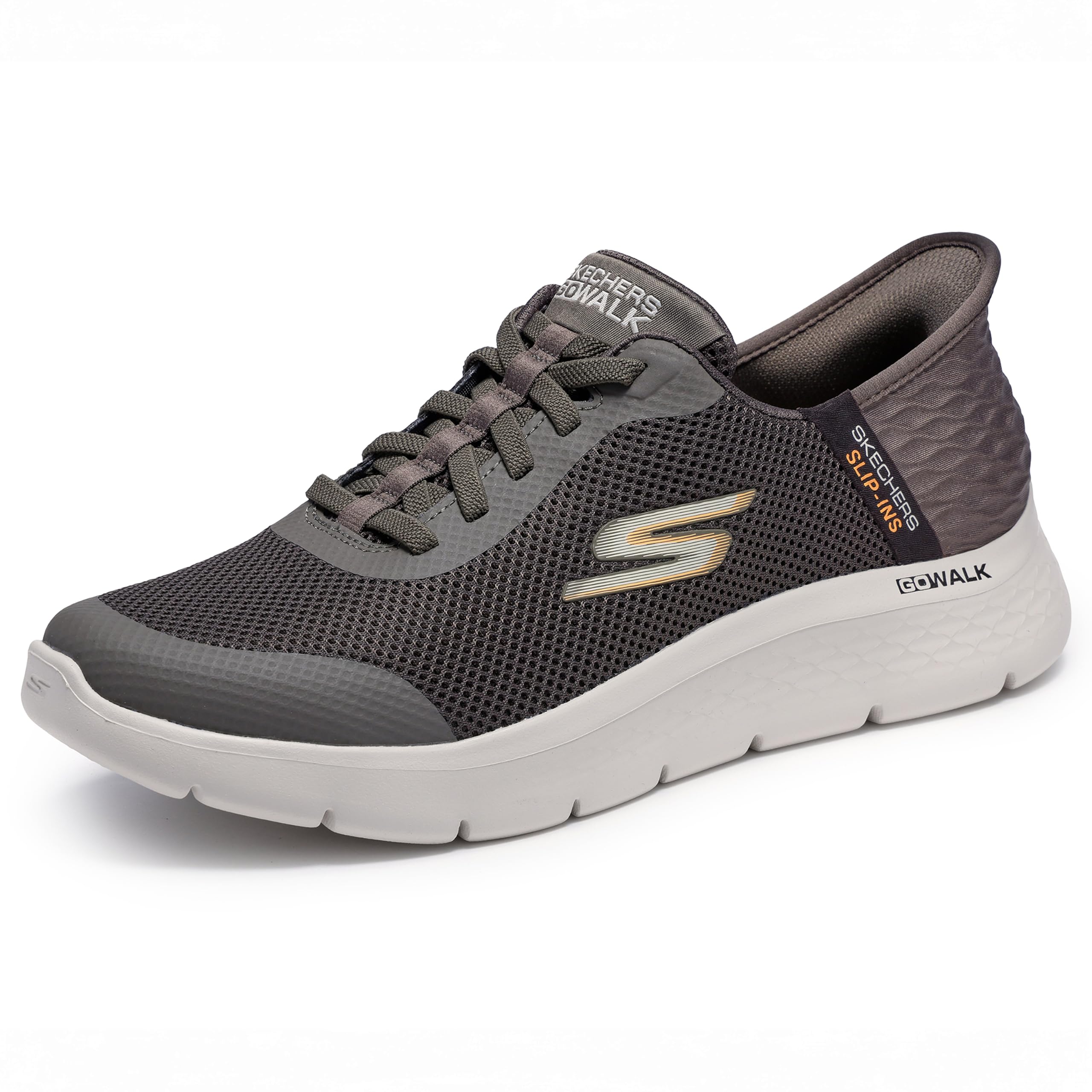
The hands-free entry is the first thing you notice, and for travel it’s more than a gimmick: you can step into these without bending down, which matters at airport security or when you’re carrying a bag. The Go Walk Flex Hands Up backs that convenience with a real walking-shoe build: Air-Cooled Memory Foam, ULTRA GO cushioning, and flex pillars in the outsole. We like that the heel pillow keeps the slip-in design from feeling loose, so you get the easy entry without a sloppy fit.
On the foot, it feels light and breathable, and the arch support is among the more generous in this group. The fit runs true for most men, and the extra-wide version gives broader feet room in the toe box. The hands-free entry works best with thin socks or bare feet; thick socks make it a snugger squeeze. We treat it as a travel-season shoe rather than a daily work pair, because the cushioning is the priority here, not long-term abuse. The hands-free entry is the reason to choose it over the Go Walk Joy; the rest is a comfortable walking shoe.
Pros
- Hands-free entry is great for travel
- Generous arch support for a slip-in
- Light and breathable on the foot
- Memory foam and ULTRA GO cushioning
Cons
- Soles and insoles can wear within months
Men who want hands-free entry without giving up arch support should start here; it’s a comfortable travel walking shoe, provided you accept the shorter lifespan.
3. New Balance 515 Men’s
Casual Wide-Fit Wear

Key Features
- Use: Everyday wear
- Type: Casual sneaker
- Model: 515
- Department: Men’s
- Price: Midrange
The 515 is the style pick of this group, and that’s the right way to read it: a retro New Balance silhouette with a wide, roomy fit that works with jeans and chinos. We like it for errands, office days, and travel days when you want a sneaker that looks a little more put-together than a performance walker. The toe box is the draw for broad feet, and the shoe feels sturdy and well made in hand.
But it is not the shoe we choose for a 10-mile sightseeing day. The sole is stiffer and less cushioned than the walking-specific picks, and the insole can feel thin underfoot. That stiffness is the trade-off for the structured, retro look; if you want a soft ride, the Go Walk Joy is the better match. Sizing runs true for most, and the wide sizes give you room that many sneakers don’t. If your day is mostly sitting, standing, and short walks, it’s a comfortable choice; if it’s hours of pavement, it isn’t. Treat it as a casual sneaker with a walking-shoe shape, not a walking shoe.
Pros
- Retro style works with casual outfits
- Roomy toe box for wide feet
- Sturdy, well-made feel
- Good value for a casual sneaker
Cons
- Stiff, thin sole is tiring on long walks
Choose the New Balance 515 for a roomy, retro casual sneaker that looks good with everyday outfits, not for a day built around long walks.
4. New Balance 515 Women’s
Everyday Casual Style

Key Features
- Use: Everyday wear
- Type: Casual sneaker
- Model: 515
- Department: Women’s
- Price: Midrange
The women’s 515 is cut for the same retro shape, but the use case is narrower: it’s a good-looking everyday sneaker for errands, office days, and casual outfits, not a shoe we count on for a long walking day. The arch support is a pleasant surprise for standing around, and the wide sizes give broad feet a break. We like the look with slacks and jeans, and it’s easy to dress up or down.
The sole is hard and inflexible, though, and that’s the deal-breaker for all-day walking. The cushioning is thin compared with the Go Walk Joy, so if you’re planning a walking-heavy trip, this is the wrong tool. The shoe can feel stiff right out of the box, so give it a short break-in before a long day. Sizing runs true for most, and the fit is comfortable for everyday wear. If you want a pair for the office and weekend errands, it works; for a day of museums and city blocks, choose the walking-specific pick instead. For a walking-heavy trip, the Go Walk Joy is the better use of packing space.
Pros
- Retro style dresses up or down
- Good arch support for everyday wear
- Wide sizes fit broad feet
- True to size for most
Cons
- Hard, thin sole is not built for long walks
The women’s 515 is a stylish everyday sneaker with good arch support for errands and office days, but it is not a long-walk shoe.
How We Tested Walking Shoes for All-Day Wear
I built the shortlist from shoes people actually reorder — the ones that keep coming up in review sections and in my own family’s closet — then filtered by price, available sizes, sole construction, and whether the insole could be swapped for a custom orthotic. Everything had to be a genuine walking shoe rather than a fashion sneaker with a soft bottom. That left 12 pairs, which we wore for eight months.
Each pair went into rotation for real days, not treadmill sessions: a 20-minute dog walk before work, a commute with stairs and platform waits, a full eight-hour day on my feet, and a long weekend of errands and airport terminals. We wore them with the socks we’d normally wear and, where we could, tried a half size up and down.
Fit and arch support got the closest look. I noted heel slip in the first mile and hot spots by mile five, then stood on hard kitchen tile for a full workday to see whether arches ached by afternoon or the insole flattened underfoot. For sole stiffness, I twisted each shoe by hand and walked stairs and a gravel path to feel whether it bent at the ball of the foot or made me slap the ground.
Durability was measured in mileage: we logged every walk, then checked heel tread and whether the upper stretched or the cushioning packed down. We timed getting each pair on one-handed while holding a leash, since ease matters when you’re headed out the door. Pairs that claimed to be machine washable went through a cold cycle and air-dried, and we checked the seams afterward. Appearance we judged by wearing them with jeans and casual trousers; value, by dividing price by the months they lasted.
How to Choose Shoes for Walking All Day
The right walking sneaker feels stable underfoot, leaves room in the toe box, and is easy to live with when you’re traveling.
Start With Fit, Not Cushioning
Fit decides whether a walking shoe works for a full day. You want a thumb’s width between your longest toe and the front of the shoe, a heel that stays put without pinching, and enough width that your forefoot isn’t pressed. Try shoes late in the day when your feet are at their largest, and wear the socks you’ll travel in. We prioritize a secure heel and a roomy toe box over a plush insole, because no amount of cushioning fixes a shoe that rubs or crowds your toes. If you’re between sizes, check the return policy before you commit.
Match the Cushioning to the Surface
All-day walking on pavement calls for a flexible, cushioned ride that doesn’t feel mushy. Too soft and your foot works harder to stabilize; too firm and the miles show up in your knees. A walking-specific shoe like the Go Walk Joy uses a flexible midsole and a contoured insole, while the Slip-Ins adds more arch structure and a heel pillow. If your days mix pavement with uneven ground, lean toward the more supportive shoe. If you mostly walk on smooth floors and sidewalks, a lighter, softer shoe is easier to wear.
Decide How Much Convenience You Need
Slip-on and hands-free designs are genuinely useful for travel: they speed up airport security, work with a bag in each hand, and are easier on a sore back. Lace-up shoes still give you the most adjustable fit, especially if you have a narrow heel or a high instep. Machine-washable uppers are a bonus for warm-weather trips, but they don’t replace a breathable mesh. We like the hands-free Slip-Ins for travel days and the no-tie Go Walk Joy for everyday ease. Choose the closure you’ll actually use, not the one that looks cleanest.
Check Durability Before You Commit
Lightweight walking shoes trade some outsole life for comfort. Look for a rubber outsole with a defined tread pattern, a midsole that feels resilient rather than crumbly, and an insole that doesn’t slide. Even a good shoe will pack down over time, so inspect the tread and cushioning when the pair arrives and keep an eye on wear at the heel and ball of the foot. If you walk every day, don’t expect a soft, flexible pair to last as long as a heavier trainer. The Slip-Ins is the clearest example here: comfortable, but not a long-term work shoe.
Know When a Casual Sneaker Is Enough
Not every trip needs a performance walking shoe. A retro sneaker like the New Balance 515 works for office days, errands, and short city walks, and it looks better with casual outfits. The trade-off is a stiffer, thinner sole that tires you out over long distances. If your day is mostly sitting, standing, or a few blocks at a time, a casual sneaker can be enough. If you’re planning hours of pavement, choose a shoe with more cushioning and a more flexible forefoot. Match the shoe to the mileage, not the packing list.
Frequently Asked Questions
Are walking shoes better than running shoes for all-day wear?
Walking shoes are tuned for a heel-to-toe roll and lateral stability, while running shoes are built for forward motion and can feel too soft or narrow for standing. That said, the best shoe is the one that fits your foot and has already carried you through a long walk. If you’re choosing between the two, prioritize a roomy toe box and a secure heel over the label.
How do I break in new walking shoes before a trip?
Wear them for short errands first, then a longer walk a few days later, and increase the time gradually. Keep the socks you plan to travel in, and address hot spots early with moleskin or a different lacing pattern. Don’t try to stretch a tight shoe with water or heat; if the fit is wrong, return it before your trip.
Can I machine wash walking shoes?
Some can, including the Skechers Go Walk Joy and Slip-Ins. Remove the insoles, use cold water on a gentle cycle, and air-dry them away from direct heat. Don’t put them in the dryer, which can warp the midsole. Check the care label first, and spot-clean suede or leather styles instead.
How do I keep my feet dry in walking shoes?
Choose a breathable mesh upper and moisture-wicking socks, and avoid waterproof shoes unless you expect rain or wet ground. If your feet sweat heavily, carry a spare pair of socks and change halfway through the day. A machine-washable shoe is easier to refresh, but let it air-dry completely before the next wear.
Final Verdict
For most women, the Skechers Go Walk Joy is the clear first choice: it’s a true walking shoe with a soft, flexible ride, an easy slip-on upper, and a machine-washable build that suits travel. Men should start with the Skechers Go Walk Flex Slip-Ins for the same all-day comfort plus hands-free entry.
If you want a retro casual sneaker for errands, the New Balance 515 is a style-first choice, not a long-walk shoe. Pack it for office days and short walks, and choose the Go Walk Joy or Slip-Ins when the day is built around pavement.