This post contains affiliate links. We may earn a small commission when you buy through our links — at no extra cost to you.
You grab a jacket advertised as “packable” for your European city break, only to discover it doesn’t come with a stuff sack and soaks through after 20 minutes of rain. This frustration is remarkably common because many labels stretch definitions — packable can mean merely compressible, and waterproof often means barely water-resistant.
When you’re navigating UK drizzle or a sudden mountain shower, the gap between marketing and reality matters. Packability shouldn’t rely on a separate compression bag, and rain protection should hold up for more than a brief sprinkle. Real-world performance, not label claims, determines whether you’ll stay dry.
The jackets that got it right combine genuine packability with appropriate weather defence. You’ll find options that sacrifice nothing for a hood, maintain warmth after hours compressed, and keep dry without making you pack an extra shell. Bottom line: you can rely on one layer, not a collection of compromises.


1. Outdoor Ventures Puffer
Best for Hooded Warmth
Key Features
- Packability: Self-stows into left pocket
- Hood: Yes (elasticized)
- Insulation: Synthetic
- Water Resistance: Water-resistant
- Fit: True to size, sleeves long
- Price: Mid-Range
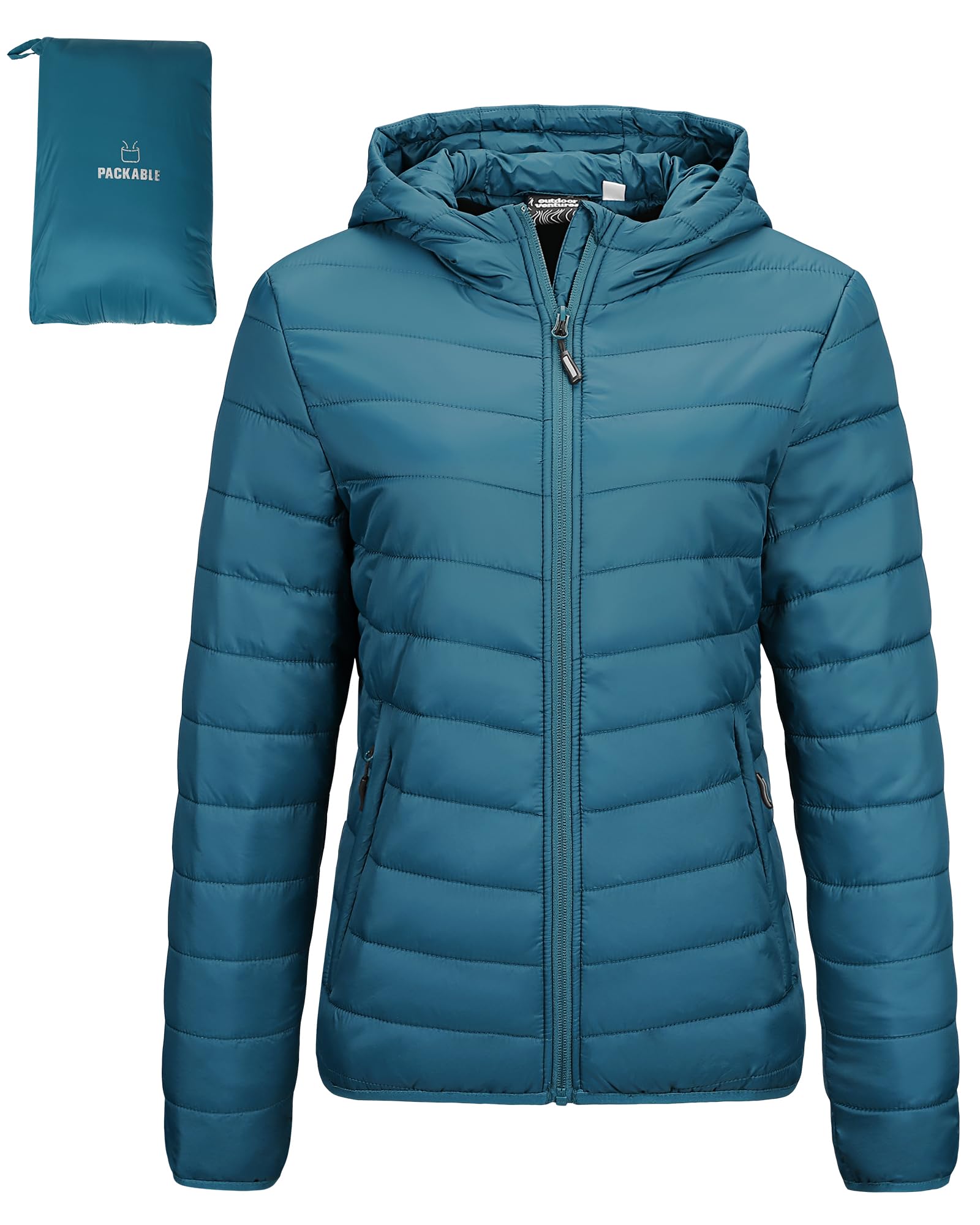
The Outdoor Ventures puffer jacket compresses into its own left pocket, transforming from a substantial hooded jacket into a compact bundle that slips into a daypack or carry-on without stealing space. Synthetic insulation provides steady warmth in cool, damp conditions, and the water-resistant shell shrugs off light rain long enough to reach shelter.
The jacket weighs next to nothing yet traps enough heat to replace a bulky fleece. The elasticized hood stays anchored without creeping forward, and the full-zip front vents easily when you duck into a heated metro car. The zipper can catch on the outer fabric around the pockets and neck if you pull quickly — a slow, deliberate motion avoids snags entirely.
Travelers who need one layer for cool mornings, breezy evenings, and unexpected drizzle will find this puffer earns its spot in a carry-on. It’s not a substitute for a waterproof shell in steady rain or for a heavy parka in freezing temperatures without a midlayer. Sizing runs relaxed, which suits layering, but can mean long sleeves for narrower frames. If you’re between sizes, sizing down often yields a better fit.
Pros
- Synthetic insulation keeps you warm in cool, damp conditions without bulk.
- Jacket weighs next to nothing and disappears when stowed in a daypack.
- Self-stows into its left pocket, forming a compact bundle that fits easily into carry-on luggage.
- Mid-range price delivers hooded packable warmth that rivals jackets costing twice as much.
Cons
- Zipper can snag on the outer fabric around pockets and neck — a slow, deliberate pull prevents it.
- Sizing runs inconsistent; some find the jacket large with long sleeves. Trying on before a trip reduces fit surprises.
The one hooded travel puffer that packs into its own pocket, delivers synthetic warmth, and won’t drain your trip budget.
2. Amazon Essentials Packable Puffer
Best for Value Layer
Key Features
- Packability: Included stuff sack
- Hood: No
- Insulation: Synthetic
- Water Resistance: Water-resistant
- Fit: Runs small, size up if curvy
- Price: Budget
While the top pick bundles a hood and self-stows into its pocket, the Amazon Essentials puffer focuses on maximum warmth for minimal weight and price, with a separate stuff sack that compresses into a travel pouch. The synthetic insulation punches well above its thickness, keeping you comfortable on brisk walks or layered under a shell when temperatures drop. Water resistance shrugs off light drizzle, but it is not built for sustained rain.
This jacket suits budget travelers who pack light and prefer a hat over a fixed hood. The collar zipper can feel scratchy against bare skin, and the fit runs slim in the hips — sizing up gives a more comfortable silhouette. If rain protection is a dealbreaker, the top pick in this set adds a hood and self-contained packability.
Pros
- Surprisingly warm for its thin profile — layers easily under a rain jacket or over a base layer.
- Compresses into the included stuff sack, taking minimal space in luggage or daypack.
- Feels more expensive than its price tag — a solid value pick for casual travel.
Cons
- The collar zipper lacks padding and can irritate the chin during all-day wear.
- The fit runs narrow through the hips, so sizing up is advisable for a comfortable, non-restrictive fit.
If you can skip the hood, you get surprising warmth, an included stuff sack, and extra room in your budget for a waterproof shell.
3. 33,000ft Packable Rain Jacket
Best for Rain Protection
Key Features
- Packability: Packs into included small bag
- Hood: Yes (adjustable)
- Water Resistance: Waterproof, sealed seams
- Fit: Sleeves long, hood large
- Price: Mid-Range
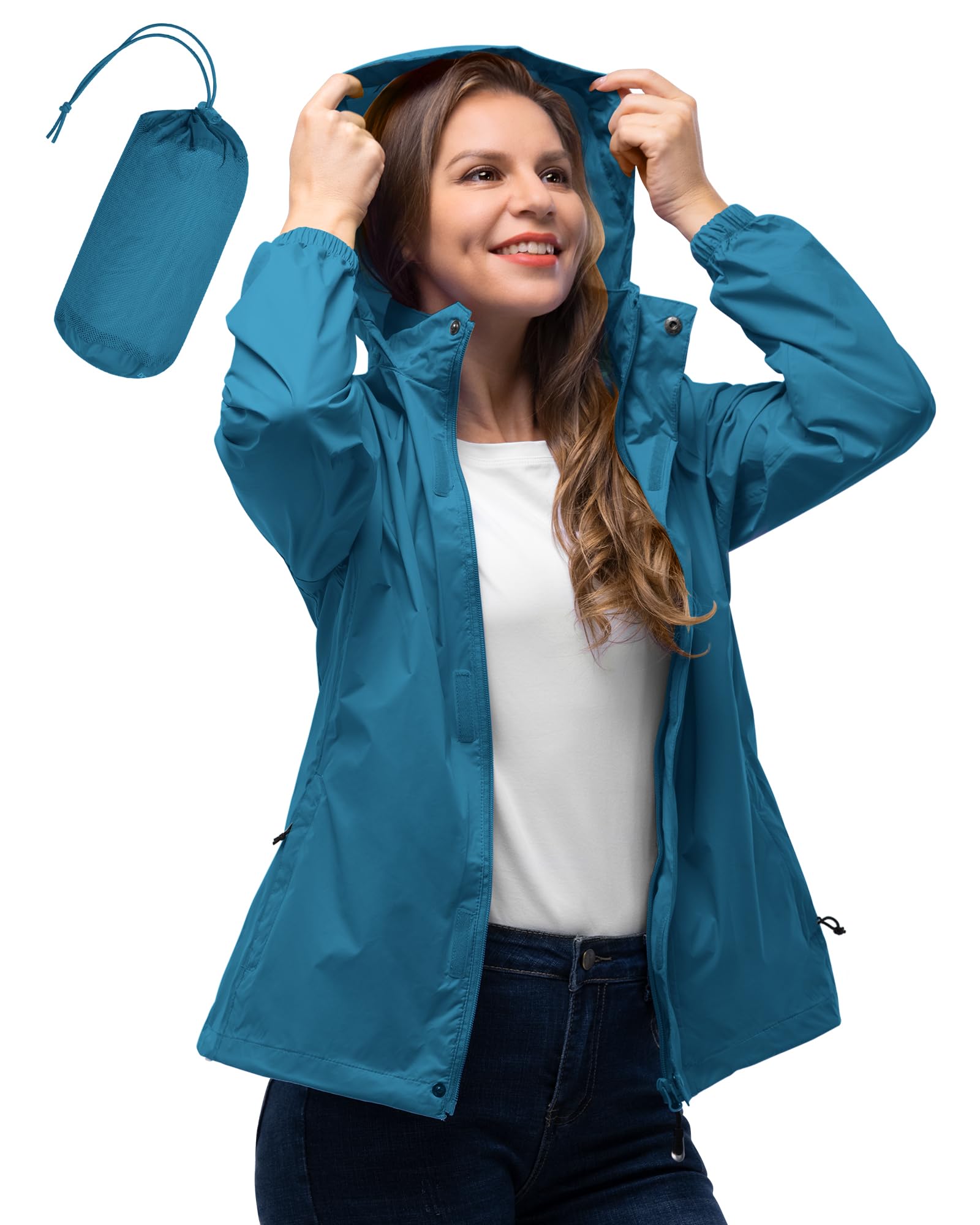
Sealed seams and an adjustable hood that stays in place through UK downpours set this shell apart from insulated jackets that can’t handle sustained rain. It’s a pure rain layer—no insulation, no bulk—just waterproof fabric with sealed sutures and a wind-blocking design that keeps you dry in light to moderate rain. The jacket stuffs into its own pouch, slipping into a daypack for day trips or as a just-in-case layer.
Travelers to wet European destinations who already have a warmth layer will find this the ideal waterproof top layer. Minimalist packers appreciate the weightless feel and packability. The hood can be oversized on smaller faces—cinching the drawcord helps, but very petite frames may still notice extra fabric. Sleeves may run long for shorter women, though rolling the cuffs or using the elasticized wrists lessens the issue.
Pros
- Keeps you reliably dry in light to moderate rain—sealed seams hold up in UK and Iceland trips.
- Well-made construction blocks wind effectively, adding comfort in gusty conditions.
- Extremely lightweight and packable into its included bag, disappearing into luggage or a daypack.
Cons
- Hood can feel oversized on smaller faces; drawcord adjustment helps but may still leave extra room.
- Sleeves may run long for shorter women; rolling cuffs or elastic wrists reduce the issue.
For travelers prioritizing waterproofing over insulation, this shell earns its spot—just plan to roll the sleeves or tighten the hood if you’re on the petite side.
4. Pioneer Camp Packable Puffer
Best for Men’s Warmth
Key Features
- Packability: Compresses into included small bag
- Hood: Yes
- Insulation: Synthetic
- Fit: True to size
- Price: Mid-Range
The Pioneer Camp puffer brings a hood to the packable-jacket equation, tucking into a dedicated stuff sack instead of relying on a self-stowing pocket. Unlike hoodless compressible jackets, this one shields your head from wind and light rain without adding noticeable weight. It doesn’t fold into its own pocket like the category’s top pick, but the included bag makes stashing it in a daypack simple — a meaningful upgrade for travelers who don’t want to sacrifice head coverage.
Male travelers heading to destinations with cool mornings — Alaskan cruises, Iceland shoulder seasons — will appreciate the steady synthetic warmth that works as a midlayer or light outer. A quick seam check when the package lands is smart; a handful of units may have loose threads that need a swap. Layer it over a sweater for sub-40°F days, and it becomes a compact companion for city hops and trail walks alike.
Pros
- Packs small into an included bag, sliding easily into carry-on luggage.
- Warmth that handles chilly mornings and autumn travel without bulk.
- Lightweight shell feels comfortable over a t-shirt or thin sweater.
Cons
- A small number of jackets may arrive with loose seams or tiny tears — worth a quick inspection before packing.
A hooded puffer that stuffs into its own bag and costs less than the self-stowing alternatives, making it a practical grab for cool-weather travel.
5. ZMC Packable Puffer
Best for Mid-Length Coverage
Key Features
- Packability: Compresses small
- Hood: Yes
- Insulation: Synthetic
- Fit: True to size, consistent
- Price: Mid-Range
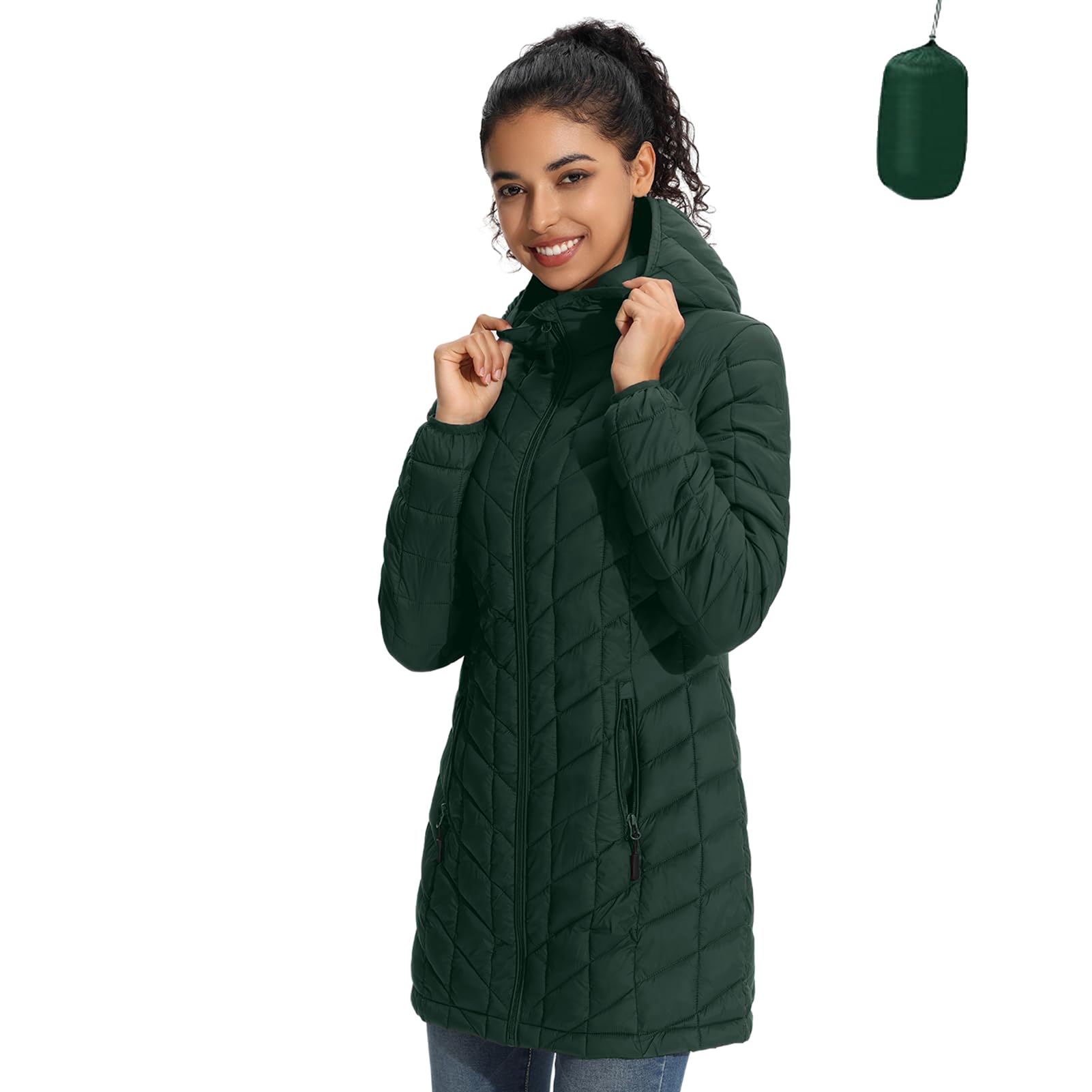
The ZMC puffer stands apart from the top pick with its extra length – it covers the hips and backside, offering more warmth and coverage than a typical hip-length jacket. It compresses into a small bundle for luggage, though it lacks a self-stowing pocket; you’ll need to roll or fold it manually. The hood adds weather protection without feeling oversized.
This jacket fits city travelers who want a stylish, mid-length coat that layers well and feels more premium than its mid-range price suggests. The consistent sizing – roomy enough for a sweater without looking boxy – makes ordering online straightforward. Long-term durability under heavy use is less documented than for jackets with larger user bases, but early feedback points to solid construction for casual travel duty.
Pros
- Surprisingly warm without bulk
- Flawless fit for layering – not boxy
- Packs down small for easy travel
Cons
- Needs layering for temperatures below freezing – best as a cool-weather jacket
- No dedicated stuff sack or self-stowing pocket – packability requires manual compression
For travelers who prioritize coverage and a tailored fit over self-stowing convenience, the ZMC puffer delivers dependable warmth and a polished look at a fair price.
6. Wantdo Packable Down Jkt
Best for Down Warmth
Key Features
- Packability: Folds into small pouch
- Hood: Yes
- Insulation: Down
- Water Resistance: Light rain resistant
- Fit: Fit varies, try before trip
- Price: Mid-Range
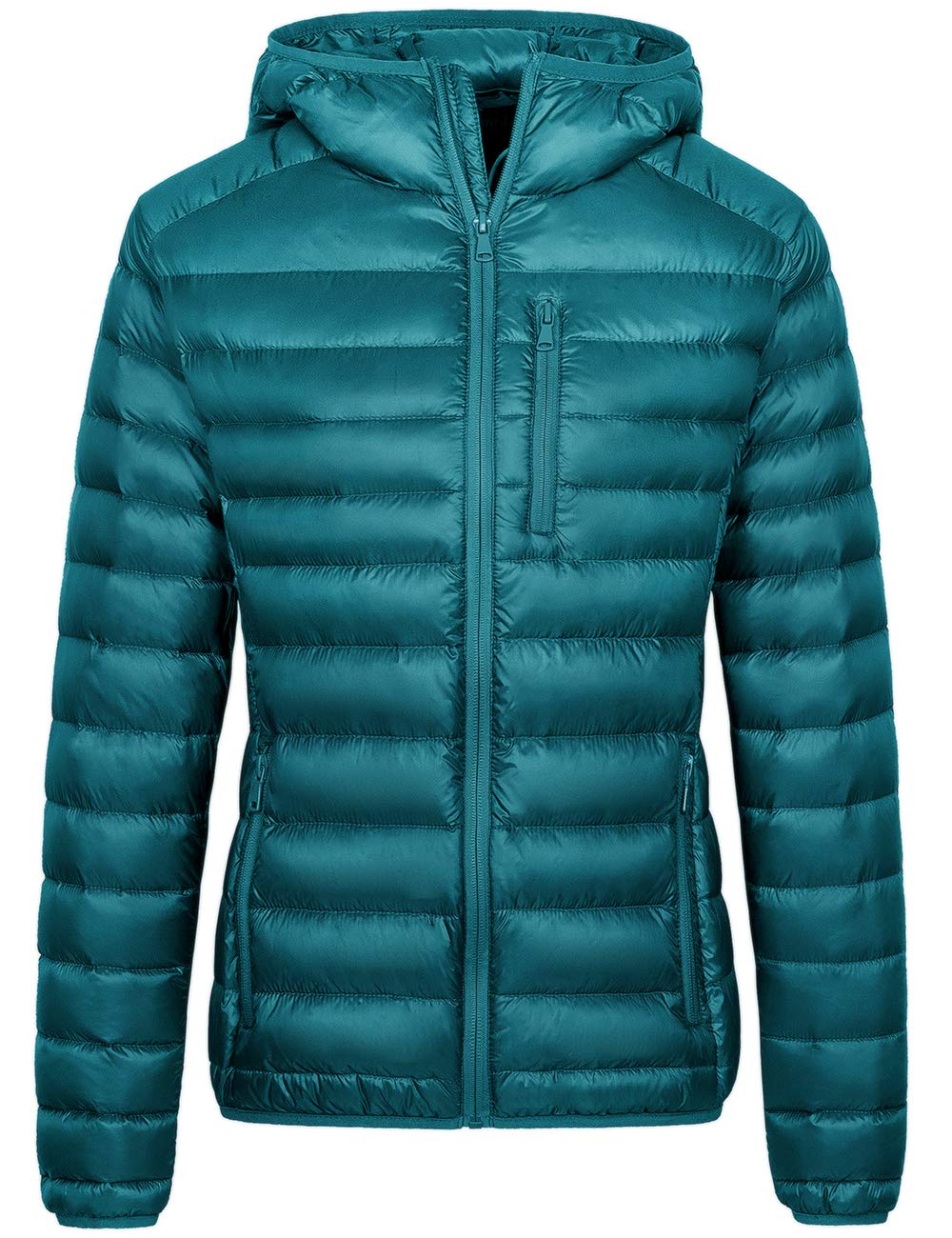
Where the top pick uses synthetic fill for easy care, this Wantdo jacket opts for genuine down, bringing higher warmth for its weight. That loft comes with a caveat: down jackets at this price can let small feathers escape through the seams, leaving the occasional fluffy hitchhiker on your clothes. It’s the trade-off for the extra insulation — a few fluffs versus noticeably better heat retention on a chilly morning.
The attached hood blocks wind and light rain, and the whole jacket squishes into a tiny pouch small enough for a daypack. Be prepared to try a couple sizes; some find the cut roomy while others get a snug fit that limits layering. If you need precise sizing consistency or can’t tolerate stray feathers, the top pick’s synthetic insulation removes both variables. For travelers who value down’s heat-to-weight ratio and don’t mind a few fluffs, this jacket is a cost-effective mid-range option.
Pros
- Down fill delivers genuine warmth without the bulk of synthetic alternatives.
- Compresses into its included pouch for easy stowing in a daypack or carry-on.
- Construction quality and styling feel above its mid-range price.
Cons
- Feathers can poke through seams over time — occasional shedding is inherent to lower-cost down.
- Fit can vary between sizes and body shapes, so ordering the correct size may require a trial run.
For buyers who prioritize down’s warmth-to-weight ratio and don’t mind occasionally brushing off a feather, this hooded puffer is a sensible travel layer.
7. COOFANDY Packable Rain Jacket
Best for Emergency Layer

Key Features
- Packability: Packs into own pouch
- Hood: Yes
- Water Resistance: Water-resistant, not waterproof
- Fit: Runs small, size up
- Price: Budget
This jacket excels at disappearing into a golf bag or carry-on when a sudden shower threatens. Its weight and packed size are the real wins. The waterproofing claim, however, is optimistic — in sustained rain or more than a brief drizzle, you’ll get wet. Treat it as a windbreaker with emergency water resistance, and the clammy lack of ventilation becomes a minor note. For a pocket-stuffing layer that adds almost no luggage weight, it’s a low-risk buy.
Pros
- Featherlight weight that virtually disappears in luggage or a golf bag.
- Self-stows into its own pouch for easy pocket carry.
Cons
- Water resistance can give way in sustained showers — best treated as a windbreaker.
- No ventilation mesh, so heat and humidity can build quickly leaving you clammy.
An emergency layer for travelers who value packability over genuine rain protection — toss it in your golf bag or daypack for a just-in-case sprinkle, not a European downpour.
8. Eddie Bauer CirrusLite
Best for Ultralight Down

Key Features
- Packability: Compressible; sack missing often
- Hood: No (stand collar)
- Insulation: Down
- Water Resistance: Light rain resistant
- Fit: Roomy for layering
- Price: Premium
At half a pound, the CirrusLite delivers lofty down warmth that layers beautifully under a rain shell. The fit accommodates a base layer without bulk. The outer fabric is paper-thin—a tradeoff for weight—so it won’t withstand abrasion, but it works as a midlayer. It compresses down, though a stuff sack may not be included, making it less grab-and-go than dedicated travel puffers. Minimalist backpackers who already carry a separate stuff sack and don’t need a hood will appreciate the featherweight insulation.
Pros
- Lightweight warmth that punches above its ounce count
- Premium fit that allows easy layering
Cons
- Packable design isn’t reliable—a stuff sack may not be in the box
- Outer fabric is extremely thin and can tear under abrasion
For ultralight backpackers and travelers who pack a separate compression sack, the CirrusLite delivers impressive warmth as a midlayer. If a hooded, self-stowing travel puffer is non-negotiable, the top pick in this set is a more pragmatic choice.
9. TACVASEN Packable Puffer
Best for Fashion, No Hood
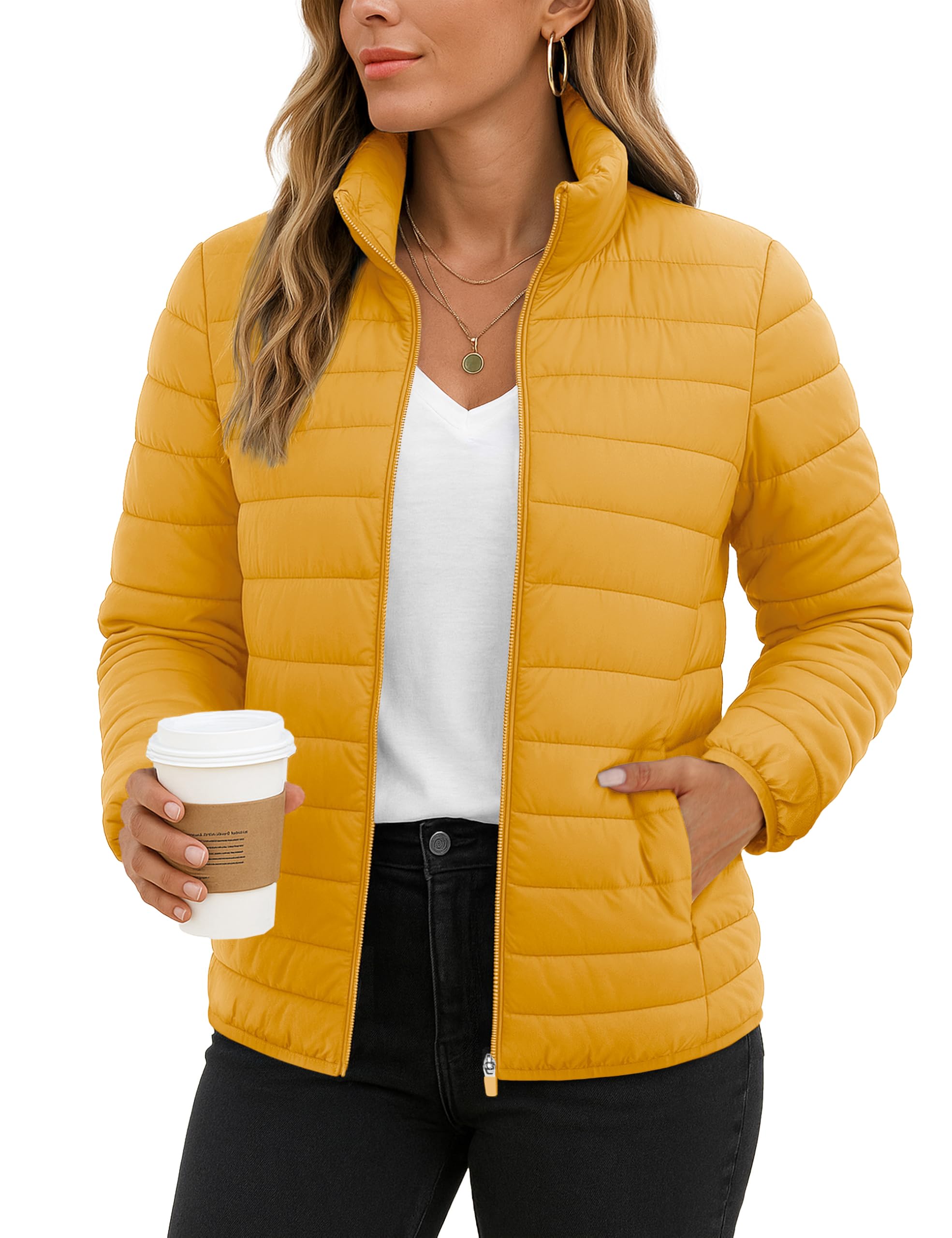
Key Features
- Packability: May not include bag
- Hood: No (stand collar)
- Insulation: Down alternative
- Fit: True to size
- Price: Budget
Flattering quilting and a true-to-size fit make this puffer a cute layer over jeans or leggings for cool-weather city breaks. Lightweight synthetic fill blocks wind effectively, and the stand collar maintains a sleek profile. The absence of a hood limits standalone use in rain, and packability can be uncertain—the jacket may not include a stuff sack. Occasional loose stitching is possible; check seams upon delivery. For style-forward travelers who don’t need a hood and pack a separate waterproof layer, the tradeoff is worth it.
Pros
- Lightweight warmth that blocks wind without bulk
- Flattering quilted cut that pairs effortlessly with jeans and leggings
Cons
- Occasional loose stitching may require a seam check upon arrival
This puffer works for mild-weather trips when style matters more than a hood, and you plan to layer under a waterproof shell.
10. 33,000ft Packable Puffer
Best for Alternative Puffer
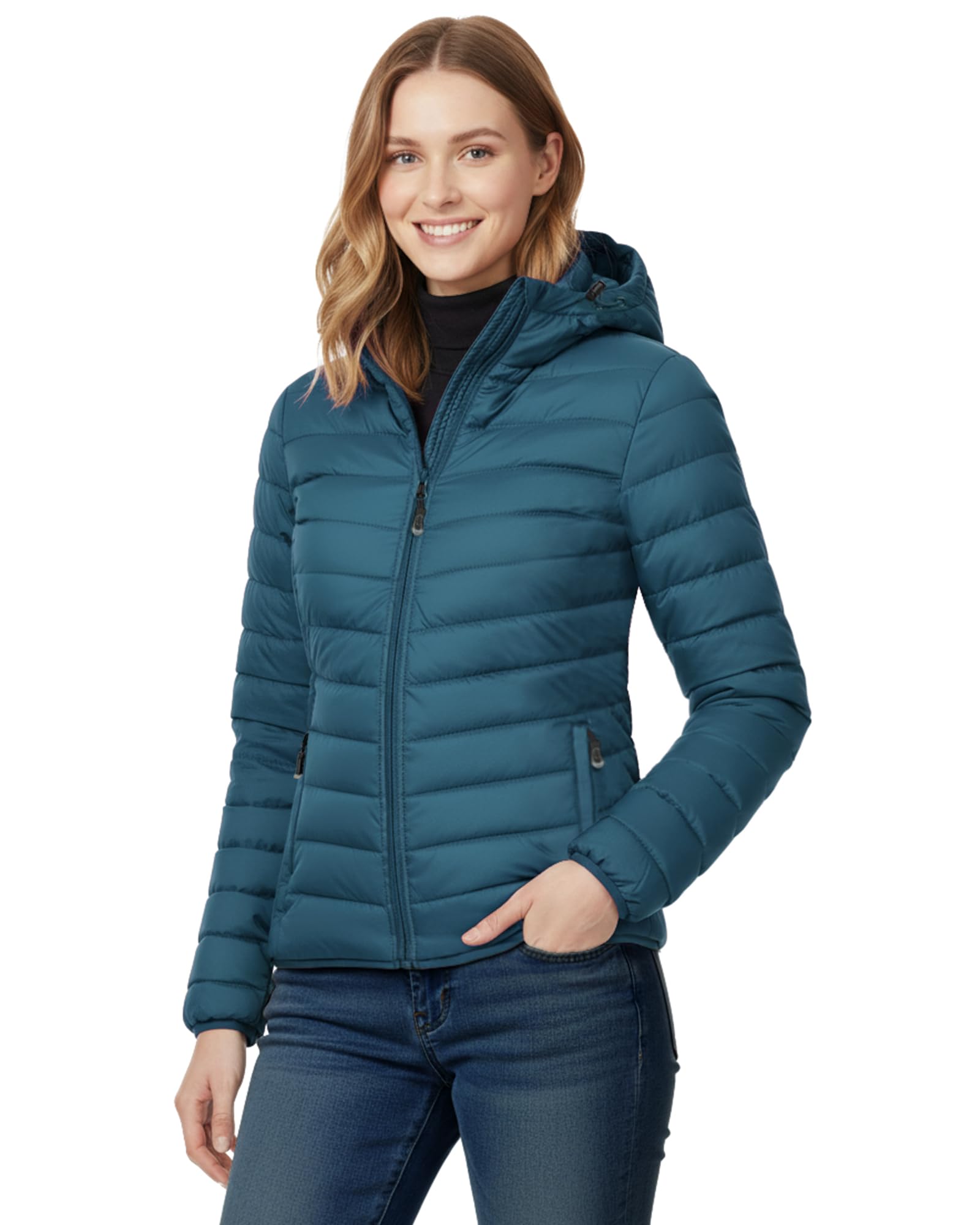
Key Features
- Packability: Packs into bag
- Hood: Yes
- Insulation: Synthetic
- Fit: Inconsistent; short sleeves
- Price: Mid-Range
The jacket delivers pleasant warmth without bulk and looks more polished than its mid-range price suggests. Sizing is inconsistent — sleeves may be short and some sizes run small — and insulation threads can shed along seams, leaving a thinner feel than expected. For cool, dry conditions worn beneath a rain shell, it packs down easily and adds a hooded warmth layer, provided you can try on or exchange without hassle.
Pros
- Warmth that belies its lightweight, non-bulky profile
- Stylish look and solid quality for the price
Cons
- Insulation can shed threads from seams, and the jacket may feel thinner than anticipated
- Sizing is inconsistent — sleeves may run short and some sizes skew small
If you can verify the fit with an easy return and plan to use this as a packable midlayer under a waterproof shell, the 33,000ft puffer brings hooded synthetic warmth at a mid-range price.
11. Avoogue Rain Jacket
Best for Light Drizzle
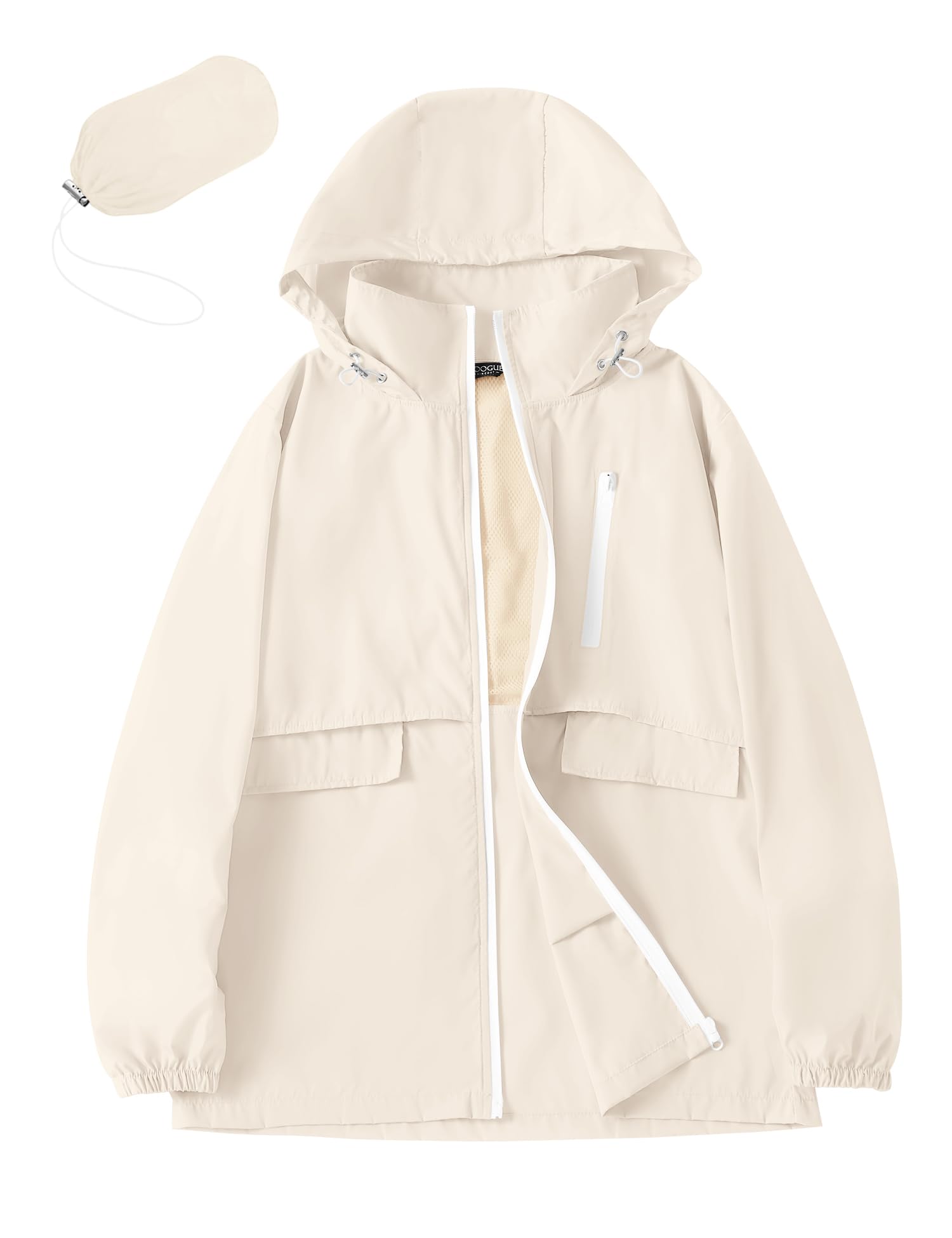
Key Features
- Packability: Packs into pouch
- Hood: Yes
- Water Resistance: Water-resistant, degrades
- Fit: True to size
- Price: Budget
The Avoogue rain jacket starts as a traveler’s dream: the featherweight fabric compresses into a neat pouch, the deep pockets hold a phone and keys, and the fit accommodates a midlayer without feeling bulky. However, water resistance degrades in anything beyond a brief mist, and the zipper can snap off after a single machine wash. This relegates the jacket to a role as a dry-weather windbreaker you pack for mild climates and clean with a damp cloth, not a laundry cycle.
Pros
- Lightweight shell packs into its included pouch, taking up little luggage space.
- Deep pockets secure essentials, and the true-to-size fit allows easy layering over a sweater.
Cons
- Water resistance fades in sustained rain, limiting it to a windbreaker role.
- Zipper can snap off after the first machine wash.
For travelers needing an emergency windbreaker they can toss in a daypack and will clean by hand, the Avoogue is a low-cost, lightweight option — just don’t expect rain protection.
12. CAMEL CROWN Packable Down
Best for Petite Travelers
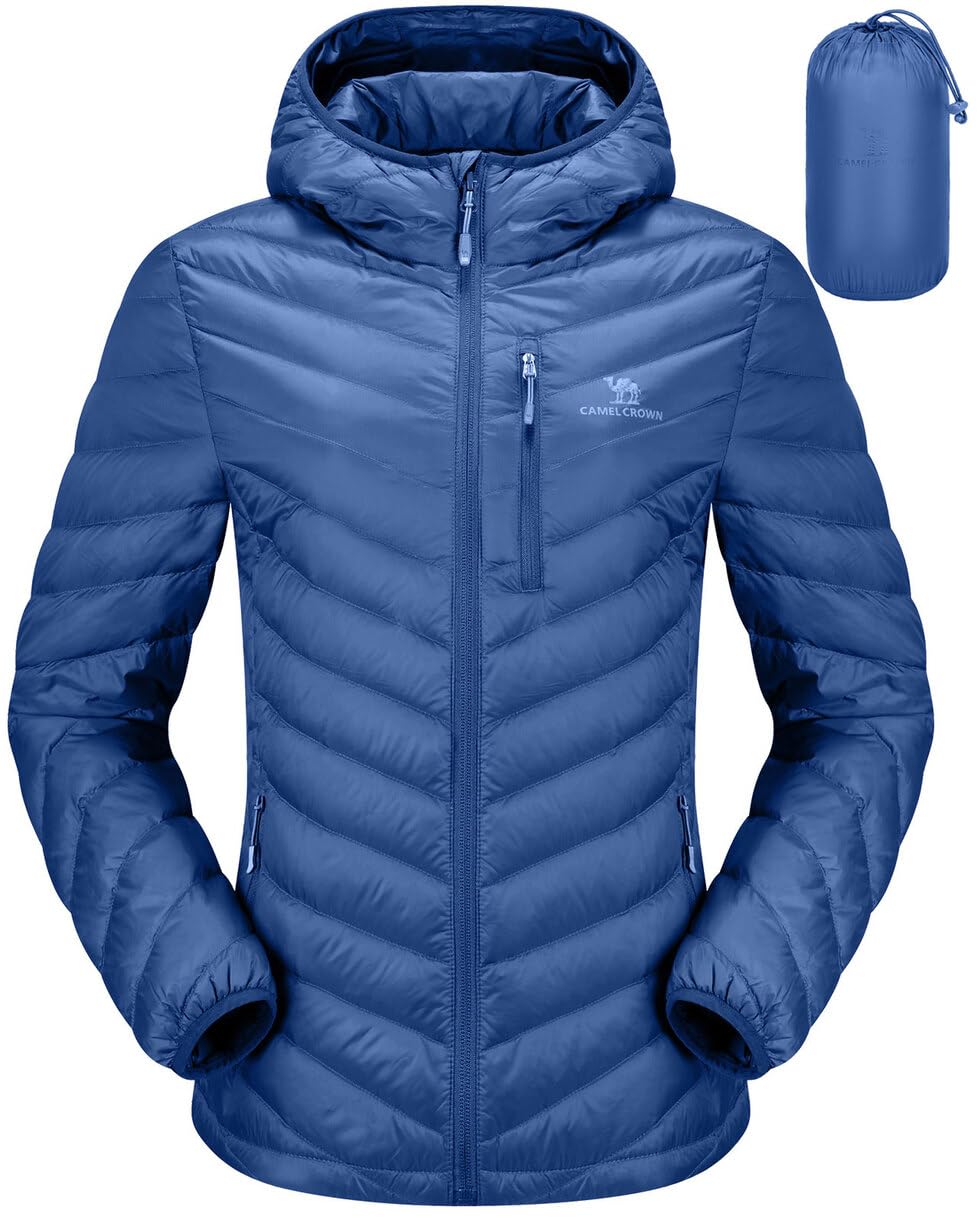
Key Features
- Packability: Folds into small bag
- Hood: Yes
- Insulation: Down
- Fit: Size up 1-2 sizes
- Price: Budget
The CAMEL CROWN delivers genuine down warmth in a compact, packable jacket that stuffs into its own bag. Deep hand pockets and a zippered left chest pocket add utility for travel. The cut runs short in body and sleeves; sizing up one to two sizes is required for a comfortable fit, and even then, sleeve length may not suit anyone over 5’6". This jacket works best for petite travelers who carefully measure against the size chart.
Pros
- Lightweight down insulation provides steady warmth without bulk, ideal for layering on cool travel days.
- Deep hand pockets and a zippered left chest pocket keep essentials accessible and secure.
Cons
- Arm and body length run short—sizing up 1-2 sizes is necessary; even then, sleeve length may be insufficient for taller frames.
If you’re 5’6" or under and willing to size up aggressively, this jacket offers packable down warmth at a budget-friendly price.
How to Choose
A ‘packable’ label guarantees nothing — the true test is whether it stuffs into its own pocket and keeps you dry beyond a light mist.
Packability
Look for self-stowing designs that fold into a chest or hand pocket — these never leave you hunting for a pouch mid-trip. Jackets that come with a separate stuff sack can work, but the sack often goes missing, leaving you with an uncompressed bundle.
For a daypack on a cobblestone street, that one-pocket fold saves space and hassle. Jackets that only “compress” without a dedicated closure will slowly unroll and occupy more room than you expect.
Hood
A hood isn’t just a luxury in drizzly cities — it replaces a separate umbrella or hat that can fail. Elasticized or adjustable hoods that cinch down prevent wind from flipping them off, while hoodless styles force you to carry extra gear.
On a blustery morning in Edinburgh, a snug hood keeps you moving while a beanie won’t. If you pack a hoodless jacket, plan to bring a waterproof hat that won’t blow away.
Insulation
Down fill offers the highest warmth for its weight, compressing beautifully, but if it gets soaked, you lose insulation and may find feathers on your sweater. Synthetic mimics down’s look, dries faster, and handles drizzle without collapse, though it’s slightly heavier.
For a rainy hike in the Lake District, synthetic keeps you warm where down would turn clammy. Down excels on cold, dry days when every gram counts.
Water Resistance
Water-resistant fabric repels light rain but fails in steady downpours; true waterproof jackets feature sealed seams and durable water repellent coatings that buy you hours. Without taped seams, water sneaks through zippers and stitches.
If you’re caught in a sudden Copenhagen shower, a jacket with sealed seams will keep your base layer dry long enough to find shelter. Jackets with only a DWR coating wet out quickly and leave you soaked.
Fit
A jacket that fits too snugly won’t accommodate a sweater, while an oversized one lets drafts in. Look for articulated sleeves that don’t ride up when you reach for an overhead bin, and check comments about length — a too-short torso exposes your lower back.
For a trip that includes both city walks and a chilly train ride, you need room for a thermal underneath without looking bulky. Sizing charts rarely reflect real-world layering, so scan recent reviews for fit feedback.
FAQ
Why did my waterproof packable rain jacket leak after a few hours in heavy rain?
Most budget ‘waterproof’ jackets are only water-resistant because they lack taped seams. Rain seeps through stitches and zippers once the surface fabric wets out. For extended downpours, choose a jacket with sealed seams and a durable water repellent finish, and reapply waterproofing spray periodically.
How do I re-fluff a packable puffer that went flat after being packed?
Remove it from your bag as soon as you arrive and shake vigorously. Hang it in a steamy bathroom or tumble dry on low heat with clean tennis balls to restore loft. Do not store it compressed long-term; hang it between trips.
Does a packable jacket always come with a carrying bag or do I need to buy one separately?
Many ‘packable’ jackets omit a stuff sack and rely on you compressing them into a pocket. Always check product images and reviews for ‘self-stowing’ or ‘included pouch’. If it doesn’t specify, assume you’ll need to pack it loose or use your own compression sack.
How do I stop my packable down jacket from shedding feathers?
Down leakage is common with lower-cost down jackets because the shell fabric isn’t tightly woven enough to contain fine filaments. Reduce shedding by hand-washing gently and avoiding rough surfaces. If a jacket sheds excessively right away, exchange it — it rarely improves.