This post contains affiliate links. We may earn a small commission when you buy through our links — at no extra cost to you.
The first time I folded a stroller at the gate and walked it onto the plane instead of handing it to a baggage handler, I felt like I’d gotten away with something. Anyone who has watched a full-size stroller disappear into the cargo hold knows the trade-off: a travel stroller has to be light enough to carry up a flight of stairs with a toddler on your hip, small enough for an overhead bin, and steady enough to survive a bad sidewalk. Get those right and travel days stop being a production.
Over the past six months, we’ve folded, carried, and pushed 10 of them through airports and around our own neighborhoods. Weight is the number everyone shops by, but the folded shape matters more than the folded weight, and a one-hand fold is only worth anything if it works with a diaper bag on your shoulder and a toddler on your arm. The picks below got both right, whether your trip is a flight across the country or a walk to the park.
Our Top Picks




The Best Lightweight Travel Strollers, Reviewed
1. Mamazing Ultra Air
Best Overall
Key Features
- Harness: 5-point
- Folded size: 20.6 x 18.5 x 11 inches
- Carried weight: 11.6 lb
- Child weight limit: 50 lb
- Price: Premium
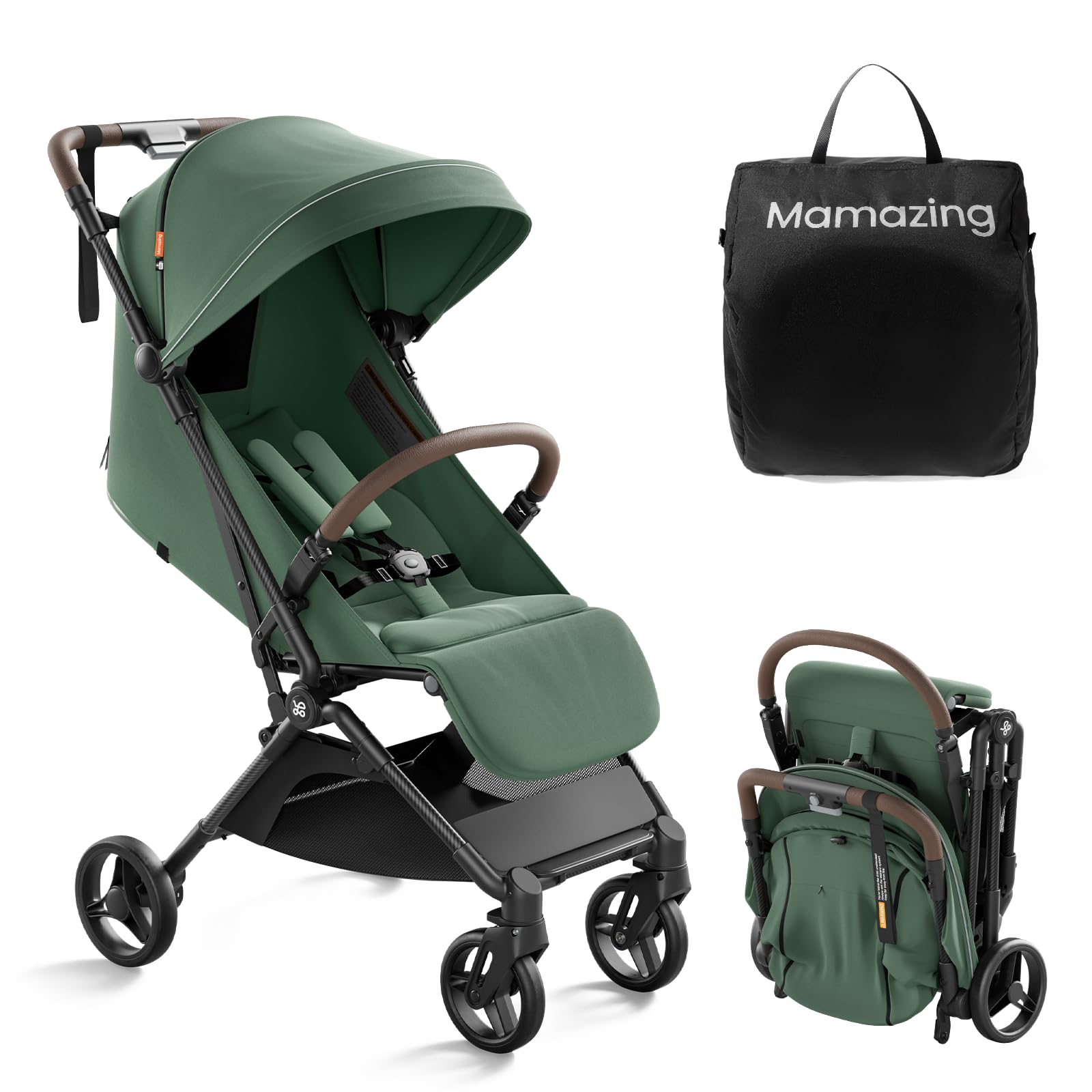
Our test for a travel stroller is always the same: fold it with one hand, then find somewhere to put it. The Ultra Air is the pick that passes both halves without much of a compromise. The carbon fiber frame is 11.6 pounds, the fold measures 20.6 by 18.5 by 11 inches, and that is the shape that goes into an overhead bin instead of onto the jet bridge.
That is why it is the one we recommend first. Plenty of light strollers buy their weight with a shallow seat and a low limit; this one keeps a 50-pound, 6-to-36-month seat, a 22-pound under-seat basket, and a UPF 50+ canopy, so a full day out does not mean rationing what you bring. It pushes smoothly on foam-filled wheels, and the faux-leather handlebar is a nicer thing to hold for an hour than bare foam.
The shoulder strap is the part to watch. It is the piece that can give out first, so carry it by the frame handle when the bag is loaded and your hands are full. Everything else about the frame feels like the money went somewhere real rather than into the canopy print.
Two brake pedals, one to set and one to release, is the small thing we kept noticing on uneven sidewalks, because you are not toeing a single lever to get rolling again. It is the stroller for a family that flies a few times a year and wants the same one for errands at home.
Pros
- Folds one-handed into an overhead-bin shape
- 50-pound seat and a 22-pound basket
- UPF 50+ canopy and 5-point harness
- Smooth push on 6-inch rear wheels
Cons
- Heavier than the 10-pound picks at 11.6 pounds
Our default recommendation: it folds one-handed, stows overhead, and still carries a 50-pound child, which is more than the ultralights manage.
2. Mompush Jeto
Best Ultralight
Key Features
- Harness: 5-point
- Folded size: 20.5 x 17.3 x 7.1 inches
- Carried weight: 10.1 lb
- Child weight limit: 40 lb
- Price: Budget
Just over 10 pounds, and it folds into a 20.5 by 17.3 by 7.1-inch square that stands up on its own. Of everything here, this is the closest thing to a stroller you can forget you brought: it goes overhead, under a seat, into a rental-car trunk, and into the corner of a small hotel room without a second thought.
What we did not expect at this weight is the ride. There is suspension on 5.5-inch wheels, a seat a bigger toddler can stretch out in, and a one-hand fold with a carry strap on the frame. The visor pulls down past the child’s head, which is the difference between a nap and a fight on a sunny afternoon.
What you give up is seat capacity: 40 pounds and 6 to 36 months means a tall four-year-old is out, and that is the whole reason our top pick exists. Against the Mamazing you save weight and money and lose ten pounds of child. For a 25-pound two-year-old on a four-day trip, that is the right trade.
Pros
- Just over 10 pounds
- Self-standing 20.5 x 17.3 x 7.1-inch fold
- Suspension on 5.5-inch wheels
- One-second fold with a carry strap
Cons
- Basket rated for only 4.4 pounds
The Jeto is the stroller we hand to anyone traveling with a child under 40 pounds: the lightest way to travel well here.
3. Colugo Compact+
Best for Tall Toddlers
Key Features
- Included: Carry bag, rain cover, cup holder
- Folded size: 17.6 x 10.6 x 22 inches
- Carried weight: 18 lb
- Child weight limit: 55 lb
- Price: Premium
There is no latch and no button: you lift the handle and the Compact+ folds itself, then stands there while you get a child onto your hip. At a gate, with a backpack on one shoulder, that is the difference between a smooth boarding and a wrestling match.
The box is unusually complete. A backpack-style carry bag, a rain cover, and a cup holder all come with it, and the seat fabrics are machine washable, which is the specification parents actually use. The canopy extends well past the child’s knees for low sun.
Where it earns its place is the seat: 55 pounds and 6 months to 4 years is the longest run of anything in this roundup, and the adjustable footrest keeps a taller child’s legs supported instead of dangling. If your three-year-old is already closing in on 40 pounds, this is the one we point you to.
The ride is the other pleasant surprise. The wheels roll over packed gravel and pavement without the chatter you get from the four-inch wheels on the budget picks, and the folded frame went down a plane aisle and into the overhead without a fight.
Pros
- 55-pound seat rated to age four
- Auto-fold with no latch to release
- Carry bag, rain cover, and cup holder included
- Machine-washable seat fabrics
Cons
- Heaviest pick here at 18 pounds
- No fully flat recline for newborns
The one we reach for with a tall, heavy toddler: a 55-pound seat that lasts to age four, plus the carry bag and rain cover in the box.
4. Graco Ready2Jet
Best for Car Seats
Key Features
- Car seat: Graco SnugRide infant seats
- Folded size: Less than 43.5 x 12 x 8 inches
- Carried weight: 13.2 lb
- Child weight limit: 50 lb
- Price: Premium
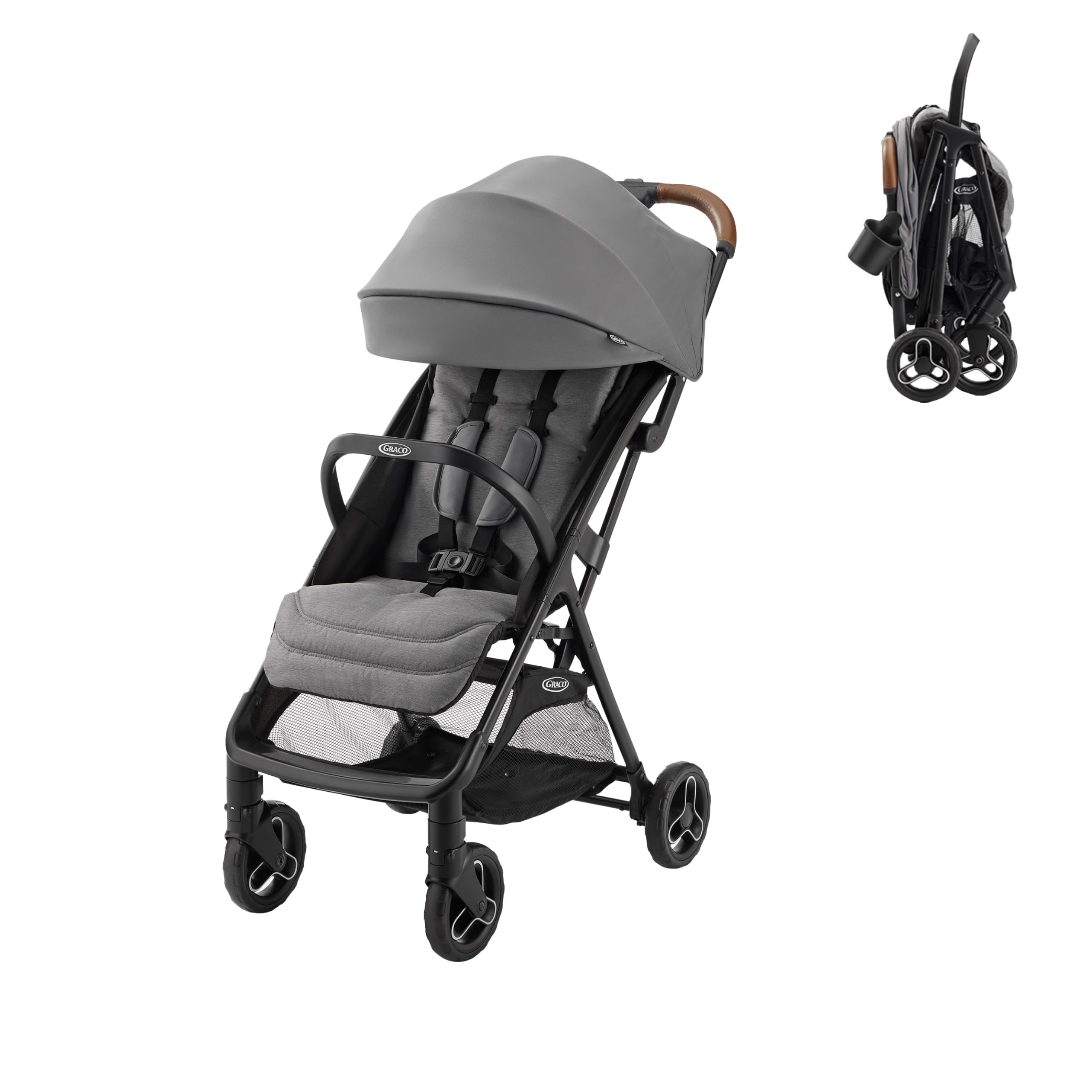
The Ready2Jet does the one thing the ultralights cannot: a Graco SnugRide infant seat clicks onto the frame, so a sleeping baby moves from the car to the stroller without being unbuckled. Give yourself a couple of attempts the first time, because the seat takes a few tries before it drops in cleanly.
That compatibility is why we keep it in this roundup at 13.2 pounds, a step above the ultralights. The fold is the other argument: pull one handle, the frame collapses, and it stands upright by itself instead of lying on an airport floor while you hold a boarding pass in your teeth.
The rest of the spec is more generous than most at this weight. There is a convertible 3- or 5-point harness, adjustable calf support, all-wheel suspension, a multi-position recline, and a removable belly bar that doubles as a carry handle. The leatherette handle and the canopy make it look more expensive than the strollers it parks next to.
Pros
- Graco SnugRide infant seat clicks on
- Self-standing automatic fold
- Convertible 3- or 5-point harness
- All-wheel suspension and a 50-pound seat
Cons
- Small under-seat basket
We keep this one for Graco families: a SnugRide infant seat clicks onto the frame, and the folded stroller stands on its own.
5. Mompush Lithe V2
Best for Naps
Key Features
- Recline: 3 positions to 175 degrees
- Folded size: 21.26 x 11.2 x 26.9 inches
- Carried weight: 17.4 lb
- Child weight limit: 40 lb
- Price: Midrange
The Lithe V2 is the comfort pick, and the recline is why. It is a mechanical system that goes to 175 degrees with one hand, as close to flat as anything here, so a nap on a long afternoon is a real possibility rather than a slouched doze. The removable snack tray means lunch happens in the seat instead of on your lap.
Around that seat there is a UPF 50+ canopy with a peek-a-boo window, a three-position backrest, and a travel bag and rain cover in the box, the two accessories we end up buying separately for everything else. For a stroller aimed at long days, that is the right list.
The cost is the fold. It stands 26.9 inches tall when collapsed, the tallest here, so do not count on the overhead bin of a regional jet; plan on the jet bridge and the size stops mattering. Give the mechanism a few goes at home before you try it in a boarding line.
Pros
- Reclines to 175 degrees with one hand
- Snack tray and cup holder included
- Travel bag and rain cover in the box
- Plush, supportive seat for long days
Cons
- 17.4 pounds, heavy for a travel stroller
Comfort is the whole argument here, and we think it wins: a near-flat recline, a snack tray, and the plushest seat in this roundup.
6. Dream On Me Aero
Best Budget
Key Features
- Harness: 3-point
- Folded size: 40.6 x 7.7 inches
- Carried weight: 7.2 lb
- Child weight limit: 33 lb
- Price: Budget
At 7.2 pounds, the Aero is the stroller that lives in the trunk and handles the errands nobody plans for. It is also the least expensive pick in this roundup by a wide margin, which changes how you feel about gate-checking it.
The fold is the classic umbrella-stroller collapse, long and narrow at 40.6 by 7.7 inches, so it slides into a trunk beside the groceries rather than claiming its own quarter of the space. The steel frame, dual brakes, and removable canopy are all sensible at this level, and it goes together without tools.
Where it stops is the child. A 33-pound limit and a 6-to-36-month range cover a toddler and not much more, and the three-point harness is fine for a child who sits up but not what we want for a baby who still slumps. For a 20-pound toddler on a weekend trip, it does the job at a fraction of the bulk. The dual brakes are the other thing we appreciated: one lever per rear wheel, both easy to stomp with a sneaker.
Pros
- 7.2 pounds
- Lowest price in this roundup
- Dual brakes on the rear wheels
- Folds without tools
Cons
- Short handles leave taller parents hunched
- Canopy blocks only high sun
We treat the Aero as the spare: 7.2 pounds and the lowest price here, for quick errands and trunk duty rather than a week away.
7. Rollingsurfer F1 Travel Stroller
Best for Rolling Through Terminals

Key Features
- Recline: 100 to 170 degrees
- Folded size: 25.2 x 19.29 x 9 inches
- Carried weight: 16.3 lb
- Child weight limit: 22 kg (48 pounds)
- Price: Midrange
A grab handle on the back of the folded frame turns this stroller into a small rolling case you pull behind you through a terminal. It sounds like a gimmick until you are the one with a carry-on in each hand, and then the roll takes the weight off your shoulder, which is the whole point of a travel stroller.
Open it up and we were surprised by the seat: the backrest runs from 100 degrees upright to 170 for naps, the armrest is stitched leather, and the 5.9-inch rear wheels are among the biggest here.
The folded package is 25.2 by 19.29 by 9 inches on an aluminum frame that is listed as meeting ASTM F833 and JPMA standards, and the under-seat storage takes a diaper bag rather than a folded jacket. The canopy and the five-point harness are the usual specifications, done properly.
For an airport day, this is the pick. The handle does the carrying, and the 170-degree recline means the same stroller handles a nap in a hotel lobby an hour later.
Pros
- Rolls on its own handle when folded
- Reclines from 100 to 170 degrees
- Large 5.9-inch rear wheels
- Storage takes a full diaper bag
Cons
- 16.3 pounds is heavy for this category
- Harness buckles can give way
The one we recommend to travelers who would rather roll than carry: a suitcase handle on the folded frame and a 170-degree recline.
8. Gromast F2 Travel Stroller
Lightest Big-Kid Seat

Key Features
- Harness: 5-point
- Folded size: 18.5 x 8.7 x 18.5 inches
- Carried weight: 9.9 lb
- Child weight limit: 50 lb
- Price: Midrange
Nine point nine pounds with a 50-pound seat limit is the combination that makes the F2 worth a look. Only the Mompush Jeto is lighter, and it stops at 40 pounds; the picks that match the capacity, the Mamazing and the Colugo, carry two to eight pounds more.
The fold is a cube rather than a stick: 18.5 by 8.7 by 18.5 inches, which is the shape that goes into a bin end-on. The aluminum frame and the 300D Oxford canopy are the sensible choices at this weight, and the fabric is waterproof as well as rated UPF 50+.
For the child there is a widened seat, a three-level adjustable backrest, a five-point harness, and 360-degree wheels with suspension. The under-seat basket is generous enough for a diaper bag, which matters more than it sounds when the alternative is carrying that bag on your shoulder for six hours.
If you want the lightest seat that still takes a big toddler, this is where we point you, and it is the pick that makes the Mamazing’s 11.6 pounds feel unnecessary. The boundary is the ground under it: 4.7-inch front wheels mean pavement and terminal floors, not gravel.
Pros
- 9.9 pounds with a 50-pound seat limit
- Cube-shaped 18.5-inch fold
- UPF 50+ waterproof canopy
- Five-point harness and suspension
Cons
- Rated to age three only
We recommend the F2 to families who would rather carry ten pounds than push eighteen: the lightest stroller here that still takes a 50-pound child.
How We Tested Lightweight Travel Strollers
We started with the travel strollers that show up most in parent forums and best-seller lists, then narrowed the field to models under about 16 pounds that claim a one-hand fold and a compact footprint. That left 10 strollers, which we used for six months on real trips and on the ordinary errands that make up most of a stroller’s life.
The airport came first. We folded each one with a bag in the other hand and timed it, then lifted it into an overhead bin to see if the folded shape actually cleared the door. We pushed them over cracked sidewalks, gravel, and cobblestones, watching for wheels that rattled and frames that flexed when a 30-pound toddler leaned over the side.
Ease of use got tested at the worst moments: buckling a squirming toddler in a cold parking lot, loosening the harness, clipping a car seat onto the frame to see whether the connection wobbled. We opened and closed each buckle two dozen times and ran a thumb along the edges for anything sharp, and we reclined the seats mid-trip to see whether a toddler could actually nap.
Every couple of weeks we weighed each stroller on a luggage scale against its listed weight, loaded the basket with a diaper bag to see if it tipped, and checked brakes, tires, and fabric for wear. We tallied the accessories in the box, too, whether that was a travel bag, rain cover, cup holder, or snack tray, since that’s where value for money lives. Six months in, the ones that held up fold exactly the way they did on day one.
How to Choose a Lightweight Travel Stroller
The right travel stroller is the one you can fold with one hand and carry with the other while a child sits on your hip; everything else is a trade you get to choose.
Weight Is a Carry Test, Not a Number
The picks here run from 7.2 to 18 pounds, and that spread is not a spec-sheet formality. You feel it at the top of a jet bridge, on the stairs of a walk-up rental, and every time you lift the stroller into a trunk with a child on your other arm.
Our advice is to favor a stroller that stands on its own once folded, because parking it and using both hands is worth a couple of pounds of frame. A 10-pound stroller you can sling and set down beats a 14-pound one that needs to be leaned against a wall.
What Compact Actually Means
Compact in a listing usually means it fits a car trunk, which is not the same as fitting an overhead bin. Check the folded dimensions against your airline’s carry-on size before you count on carrying it aboard, and know that the cabin claims printed by stroller makers are theirs, not the carrier’s. The crew has the final say.
The picks here that genuinely go overhead fold to roughly 18 to 21 inches on their longest side. A fold that stands much taller than that is a gate-check stroller: fine, but plan for it and pack a bag you can shoulder.
Seat Limits Decide How Long You Keep It
Weight limits across this group run from 33 to 55 pounds, and that number, not the price, decides whether the stroller survives past age three. A 33-pound seat can be outgrown by a tall two-year-old; a 55-pound seat takes a four-year-old in a winter coat with room to spare.
Height and harness matter too. The Mamazing lists a 39.4-inch standing height, and a five-point harness is worth insisting on if a baby is riding rather than a walking toddler. Age minimums sit at 6 months for most of these, so a newborn needs a different setup entirely.
Recline and Canopy for the Nap Question
Two features decide whether a full day out ends in a meltdown. A near-flat recline lets a toddler sleep properly instead of slumping forward, and the mechanical systems here are the ones to want: the Mompush Lithe V2 goes to 175 degrees and the Rollingsurfer to 170, both with one hand.
Canopy coverage is the most underestimated spec in the category. Look at how far the fabric reaches past the child’s knees rather than how many panels the listing counts; a short canopy means a muslin draped over the front and a sunburnt shin by noon.
Wheels, Terrain, and the Basket
Wheels on these strollers run about 4 to 6 inches, and that tells you where they work: airports, sidewalks, museum floors, packed gravel. If cobblestones are part of your daily route, no ultralight here is the right tool, though bigger wheels and suspension help, and the Rollingsurfer’s 5.9-inch rears and the Mamazing’s 6-inch wheels are the most forgiving of the group.
Basket capacity is the other quiet dealbreaker. The Mamazing is rated for 22 pounds of cargo; both Mompush picks come in at 4.4. If the stroller is also your shopping cart, that difference shows up on the first Saturday.
Frequently Asked Questions
Can a lightweight travel stroller be your only stroller?
For a city family with a toddler and a walkable neighborhood, yes. The trade is ride comfort on rough ground and storage, not the core job. If you have a newborn or walk miles every day, treat one of these as a second stroller and keep the big one at home.
If it will be your only stroller, insist on a near-flat recline and a basket you can actually load. The Mompush Lithe V2 and the Rollingsurfer are the two here that recline far enough for a real nap.
How do you clean a travel stroller?
Most of these are wipe-clean polyester or Oxford fabric: cold water, mild soap, a damp cloth, air dry. Never machine wash a frame, harness webbing, or anything with a fold mechanism inside it.
The Colugo Compact+ is the exception, with machine-washable seat fabrics. Check the care tag on the seat pad before anything goes in the drum, and spot-clean first if you are unsure.
Are carbon fiber strollers worth the extra money?
Sometimes, but the material is not the deciding factor. The Mamazing’s carbon fiber frame comes in at 11.6 pounds, while the aluminum Mompush Jeto is 10.1, so how a frame folds clearly matters more than what it is woven from.
Compare folded dimensions, seat limits, and the fold mechanism first, and treat carbon fiber as a nice-to-have. A light frame on a stroller with a clumsy latch is still a stroller you fight at the gate.
Final Verdict
The Mamazing Ultra Air is the stroller we recommend to most families, because it gets through an airport without a fight and still carries a 50-pound child with a real basket and a proper canopy. It is the pick that makes the fewest compromises at once.
If your child is tall or already closing in on 40 pounds, the Colugo Compact+ lasts to age four and arrives with the bag, rain cover, and cup holder. And if the lightest possible bag is the goal, the Mompush Jeto at just over 10 pounds is the one to take.