This post contains affiliate links. We may earn a small commission when you buy through our links — at no extra cost to you.
The moment compression socks prove themselves is usually about three hours into a long flight, when everyone else is toeing off their shoes and you’re still comfortable. Graduated compression grips tightest at the ankle and eases up the calf, which is what keeps blood moving instead of pooling down there. We’ve just spent four months with 16 pairs, wearing them through red-eyes, long drives, and full days at a desk.
The millimeter-of-mercury number on the label turned out to be the least interesting thing about a pair. A 20-30 sock that’s too long in the calf bunches behind the knee, while a well-fitting 15-20 can beat a stronger pair that never sat right. Copper fabric is mostly a marketing story, and the real test is whether you can pull a sock on at 5 a.m. without a wrestling match.
We looked for pairs that hold that balance: easy to pull on, snug enough to matter, and tough enough to survive hotel-sink laundry. The picks below cover frequent flyers, wide calves, and anyone who just wants a multipack that outlasts trip three.
Our Top Picks



The Best Compression Socks for Travel, Reviewed
1. Physix Gear 20-30
Best Overall
Key Features
- Length: Knee-high
- Department: Unisex adult
- Compression level: 20-30 mmHg
- Price: Midrange
The 20-30 mmHg range is where travel compression stops being a gentle hug and starts doing real work. That is the range we want for a long flight or a day of walking through airports, and the Physix Gear pair is the one we reach for first. It has the firmest, most consistent hold of the 20-30 socks here, and that is what makes it our default.
The sock stays put without rolling at the top, which is the difference between compression you forget about and compression you keep tugging at. The knit has a dense, supportive feel, and the pressure stays even from ankle to calf rather than bunching at the ankle. We like it for a full travel day because it does not ask for much attention once it is on.
Fit is the part to slow down for. The sizing can run big and long, so a short-legged traveler may find the top sitting higher than expected, and a very wide calf can feel squeezed. Check the size chart against both calf and shoe size, and do not size up just because you want a firmer squeeze. The fit is the one thing that can turn a good compression sock into a drawer ornament.
For a traveler with a prescribed 20-30 level or pronounced swelling, this is the pair we point to. If you want an easier pull-on, CHARMKING is the gentler choice; if you want a cushioned foot, SB SOX is the long-haul alternative. The toe seam is the detail we check before a long day; if it sits crooked, fix it before you board.
Pros
- Firm 20-30 mmHg support
- Stays put without rolling
- Strong swelling and leg-fatigue relief
Cons
- Takes effort to get over the heel
For most travelers who want real 20-30 mmHg support, this is the pair we recommend first, with firm, stay-put compression that earns its keep on long days.
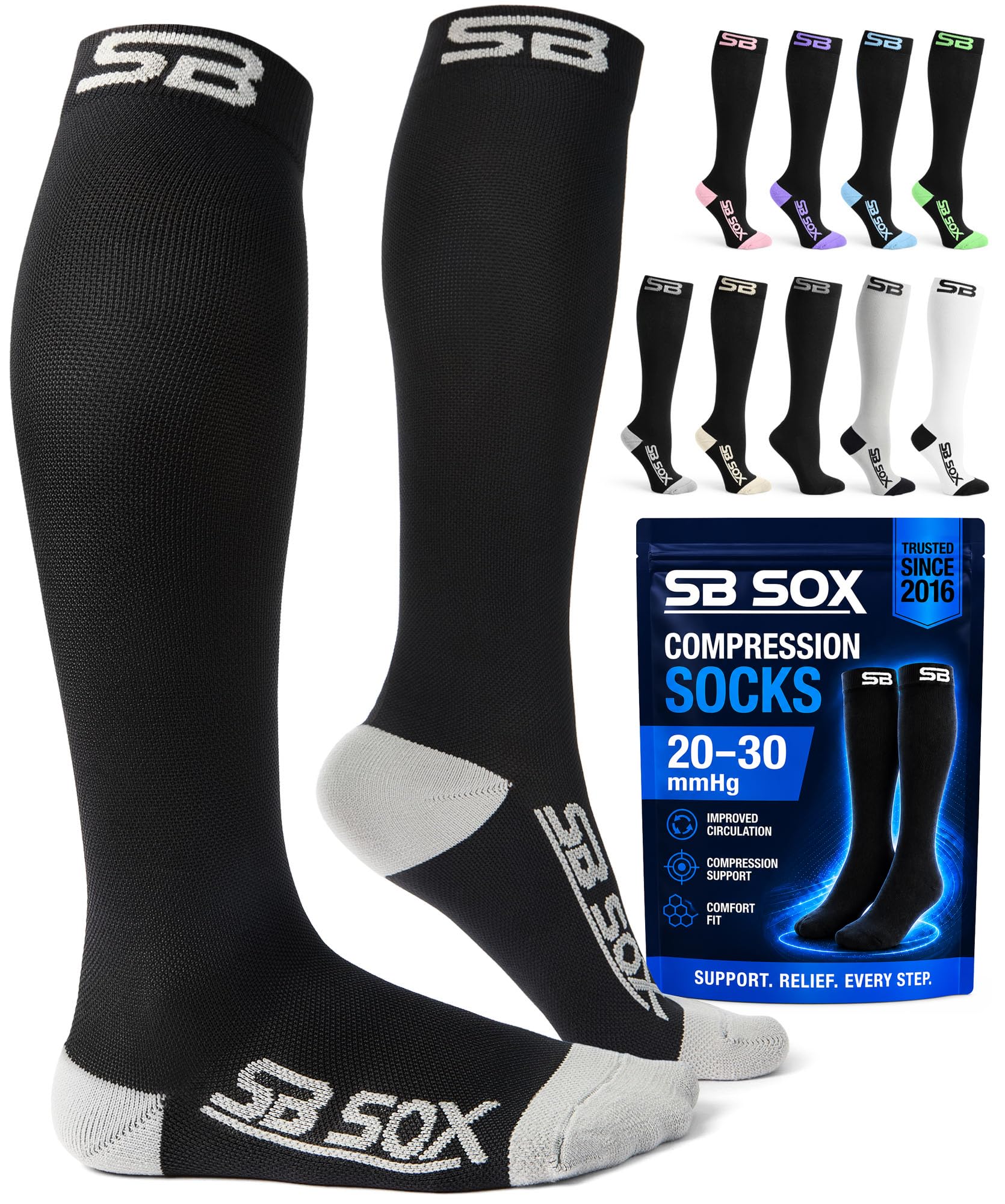
2. SB SOX 20-30
Best for Long-Haul Flights
Key Features
- Care: Hand wash only
- Size: Large
- Material: 80% nylon, 20% spandex
- Compression level: 20-30 mmHg
- Price: Midrange
SB SOX is the pair that reads as travel gear first and medical sock second. The 20-30 mmHg range gives you real support, but the cushioned heel and toe take the edge off standing in line and walking through terminals. We like that combination for a long-haul flight: firm enough to feel like it is doing something, soft enough that you are not counting the minutes until you can take it off.
The quality is the strongest part of the case. The 80% nylon, 20% spandex blend has a smooth, dense feel, and the sock holds its shape without bunching at the ankle. It is the pair we trust when we want a firm hold that still feels finished, not like a piece of hospital equipment.
Sizing is where we pause. The brand publishes calf and shoe-size ranges, and that is the chart to use, not your usual sock size. The fit can run small, especially through the calf, so measure before you order. The 20-30 squeeze also takes more effort to pull on than a 15-20 pair, which is normal for the category but worth knowing if you have limited hand strength or an early flight.
For a traveler who wants one pair to do the heavy lifting on a long flight, this is the one we pack. It is not the easiest sock to wrestle on in a cramped seat, so put it on before you leave the house.
Pros
- Cushioned heel and toe
- Firm 20-30 mmHg compression
- Smooth nylon-spandex knit
Cons
- Hand wash only
If your flight is long enough to make your ankles ache, start here: the cushioned foot and firm 20-30 hold make this our long-haul pick.
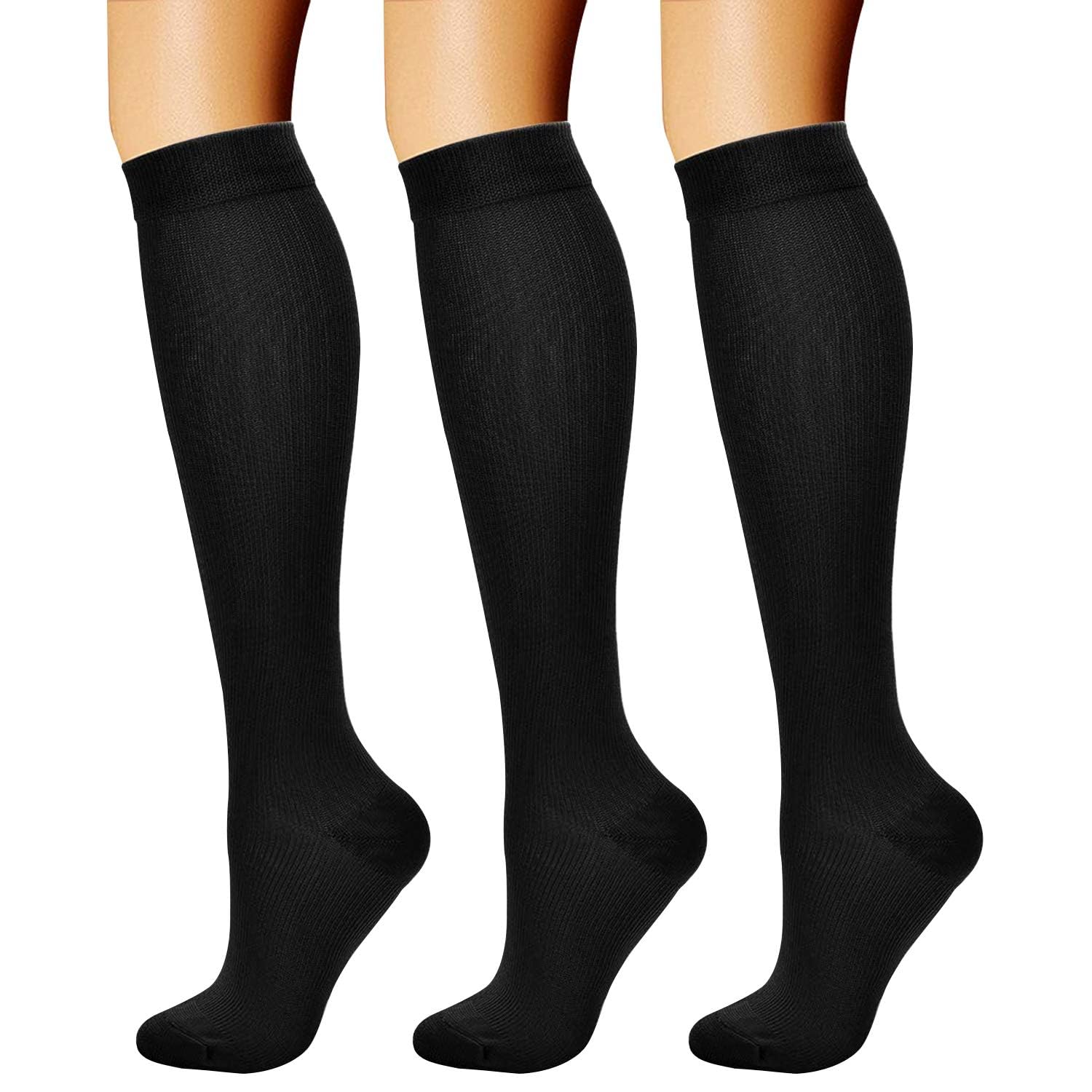
3. CHARMKING 15-20
Best Budget
Key Features
- Length: Knee-high
- Department: Unisex
- Pairs per pack: 3 pairs
- Compression level: 15-20 mmHg
- Price: Budget
Not every travel sock needs to feel like a medical device. CHARMKING’s 15-20 mmHg sock is built for gentle pressure, a soft handfeel, and a pull-on that does not require a wrestling match. It is the easiest pair to get over the heel in this group, which matters when you are dressing in a hotel room before an early flight.
The compression is light but not pointless. It gives mild support for long sitting and ordinary swelling, and the sock stays comfortable enough for all-day wear. We like the three-pair pack for a trip because you can rotate them and wash less often. This is a travel comfort sock, not a substitute for a measured medical garment.
Fit is forgiving but not universal. The sock is designed as a unisex knee-high, and the top band sits below the knee without digging in for most wearers. If you have a wide calf, check the size chart rather than assuming the stretch will cover it.
For a first-time compression wearer, a short flight, or a traveler who hates tight socks, this is the sensible starter pair. It is also the budget pick in this guide, and the low cost makes it easy to try a pair before committing to a firmer 20-30 sock.
Pros
- Easy to pull on and take off
- Soft, comfortable 15-20 mmHg fit
- Three-pair pack for rotation
Cons
- Too light for a prescribed 20-30 need
This is the pair we hand to anyone who wants travel compression without a wrestling match in the morning.
4. FITRELL 20-30
Best Value 20-30 Mmhg
Key Features
- Length: Knee-high
- Department: Unisex adult
- Pairs per pack: 3 pairs
- Compression level: 20-30 mmHg
- Price: Budget
A 20-30 mmHg sock at this price is the reason FITRELL caught our attention. The three-pair pack gives you enough rotation for a week-long trip, and the compression is firm enough to feel purposeful without the stiffness of a hospital-grade stocking.
The fit is the pleasant surprise. It comes in unisex sizing, and the sock stays in place without sliding down the calf, which is the failure mode that makes compression socks annoying on a travel day. The material is soft, not itchy, and the colors are easy to wear with regular clothes. We like it as a daily sock for a trip where you are walking a lot but not necessarily dealing with serious swelling.
The firmness is not perfectly consistent across pairs. Some find it closer to a 15-20 squeeze than the 20-30 label suggests, so if you need a specific medical level, this is not the pair to gamble on. For a budget travel sock, we can live with that, but we do not make it the only pair in the bag.
For a traveler who wants a true 20-30 sock without spending the most, this is the value call. If you need the firmest, most consistent squeeze here, go with Physix Gear; if you want a softer everyday sock, CHARMKING is easier.
Pros
- Stated 20-30 mmHg range
- Stays in place without sliding
- Soft, non-itchy knit
Cons
- Durability can be uneven after washing
A three-pair set that proves 20-30 mmHg support does not have to cost the most, and our value pick for daily travel support.
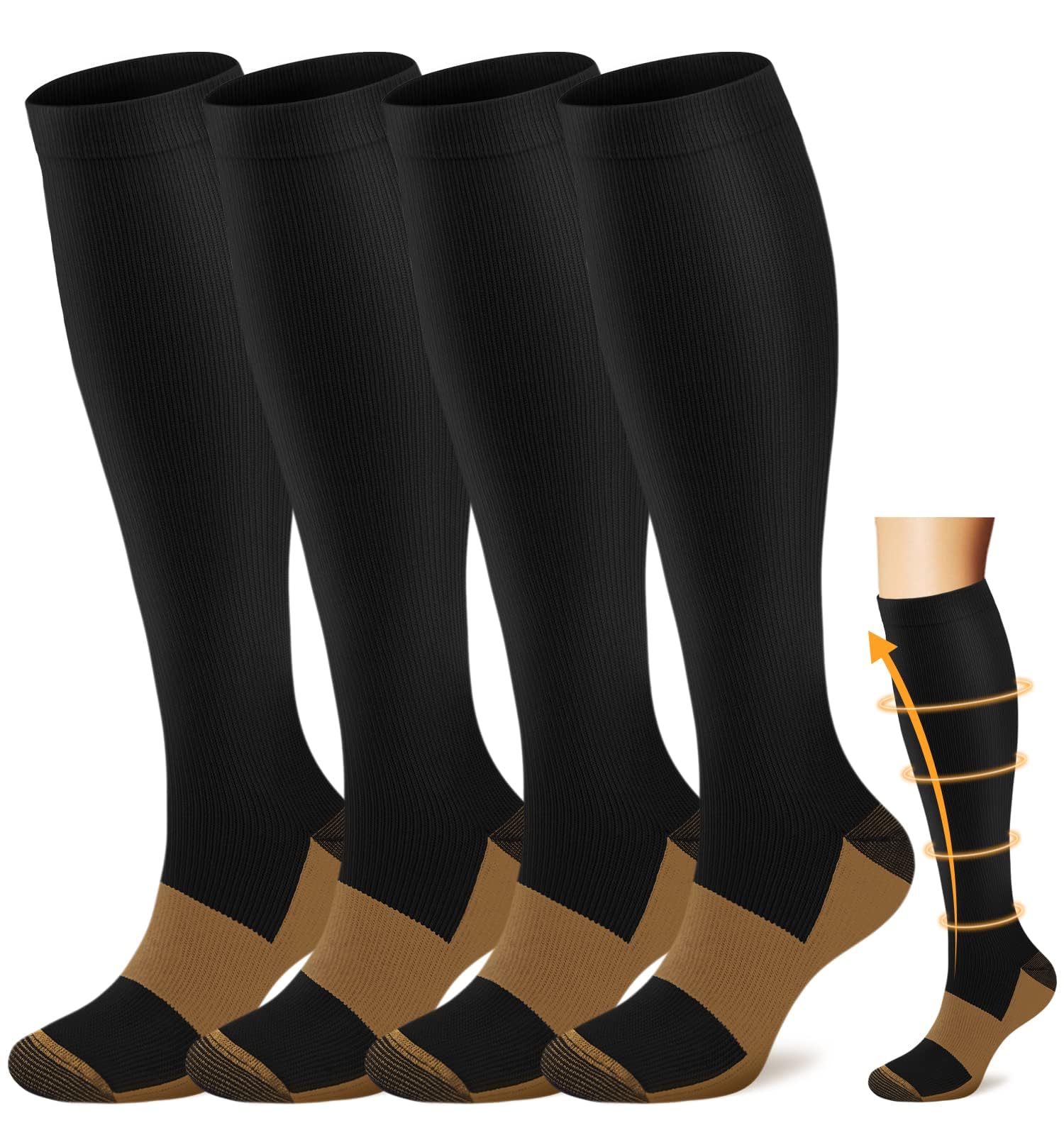
5. ACTINPUT Copper
Best for All-Day Comfort
Key Features
- Material: Copper-infused
- Department: Men
- Pairs per pack: 4 pairs
- Price: Budget
The first thing we noticed about the ACTINPUT socks is how little they feel like a compression garment. The pressure is even and gentle, with no hard band digging into the calf and no toe squeeze. That makes them a good choice for a traveler who wants a little support on a flight but does not want to feel like they are wearing medical equipment.
The four-pair pack is the practical part. You get enough pairs to rotate through a trip, and the colors are bright enough to feel deliberate rather than clinical. The socks are easy to pull on and off, which is a real advantage if you are putting them on in a hotel room or a plane bathroom. We also like that the compression is concentrated enough to help with tired legs without leaving deep marks.
The catch is the missing compression rating. ACTINPUT does not publish a mmHg range, so this is not the pair for anyone with a prescribed level or a specific medical need. For casual travel use, though, the gentle fit is the point.
If you have been avoiding compression socks because they feel too tight, start here. If you need a documented 20-30 mmHg sock, choose Physix Gear or SB SOX instead.
Pros
- Gentle pressure without binding
- Easy to put on and take off
- Four-pair pack for rotation
Cons
- No published mmHg range
- Sizing runs small for some
For travelers who want gentle, all-day pressure and an easy pull-on, this four-pack is the one we keep coming back to.
6. Blueenjoy Copper
Best Multi-Pair Pack
Key Features
- Care: Machine wash
- Size: Large-X-Large
- Material: 85% nylon, 15% polyester
- Pairs per pack: 6 pairs
- Price: Midrange
Six pairs is not a gimmick here. Blueenjoy’s pack is the one we throw in the bottom of a suitcase when we do not want to think about laundry on a trip. The socks are machine washable, the colors are easy to match, and the nylon-polyester knit has enough stretch to pull on without a fight. For a family or a long trip, that combination is hard to beat.
The compression is on the moderate side, and the sock is best for mild swelling and general travel comfort. We like the over-the-calf height for wearing with sneakers and loose pants, and the copper-infused fabric is a nice touch if you like the idea of a sock that feels a little more technical than a plain cotton tube.
Fit is the main caveat. The Large-X-Large size covers a lot of ground, and some travelers find the calf too tight or the foot too roomy. For a cheap rotation sock, it is a trade-off we can live with, but try one pair before you pack six.
This is the pack for a traveler who wants a fresh pair every day without paying premium prices. It is the pair to choose when you want to stop doing sock laundry on vacation.
Pros
- Six-pair pack for rotation
- Machine washable
- Moderate stretch and easy pull-on
Cons
- No published mmHg range
Six pairs for the price of a single premium sock is the reason this pack earns a spot in our carry-on.
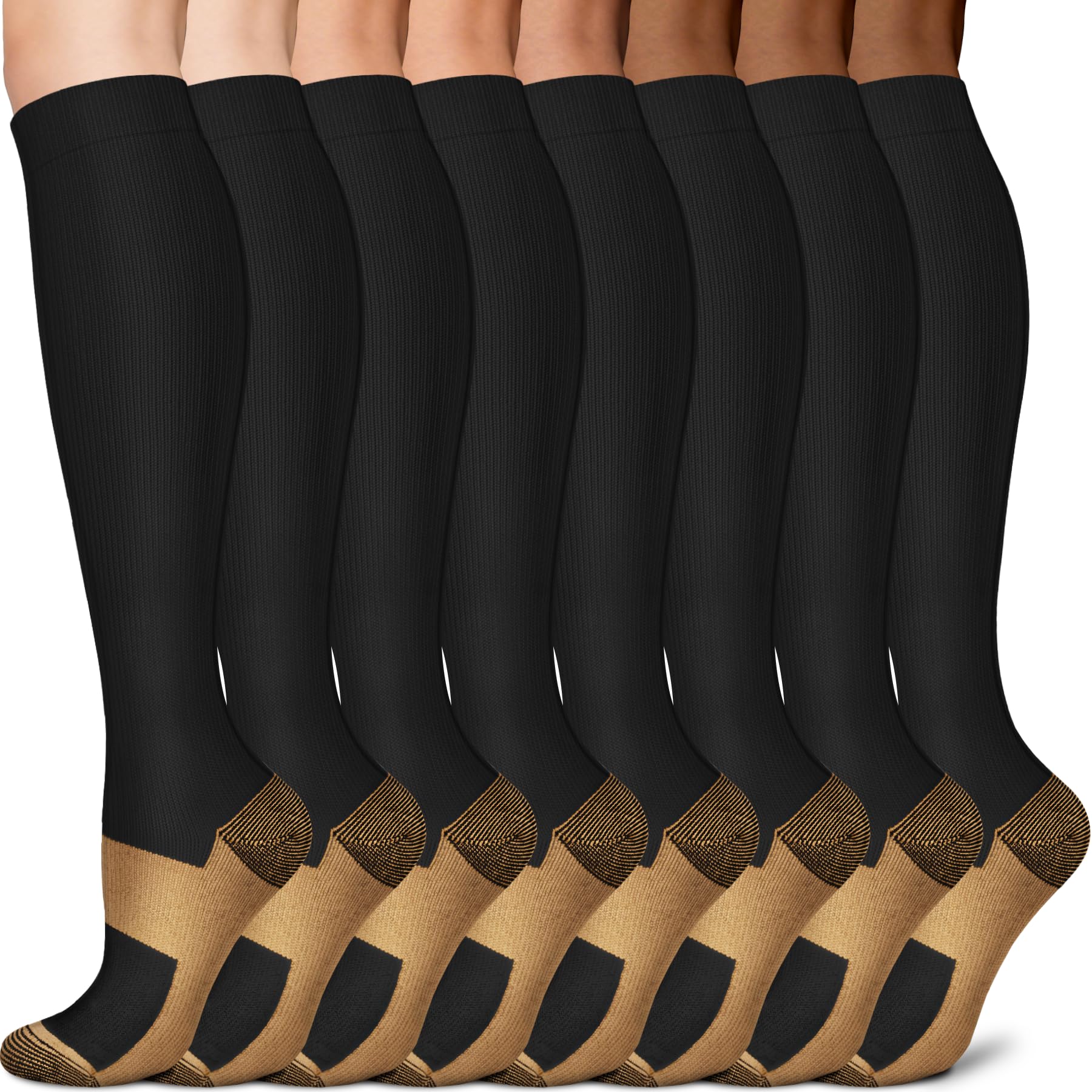
7. Sooverki 8 Pack
Stocking Up
Key Features
- Care: Hand wash only
- Material: 85% nylon, 10% polyester, 5% copper fiber
- Pairs per pack: 8 pairs
- Compression level: 15-20 mmHg
- Price: Midrange
Eight pairs is a lot of compression socks, and that is the point. The Sooverki pack is for the traveler who wants a pair for every day of a long trip, or for a household where several people need a sock they can grab without sorting. The 15-20 mmHg range is mild enough for all-day wear and easy to pull on, which makes it a sensible first compression sock for a lot of people.
The socks are thin and smooth under pants, and the colors are subdued enough for work clothes. We like the over-the-calf height for wearing with sneakers and loose trousers. The compression is not the firmest here, so if you need a strong squeeze for a long flight, look at the 20-30 picks instead.
There is a real spread in how these feel. Some pairs deliver a light, even squeeze; others feel closer to a regular sock, and a few develop holes at the toe after only a few wears. That inconsistency is why this is an also-consider rather than a top pick. If you want a low-cost stash for occasional travel, it is fine; if you need dependable compression, spend more on a pair with a firmer reputation.
This is the pack for a long trip with laundry access, or for a family that goes through socks quickly. It is not the pair to buy if you need one dependable sock for a single long-haul flight.
Pros
- Eight pairs for long trips
- Thin, smooth under pants
- Mild 15-20 mmHg everyday support
Cons
- Hand wash only
Stock up once and stop thinking about laundry: this eight-pack is the practical choice for long trips and shared households.
8. Bluemaple 6 Pack
Colorful Six-Pack

Key Features
- Material: Copper-infused
- Department: Women
- Pairs per pack: 6 pairs
- Price: Midrange
Bluemaple’s six-pack is the one we reach for when we want a compression sock that does not look like a compression sock. The colors stay bright after washing, and the six pairs make it easy to keep one in a carry-on, one in a gym bag, and one in the drawer without doing laundry every night. That is a small pleasure on a long trip, but it is a real one.
The sock itself is soft and comfortable, with a fit that stays up without rolling for most wearers. It is easy to get on and off, which is not a given in this category, and the unisex styling works with sneakers or pants. We like it for mild swelling and general travel comfort.
The weak point is durability. The heels and seams are where these socks tend to go first, and a few pairs develop holes before the rest of the pack has been worn. If you want a colorful, comfortable rotation sock and you are not asking it to last for years, it is a good value.
This is the pack for a traveler who wants variety and easy rotation. It is also a good choice for a shared household, where a six-pack disappears fast.
Pros
- Six bright, colorfast pairs
- Soft and comfortable for all-day wear
- Easy on and off
Cons
- No published mmHg range
The colors are the fun part; the six-pair value is why this pack stays in our rotation.
9. COOLOVER 6 Pack
Patterned Six-Pack
Key Features
- Material: Copper-infused
- Department: Women
- Package weight: 12.8 oz
- Pairs per pack: 6 pairs
- Price: Midrange
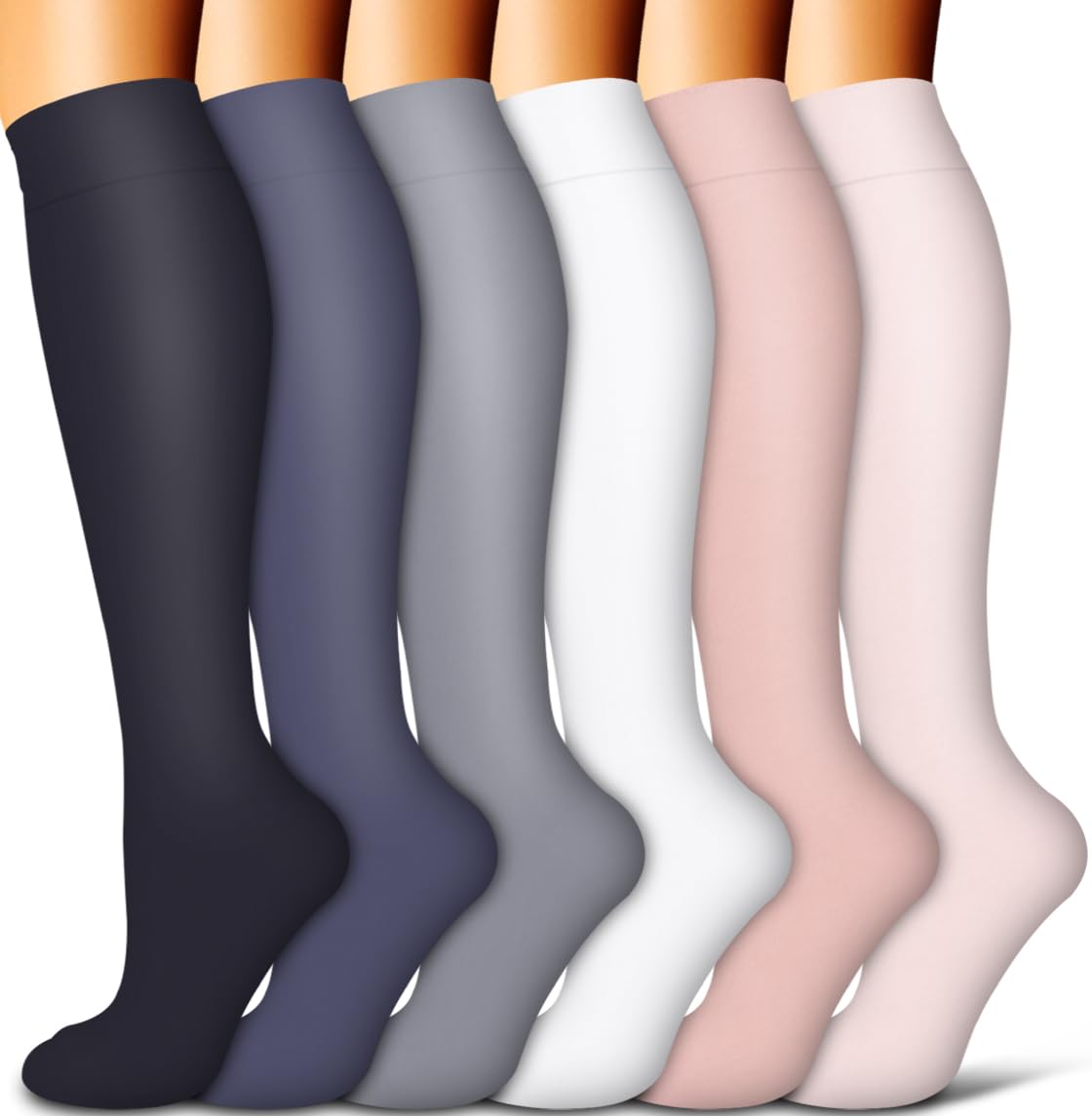
COOLOVER’s six-pack is for the traveler who wants compression socks to look like a choice rather than a chore. The patterns are the draw, but the fit is what keeps them in the bag: the toe box is roomier than many pairs here, and the sock stays comfortable through a long day of walking. We like the variety for mixing with casual clothes on a trip.
The compression is moderate and the fabric is soft, so these are easy to wear for hours without feeling clamped. They are also simple to pull on and off, which matters if you are changing in a hotel room or on a plane. The six-pair count makes them a good value for a family or a long trip.
The fit is not universal. Some travelers find the calf too tight and the sizing runs small, so check the chart before ordering. For a casual travel sock with a bit of personality, though, it earns its place.
This is the pack for a traveler who wants a roomier toe and a little color in the drawer.
Pros
- Six patterned pairs for variety
- Roomy toe box
- Soft, moderate compression
Cons
- No published mmHg range
If you want a patterned pack that feels roomier through the toe, this is the six-pair set we reach for.
10. FuelMeFoot 3 Pack
Best for Light Travel

Key Features
- Material: Copper-infused
- Department: Unisex adult
- Pairs per pack: 3 pairs
- Price: Budget
FuelMeFoot’s three-pack is the lightest-feeling option in this group. The socks are thin enough to wear under regular pants, and the compression is firm enough to notice without feeling like a tourniquet. We like them for a short flight or a travel day when you want a little support but do not want to be aware of your socks the whole time.
The fit is the tricky part. The sock runs long, so shorter travelers may find the top sitting above the knee or bunching behind it; the foot is also roomy, which is comfortable for some and sloppy for others. For the price, that is a fair trade if you are using them for a weekend trip rather than a two-week trek.
These are not the socks to buy if you want one pair to last through years of washing, but they are fine as a cheap rotation pair for occasional travel. If you have a long flight or a history of swelling, go with a firmer pair like Physix Gear or SB SOX.
This is the pack for a short trip, a spare pair in the car, or a traveler who wants to try compression without a big commitment.
Pros
- Lightweight under pants
- Firm but not restrictive compression
- Three-pair pack for short trips
Cons
- No published mmHg range
A light, easy-on three-pack for travelers who want compression without a medical-grade squeeze.
How We Tested Travel Compression Socks
We built the shortlist by reading through listings for anything that stated a compression level and a knee-high cut, then dropped pairs that gave no calf measurement or came in only one universal size. From there we ordered 16 pairs, spanning both 15-20 and 20-30 mmHg and including several multipacks, and put them into rotation for four months.
Testing happened where these socks actually live: two cross-country red-eyes, a nine-hour drive, a week of twelve-hour standing shifts, and a few weekend runs. I pulled each pair on before dawn and timed it, and anything that took more than about half a minute or left me winded lost ground on ease of use. On travel days I measured my ankle and calf in the morning and again at night to see which pairs genuinely kept swelling down.
Fit and length got checked in a mirror as much as by feel: whether the heel pocket landed under my heel or halfway up my ankle, whether the top edge sat below the knee or rolled into a tourniquet, and whether the toe seam pressed on my longest toe. A second tester with wider calves tried every pair that claimed a wide-calf fit.
Durability meant washing. Each pair went through at least ten machine wash-and-dry cycles, and I noted pilling at the heel, whether the cuff snapped back or went slack, and whether the compression still felt graduated or had gone uniform. Because so many of these arrive in multipacks, we also weighed cost per pair against how the cheapest ones held up.
How to Choose Compression Socks for Travel
The right travel pair is the one you can put on without a fight and forget about by the time the drink cart arrives, so start with compression level and fit, not the color of the pack.
Pick the compression level for your trip
For most healthy travelers, 15-20 mmHg is enough to take the edge off long sitting and mild swelling. It is easier to pull on and more comfortable for all-day wear, which is why we suggest it for first-timers and shorter flights. A 20-30 mmHg sock gives firmer support for longer travel days or more pronounced swelling, but it takes more effort to put on and can feel restrictive if you are not used to it.
If a clinician has given you a target, buy only a sock that states that range. Do not guess from a product’s medical label or from how tight it feels in the package. For everyone else, choose 15-20 for comfort and 20-30 when you want a firmer hold and do not mind the extra effort.
Fit by calf and shoe size
Compression socks live or die by calf circumference, not by your usual clothing size. Measure the widest part of your calf and compare it with the brand’s chart, then check the shoe-size range for the foot. A sock that is too small will bind at the top and leave deep marks; one that is too large will slide down and stop compressing where it should.
If you are between sizes, do not automatically size up for a firmer squeeze. A larger sock does not compress harder; it just moves the pressure in the wrong places. Use the calf measurement first, then the shoe size, and only then consider the length if you are short or long-legged.
Length and stay-up matter
A travel sock should finish below the knee, not bunch behind it or roll down the calf. The top band needs to sit flat without digging in, and the heel should land where your heel actually is. A sock that slides down is not just annoying; it stops delivering graduated pressure where you need it.
Look for a contoured calf and a top band that is wide enough to stay put without pinching. If you are short, check the listed length before buying; if you have a wide calf, check the size chart rather than relying on stretch.
Ease of use is a real feature
The best compression sock is the one you actually wear. A 20-30 pair can take both hands and a bit of patience to get over the heel, especially first thing in the morning. A 15-20 pair is usually quicker. If you have limited hand strength, arthritis, or a very early flight, that difference matters more than a few mmHg.
Put the sock on before your legs have had a chance to swell, and work it up from the heel rather than yanking the top. A sock that goes on easily is more likely to come off easily at security or in a hotel room, which is its own kind of travel convenience.
Care and durability
Compression socks are elastic garments, and heat is their enemy. Hand wash or use a delicate cycle in cool water, then air dry; a hot dryer can turn a supportive sock into a loose tube. If you are traveling with one or two pairs, choose a sock you can rinse in the sink and wear again the next day.
Check the heel and toe first for thin spots. Those are the places a travel sock usually goes first, especially if you are walking through airports in them. A pack of six or eight is convenient, but only if the pairs hold their shape after a few washes.
Frequently Asked Questions
Do compression socks really help on a plane?
They can help. Graduated pressure squeezes the ankle more than the calf, which can reduce swelling and that heavy-leg feeling during long sitting. For most travelers, 15-20 mmHg is enough; if you have a history of blood clots, varicose veins, or a prescribed level, confirm the sock with your clinician before flying.
Put them on before boarding and keep them on until you are through the airport, rather than waiting until your legs already feel swollen.
How tight should travel compression socks feel?
Snug and supportive, not painful. You should feel even pressure from ankle to calf, with no numbness, tingling, or a band cutting into the back of the knee. If your toes change color or the sock rolls down into a tight ring, take it off and check the fit.
How many pairs do I need for a week-long trip?
Two or three is usually enough if you rinse them in the sink and air dry overnight. A six- or eight-pack is better for a longer trip, a shared household, or anyone who would rather not do laundry on vacation.
Pack one extra pair in your carry-on so a lost bag does not leave you without compression for the flight home.
Final Verdict
Physix Gear is the pair we recommend first for travel: it delivers a firm 20-30 mmHg hold, and that is the level we want when a flight is long enough to make your legs feel heavy. If you want an easier pull-on and milder pressure, CHARMKING is the better first pair; for a cushioned foot on a long-haul flight, SB SOX is the one we pack.
The deciding question is simple: choose 20-30 for firmer support, 15-20 for comfort and ease.