This post contains affiliate links. We may earn a small commission when you buy through our links — at no extra cost to you.
Ask anyone who’s travelled through the UK or Europe: a jacket that’s both light enough to forget you’re carrying it and tough enough to handle a sudden downpour is worth its weight in gold. Yet the labels “waterproof” and “packable” are tossed around so loosely that many travellers end up soaked or wrestling with a coat that swallows half their bag.
This guide focuses on the features that actually decide whether a jacket earns its place in your suitcase: true packability (folds into its own pocket), realistic water resistance (not just a spray-coated label), and warmth without bulk. You’ll find options for every travel style, from hole-in-the-wall exploration to city café-hopping. Above all, you’ll learn why a jacket that squashes into its own pocket beats a generic “lightweight” tag every time.


1. Outdoor Ventures Packable Puffer
Best for All-Round Travel
Key Features
- Water Resistance: Water-repellent, light rain
- Packability: Folds into own pocket
- Insulation & Warmth: Synthetic fill, 30–40°F
- Hood: Elasticised hood
- Price: Mid-Range
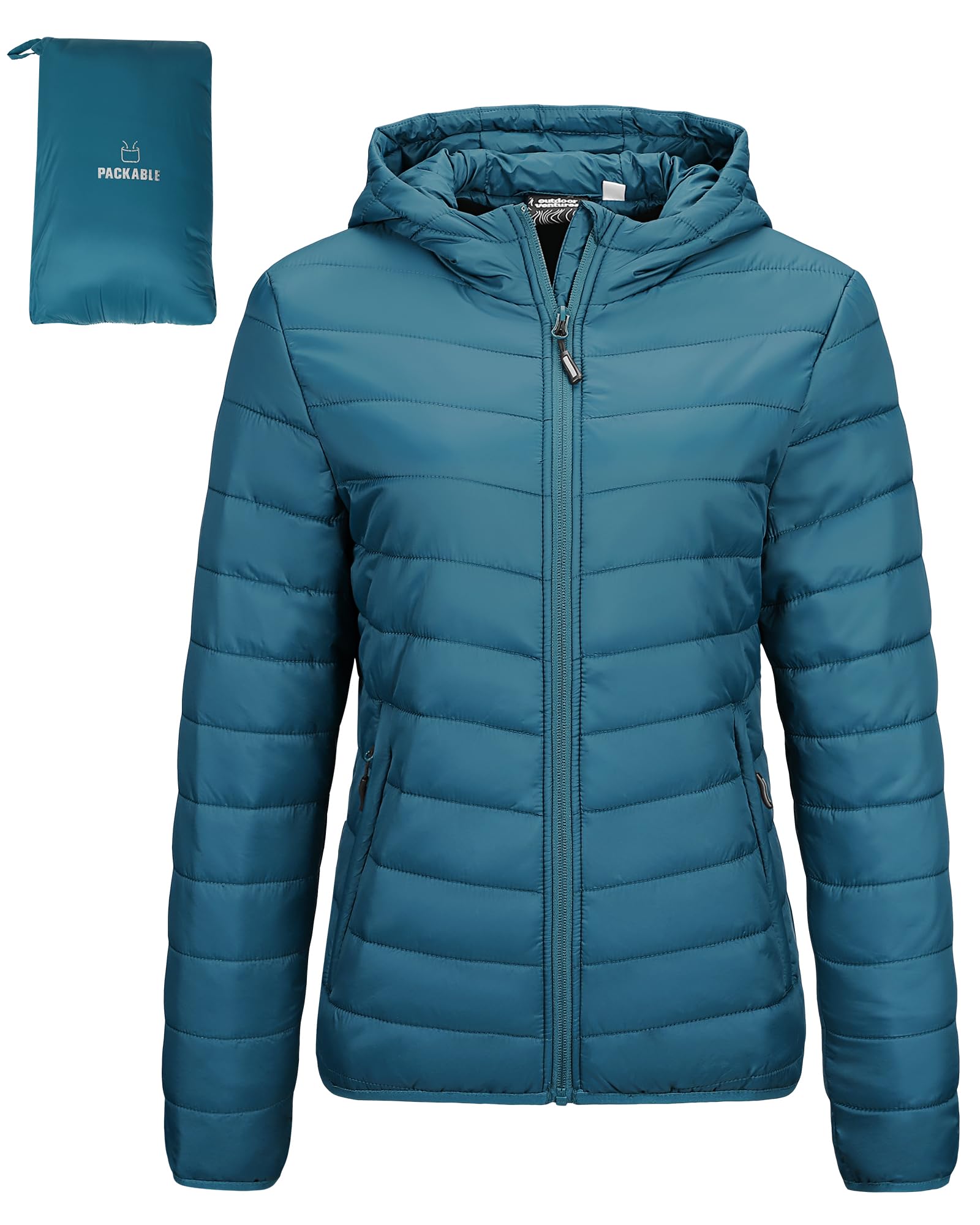
This jacket folds into its left pocket and emerges as a small pillow-sized bundle, freeing up carry-on space without sacrificing warmth. The synthetic fill keeps you comfortable down to 30–40°F, making it a solid mid-layer under a rain shell or a standalone piece for cool city days.
The water-repellent finish handles a light shower or drizzle, but sustained rain will soak through — this isn’t a waterproof jacket. That tradeoff is manageable for travellers who pack it alongside a dedicated rain shell or stick to variable weather where sun and showers alternate.
Best suited for one-bag travellers heading to cool climates, or anyone who wants to layer without bulk. If your trip involves prolonged wet weather, pair this with a waterproof shell rather than relying on the puffer alone.
Pros
- Keeps you warm without bulk — packs down to a pillow-sized bundle for easy carry-on storage
- Featherlight construction that doesn’t weigh you down during a full day of sightseeing
- Self-packing pocket and included storage bag make it a true travel companion
Cons
- In persistent rain the jacket will wet through — needs a rain shell for wet conditions
- Fit can vary between sizes; ordering true to size may still result in a boxy or snug feel
For one-bag travellers who need a single jacket that handles cool weather and light rain, this packs more utility than its size suggests.
2. Outdoor Ventures Packable Rain
Best for Wet Weather Layering
Key Features
- Water Resistance: Waterproof, moderate rain
- Packability: Packs into own pouch
- Insulation & Warmth: None (shell only)
- Hood: Adjustable hood
- Price: Mid-Range
The Outdoor Ventures Packable Rain Jacket layers easily over a fleece or puffer, delivering waterproof coverage for light-to-moderate rain while armpit vents prevent overheating on active pursuits. It packs into its own pouch, making it a low-bulk staple for one-bag travel. Multiple zippered pockets — including an internal one — keep essentials accessible. There’s no insulation built in, so you supply the warmth, but that’s exactly why it stays compact and breathable for hiking, cycling, and cool-day layering. It’s not a stand-alone winter coat, but as a rain shell for travellers who already pack a mid-layer, it handles changing weather without wasting space.
Pros
- Folds into its own compact pouch for minimal pack space — ideal for one-bag travel.
- Waterproof in light-to-moderate rain, keeping you dry on day hikes and city trips.
- Armpit vents and multiple zippered pockets (including internal) add active-use convenience.
Cons
- Shoulders run narrow — sizing up helps if you plan to wear thicker mid-layers.
- Extended heavy rain can cause seepage, making it less suited for all-day downpours.
For active travellers who pack their own insulation, this rain shell’s waterproofing, ventilation, and packability make it a sharp choice — just size up if you layer thickly.
3. Amazon Essentials Puffer
Best for Budget Insulation
Key Features
- Water Resistance: Water-resistant, light rain
- Packability: Packs into included bag
- Insulation & Warmth: Synthetic fill, to 40°F
- Hood: No hood
- Price: Budget
True packability at a budget-friendly price, with a separate stuff sack that keeps the jacket compact in your daypack. While the top pick stuffs into its own pocket, this jacket’s separate bag saves you significant cash and adds minimal bulk. The synthetic fill delivers surprising warmth down to around 40°F, and it layers comfortably under a waterproof shell when light drizzle appears. It’s the right pick if you already own a rain jacket and just need a packable insulating layer that won’t eat luggage space. Sizing can run small—order up if you plan to wear a sweater underneath—and there’s no hood, so it’s not a standalone piece for wet weather.
Pros
- Extremely lightweight and packs into its own carry bag for effortless travel.
- Impressive warmth for the weight, comfortable down to around 40°F.
- Strong value compared to pricier packable puffers.
Cons
- Sizing may run small; ordering up helps if you plan to layer.
- Water resistance is minimal—light snow or drizzle at best; not for sustained rain.
For the price, this is the packable puffer to grab when you need a light thermal layer and already have a rain shell in your bag.
4. Columbia Glennaker Lake II
Best for Men’s Light Rain
Key Features
- Water Resistance: Water-resistant, light rain
- Packability: Packs into hand pocket
- Insulation & Warmth: None (shell)
- Hood: Stowaway hood in collar
- Price: Budget
Unlike an insulated puffer, the Glennaker Lake II is a pared-back rain shell that packs into its own hand pocket — no separate stuff sack needed. Its featherlight construction and self-stowing design make it one of the easiest jackets to toss into a daypack as a just-in-case layer, and the stowaway hood adds coverage without bulk.
It fits travel where showers are brief and you’re already carrying an umbrella or a warmer midlayer. The water-resistant fabric repels light rain and wind effectively, but once drizzle turns steady, fabric wet-out occurs and moisture can seep through. This is a backup, not a primary defense against heavy rain.
Pros
- Extremely lightweight and effortless to stow away in a bag.
- Excellent value, delivering solid quality from a well-known brand at a budget price.
- Good wind resistance and light weather protection for brief showers.
Cons
- Generous cut runs large; may look baggy without substantial layering underneath.
- Water resistance falls off in moderate rain — fabric can wet through quickly once drizzle turns steady.
For light travel with an umbrella as primary rain defense, this jacket adds a packable wind-and-drizzle layer at a price that’s easy to justify.
5. Diamond Candy Rain Jacket
Best for Cool Damp Weather
Key Features
- Water Resistance: Water-resistant, light rain
- Packability: Not packable
- Insulation & Warmth: Fleece lining, cool weather
- Hood: Adjustable hood
- Price: Budget
The fleece lining is the standout feature — it adds enough warmth for cool drizzly walks without requiring a mid-layer. The water-resistant shell holds up in light rain, keeping you dry on short outings. Unlike a packable puffer, this jacket doesn’t compress into a pouch; it stays bulky and demands space.
For day trips and road travel, where luggage room isn’t tight, that bulk is an acceptable trade-off for the convenience of one-layer warmth and rain protection. Just be aware that sizing runs small — order up, especially if you carry weight in your hips.
Pros
- Fleece lining adds warmth without extra bulk for cool-weather comfort.
- Water resistance handles light-to-moderate showers effectively.
- Lightweight shell feels easy to wear and move in.
Cons
- Sizing runs small through the hips — ordering a size up is the only fix.
- Water protection is for light rain only; sustained heavy rain will soak through.
This is the right jacket for cool, rainy day trips when luggage space isn’t at a premium and you want the simplicity of built-in warmth. Skip it if you need a compressible travel layer.
6. LOMON Trench Raincoat
Best for City Style Rain
Key Features
- Water Resistance: Water-resistant, light rain
- Packability: Lightweight, rolls flat
- Insulation & Warmth: Light lining
- Hood: Hooded
- Price: Mid-Range
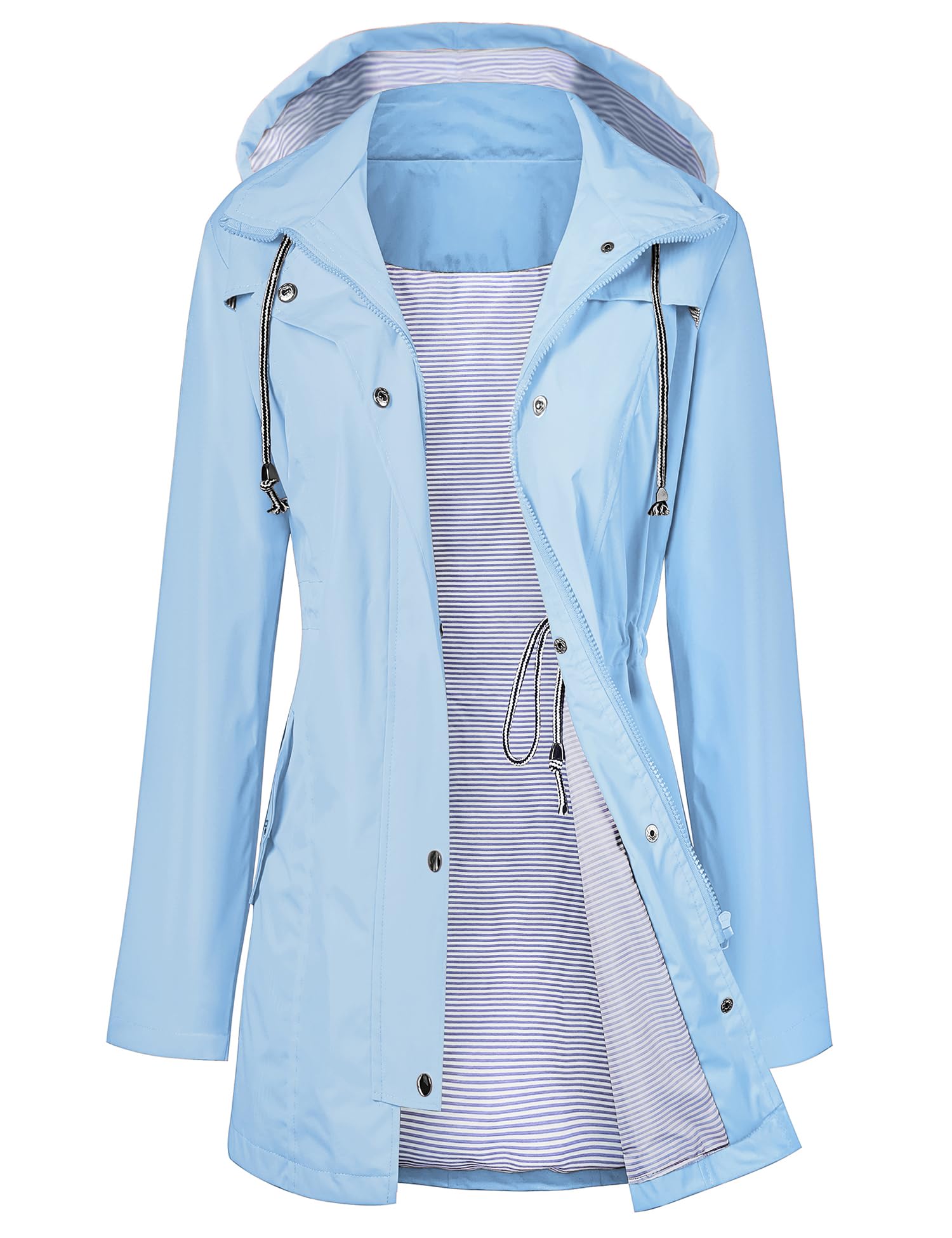
Where packable puffers trade form for warmth, the LOMON trench focuses on a feminine silhouette and full-length coverage that packs flat for city travel. The lightweight shell rolls compactly into a main bag, though it lacks its own pouch. Water resistance handles light showers and drizzle, making it suited for urban sightseeing, not sustained rain. The cut runs small across the shoulders—sizing up is the smart move, especially with a sweater underneath. This is the raincoat for travellers who want to look sharp transitioning from museum to dinner, accepting light-weather limits for the sake of style.
Pros
- Flattering adjustable waist creates a tailored silhouette.
- Stylish enough to wear to dinner without looking like outdoor gear.
- Lightweight and packs flat, despite no dedicated pouch.
Cons
- Sizing runs small; plan to order up, especially if layering.
- Water resistance is adequate only for light showers; not built for sustained downpours.
A stylish urban raincoat that favours a polished look over heavy-weather protection—right for city travellers who pack a separate serious shell or umbrella for downpours.
7. 33,000ft Packable Rain Jacket
Best for Active Outdoor

Key Features
- Water Resistance: Waterproof, moderate rain
- Packability: Packs into own pouch
- Insulation & Warmth: None (shell)
- Hood: Adjustable hood
- Price: Mid-Range
This jacket packs into its own pouch and includes zippered underarm vents plus multiple secure pockets — a practical design for cycling and hiking. Waterproofing holds up in moderate rain but can let moisture through during sustained downpours, trailing the top rain shell. For intermittent showers, the ventilation and storage make it a useful travel layer.
Pros
- Packs into its own small pouch — disappears into a backpack or pannier
- Zippered armpit vents and multiple secure pockets keep you cool and organized on the move
Cons
- Waterproofing can fail in prolonged downpours, with arms potentially soaking through after about 30 minutes
For cyclists and hikers who value ventilation and compact storage, and rarely face prolonged downpours, this jacket delivers at a mid-range price.
8. DECKTIN Raincoat
Best for Casual Daily Wear

Key Features
- Water Resistance: Water-repellent, light rain
- Packability: Not packable, lightweight
- Insulation & Warmth: Light lining
- Hood: Detachable hood
- Price: Budget
The DECKTIN raincoat is a lightweight, comfortable outer layer that repels water effectively in light showers, with a detachable hood adding flexibility. It’s a practical, budget-friendly option for daily use around town. However, it isn’t packable — it lacks a stuff pocket and doesn’t compress down, making it a poor fit for travel where luggage space is tight.
Pros
- Very lightweight and easy to wear
- Solid light‑rain protection with a comfortable fit
Cons
- Not packable — doesn’t compress into a pocket or include a storage pouch
A dependable lightweight coat for grabbing on the way out the door in changeable weather, as long as you don’t need to stuff it into a bag. Skip it if packability is a priority.
9. Columbia Switchback IV
Best for Minimalist Light Rain
Key Features
- Water Resistance: Water-resistant, light rain
- Packability: Lightweight, no pouch
- Hood: Stowaway hood
- Price: Low-Mid
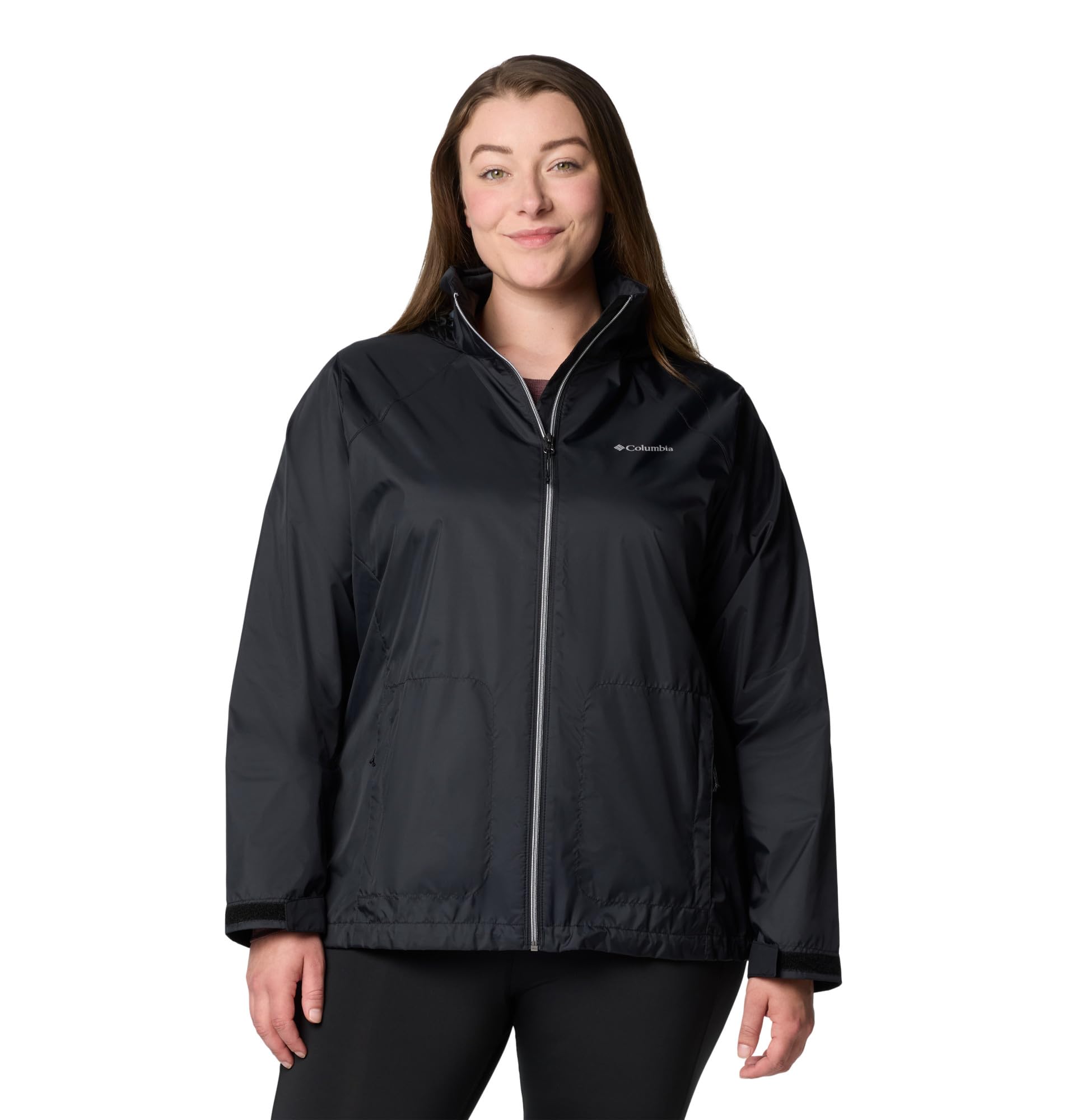
The Switchback IV excels at disappearing into a daypack—barely registering on the scale and stashing its own hood in the collar for sudden showers. For travel, though, the lack of a dedicated stuff sack means it takes up more room than truly packable jackets. The fabric’s thinness also limits confidence in extended rain.
Pros
- Featherlight — easy to toss in a bag for minimal weight.
- Handles light rain well for short errands or trails.
Cons
- Sizing runs small — may need to size up for layering or a relaxed fit.
For the traveller who values absolute minimum weight and only needs a shell for a brief sprinkle, the Switchback IV does the job—just don’t expect it to compress into a pouch or fend off persistent rain.
How to Choose
A jacket’s true packability (folds into its own pocket) and realistic water resistance matter far more for travel than a generic “lightweight” tag.
Water Resistance: Don’t Trust the Label Alone
Many jackets sold as “waterproof” rely on a thin spray coating that fails after 30 minutes of steady rain. Look for taped seams and a higher hydrostatic head rating if you’ll face UK-style downpours. Even then, a packable rain shell with a dedicated membrane will outperform a softshell in sustained wetness.
Packability: Pouch vs. Lightweight
A jacket that truly packs into its own pocket saves precious suitcase space and stays with you during day trips. “Lightweight” coats that don’t compress can still swallow a third of your carry-on. Look for the phrase “packs into its own pocket” or an included stuff sack—these designs compress to the size of a water bottle, letting you toss it into a daypack without a second thought.
Insulation: Warmth Without Bulk
Synthetic fills like PrimaLoft or generic polyester insulate even when damp, making them safer than down for wet European climates. A puffer rated to 40°F works as a standalone in spring, while an uninsulated shell is ideal for layering. The hidden trade-off: fleece-lined jackets provide cosy warmth but rarely compress well, eating bag space.
Hood: Adjustable Coverage Matters
A stowaway hood that lives in the collar is handy for sudden showers, but it’s often flimsy in wind. An elasticised or adjustable hood with a stiff brim keeps rain off your face without needing one hand to hold it. For urban travel, a detachable hood adds versatility—you can look polished when the sun comes out.
Ventilation: Staying Dry from Inside Out
Waterproof jackets trap sweat fast, leaving you clammy on a brisk walk. Look for armpit zips or mesh-lined backs that let heat escape. Without them, you’ll end up as wet from condensation as from the rain outside—a common complaint among hikers in waterproof shells.
FAQ
How waterproof are packable travel jackets really?
Most packable jackets labelled “waterproof” actually only resist light rain; the thin fabric and lack of taped seams means water seeps through after 30–40 minutes in a downpour. For sustained UK rain, look for a shell with a waterproof membrane and sealed seams. Even then, armpit vents help prevent internal condensation, which can leave you feeling damp.
Can I use a packable puffer jacket in light rain, or do I need a separate rain shell?
Packable puffers typically have a water-repellent finish that beads off drizzle, but they aren’t built for persistent rain. If you’re travelling to places like the UK where showers last hours, pair your puffer with a packable rain shell—the shell handles rain, the puffer keeps you warm underneath.
Why does my rain jacket wet out after 30 minutes of rain?
“Wetting out” happens when the jacket’s outer water-repellent coating wears off or is overwhelmed, allowing the fabric to soak through. Even waterproof membranes can fail if the outer layer isn’t breathable or if seams aren’t taped. To avoid it, choose a jacket with a durable water-repellent (DWR) treatment that you can refresh, and ensure seams are fully sealed.
Should I size up in travel jackets to fit a sweater underneath?
Yes, many travel jackets run small or fit snugly, so sizing up is a smart move if you plan to layer a fleece or thicker sweater. Check the specific brand’s fit reviews—some consistently run large, but for brands like LOMON or Diamond Candy, ordering one size up is almost universal advice.