This post contains affiliate links. We may earn a small commission when you buy through our links — at no extra cost to you.
Travel with a baby can turn a stroller into a burden — the gate-check line, the broken elevator, the train platform with no ramp. A carrier keeps your baby close and your hands free for a boarding pass or a suitcase handle. The wrong one can make a long day miserable if it’s fussy to put on, hot against your back, or hard to adjust as your baby grows. We tested 12 carriers over eight months on flights and trains.
The winners were easy to put on alone in a narrow aisle, comfortable past the first hour, and adjustable between my husband and me without waking the baby. I checked buckle security and whether the baby stayed high and close after a long walk, then noted shoulder pressure, lumbar support, and waistband dig. Heat and fabric quality showed up fast: thick panels turned humid afternoons into sweat tests, and fabric pilled, faded, or looked dingy after washing. Value meant versatility, not price — one carrier that handled a newborn, a toddler, and a full travel day.
Our Top Picks



The Best Baby Carrier for Travel, Reviewed
1. Infantino Flip 4-in-1
Best Overall
Key Features
- Care: Machine wash
- Weight range: 8–32 lb
- Carrier weight: 1.1 lb
- Carry positions: 4 modes
- Price: Budget
At 1.1 pounds, the Flip 4-in-1 is the carrier that disappears into a diaper bag and still gives you four ways to carry. The seat adjusts through the infant and toddler stages, so it can move from a front-facing newborn carry to a back carry for a bigger baby without a second carrier.
We like that combination for travel because it keeps packing simple: one soft structured carrier, one machine-washable body, and a set of padded shoulder straps and a waist belt that are enough for errands and airport walks. The four modes mean you are not stuck if your baby suddenly decides they want to face out, and the adjustable head support gives a smaller baby a more comfortable fit.
The Flip is not the plushest carrier here, but it is the one we recommend first for most families who want a lightweight travel carrier that does not cost a lot. For a first carrier or a backup that stays packed, that is a useful kind of ordinary.
Pros
- Very light 1.1-pound body
- Four carry modes for growing babies
- Machine-washable polyester-cotton body
- Budget-friendly for a full-featured carrier
Cons
- Back support feels limited on long carries
- Tops out at 32 lb for toddlers
The Flip is our default travel carrier because it is light, compact, and easy to get on solo, with four positions for the infant-to-toddler years.
2. Ergobaby Omni Classic
Best for Long Travel Days
Key Features
- Fabric: Mesh
- Weight range: 7–45 lb
- Carrier weight: 1.7 lb
- Carry positions: 4 positions
- Price: Premium
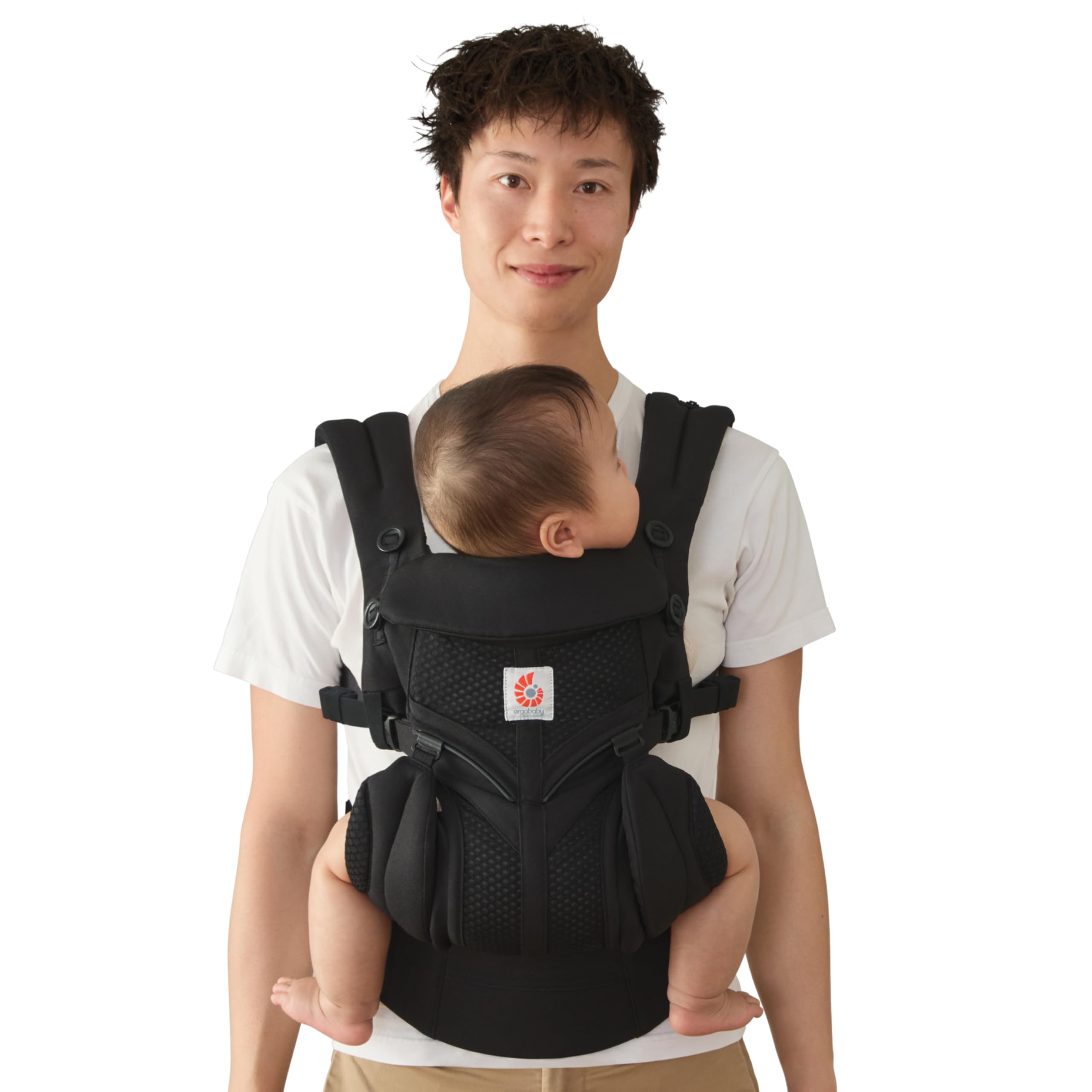
The Omni Classic is what we reach for when the day is mostly walking: the mesh body breathes, the lumbar panel carries some of the load, and the seat adjusts from 7 to 45 pounds.
What we appreciate most is the flexibility in the straps. You can set it up cross-back or H-back, which matters when two caregivers with different frames share one carrier on a trip. The four positions and the three-way head support also mean it can go from a sleeping newborn to a forward-facing toddler without a second purchase.
It is a more substantial carrier than the Flip, and that is the point: the extra structure is what makes a long museum day or a hike feel manageable. If your travel style is mostly short hops and crowded transit, the bulk may not earn its place, but for a full day on your feet it does.
Pros
- Breathable mesh body for warm days
- Lumbar support for long walking days
- Cross-back or H-back strap options
- Grows from 7 to 45 lb
Cons
- Premium price
- Not the quickest to get on solo
We choose the Omni when the day is mostly walking: breathable mesh, real lumbar support, and a seat that grows to 45 pounds.
3. BabyBjörn Carrier Mini
Best for Newborns
Key Features
- Fabric: 3D jersey
- Weight range: 7–24 lb
- Carrier weight: 1.76 lb
- Carry positions: 3 front positions
- Price: Midrange
The BabyBjörn Mini is built for the newborn phase, and it shows: three front-carry positions, soft 3D jersey, and a simple buckle layout that is easy to put on without a second person. There is less carrier to manage in a security line or a narrow airplane aisle than with a full structured carrier.
The fabric is gentle against newborn skin, and the adjustable seat and head support give you a place to start before you add a wrap or a bigger structured carrier. The front-carry design keeps the carrier close to your body and leaves your hands free for a boarding pass or a coffee. The front carry is also easy to adjust between caregivers, which helps when one of you wears the baby through the airport and the other takes over at the gate.
That focus is the appeal: it is the one we hand to a grandparent or a partner who has never used a carrier before. For a newborn trip, the simplicity is worth more than a long feature list.
Pros
- Soft 3D jersey fabric
- Quick to put on solo
- Three front-carry positions
Cons
- Outgrown at 24 lb
- Minimal back support
We like the Mini best for the newborn months because it is the easiest carrier here to put on and take off, with soft fabric and a simple front carry.
4. Momcozy PureHug
Best Value
Key Features
- Material: 100% cotton
- Back support: EVA lumbar panel
- Weight range: 7–44 lb
- Carrier weight: 1.65 lb
- Price: Midrange
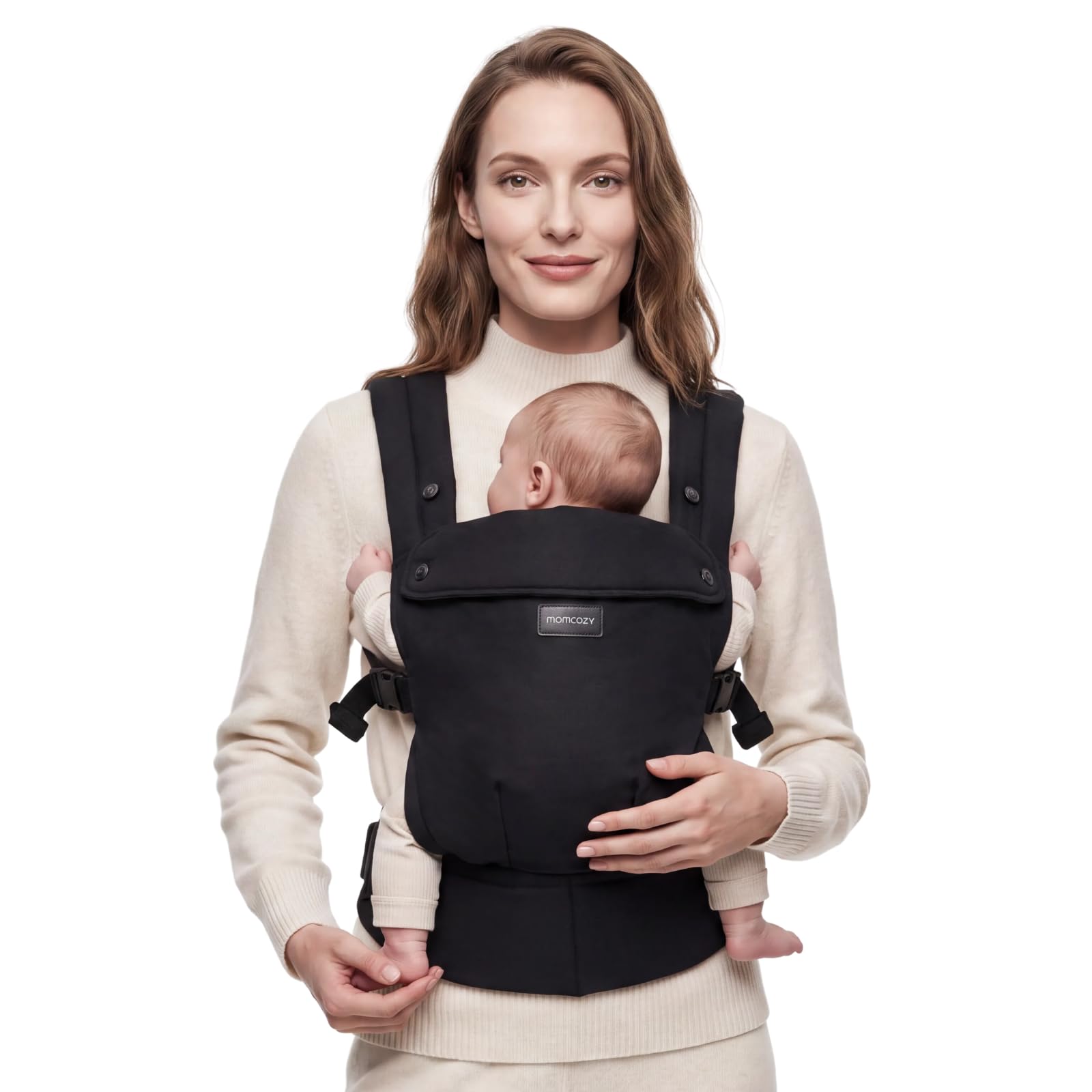
The PureHug pairs a 7-to-44-pound seat with a wide EVA waist panel and X-shaped back straps that pull the load across your back rather than straight down your shoulders.
We like the lumbar support for travel days that involve a lot of standing and walking. The cotton body is machine washable, and the three sizing positions let you adjust the seat as your baby grows. The padded waistband is the part we notice most on a long queue, because it keeps the seat from digging into your hips. The X-back design is also easier to share between caregivers of different sizes than a fixed H-back.
The PureHug is not the softest fabric here, but that is the trade-off for a carrier that covers a broad weight range without a premium price. What sells it is the combination of a broad seat and a waist panel that actually feels padded, without the bulk of the premium carriers.
Pros
- Broad 7–44 lb weight range
- Padded EVA lumbar support
- Machine-washable cotton body
Cons
- Leg openings feel wide for small babies
We recommend the PureHug for families who want a broad weight range and real lumbar padding without a premium price.
5. Ergobaby Embrace
Best for Packing Light
Key Features
- Fabric: Soft knit
- Weight range: 7–25 lb
- Carrier weight: 1 lb
- Carry positions: 2 positions
- Price: Midrange
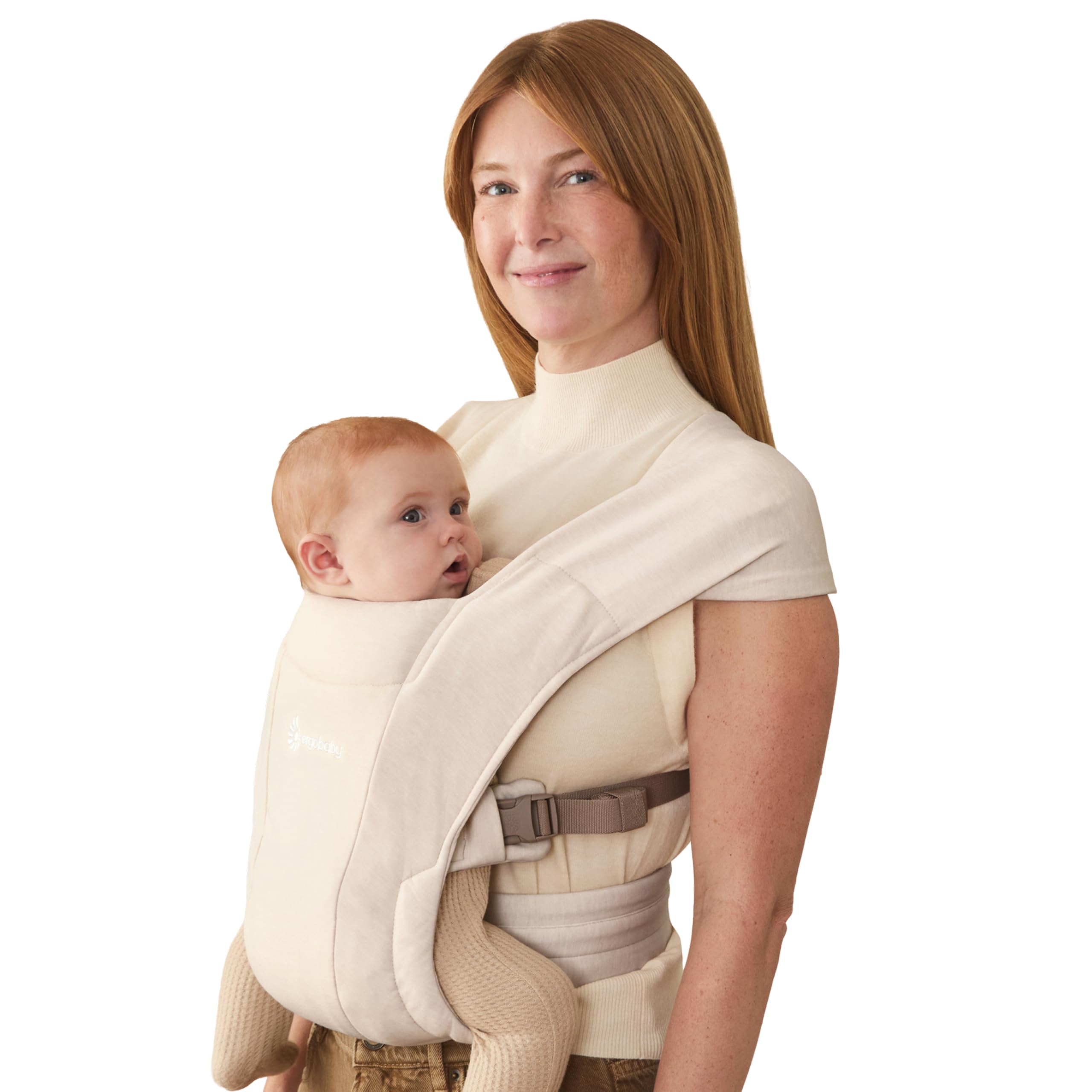
Compared with the Omni, the Embrace gives up some structure and gains a much smaller packed shape. It folds down small enough to live in a diaper bag, which is exactly what we want for a newborn trip where luggage space is tight.
At 454 grams, it is one of the lightest structured carriers here, and the soft knit body packs down without a frame. The fabric is soft against newborn skin, and the adjustable panel gives the seat a little room to grow.
The two-position design is simple enough to put on without a second person, and the cross-back straps keep the carrier close without a lot of hardware. The knit molds to your body, so it feels more like a soft shirt than a framed carrier.
For a newborn trip where space matters, this is the carrier we pack; it is a specialist, and it does its job without a lot of fuss.
Pros
- Folds small for a diaper bag
- Light 454-gram body
- Soft knit for newborns
Cons
- Outgrown at 25 lb
- Little back support
The Embrace is the one we pack when space is tight: soft, compact, and simple for a newborn, with a first-year focus.
6. KeaBabies Wrap
Best Wrap for Travel
Key Features
- Closure: Tie
- Material: Stretch fabric
- Weight range: 7–35 lb
- Carrier weight: 1.1 lb
- Price: Budget
A tie wrap has a learning curve, and the KeaBabies is no exception: you are working with a long piece of stretch fabric, not a buckle-and-click carrier. Once it is on, though, the fabric hugs a newborn close and distributes the weight across both shoulders.
We like it for travel because it packs down to almost nothing and gives you a secure, custom fit without hard hardware. The stretch is forgiving enough to tie snugly, and the long length means different caregivers can use the same wrap. It is also machine washable, which matters on a trip.
For a newborn who wants to be held constantly, that stretch is the point: it creates a snug, womblike carry that a structured carrier cannot match. We treat it as a specialist for the newborn phase rather than the only carrier in the bag.
Pros
- Packs down to almost nothing
- Soft, stretchy fabric
- Secure custom tie fit
Cons
- Can get hot in warm weather
- Fit runs short for plus-size wearers
We like the KeaBabies for newborn trips because it packs small, feels soft, and ties to a secure fit.
7. Tushbaby Original
Best for Quick Toddler Stops
Key Features
- Storage: 5 pockets + bottle holder
- Weight range: 8–45 lb
- Carrier weight: 1.98 lb
- Carry positions: Hip carry
- Price: Midrange
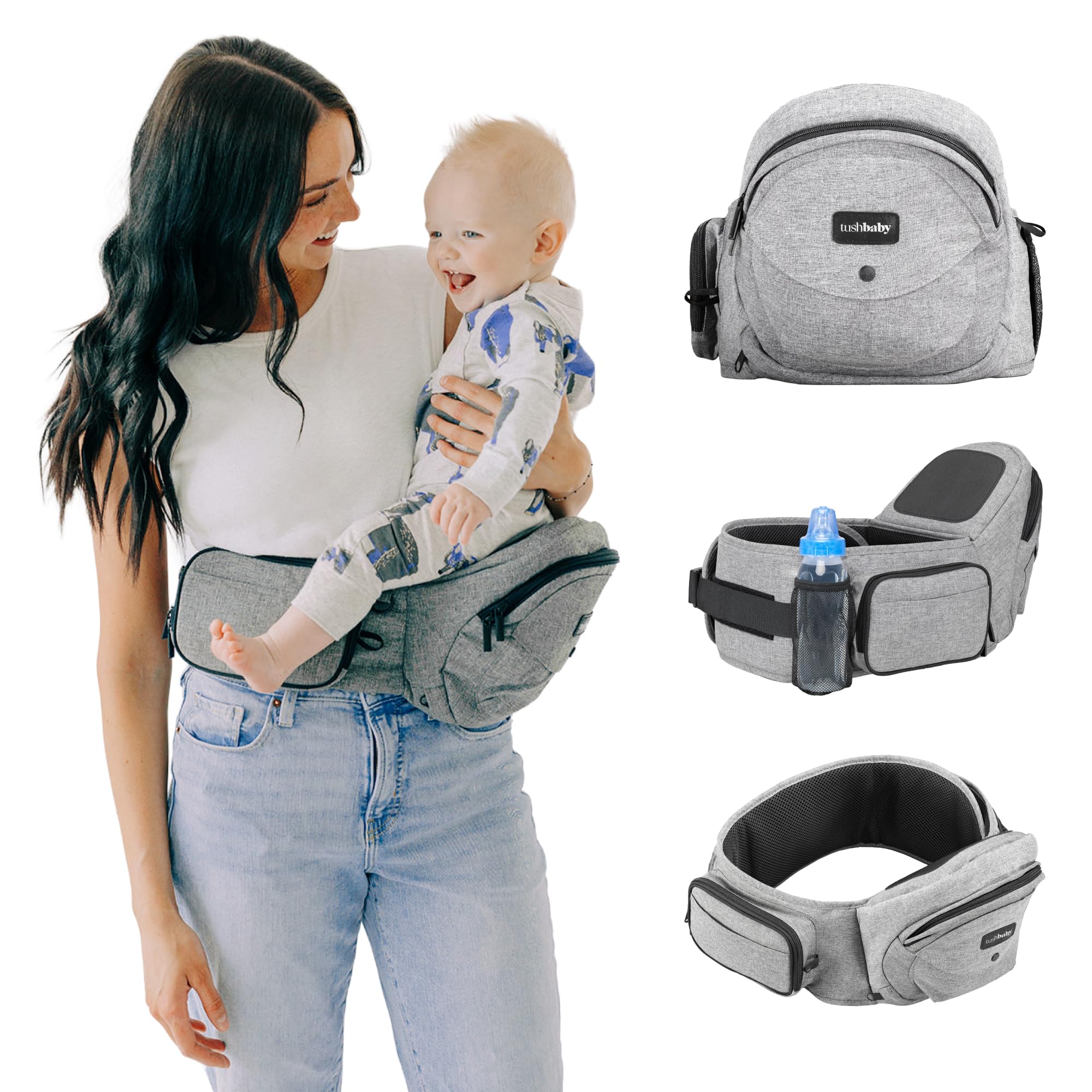
Picture a toddler who wants up, then down, then up again in the middle of an airport concourse. The Tushbaby is built for exactly that: a structured hip seat that buckles around your waist, with a firm shelf for the child and no wrapping or long straps to manage.
We like the storage as much as the seat. Five pockets and a tuck-away bottle holder mean you can leave the diaper bag behind for a quick gate change, and the wide waistband and lumbar support take pressure off your shoulders.
The firm seat gives a squirmy toddler a clear place to sit, and the waist buckle is faster than a full carrier when you are juggling a coffee and a boarding pass. The firm seat also gives a squirmy toddler a clear place to sit, which makes the up-and-down transitions less of a wrestling match.
Pros
- Quick waist buckle and firm hip shelf
- Five pockets plus bottle holder
- Lumbar support for short carries
Cons
- Not a hands-free carrier
- Comfort varies by hip shape
The Tushbaby is the travel seat we keep for toddler errands and airport pickups, with pockets that replace a small diaper bag.
8. Mabē Monarch
Best for Premium Everyday
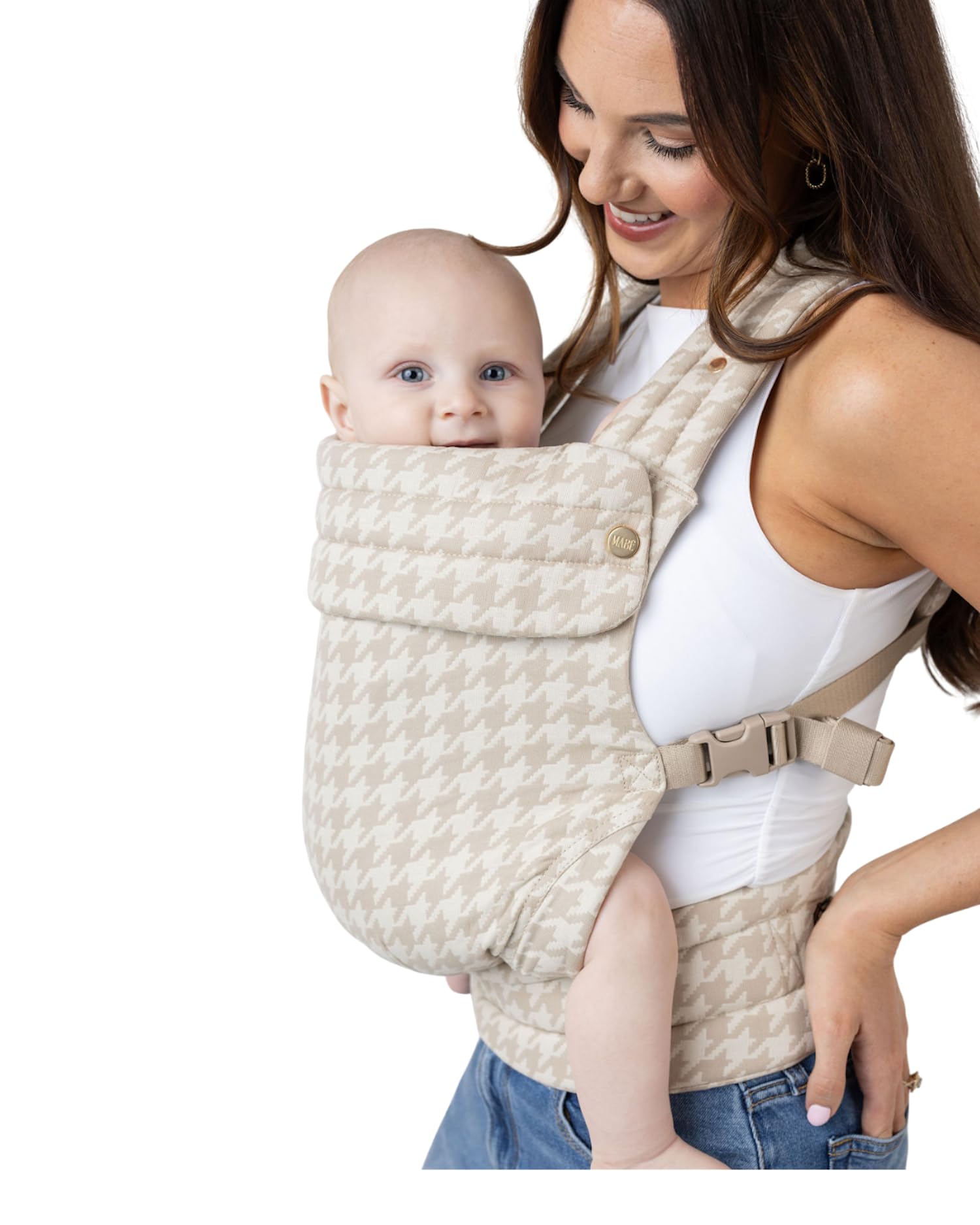
Key Features
- Care: Machine wash cold
- Fabric: 90% cotton, 10% linen
- Weight range: 7–35 lb
- Carry positions: 3 positions
- Price: Premium
The Monarch is the carrier here that looks less like baby gear and more like something you chose on purpose: a cotton-linen houndstooth, soft straps, and a shape that sits close to the body.
The cross-back support spreads the load and stays comfortable when you are wearing a baby through a long airport day. The adjustable straps are easy to share between caregivers, and the seat adjusts as your baby grows.
The three positions cover front-in, front-out, and back carry, and the fabric is soft enough to wear against a light shirt. It has a more polished feel than the nylon-heavy carriers here, which is the point of the premium finish.
For a cooler destination where you want a carrier that feels good and looks polished, it is a lovely choice; it is the one in this group we hand to someone who cares about style as much as function.
Pros
- Soft cotton-linen fabric
- Supportive cross-back straps
- Polished houndstooth look
Cons
- Premium price
- Thick fabric runs warm
We like the Monarch for travelers who want a carrier that feels like a soft everyday layer, with supportive cross-back straps and a polished look.
How We Tested Travel Baby Carriers
I started by pulling together carriers that could plausibly travel: soft wraps, newborn-focused carriers, convertible structured seats, and hip seats, all with adjustable fits and weight ranges that could cover more than one stage. I filtered out anything that looked bulky enough to need its own suitcase, anything with hard-to-reach buckles, and anything whose fabric or care instructions suggested it would wilt on a hot trip. That left 12 carriers, which we tested over eight months.
We wore them through airport security and down jet bridges, on weekend trains, on city sidewalks, and through a humid-weather trip; we also used them for everyday errands so a carrier had to work before and after the vacation. I put each one on and took it off solo with a wriggling baby and timed how long it took, then adjusted it between two adults of different sizes to see where the straps landed. I checked buckle placement, strap slack, and whether the baby stayed high and close after 20 minutes of walking.
Comfort came down to the second hour: I noted shoulder pressure, lower-back support, and whether the waistband dug into my hips. On warm days I checked for sweaty backs and damp chest panels, and after each wash I looked for pilling, fading, stretched straps, and whether the fabric still looked presentable. For value, I compared how many ages and carry positions each carrier actually handled against what it cost, since a carrier that replaces a wrap and a structured seat is worth more than one that only works for a month.
How to Choose a Travel Baby Carrier
The best travel carrier is the one you can put on by yourself in a cramped airport bathroom and still want to wear after three hours.
Match the Carrier Type to the Trip
A wrap is the most packable option for a newborn, but it takes practice to tie and can be warm. A soft structured carrier is the better default for airports, walking days, and growing babies because the buckles and waist belt do the work. A hip seat is a short-carry tool for toddlers who want up and down; it is not a substitute for a hands-free carrier on a long walk. Decide which of those jobs your trip actually needs before you compare features.
Packability Is More Than a Weight Number
An ultralight carrier with long dangling straps can still be a nuisance in a diaper bag, so look at the packed shape as well as the number on the spec sheet. A soft knit carrier that folds into its own pouch may beat a slightly lighter structured carrier that takes up half the bag. If you plan to carry the carrier as a backup, choose one that lies flat and does not need a separate stuff sack. Test it in the bag you will actually bring.
Fit Both Caregivers Before You Leave
Travel often means two adults sharing one carrier, and a waistband that fits one parent can swim on the other. Look for a wide adjustment range, easy strap tails, and a back configuration that one person can tighten alone. Cross-back straps can help distribute weight, while H-back straps may be easier to get into. Adjust the carrier at home with the baby in it, then note the settings so you are not learning the fit in a security line.
Support and Breathability for Long Days
A travel day can mean three hours of walking followed by a lot of standing, so lumbar support and a firm waist belt matter more than a long feature list. Mesh and lightweight cotton help in warm airports and crowded transit, while thick knits and long wraps trap heat. If you run hot or travel somewhere humid, prioritize breathable fabric over plush padding. A carrier that feels cozy for a 20-minute errand may feel like a winter coat by noon.
Cleaning and Storage for Real Travel
A washable body is a practical travel feature, not a luxury: spills, sunscreen, and airport grime all end up on the straps. Check whether the maker calls for machine washing or hand washing, and whether the carrier needs to air dry. Pockets are useful for a phone, keys, and a boarding pass, but they add bulk at the waist. If you want one carrier to do everything, favor a washable body and a pocket you can reach without unclipping the whole thing.
Frequently Asked Questions
Can you use a baby carrier on an airplane?
A soft carrier is useful for boarding and walking the aisle, but it is not a substitute for an approved child restraint. Airlines generally require you to hold your baby or use an approved seat during taxi, takeoff, and landing, so check the airline’s policy and your carrier’s manual before you fly. Keep the carrier on for hands-free transit, then take baby out for the seat-belt phases.
Do I need a newborn insert for a travel carrier?
Not always. Several carriers here are sold as newborn-ready, including the Ergobaby Embrace, Omni, and BabyBjörn Mini, while the Infantino Flip starts at 8 pounds. Use an insert only if the carrier’s maker says it is approved for that model, and check the minimum weight and head-support settings. Weigh your baby before the trip and test the fit at home.
How long can a baby stay in a carrier?
There is no single clock that fits every baby and carrier. Follow the maker’s guidance, keep baby’s face visible, and take breaks when you can. Watch for overheating, a slumped chin, or a baby who seems uncomfortable, and adjust or take them out. On travel days, build in a pause at each gate or rest stop rather than waiting for a set number of hours.
Should I bring a carrier if I’m already bringing a stroller?
A carrier and a stroller do different jobs. The carrier gets you through airports, stairs, buses, and crowded markets where a stroller is a liability; the stroller gives you a place to set baby down and carry gear on long days. For most trips, bring both if you have the hands and the trunk space, and use the carrier as the short-hop tool.
Final Verdict
For most travelers, the Infantino Flip 4-in-1 is the one to pack: it is light, compact, and simple to put on solo, with four carry modes for the infant-to-toddler years. If your trip is built around long walking days, the Ergobaby Omni‘s mesh and lumbar support are worth the extra bulk.
For a newborn-only trip where space is tight, the BabyBjörn Mini or Ergobaby Embrace is the easier first carrier. We recommend the Flip as the default and the Omni as the long-day upgrade.