This post contains affiliate links. We may earn a small commission when you buy through our links — at no extra cost to you.
The carry-on sizer at the gate is a ruthless little cage, and I’ve watched more than one confident traveler discover their bag doesn’t fit it. A good cabin bag settles that before you leave the house: it’s built to the 22 x 14 x 9 envelope most U.S. carriers use, it rolls straight down a jet bridge with two fingers, and it goes into an overhead bin with one arm.
Here’s what nobody tells you before your first trip with a new suitcase: an expander isn’t free space. Unzip it and a bag that squeaked under the sizer on the way out may not fit on the way home. Over the past eight months, my team and I have packed, flown with, and occasionally overstuffed 12 carry-ons, and the differences in wheels and zippers showed up fast.
Weight is the other thing shoppers underestimate until they’re walking a long concourse; a pound saved feels like three by gate C. The picks below are for travelers who’d rather not think about their luggage again until they land.
Our Top Picks



The Best Cabin Luggage, Reviewed
1. Travelpro Maxlite 5 21-Inch
Best Overall
Key Features
- Weight: 5.4 lb
- Capacity: 46 L
- Warranty: Limited lifetime
- Case dimensions: 21 x 14 x 9 in
- Price: Premium
The Maxlite 5 is the bag we reach for when the trip is long and the airline is strict. Its case measures 21 by 14 by 9 inches, and it weighs 5.4 pounds, so you get a rare combination in this group: 46 liters of packing space without a bag that feels like a burden before you put anything in it. We kept coming back to that balance.
Softside construction is the reason it packs so much. The fabric flexes around odd-shaped items, and the exterior pockets give you a place for a book or charging cable without opening the main compartment. The two-inch expansion gusset is useful for a last-minute layer, and the four spinner wheels and PowerScope Lite handle gave us the control we wanted in crowded terminals.
The 46-liter shell held a week’s clothes for a warm-weather trip, and the interior divider kept the load from sliding around. We did not need the expansion on that trip; when you do use it, the bag grows wider and feels less certain in a tight sizer. That is the trade-off of an expandable softside: flexibility when you need it, less discipline when you do not.
For most travelers, the useful move is to pack the Maxlite as a soft bag and keep a packing cube for structure; the exterior pockets then do the work a hard shell’s lid cannot. The limited lifetime warranty adds confidence, though the soft shell will not protect a bottle the way the LUGGEX or Luminous will. That is the line we draw: maximum packing room and an easy lift, with protection as the sacrifice.
Pros
- Light 5.4-pound empty weight
- 46 liters in a strict case size
- Limited lifetime warranty
Cons
- Less impact protection than a hard shell
- Expansion adds bulk in strict sizers
We recommend the Maxlite 5 first for one-bag trips: it carries 46 liters yet weighs just 5.4 pounds, and its 21-by-14-by-9 case fits strict airline sizers.
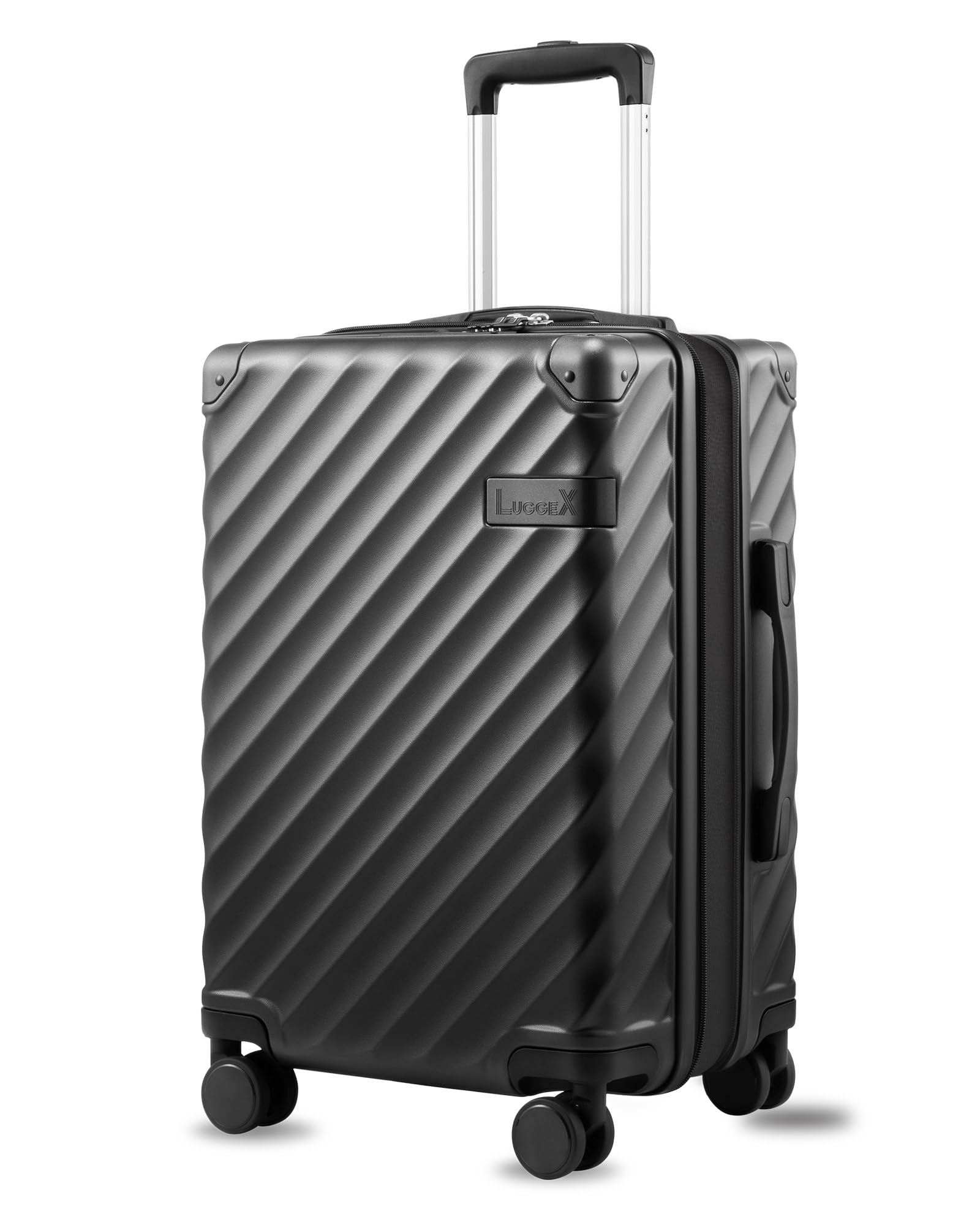
2. LUGGEX 20-Inch Carry-On
Best Hardside Value
Key Features
- Shell: 100% polycarbonate
- Weight: 7.5 lb
- Capacity: 40 L
- Overall dimensions: 21.9 x 13.8 x 9.4 in
- Price: Budget
The LUGGEX is the rare budget hardside that measures 21.9 by 13.8 by 9.4 inches overall, just inside the common 22-by-14-by-9 envelope. It still lists 40 liters of capacity, and the shell is 100% polycarbonate rather than the ABS used by several cheaper bags. We started with it when we wanted a hard shell that does not fight a sizer.
The value is not just the price. Eight spinner wheels make the LUGGEX easy to guide with a fingertip, and the split-case interior has a zippered divider and multiple compartments, so packing cubes stay on one side and shoes on the other. The expansion adds room for a bulky layer, but it also pushes the bag past its strict 22-by-14-by-9 footprint; use it after you clear the sizer, not before.
The zippers are the reservation. The double-layer design is reinforced, but the zipper is still the part to watch when the bag is full. Close it slowly, do not force the expansion, and keep the three-year warranty in mind. If you need a laptop at the front, the LEVEL8 Grace is the better layout; if you want the quietest roll, the Luminous is worth the step up.
Pros
- Cabin-size 21.9 x 13.8 x 9.4 hardside
- 40-liter polycarbonate body
- Eight spinner wheels
Cons
- Zipper is the weak point under load
For a hardside carry-on that measures 21.9 by 13.8 by 9.4 inches overall, we point most shoppers to the LUGGEX: 40 liters, polycarbonate, and eight spinner wheels at a budget price.
3. LEVEL8 Luminous 20-Inch
Best Premium Hardside
Key Features
- Weight: 7.7 lb
- Wheels: 8 spinner wheels
- Capacity: 40 L
- Overall dimensions: 21.5 x 14.5 x 9.2 in
- Price: Premium
Eight wheels are the first thing you notice about the Luminous, and they are why we choose it when quiet rolling matters. The polycarbonate shell has a textured finish that resists scuffs, and the overall package measures 21.5 by 14.5 by 9.2 inches. At 7.7 pounds, it is not a featherweight, but it rolls with a composure the four-wheel budget bags cannot match.
The 40-liter split-case interior is fully lined, with zippered mesh pockets and a divider that keep a week’s clothes from turning into a pile. The TSA combination lock sits flush, and the four-level aluminum handle has a more solid feel than the telescoping handles on the budget bags. We also appreciate the flat top: it gives you a place to rest a tote or a coffee while you wait.
The eight rubber-covered wheels are the smoothest in this set on terminal floors, and the bag feels balanced when you push it with one hand. That composure is what you pay for; the shell and wheels make a long connection feel less like a workout. The polycarbonate is not water resistant, so a rain shell or a dry bag is worth adding if you travel in wet weather.
If you want the lowest weight, the Travelpro beats it; if you want the front-pocket convenience, the Grace is more practical. For a quiet, premium hardside, the Luminous is the one we reach for.
Pros
- Eight quiet spinner wheels
- Textured polycarbonate shell
- Fully lined 40-liter split case
Cons
- Zipper failures can occur under load
- Not water resistant
The Luminous is the premium hardside we choose when quiet wheels and a clean polycarbonate shell matter more than saving money.
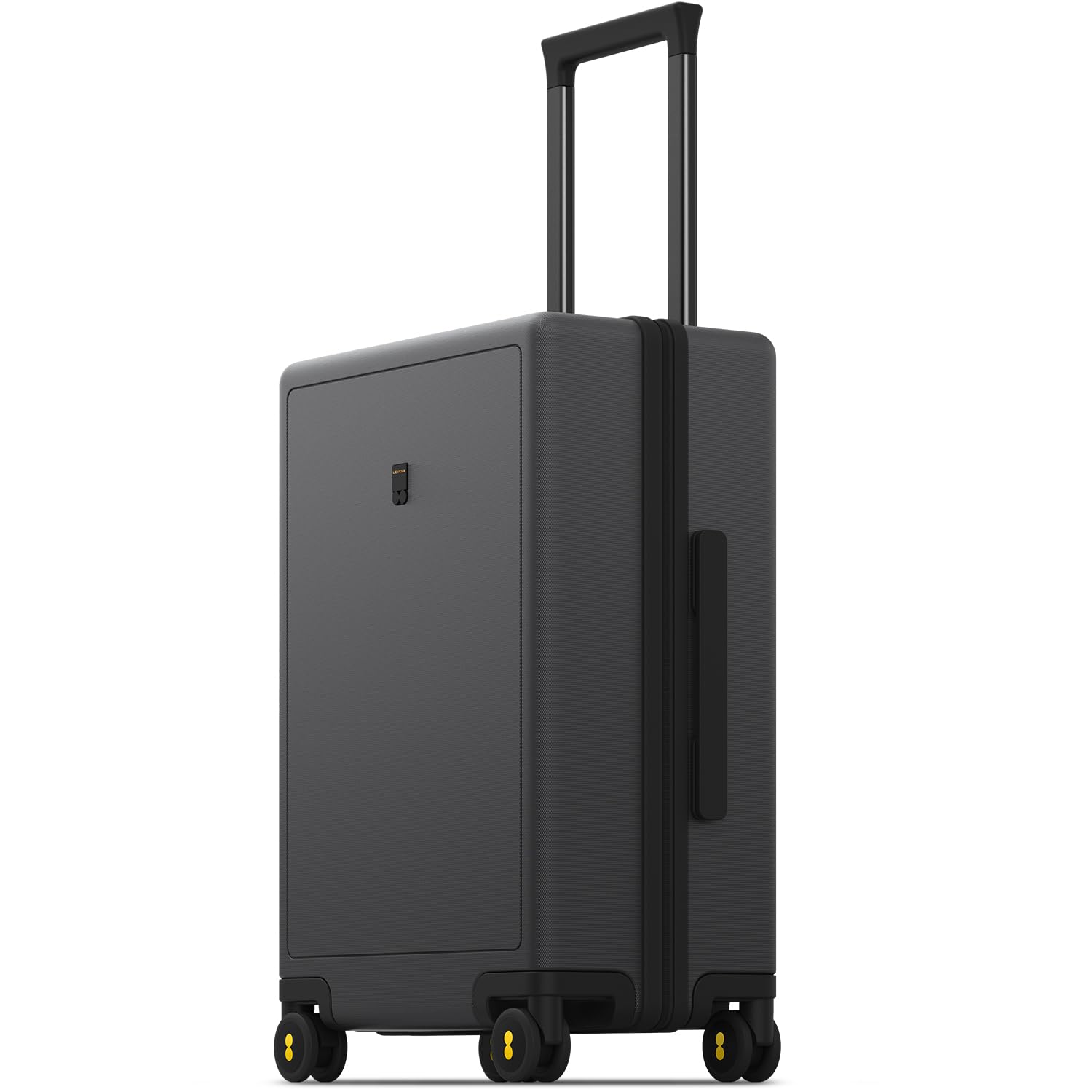
4. LEVEL8 Grace 20-Inch
Best for Business Travelers
Key Features
- Weight: 9 lb
- Expansion: 1.57 in
- Laptop compartment: Fits up to 15.6 in
- Overall dimensions: 21.8 x 14.5 x 9.8 in
- Price: Midrange
At nine pounds, the Grace is the heaviest bag in this group, and that is the first thing to accept. What you get for the weight is a front-access compartment that holds a laptop up to 15.6 inches, a separate space for a tablet or chargers, and a hard shell that keeps work gear from being crushed by a jacket.
The 21.8-by-14.5-by-9.8-inch overall size is close to the common 22-by-14-by-9 limit, but the extra width and depth mean you should check your airline before a strict international trip. The bag expands an extra 1.57 inches, which is useful for a last-minute layer but not something to rely on in a sizer. The eight wheels and four-level handle make it easier to move than the weight suggests, and the textured PC-ABS shell hides scuffs better than a smooth case.
We like the Grace for the traveler whose bag doubles as an office: you can open the front at security, pull the laptop without unpacking the main compartment, and keep cables in the same place all trip. The trade-off is that the front structure eats into packing flexibility, and the 36-liter main capacity is smaller than the Travelpro’s 46. If you need maximum clothes space, choose the Maxlite; if your laptop comes with you, the Grace is the more useful shape.
Pros
- Front compartment fits 15.6-inch laptop
- Expands 1.57 inches
- Eight spinner wheels
Cons
- Nine pounds before packing
- No water resistance rating
The Grace is the cabin bag we recommend for business travelers who want a 15.6-inch laptop at the front and still need expansion for a longer trip.
5. Samsonite Omni PC 20-Inch
Best Warranty
Key Features
- Shell: Polycarbonate
- Warranty: 10 years
- Overall dimensions: 22 x 14.5 x 9.75 in
- Packing dimensions: 19 x 14.5 x 9.5 in
- Price: Midrange
A 10-year warranty is the reason the Omni PC stays on our list. The polycarbonate shell has a micro-diamond texture that resists scratches, the side-mounted TSA lock is easy to reach, and the overall case measures 22 by 14.5 by 9.75 inches, with a 19-by-14.5-by-9.5-inch packing area inside.
We recommend it for travelers who value the safety net more than the scale. The Omni is not the lightest hardside here, and its 22-inch overall height is worth checking against a strict sizer, but the four spinner wheels and sturdy top handle make it feel more planted than the budget shells. The 10-year coverage is the longest in this set, and that matters if you commute through airports and do not want to shop for luggage again soon.
The interior divider and pockets are useful for keeping small items in place, and the textured finish hides scuffs better than a glossy shell. If you want a lighter softside, the Travelpro is the easier carry; if you want a lower price, the LUGGEX is the better value. The Omni makes sense when the warranty is the feature you will actually use.
Pros
- 10-year limited warranty
- TSA side-mounted lock
- Textured polycarbonate shell
Cons
- Wheel and handle durability can vary
If a long warranty and a TSA side lock matter more than the lightest carry, the Omni PC is the hardside we recommend.
6. Traveler’s Choice Pagosa 22-Inch
Best Expandable Hardside
Key Features
- Lock: TSA combination
- Weight: 6.3 lb
- Capacity: 37 L
- Overall dimensions: 22.5 x 14.5 x 9.25 in
- Price: Midrange
The Pagosa’s two-inch expansion gusset is the feature that earns it a place. When a week’s clothes turn into ten days’ worth, you can add room without switching bags, and the polypropylene shell is abrasion- and water-resistant. The overall bag measures 22.5 by 14.5 by 9.25 inches and weighs 6.3 pounds, so it is close to the common carry-on envelope without being the smallest here.
The 37-liter interior has a zippered middle divider and multiple pockets, which makes it easier to keep clean clothes on one side and shoes on the other. The four spinner wheels roll smoothly, and the multi-stage handle has a push-button lock that is simple to set. The TSA combination lock is a useful bonus at this price.
We recommend the Pagosa when you want a hard shell and you tend to pack right up to the limit. The expansion is the safety valve, but it also makes an already-close-to-max bag wider, so measure before a strict flight and plan to check it if you fly a carrier with a 22-by-14-by-9 sizer. The zipper is the part to watch under a full load. If you want a lighter bag with more capacity, the Travelpro is the better all-rounder.
Pros
- Two-inch expansion gusset
- 37-liter divided hardside
- 6.3-pound empty weight
Cons
- Two-year warranty is short
The Pagosa is our pick for overpackers: a two-inch expansion gusset, a TSA lock, and a 37-liter hardside that stays close to carry-on size.
7. Wrangler Astral 20-Inch
Best for Airport Waiting Extras
Key Features
- Shell: ABS
- Weight: 8 lb
- Built-in extras: Cup holder, phone holder, USB port
- Overall dimensions: 22 x 14.5 x 9.5 in
- Price: Budget
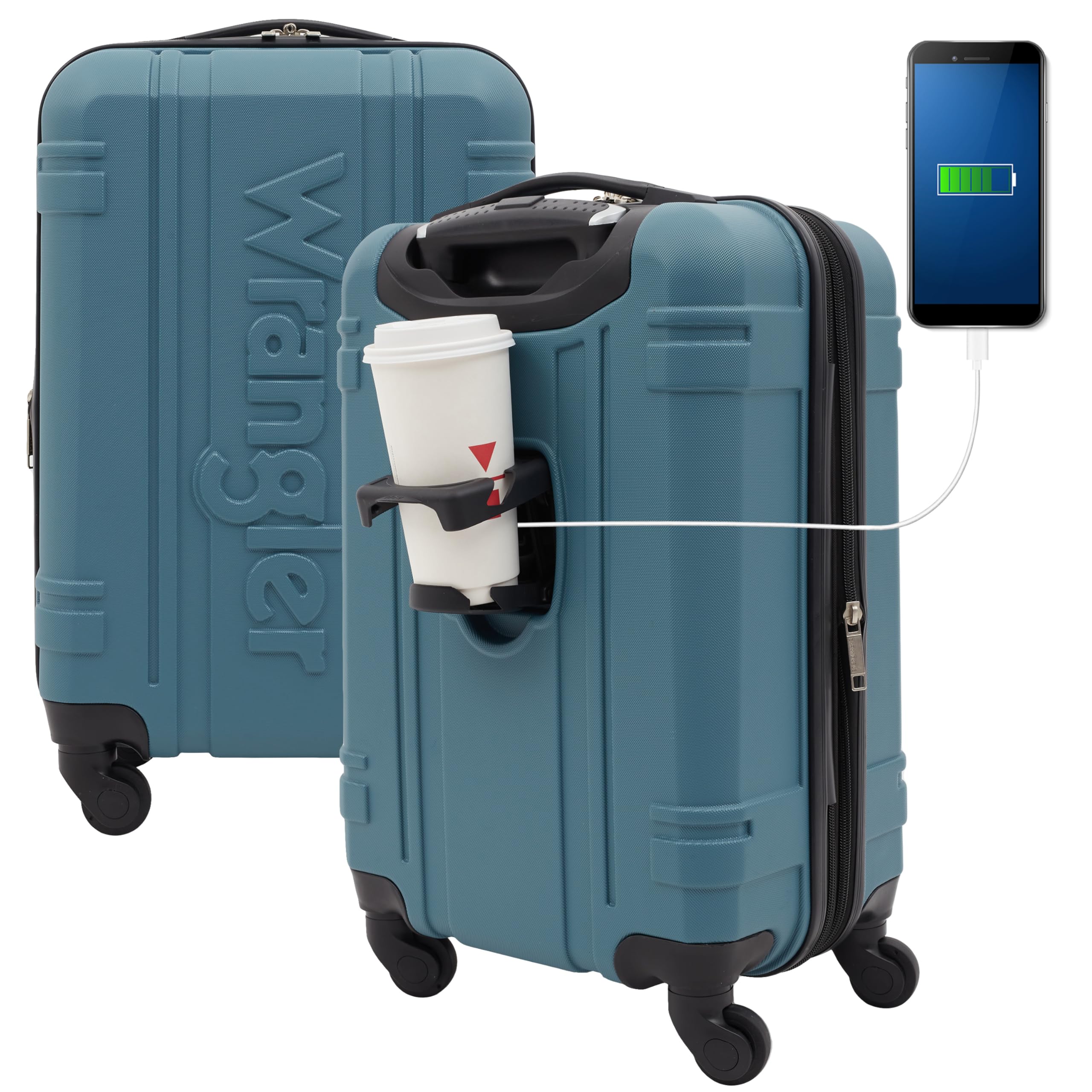
The cup holder is the reason the Astral exists in this roundup. It sits on the back of the case with a phone slot beside it, so you can set down a coffee and keep your boarding pass in view while you wait at the gate. The USB port is a pass-through, not a battery, so you still need to supply your own power bank.
The rest is a conventional 20-inch hardside: ABS shell, four 360-degree spinner wheels, a combination lock, and a 22-by-14.5-by-9.5-inch overall footprint. At eight pounds, it is one of the heavier bags here, and the extra hardware takes up room inside. The top and side handles are useful when you lift it into the bin, and the Hydro color is easy to spot on a carousel.
We treated it as a short-trip bag, and the main compartment held a few days of clothes while the exterior slot kept a phone and bottle within reach. The wheels can get a little wonky on long walks, so this is not the bag we choose for a mile-long connection.
What we like most is that the extras are genuinely usable rather than decorative. The cup holder holds a standard travel cup, the phone slot is deep enough for a boarding pass, and the USB pass-through is convenient if you already carry a battery. If you want a lighter, simpler bag at a similar price, the Travelers Club Richmond is the more practical choice; if you want the gadget storage, the Astral earns its weight.
Pros
- Built-in cup and phone holder
- USB pass-through port
- Easy-to-spot Hydro color
Cons
- Eight pounds before packing
- USB port needs a separate battery
We like the Astral for travelers who want a cup holder, phone slot, and USB pass-through built into a compact hardside, and who can live with eight pounds empty.
8. Travelers Club Richmond 22-Inch
Best for Light Budget Packing

Key Features
- Shell: ABS
- Weight: 5.8 lb
- Capacity: 39.8 L
- Overall dimensions: 22 x 13.5 x 9 in
- Price: Budget
At 5.8 pounds, the Richmond is the lightest hardside in this group, and that is the number that makes it interesting. The 22-by-13.5-by-9-inch shell is narrow enough to slip through tight aisles, and the 39.8-liter interior is larger than its price suggests. It is an ABS case, so treat the shell as protection for soft goods rather than a guarantee against a rough baggage handler.
The four spinner wheels roll smoothly on carpet and concrete, and the telescoping handle and top carry handle do their jobs without drama. The interior has a zippered compartment and compression straps, which is the right layout for a light packer who wants to keep a week’s clothes from shifting. The combination lock is basic, but it is there.
The trade-off is sturdiness. The ABS shell and handle feel lighter-duty than the polycarbonate bags here, and the zipper is the part to watch when the bag is full. This is a short-trip carry-on, not a bag for checked-bag abuse or a once-a-month business circuit. Pack it with cubes, leave the expansion alone if you can, and it does the job.
We like it as a second bag for a weekend or a first hard shell for someone who is not ready to spend premium money. The narrow width is a real advantage in regional jets, and the low weight leaves more of your airline allowance for clothes. If you need more protection or a longer warranty, the LUGGEX or Samsonite Omni is the step up.
Pros
- Light 5.8-pound hardside
- Narrow 13.5-inch width
- 39.8-liter capacity
Cons
- Light-duty ABS shell
- No water resistance rating
We keep the Richmond on the list for budget travelers who want a 5.8-pound hardside and can pack light enough to skip the expansion.
How We Chose and Tested the Carry-Ons
We started with a wide sweep of softside spinners and hard shells in polycarbonate, polycarbonate blends, and ABS, then filtered by the things that actually decide a carry-on: exterior measurements against the 22 x 14 x 9 rule, wheel configuration, whether the telescoping handle locked at more than two heights, and whether the bag expanded at all. That left us with 12 bags spanning entry-level and mid-range prices, which we rotated through eight months of real trips.
At home, I measured every bag with a tape and weighed it empty on a kitchen scale, then packed the same four-day list into each one — clothes rolled tight, a dopp kit, a spare pair of shoes, a laptop — and weighed it again. I ran the main zipper and the expander zipper 25 times per bag, watching for teeth that snagged the lining or seams that puckered under load, then unzipped the expander and re-measured to see whether the bag still cleared a sizer. To judge what a built-in charging port really costs you, I weighed each bag a third time with a battery pack in the outer pocket.
Out in the world, bags came through terminals with me: carpeted concourse, tile, the metal seam of a jet bridge, a curb, and a very tight aisle. I rolled each one with two fingers and again with a loaded wrist, lifted it fully packed into an overhead bin one-handed, and pulled it back down by the side handle. I noted which wheels skated sideways, which rattled over grout lines, and which handles wobbled at full extension.
Durability got less gentle treatment. I tipped each loaded bag off a counter corner-first onto a hard floor, dragged it up and down stairs, and stuffed it past comfortable capacity on purpose. After eight months I checked shell flex and corner scuffs, looked at stitch lines and zipper tape, and confirmed the handles still telescoped without grinding.
How to Choose Cabin Luggage
The right cabin bag is the one you can lift into the overhead bin without help and roll through a crowded terminal without wrestling it, so start with dimensions and empty weight before you look at pockets or color.
Fit the Airline, Not the Label
Carry-on limits are published as overall dimensions, which usually include wheels and handles. A bag listed as 21 inches can measure closer to 23 inches once the wheels are counted, so compare the overall figure, not the packing box. The common U.S. target is 22 by 14 by 9 inches; strict international carriers can be smaller. The Travelpro Maxlite 5 lists a 21-by-14-by-9-inch case, while the LUGGEX lists 21.9 by 13.8 by 9.4 inches overall. If you fly a mix of airlines, buy for the tightest one and do not count on expansion in the sizer.
Choose a Weight You Can Lift
Empty weight matters twice: you lift it into the bin, and you pay for it at the check-in scale. The Travelpro is 5.4 pounds, the Travelers Club Richmond is 5.8, and the LEVEL8 Grace is 9. That spread is roughly a pair of boots or a laptop. A softside bag usually starts lighter, but a hard shell protects better. We treat anything under six pounds as easy to handle and anything near nine as a bag you pack for the destination, not for the journey. If your route has tight connections, shave weight before you add another pocket.
Hard Shell or Soft Shell?
Hard shells protect fragile items and keep their shape, but they give you fewer exterior pockets and less flex when a bin is tight. Softside bags like the Travelpro squeeze into odd spaces and let you reach a jacket without opening the main compartment, though they offer less impact protection. The practical split: choose polycarbonate or polypropylene if you check the bag at the gate or carry bottles; choose a softside if you want maximum packing flexibility and exterior access. ABS is the budget shell material in this set, and it is best for light duty.
Wheels, Handles, and Zippers
Four spinner wheels are the minimum; eight wheels make a hardside track straighter and feel quieter, which is why the LEVEL8 Luminous is the smoothest roller here. Test the handle at full extension and look for wobble before you pack. Zippers are the most common weak point in this group: a double-layer zipper and a lock are only useful if the teeth close cleanly when the bag is full. A longer warranty helps. Samsonite covers the Omni for 10 years; Travelpro offers a limited lifetime warranty; LEVEL8 and LUGGEX are shorter.
Pack for the Trip You Take
Capacity is not a single number. A 46-liter softside can hold more than a 40-liter hard shell because the fabric gives, but the hard shell keeps its shape in a crowded bin. Expansion is a safety valve, not a packing plan: it adds width exactly when you are trying to fit a sizer. If you carry a laptop, a front compartment like the LEVEL8 Grace’s changes how you use the bag at security. Otherwise, spend the space on packing cubes and keep the exterior pockets for the things you need before takeoff.
Frequently Asked Questions
Do carry-on USB ports include a battery?
No. The port on the Wrangler Astral is a pass-through, so it only works when you connect your own power bank inside the bag. Check that the internal pocket fits the bank you already own before you rely on the feature. If you do not carry a battery, the port adds weight without adding function.
How can I keep a carry-on under an airline’s weight limit?
Start with a light bag: the Travelpro is 5.4 pounds empty, while the Wrangler is 8 and the Grace is 9. Then wear your heaviest shoes and jacket on travel day, put chargers and toiletries in your personal item, and weigh the packed bag at home. A five-pound difference is often the margin between an easy boarding and a repack at the counter.
Do I need a TSA lock on a carry-on?
A TSA lock helps only if you check the bag or leave it in a hotel luggage room; on a true carry-on it is mostly a convenience. The Samsonite Omni’s side-mounted TSA lock is easier to reach than a zipper-mounted lock, but it will not stop a determined thief. Keep passports, medication, and electronics in your personal item, and treat the lock as a basic deterrent rather than a safe.
Final Verdict
For most travelers, the Travelpro Maxlite 5 21-Inch is the cabin bag we recommend first: at 5.4 pounds and 46 liters, it gives you the most packing room for the least lift, and its 21-by-14-by-9 case fits strict airline sizers. If you prefer a hard shell or need a compact polycarbonate footprint, the LUGGEX 20-Inch is the better buy. Business travelers who want a laptop at the front should start with the LEVEL8 Grace.