This post contains affiliate links. We may earn a small commission when you buy through our links — at no extra cost to you.
Stepping off a plane into a downpour and feeling cold water creep across your sock is a particular kind of travel misery — the kind that turns a day of sightseeing into a countdown to dry shoes. A genuinely waterproof pair ends that: you stop checking the forecast, you walk through the puddle instead of around it, and the single pair you packed stays in rotation for the whole trip.
"Waterproof" gets thrown around loosely. Water-resistant uppers shrug off a drizzle and quit; a membrane does nothing if the seams aren’t sealed and the tongue isn’t gusseted. My team tested 12 pairs over eight months — trail shoes, deck boots, Chelsea rain boots — on wet city blocks, through puddles, and packed into carry-ons. We judged ankle support on uneven ground, how fast each pair came off at airport security, whether they looked decent with real clothes, whether the price felt earned, and how sizing ran for wide feet.
The picks below are the ones that earned a permanent spot by the door, grouped by the kind of trip they suit.
Our Top Picks



The Best Waterproof Shoes for Travel, Reviewed
1. Columbia Transverse Hike Waterproof
Best Overall
Key Features
- Fit: Wide fit available
- Build: Lightweight
- Traction: High traction
- Waterproofing: Fully waterproof
- Price: Midrange
The detail that convinced us the Transverse was built for wet weather is one you cannot see in the product photo: the tongue is designed to sit against the upper instead of standing off it. That gap at the instep is where a waterproof boot quietly gives up, because rain runs down the laces and pools right there. We walked these through rain and shallow standing water on pavement and wet grass, and the water stayed outside.
Comfort is what makes it our overall pick. The cushioning is soft underfoot without feeling vague, and the boot carried us through full days of walking without the ache a stiff hiker leaves behind. On steep, rocky stretches the sole and the padded collar kept us feeling planted rather than perched, which is more than we expected at this price.
Build quality is the quiet argument for it. Pairs come through a twelve-day backcountry trek and a ten-day Scotland itinerary of trails and cobblestones still intact, and the wide sizes are genuinely wide rather than simply longer. It is a boot that reads as a hiking boot but does not demand a hiking trip.
What you give up is packing space. This is a mid-height boot and it takes the room a pair of sneakers would, so a carry-on-only trip is a stretch. For a checked bag and a mixed itinerary, it is the pair we hand people first.
Pros
- Sealed tongue keeps rain out of the laces
- Cushioned for full days of walking
- Wide sizes with generous toe room
- Holds up on multi-day trips
Cons
- Sizing can run big, so try before you fly
Our pick for most travelers: a fully waterproof boot that walks all day, handles a wet trail, and still looks right in town.
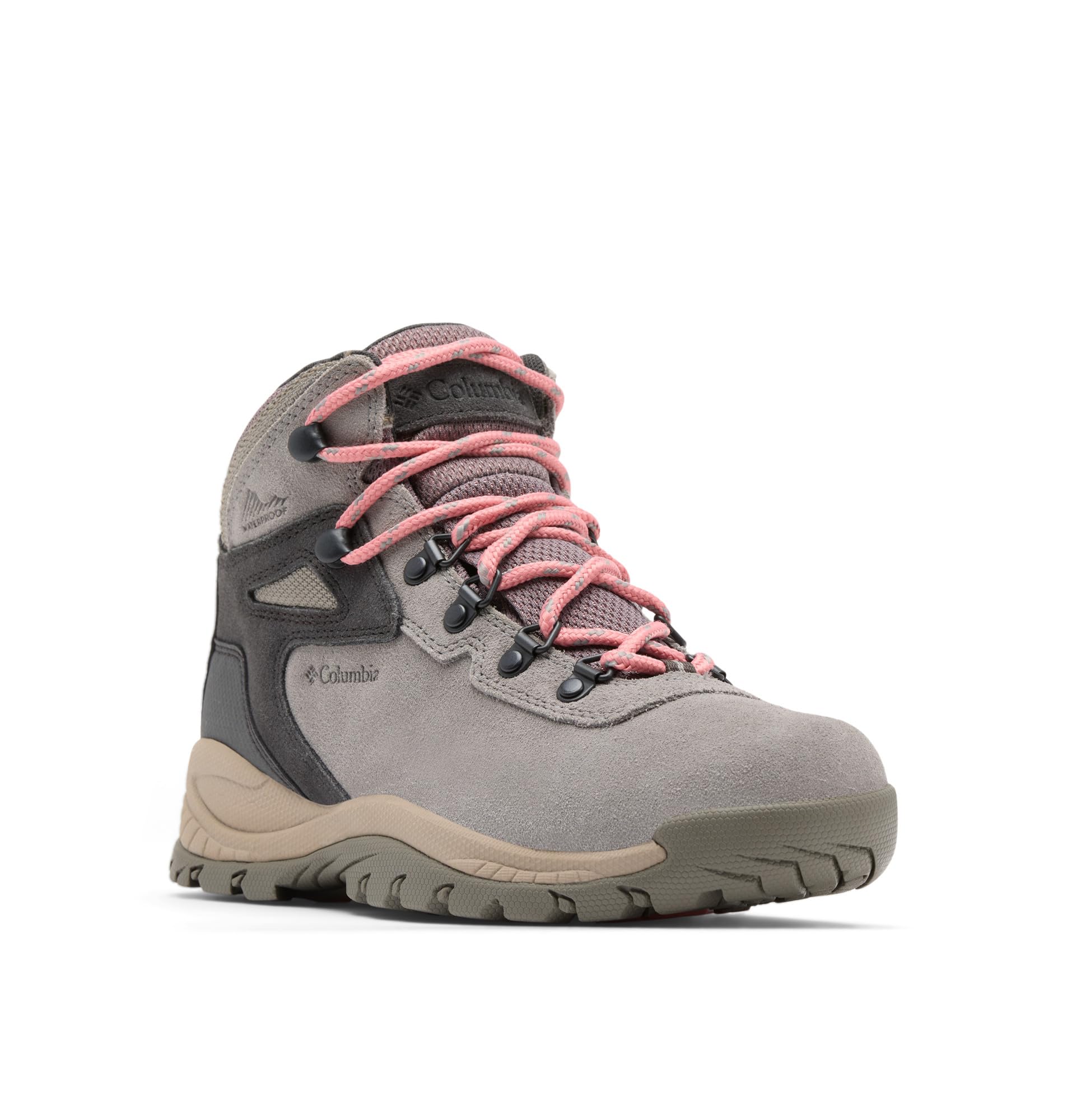
2. Columbia Newton Ridge Plus
Best for Women
Key Features
- Fit: Wide fit available
- Comfort: All-day comfort
- Traction: High traction
- Waterproofing: Fully waterproof
- Price: Premium
Women who want a real boot under them should start their search here. The Newton Ridge Plus takes the same fully waterproof, high-traction brief as our top pick and adds the best ankle support in this group, sturdy without feeling like a cast and steady over roots and loose rock.
Fit is where it earns its keep. The wide width is genuinely wide, the toe box leaves room for feet that swell by afternoon, and there is space for thick socks, the combination that keeps a long walking day from turning into a count of sore spots. For women who usually size up just to get width, that is the whole reason to buy this boot.
For a boot with this much structure it is light, and the waterproof upper held in rain and slush rather than just mist. Pairs come through multi-day trips, a fifty-mile hike and eight-mile days on Scottish cobblestones among them, still looking used rather than ruined. It is the most expensive hiking boot here, and we still think it is the right buy for anyone whose trip includes trails and weather.
Pros
- Strong ankle support without bulk
- Genuine wide width and a roomy toe box
- Dry in rain, snow, and slush
- Light for a structured boot
Cons
- Break-in can blister heels at first
We recommend it to women who want real ankle support and a wide, roomy fit, and who do not mind paying the most in this group for it.
3. NORTIV 8 Waterproof Hiking Boots
Best Budget Hiking Boot
Key Features
- Build: Lightweight
- Outsole: Slip resistant
- Waterproofing: Waterproof
- Price: Budget
One of the least expensive hiking boots in this guide, and the one we point budget-minded hikers to first. For the money you get a genuinely waterproof upper, a cushioned footbed, and enough structure to carry you up a wet trail, the three things that usually get cut when a boot costs this little.
Comfort is the surprise. The inside is soft from the first wear rather than after a week of breaking in, and the arch and ankle support are good enough that an aftermarket insole is not the first thing you will want to buy. The waterproofing covers everything below the collar, which is all you need for puddles, wet grass, and rain, and they have handled mountain hikes and town days on the same trip.
What you are giving up is refinement. The laces are ordinary, the insole is basic, and the boot will not feel custom after a hundred miles. None of that matters much at this price, and for a first hiking boot or a second pair for a wet week, it is the right trade.
Pros
- Waterproof upper at a budget price
- Cushioned from the first wear
- Good arch and ankle support without inserts
- Holds up over a couple of seasons
Cons
- Fit runs narrow for some feet
- Traction is average on smooth wet ground
The pair we point budget hikers to: waterproof, cushioned, and supportive for a fraction of what the boots above cost.
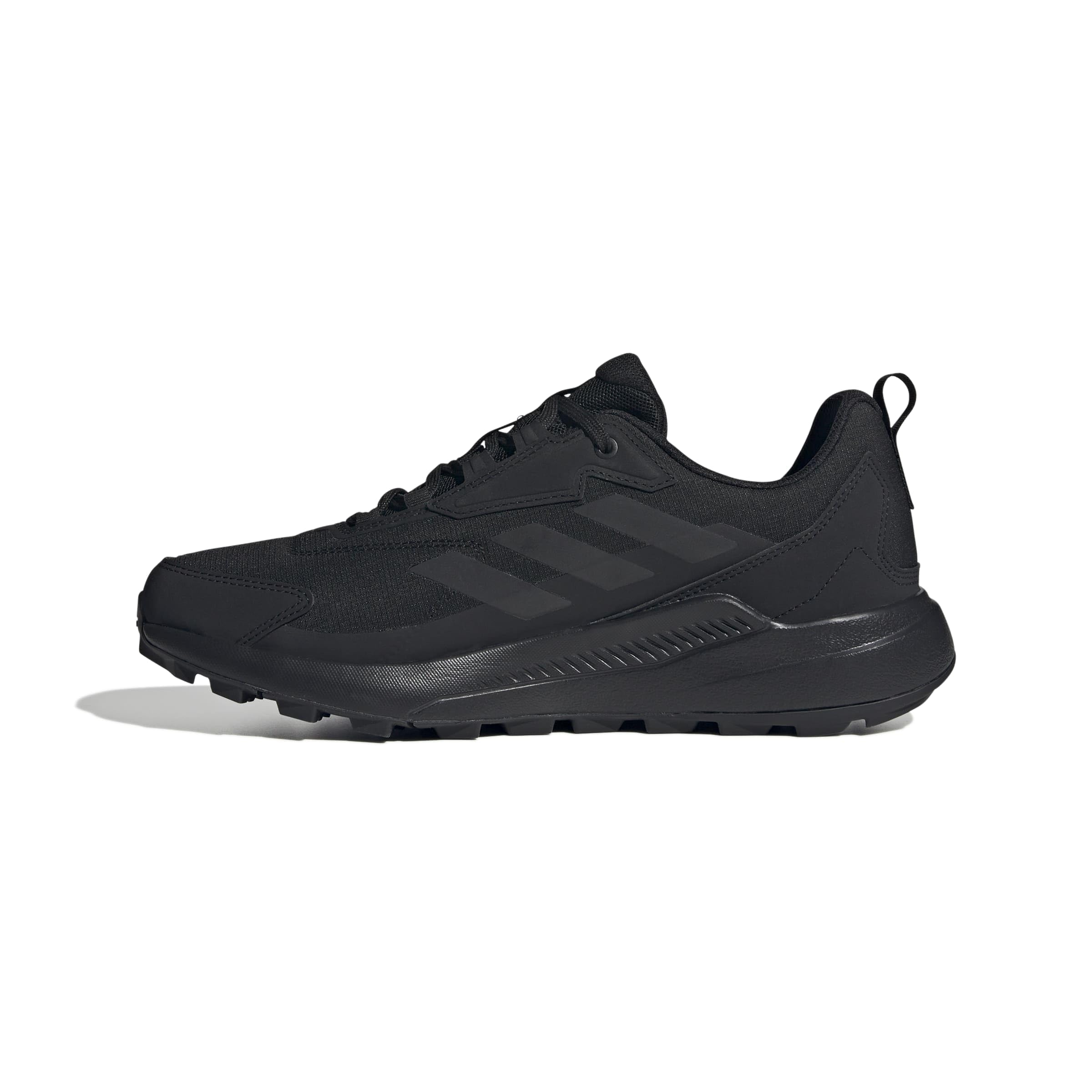
4. adidas Terrex Anylander Rain.rdy
Best Lightweight
Key Features
- Type: Hiking shoe
- Item weight: 2.43 lb
- Waterproofing: RAIN.RDY
- Price: Midrange
Weight is the first thing that registers. The spec sheet says 2.43 pounds, and whatever the split between the two shoes, the effect on your foot is the same: a low, light trail shoe that disappears into a daypack and does not drag at the end of a long afternoon.
For trips where a boot is overkill, this is our pick. The RAIN.RDY upper shrugged off puddles and wet grass on our walks, the outsole bit into dirt and grass instead of skating, and it handles a rainy city street as comfortably as a trail. If you are packing one pair for a week of mixed weather, a shoe this light earns its place fast.
The toe box is narrow, and that decides it for a lot of feet; if yours run wide, the Columbia boots above are the safer purchase. What you get in exchange is a shoe that packs small, looks like a sneaker rather than a piece of equipment, and works from a wet trailhead straight into town.
Pros
- Low weight packs easily
- Waterproof for puddles and wet grass
- Grip holds on dirt and grass
Cons
- Outsole can separate after months of use
We keep these for one-pair, carry-on trips, where a light low shoe that shrugs off puddles beats a bulky boot.
5. Fubotao Short Rain Boots
Best Rain Boot for City Travel
Key Features
- Style: Chelsea
- Height: Short ankle
- Waterproofing: Waterproof
- Price: Budget
This is not a hiking boot and it does not pretend to be. It is a short rubber Chelsea built for wet pavement, and for a rainy city week it is the pair we reach for first: light, cheap enough to treat as a beater, and easy to pull on in a hotel hallway.
The dry part is not in doubt. Water stayed out through rain and puddles, the sole is thick enough that cold pavement does not come through, and mud rinses off in a sink. They run true to size with half sizes available, the toe box is roomy, and the shaft is forgiving enough for wide calves, which is why they make sense for a London or Alaska trip.
The trick is socks. The collar sits low, and with ankle socks it can rub the shin over a long day; tall socks solve it completely. Pack them as the wet-day pair alongside a walking shoe rather than as the only thing you bring.
Pros
- Rinses clean after mud and puddles
- Half sizes and a roomy toe box
- Slips on and off quickly
- Cheap enough to pack as a second pair
Cons
- Shaft is too low for deep puddles
We treat it as the wet-day pair for city trips: cheap, dry, and easy on, with a low shaft that keeps it out of deep water.
6. Asgard Ankle Rain Boots
Best for Stylish Rain Commutes

Key Features
- Entry: Pull-on
- Finish: Matte
- Outsole: Non slip
- Waterproofing: Waterproof
- Price: Budget
A wet week on cobblestones with a dinner reservation at the end of it is the assignment this boot was designed for. The matte finish reads more like a shoe than a wellington, the colors are the reason people stop and comment, and it pulls on without a fight.
It does the wet work, too: rain and puddles stay out, mud rinses off in the sink, and the stretch in the upper accommodates wide feet and thick socks without pinching. Distance is where it struggles, since the collar rubs above the ankle after a few hours and the footbed is thin, so tall socks and a shorter walking day make the difference.
As a budget rain boot for a city trip it earns its place, but we rank it behind the Fubotao boot for walking-heavy days, because comfort is the one thing you cannot fix once you are abroad. Choose the Asgard when the look matters and the walking is short.
Pros
- Waterproof through rain and puddles
- Stretch upper suits wide feet
- Looks dressier than a rain boot
- Easy to slip on and off
Cons
- Lining can lift and seams can separate
We rank it behind the Fubotao boot for walking-heavy trips, but it is the budget rain boot we choose when the look matters.
7. NORTIV 8 Low Top Hiking Shoes
Best for Yard and Trail

Key Features
- Outsole: Slip resistant
- Toe cap: Rubber
- Waterproofing: Waterproof
- Price: Budget
This is the pair in the group that treats a muddy yard and a wet trail as the same job. The low profile, the rubber toe cap, and the price all point at one buyer: someone who wants a single knock-around shoe for outdoor work and weekend walks rather than a technical hiking boot.
Waterproofing covers the basics. Feet stayed dry on wet grass, in rain, and through shallow puddles, and the toe cap does real work when you are kneeling in dirt or pushing through brush. Ankle-deep water is a different story, since the collar sits low and a stream crossing will find your socks.
The cushioning is decent for the money and the shoe is light enough to wear all day, though sizing is a coin flip: some feet find it wide and big, others cramped, and there is no wide option to fall back on.
Where it lands for us is a waterproof value spare rather than a primary travel shoe. It is the pair to buy if you want something for yard work before the trip and do not mind carrying a second pair; as the only shoe you pack for two weeks, it is not in the same class as the Columbia pick above.
Pros
- Rubber toe cap protects in brush
- Keeps feet dry in rain and puddles
- Light enough for all-day wear
- Cheap enough for a work shoe
Cons
- Interior lining can wear through early
We see it as a waterproof value spare for yard work and short walks rather than the one pair you build a trip around.
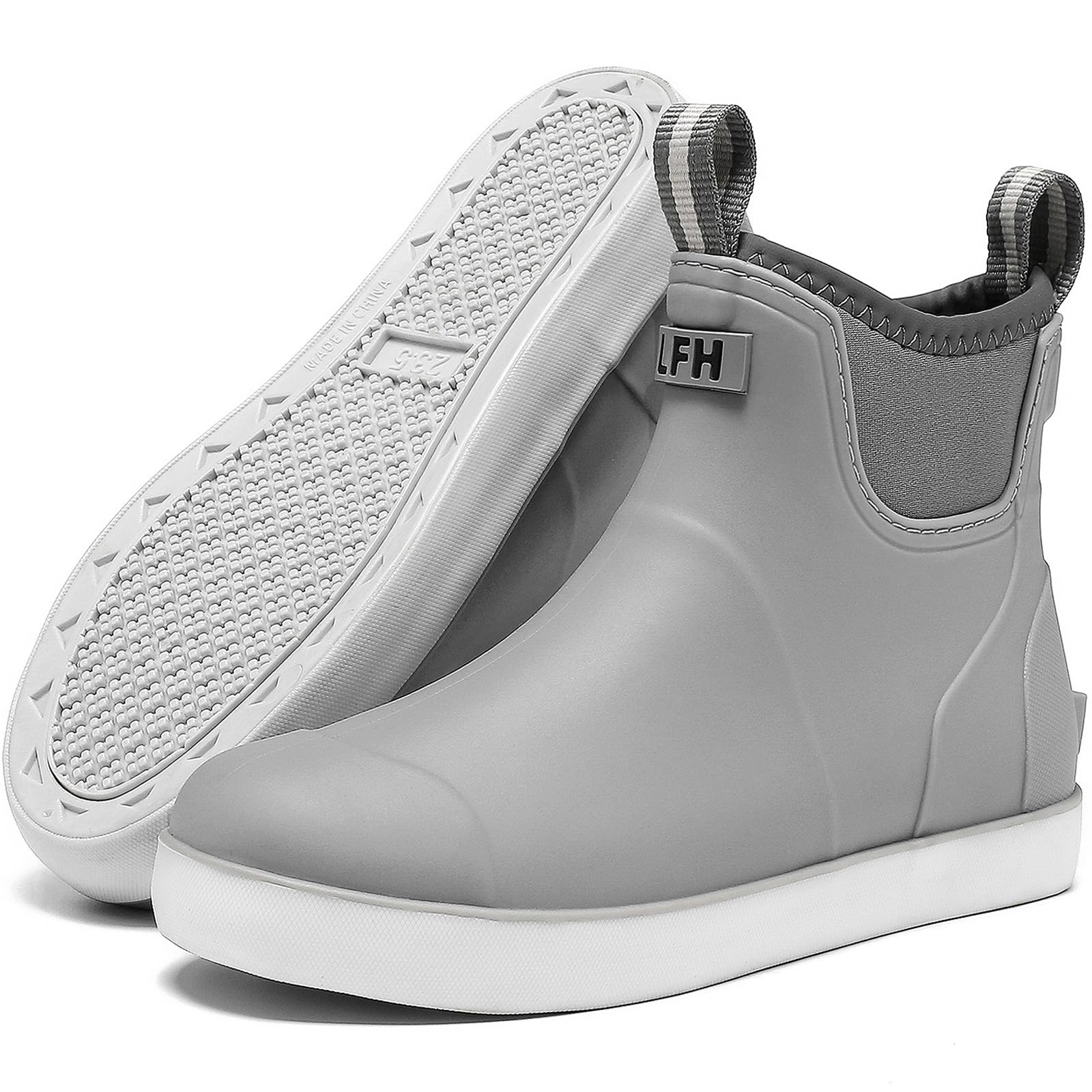
8. CKWLXQY Deck Boots
Best for Cold Wet Work
Key Features
- Height: Ankle
- Material: Rubber
- Traction: Anti-slip
- Waterproofing: Waterproof
- Price: Budget
Cold, wet, muddy days are where these boots make sense: a rubber ankle boot insulated enough that feet stay warm without the boot feeling heavy, with room inside for a thick wool sock when the temperature drops.
The wet part is handled the way a rubber boot should be. Rain and mud stay out, an all-day fishing trip in the rain does not soak through, and the whole thing rinses clean and dries fast. We also appreciated the tall lip at the front and back, which makes pulling them on and kicking them off a one-second job when your hands are full of gear.
Fit is the wild card. Some feet get a true-to-size boot with a roomy toe, others need to go up a size. If you are between sizes, order the larger one; there is room for socks either way.
That makes these a specialist. Pack them for farms, boats, muddy campsites, and cold rain, and leave them home for a city trip where they never leave the suitcase. As a second pair for messy days, the value is hard to argue with.
Pros
- Warm without feeling heavy
- Keeps feet dry in rain and mud
- Rinses clean and dries fast
- Pull loops make on and off easy
Cons
- Ankle opening is wide on narrow calves
We pack these for farms, boats, and cold rain, not for sightseeing, a warm, cheap specialist that earns its space in the right duffel.
How We Tested 12 Pairs of Waterproof Travel Shoes
We started with more than 30 styles from brands we’ve had good luck with, then narrowed to 12 by reading construction details: a real membrane or molded rubber upper, sealed seams, a gusseted tongue, and an outsole with enough lug to bite into wet ground. We made sure the shortlist included wide sizing and a spread of heights, from low trail shoes to ankle boots, then wore each pair for eight months on wet commutes, weekend trips, and one memorably muddy camping weekend.
Water resistance we tested two ways: five minutes under a faucet aimed at the toe box and laces, then a full rainy day walking through wet grass and stepping off curbs into puddles. After each round we checked socks and lifted the insoles to feel for dampness near the seams. Traction got the same treatment in every pair — a wet wooden deck, a slick tile floor, a muddy gravel path — and we noted exactly where we slid.
Ease of use we timed at the door, one-handed, the way you’d do it in a security line with a bag in the other hand. Fit and comfort got full walking days, and our wide-footed tester reported where the toe box pinched. We weighed each pair on a kitchen scale and packed them into a carry-on to see how much room they ate, judged ankle support on side slopes and uneven gravel, and after eight months checked toe caps, heel counters, and seams for scuffing, separation, and wear.
Then we wore the survivors with jeans and with dresses to see whether they read as rain gear or as shoes you’d keep on at dinner. The ones still sitting by the door are the ones that came through dry.
How to Choose Waterproof Travel Shoes
The right pair for a wet trip is the one that keeps water out where water actually gets in and stays comfortable for the miles you will walk; everything else is detail.
Accept that waterproof has a ceiling
Every sealed shoe has an entry point, and it is rarely the sole. Water comes over the collar, down the laces, or through an upper that has stopped beading. A low shoe handles rain, wet grass, and splashes; a boot buys you a few more inches for slush, streams, and deep puddles. Match the height to the wettest surface you actually plan to walk on, not to the worst storm in the forecast.
So a city trip with cobblestones and pavement does not require a boot, and a trip with stream crossings should not rely on a low shoe. The middle ground, a short rubber boot or a mid hiking boot, covers most wet-weather itineraries.
Break them in before you leave
Waterproof uppers are less forgiving than mesh, and the substantial ones need a few wears to soften around the heel and instep. A blister on day one can cost you a day of a short trip. Buy a few weeks ahead, wear them around the house, then take a couple of long walks in the socks you plan to pack.
Rubber boots skip the break-in but not the sock question: a stiff collar against bare skin will rub all week, so plan on tall socks even in summer.
Decide how much weight and suitcase space to spend
A pair of boots can eat a third of a carry-on, while a low shoe tucks into a corner. Rubber boots are bulky but hollow, so stuff socks and chargers inside them. If you are packing a single pair, favor a low shoe or a light boot that reads as a walking shoe; if you can spare the room, a hiking boot plus a short rain boot covers a wet week better than either one alone.
Fit for the socks, not the size on the box
Sizing varies enough between these brands that your usual number is not a reliable guide. Wide feet should look for a listed wide width instead of sizing up, and cold-weather travelers should fit the boot with thick socks on. Half sizes matter most in a rubber boot, where laces cannot buy you adjustment.
Order early enough to walk around the block and exchange. A travel shoe that fits in the store but not on hour six of a walking day is a shoe you will resent.
Read the outsole, not the label
Slip resistant is a marketing phrase until you are standing on wet cobblestones. What you want is visible lug depth with gaps that shed mud. Smooth rubber, on the other hand, is what slides on a polished hotel floor or a wet boat deck regardless of price.
Pick the tread for the surface you will walk most, and remember that deep lugs collect mud, which makes a low-profile city shoe easier to keep presentable.
Frequently Asked Questions
Will waterproof shoes make my feet sweat?
Yes, a little. A waterproof membrane keeps water out and also slows water vapor on its way out, so feet run warmer and damper than in a mesh sneaker. The fix is mostly socks: thin merino or synthetic move moisture, cotton holds it against your skin.
Air the shoes out overnight instead of leaving them in a bag or a bathroom, and rotate pairs on a long trip if you have the room for a second.
Do I need to re-waterproof travel shoes?
Rubber boots need nothing beyond a rinse. Leather and textile uppers do: when water stops beading and starts darkening the fabric, clean off the mud and apply a treatment made for that material.
Never dry them on a radiator, in a tumble dryer, or in a hot car, because heat is what cracks a waterproof membrane. Air-dry at room temperature and stuff them with newspaper if they come back soaked.
Is it worth buying waterproof shoes if the forecast looks dry?
For a walking trip, yes. Wet grass, one surprise shower, or a single deep puddle can leave your only pair damp for a day and a half, and damp shoes are what turn a good trip sore.
The penalty is small: a few ounces and slightly warmer feet, against never having to plan your day around drying sneakers.
Can I wear waterproof hiking shoes in snow?
A sealed upper keeps snowmelt out, but waterproofing is not insulation. For slush and cold rain, a rubber boot with wool socks is the warmer choice; for packed snow on a trail, a lugged hiking boot with warm socks beats a low shoe.
Neither replaces an insulated winter boot once the temperature really drops.
Final Verdict
The Columbia Transverse is the pair we point most travelers to: the waterproofing holds where rain actually gets in, the cushioning lasts a full day on your feet, and it comes through trips harder than yours. For a woman who wants a more supportive boot, the Newton Ridge Plus is the one to try, and if you are traveling with a carry-on and nothing else, the adidas Terrex packs smaller and still handles a wet trail.