This post contains affiliate links. We may earn a small commission when you buy through our links — at no extra cost to you.
The bag you carry onto a plane has one job it can’t fail: it has to fit. I’ve watched a stranger gut her backpack on the floor at the gate because the sizer said no. A good travel backpack gets you past that moment — it slides under the seat ahead of you with room for a laptop and three days of clothes, and it survives being crammed into an overhead bin twice a week.
My team and I have spent the past six months traveling with 12 of them, and the ones that earned a spot all open flat like a suitcase. A 40-liter bag that only loads from the top becomes a duffel you unpack by feel; a 26-liter bag with a full clamshell zip can be emptied and repacked on a hotel bed in four minutes. That’s the difference between a bag you tolerate and one you keep.
The other lesson: zippers fail before fabric does, usually at the corners of an overstuffed main compartment. Everything below held up to being packed too full and costs about what it delivers.
Our Top Picks


The Best Travel Backpacks, Reviewed
1. LOVEVOOK 40L Travel Backpack
Best Overall
Key Features
- Capacity: 40 liters
- Dimensions: 18 x 14 x 8 inches
- Laptop fit: 15.6-inch laptop
- Included organizers: 3 packing cubes (2 storage bags, shoe bag)
- Price: Midrange
The 18 x 14 x 8-inch footprint is the first thing we check on a travel backpack, because that is the shape that slides into the personal-item sizer on most economy flights. The LOVEVOOK hits those numbers while claiming 40L, a rare combination that makes it our top pick. It does not force you to choose between a bag that fits under the seat and one with enough room for a long weekend.
What makes it work is the packing system. The main compartment opens like a suitcase, and the three included packing cubes turn that single cavity into removable drawers for clothes, shoes, and toiletries. We also appreciate the separate padded sleeve for a 15.6-inch laptop, the wet pocket, and the trolley sleeve. On a hotel floor, the cubes are the difference between digging and unpacking.
The soft shell is another practical choice: it squishes into an overhead bin and still holds its shape when full. The grab handles are the detail we kept using on crowded trains, and the water-bottle pockets are sized for normal bottles rather than giant ones. That is the kind of small convenience that makes a bag easy to live with.
Pros
- True 18 x 14 x 8 personal-item footprint
- 40L capacity with suitcase-style access
- Three packing cubes included
- Padded 15.6-inch laptop compartment
Cons
- Straps feel thin at full capacity
- Dry clean only
We recommend the LOVEVOOK first because it delivers a true personal-item footprint with weekend-sized capacity and included packing cubes.
2. tomtoc Navigator-T66 40L
Best for Tech-Heavy Packing
Key Features
- Zippers: YKK
- Capacity: 40 liters
- Dimensions: 20.47 x 12.99 x 9 inches
- Laptop fit: 17-inch laptop
- Price: Midrange
If the LOVEVOOK is the true personal-item choice, the tomtoc is the overhead-bin workhorse. We prefer it when a 17-inch laptop and a week of clothes share the bag. At 20.47 inches tall, it uses the overhead bin and gives you more vertical packing room than the under-seat picks.
The 40L main compartment opens wide, and the laptop section folds out 90 to 180 degrees for security. We were struck by how much easier that makes a tech-heavy trip: the laptop stays in its own padded compartment while the main bag opens for clothes. The YKK zippers and recycled fabric are the kind of details that make the tomtoc feel more expensive than the budget picks. A quick-access front panel lets you reach the main compartment without opening the whole bag.
The 1,200-gram build gives it a substantial feel, and the harness is supportive rather than plush. The separate laptop compartment is the reason we keep it in the rotation for work trips: it keeps tech away from clothes and makes security less of a repacking exercise. For overhead-bin travel, it is the most capable tech-first pack in this group.
Pros
- 40L clamshell packing space
- Fits a 17-inch laptop
- YKK zippers and recycled fabric
- Opens 90 to 180 degrees at security
Cons
- Too tall for strict personal-item sizers
- Heavier than minimalist packs
We choose the tomtoc when a 17-inch laptop and a week of clothes share the bag, and under-seat fit is not the priority.
3. Osprey Daylite 26+6
Best Lightweight Personal Item
Key Features
- Weight: 1.8 lb
- Capacity: 26+6 liters
- Back panel: AirScape
- Dimensions: 16.9 x 13 x 6.3 inches
- Price: Premium
The Daylite is the pack we reach for when the trip is short and the walk is long. It starts at 26L, expands by 2 inches and 6 liters, and weighs 1.8 pounds. That is a different proposition from the 40L bags here: less closet, more daypack.
The AirScape back panel is the reason it carries so well. It kept the load close and ventilated in our carry, which matters more on a 20-minute walk to the train than on a dash through the airport. The clamshell opening makes the small body easy to load, the twin bottle pockets are deep enough for real bottles, and the luggage pass-through lets it ride on a roller. It also looks like a daypack rather than a suitcase with straps.
It is a personal item first, and that is the point: the Daylite keeps a short trip light and mobile. The expansion is best saved for the return leg, when you have souvenirs and no long airport walk ahead. For minimalist travel and long walking days, it is the pack we trust most in this group.
Pros
- Expands from 26L to 32L
- AirScape back panel and 1.8-pound carry
- Fits under most airline seats
- Clamshell access and deep bottle pockets
Cons
- Small for week-long trips
- Expanded depth can tighten under-seat fit
Our pick for minimalist trips: the Daylite carries like a daypack, expands for extras, and still slides under most seats.
4. MATEIN 40L Expandable Backpack
Best Budget Weekender
Key Features
- Weight: 2.2 lb
- Capacity: 40 liters, expands to 45
- Dimensions: 19 x 13 x 8 inches
- Laptop fit: 17-inch laptop
- Price: Budget
The MATEIN takes the budget-weekender brief literally: 40L of main compartment, an expansion zipper that adds 5L, and a harness that hides away when you want to carry it by the handles. At 19 x 13 x 8 inches, it is sized for the overhead bin rather than the personal-item sizer.
We like the convertible idea for a car trip or a short flight with a roller. The luggage pass-through and air-mesh back panel make it easy to stack on a suitcase, and the two padded handles give you a duffel-style carry when the straps are tucked away. The expansion is the useful part: it gives you a return-trip buffer without a second bag.
The clamshell access is straightforward, and the internal compression straps help keep clothes from sliding. The bag is at its best when you pack it as a weekender rather than a moving box. It does the basic job of swallowing a weekend’s gear without asking for a packing strategy.
Where it earns its place is value for the occasional trip. We recommend it for a traveler who needs a roomy carry-on for a few trips a year and does not want to baby the bag. It is not the one to choose for weekly commuting or a heavy laptop load; that is where the tomtoc and SwissGear pull ahead.
Pros
- Expands from 40L to 45L
- Hideaway harness and two carry handles
- Luggage pass-through and air-mesh back
- Budget-friendly weekender
Cons
- Handle and strap hardware feels budget-grade
- Fully expanded, it is bulky on the back
We keep the MATEIN on our budget list because it expands from weekender to souvenir-hauler without a second bag.
5. EZUOLA 25L Travel Backpack
Best Small Under-Seat Bag
Key Features
- Weight: 2.05 lb
- Capacity: 25 liters
- Dimensions: 16.9 x 11.4 x 7.5 inches
- Laptop fit: 15.6-inch laptop
- Price: Budget
At 25L and 16.9 x 11.4 x 7.5 inches, the EZUOLA is for the traveler who wants a personal item, not a closet. It is sized for the personal-item box rather than the overhead bin, and the soft shell squishes into tight seats.
The suitcase-style side opening is what we appreciate most. It lets you pack the small body like a mini carry-on instead of digging from the top. The separate padded laptop sleeve fits a 15.6-inch machine, there is a wet compartment and a shoe bag, and the trolley sleeve slides over a roller handle. For a short trip, that is a useful little package.
The size is the point: it slides under the seat and leaves your feet free. The USB port needs your own power bank, a detail worth knowing before you rely on it. It is the smallest pick here that still opens like a suitcase, and that is why it earns a place for short trips.
Pros
- True 25L personal-item size
- Suitcase-style side opening
- Wet pocket and shoe bag
- Trolley sleeve and USB port
Cons
- 25L limits it to short trips
- Shoulder straps are lightly padded
We recommend the EZUOLA for short trips where a small personal item matters more than maximum capacity.
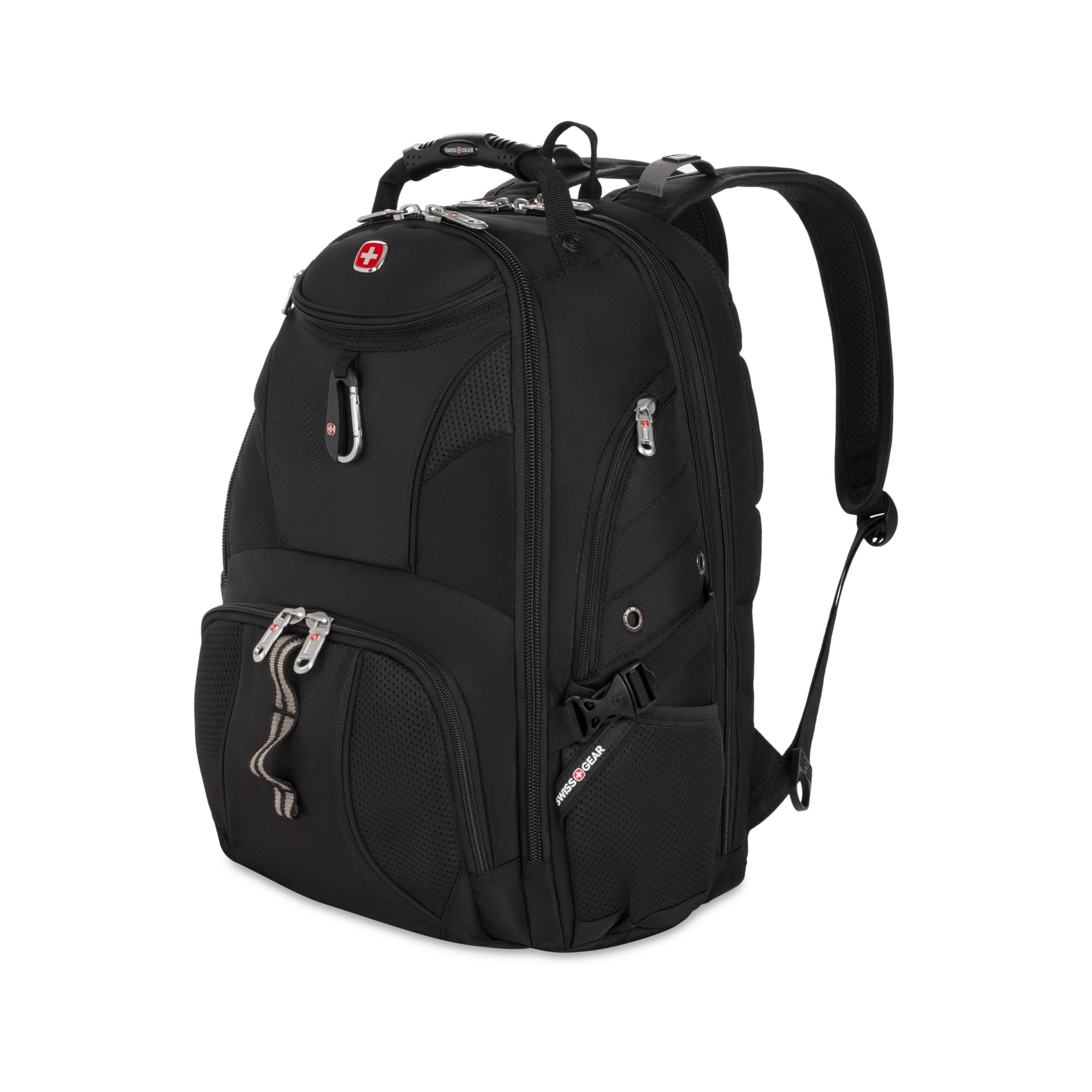
6. SwissGear 1900 ScanSmart
Best for Business Travel
Key Features
- Capacity: 31 liters
- Security: RFID-protected organizer
- Dimensions: 18.5 x 13.25 x 9 inches
- Laptop fit: 17-inch laptop
- Price: Premium
The ScanSmart lay-flat laptop section is the reason we recommend this SwissGear for business travel. You leave a 17-inch laptop in the bag and open the compartment flat at security, which is a real convenience on a trip with a laptop and a change of clothes. The RFID-protected organizer and padded tablet pocket add to the briefcase-like feel.
The 31L body has an accordion file holder, multiple quick-access pockets, a trolley strap, and a molded top handle. The harness is comfortable for a commuter load, and the bag stands up on its own when you set it down. It is more mobile office than weekender.
The accordion file holder and RFID pocket are the details that make it feel purpose-built. It is not the bag for a beach week; it is the one for a laptop, a tablet, and a carry-on’s worth of clothes. For airport security and office-to-hotel travel, it is the most focused bag here.
Pros
- ScanSmart lay-flat laptop access
- RFID-protected organizer
- Fits a 17-inch laptop and tablet
- Trolley strap and molded handle
Cons
- Zipper durability is the weak point
- Bulkier than its 31L rating suggests
Our business-travel pick, the SwissGear speeds up security and keeps a 17-inch laptop, tablet, and documents organized.
7. Taygeer 35L Women’s Backpack
Best for Women’s Short Trips

Key Features
- Weight: 1.74 lb
- Capacity: 35 liters
- Dimensions: 16.8 x 11 x 7 inches
- Laptop fit: 15.6-inch laptop
- Price: Budget
The Taygeer’s best trick is the bonus shoe bag and wet pocket, which keep dirty shoes and damp toiletries away from clothes. At 35L and 1.74 pounds, it is a soft, light bag that works best as a personal item for a short trip. The 15.6-inch laptop sleeve and 180-degree opening make it easy to pack and easy to get through security.
We like that it can be carried as a backpack or by the padded handles like a handbag. That dual carry is genuinely useful on a train or when you are loading the bag into an overhead bin. The multiple pockets are well placed for a phone, passport, and charger, and the pink color is a nice change from the black bags that dominate this category.
The shoe bag is the detail we keep coming back to: it turns a dirty pair of sneakers into a separate package instead of a problem for the rest of your clothes. The wet pocket does the same for a damp swimsuit or toiletry bag. For a short trip, that is more useful than another slim external pocket.
Pros
- Bonus shoe bag and wet pocket
- Light 1.74-pound carry
- Converts to handbag or backpack
- Fits a 15.6-inch laptop
Cons
- Durability is a question mark
- Best for light loads only
We like the Taygeer for light, short trips when a shoe bag and wet pocket matter more than heavy-load durability.
8. Samsonite Paralux 2-in-1
Best for Two-Bag Travel

Key Features
- Capacity: 26 liters
- Conversion: Unzips into two bags
- Dimensions: 17.3 x 12.2 x 9.4 inches
- Laptop fit: 15.6-inch laptop
- Price: Premium
One unzip turns the Paralux from a 26L travel backpack into two bags: a main bag and a smaller go bag. That is the whole idea, and it is a clever one for a business trip where you need a day bag but do not want to pack a second one. The lay-flat opening, laptop sleeve in both bags, and integrated AirTag holder make the system feel deliberate.
The main bag is the one that stays at the hotel; the go bag is the one you take to a meeting or a museum. We like the StackIt strap on both bags because it lets them ride on a rolling suitcase, and the lay-flat packing is easier to live with than a deep top-loading cavity.
The two bags are genuinely separate: the go bag has its own laptop sleeve and shoulder strap, so you are not just carrying an empty shell. The lay-flat opening works like a small suitcase, and the personalization tag is a nice touch for travel.
Where it makes sense is a two- or three-day business trip where a separate day bag is the alternative. The integrated AirTag holder is the small detail that sold us: it gives you a place for a tracker without adding a pouch. It is a specialized buy, not the default.
Pros
- Unzips into two usable bags
- Lay-flat packing and laptop sleeves in both
- Integrated AirTag holder
- StackIt strap for rolling luggage
Cons
- Not water resistant
- 26L capacity suits short trips only
We recommend the Paralux for premium two-bag travel, where one backpack needs to become a main bag and a day bag.
How We Tested These Travel Backpacks
We started by pulling together roughly 60 backpacks — brands we already knew and brands we didn’t — then read through the review pages looking for patterns rather than star counts. Anything that couldn’t pass as a carry-on against the published limits of the major domestic airlines, topped out at a 15-inch laptop sleeve, or drew the same seam complaint over and over got cut. We also weighed what each bag cost against what it actually did, since this category has a wide gap between price and function. That left 12 bags, which we bought ourselves.
Those 12 went everywhere I went: two round-trip flights each, a four-day work trip, weekend drives to see family, and a daily train commute where the bag sat on my lap. We packed each one with the same load — three days of clothes, a laptop (17-inch where the sleeve allowed, 15-inch in the rest), a toiletry kit, and a pair of shoes — weighed it loaded, timed how long it took to pack from empty and unpack at the other end, and measured the filled bag against a tape-marked rectangle matching the personal-item sizers at the gate. We also laid each one flat on a bed to see how the TSA-style opening handled a mid-security repack.
Then came the abuse. We overstuffed the main compartment until it bulged and worked the zippers around the corners to see whether the teeth separated or the tape puckered. Each bag got two minutes under a garden hose to check whether water beaded on the lid or soaked through the back panel, a loaded mile on foot to find where the straps dug in, and — where the bag had a pass-through sleeve — a run over the handle of a rolling suitcase.
By month six we were mostly noting what wore: scuffed bottom panels, frayed webbing at the strap anchors, zipper pulls that had gone gritty. The bags that held their shape after dozens of packings were the same ones that still fit the sizer.
How to Choose a Travel Backpack
The first decision is not capacity but shape: a bag that fits under the seat and one that maximizes overhead space are different purchases.
Start With Dimensions, Not Liters
A 40L label tells you volume, not whether the bag will clear a personal-item sizer. We start with the listed dimensions, because an inch of depth can be the difference between a free personal-item bag and a gate-check fee. The LOVEVOOK’s 18 x 14 x 8-inch body is built around that limit; the tomtoc is 20.47 inches tall and belongs in the overhead bin.
Check your airline’s sizer against the packed depth, not the empty bag. A soft backpack can bulge past its listed dimensions once clothes and a laptop are inside.
Match the Opening to Your Packing Style
Clamshell bags open flat like a suitcase, so packing cubes work and you can see everything at once. Top-loading packs are quicker for a jacket or laptop but harder to live out of. We prefer clamshell access for clothes-heavy trips and a separate quick-access panel for tech.
The Osprey and LOVEVOOK both open wide; the SwissGear uses a lay-flat laptop section for security rather than full-trip packing. Choose the opening that matches what you reach for most, not the one with the most pockets.
Treat the Harness as Part of the Luggage
Straps and a back panel matter most when you carry the bag for more than a terminal walk. A ventilated back panel and a contoured harness, like the Osprey’s AirScape, keep a loaded bag from turning into a sweaty box. If you mostly roll a suitcase and use the backpack as a personal item, a trolley sleeve and a solid top handle are more useful than a hip belt.
Put the heaviest items close to your back, and tighten the sternum strap before you lift the bag. A good harness helps; it cannot rescue a poorly packed bag.
Spend on Zippers, Straps, and the Base
Zippers and strap anchors are the first failure points on a travel bag, and they are hard to repair on the road. We look for YKK zippers, reinforced stitching at the handle, and a base that does not sag when the bag is full. A five-year warranty, like the one on the SwissGear, is worth more than an extra pocket.
Check the return policy before a big trip. If a zipper or strap fails in the first week, you want a remedy that does not depend on finding a repair shop abroad.
Choose Capacity by Trip Length, Then Add Laundry
Think in days rather than liters. A 25L bag like the EZUOLA suits two or three days; a 35 to 40L bag covers four to seven days with packing cubes; a 26+6L pack like the Osprey is a flexible personal item for short trips and day hikes.
If you plan to do laundry, you can drop a size. If you pack shoes or camera gear, size up. Expansion adds space but also depth, which can push a personal item out of the sizer.
Frequently Asked Questions
Do airlines count a travel backpack as a personal item or a carry-on?
It depends on the packed dimensions, not the label. If the bag fits the airline’s personal-item sizer, it counts as a personal item and goes under the seat; if it is larger, it counts as a carry-on and uses overhead space. A 40L pack can exceed a personal-item box when full, so measure the packed bag against your airline’s published sizer before the airport.
Can I machine wash a travel backpack?
Usually no. Most travel backpacks are hand-wash or spot-clean only, and the LOVEVOOK is dry clean only. A machine can damage coatings, frames, and zipper tracks. Empty the bag, remove straps and packing cubes, spot clean with mild soap, and air-dry away from direct heat. Check the care label before you treat a stain.
Can I check a travel backpack as luggage?
Yes, but protect the straps. A backpack’s harness and loose webbing can snag on conveyor belts, and airline damage may not be covered by the bag’s warranty. Use a duffel or strap cover, buckle or tuck every strap, and keep your laptop and valuables in your carry-on. A bag with a luggage pass-through is usually better as a carry-on than a checked bag.
Final Verdict
The LOVEVOOK is the travel backpack we recommend first because it solves the hardest part of carry-on travel: a true personal-item footprint with enough usable capacity for a weekend. Its packing cubes and clamshell access make the space easy to live with.
If you carry a 17-inch laptop and want a tougher overhead-bin bag, choose the tomtoc; for minimalist trips, the Osprey is the lighter alternative.