This post contains affiliate links. We may earn a small commission when you buy through our links — at no extra cost to you.
The first time I hauled a carry-on over wet cobblestones, I learned that luggage math is mostly wishful thinking. A bag can look compact online and still become a problem on a narrow train platform or at a budget airline gate. What matters is how it handles the gap between published dimensions and real travel: weight when packed, capacity after a week of clothes, wheels on rough pavement, zippers when you’ve overstuffed it, and sturdiness when you lift it into an overhead bin.
For eight months, we’ve tested 12 carry-ons—softside and hardside, expandable and fixed—on weekend train trips, through crowded terminals, up hotel stairs, and into overhead bins. We weighed each empty and packed, rolled them over cobblestones and carpet, and noted zipper quality, wheel wobble, built-in lock function, and whether expansion created usable space or pushed the bag past a European carrier’s sizer. The best weren’t the flashiest; they were the ones that felt durable, rolled easily, and were worth the money. The picks below are the bags that survived that math.
Our Top Picks




The Best Carry-On Luggage for Europe, Reviewed
1. Travelpro Maxlite 5 21-Inch Spinner
Best Overall
Key Features
- Lock: Accommodates pad lock
- Weight: 5.4 lb
- Capacity: 46 liters
- Case dimensions: 21" x 14" x 9"
- Price: Premium
Five point four pounds is the number that makes this the bag we take to Europe. Carriers there commonly weigh cabin bags at the gate and cap them somewhere between seven and ten kilograms, so every pound the empty suitcase spends is a pound of clothes you leave at home. At 5.4 pounds the Maxlite 5 gives back most of a ten-kilo allowance, and no hard shell here comes close.
The case measures 21 by 14 by 9 inches, and Travelpro lists it as meeting most international carry-on limits — compare the case height, since wheels and the handle add an inch or two on top. Softside construction is the other half of the argument. Fabric gives, so an underpacked Maxlite 5 presses into a sizer and slides into an overhead bin that a rigid shell of the same size will not. On a packed regional train, that matters more than an extra liter of capacity.
Packing is sensible rather than clever: two exterior pockets, a full-length lid pocket, a side accessory pocket, and compression straps that keep a half-full bag from collapsing. The PowerScope handle stops at 38 and 42.5 inches, and the bottom grab handle is the detail we noticed most, because lifting a bag onto a train rack is where a two-handle case gets awkward.
The lifetime warranty covers defects and, once you register, airline damage for the first year — worth having on a soft bag that will get gate-checked eventually. There is no built-in lock, so add a TSA padlock; the bag is built around one, and a padlock can be swapped when the combination goes missing.
Pros
- 5.4 pounds, the lightest here
- Case dimensions that meet most international limits
- Expands 2 inches for the return trip
- Lifetime warranty including first-year airline damage
Cons
- Soft shell gives less protection than a hardside
The bag we recommend first for Europe: 5.4 pounds leaves room under a cabin weight cap, and the soft shell compresses into a sizer a hard case will not.
2. LEVEL8 20-Inch Polycarbonate Hardside
Best Hardside
Key Features
- Shell: Polycarbonate
- Weight: 7.7 lb
- Capacity: 40 liters
- Overall dimensions: 21.5" x 14.5" x 9.2"
- Price: Premium
The three-layer polycarbonate on this LEVEL8 has a matte, finely textured finish, and the square profile puts a genuinely flat lid on top — enough of a shelf that a tote bag rides there while you stand in a check-in line. Eight wheels instead of four keep the case upright on a moving train floor, and the glide is the quietest in this group on tile and on cobblestones.
Spec for spec it is the hard shell we recommend first: 40 liters, 21.5 by 14.5 by 9.2 inches, a built-in TSA combination lock, a four-stop aluminum handle, and two fully lined halves with zippered mesh on one side. Pushing a packed bag with two fingers is the sort of thing you stop noticing after a week and miss instantly on a case that will not track. The cost is weight: 7.7 pounds is three and a half kilos before you pack a thing, and on a ten-kilo cabin allowance that is a real bite.
Inside, the split-case layout is the easiest to live with here. One side zips fully closed, so a week of clothes stays put when you open the case on a hotel bed; the other side has a divider and a mesh pocket for the small things that otherwise migrate to the bottom corner.
Depth is the number to check before you commit: 23 centimeters sits over the 20 that several European carriers specify, so this is a bag for a fare that includes a proper cabin allowance rather than one that gets measured at the gate. For a trip with no fragile items and a cabin bag in the fare, we have not found a hardside here we like more.
Pros
- Polycarbonate shell resists scuffs and pressure
- Eight wheels roll quietly and stay upright
- 40 liters with a built-in TSA combination lock
Cons
- 7.7 pounds eats into a weight-capped allowance
- Thin zipper pulls under a full load
The hardside we point people to first: 40 liters, eight quiet wheels, and a shell that shrugs off knocks — just budget the 7.7 pounds it costs you.
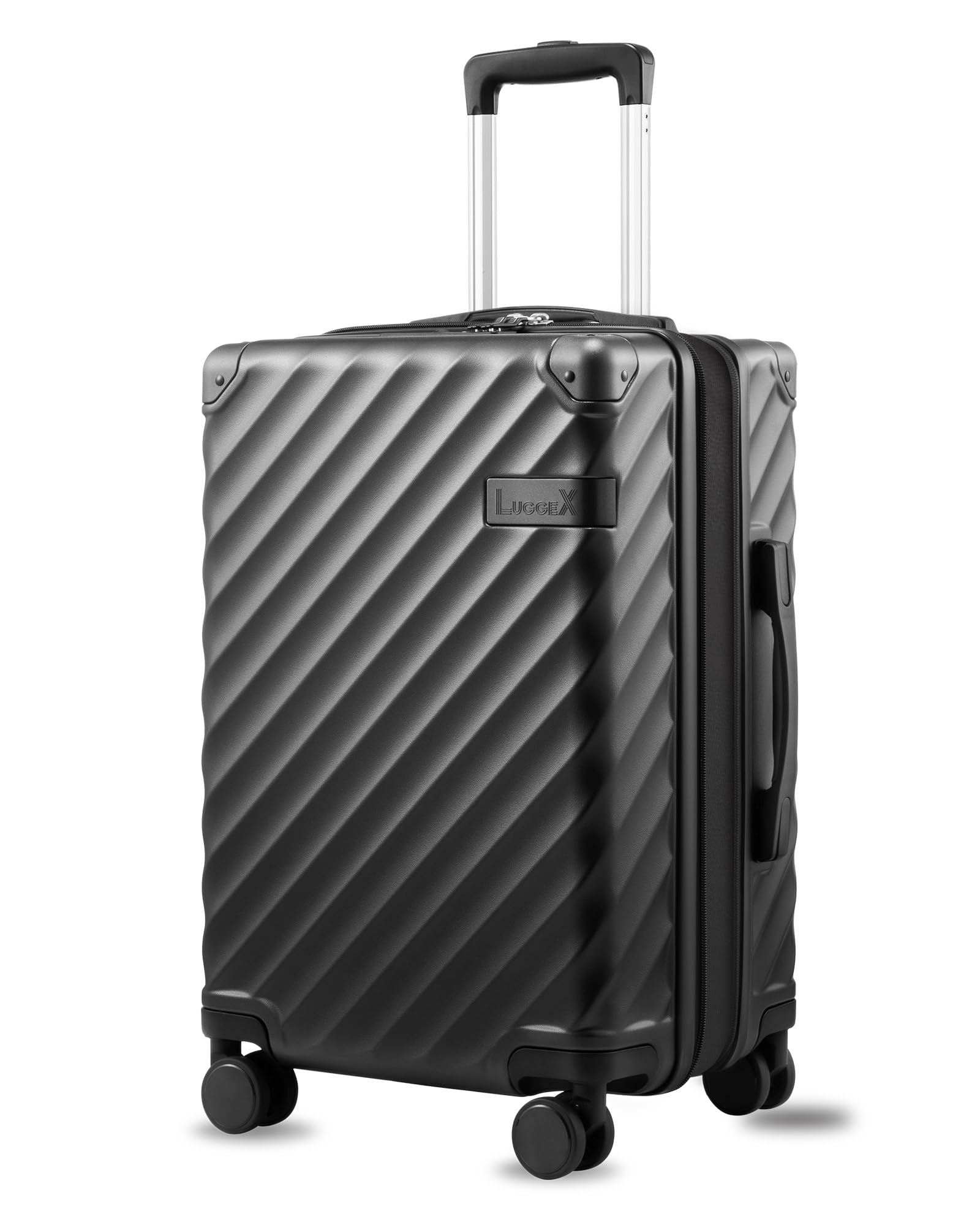
3. LUGGEX 20-Inch Carry-On
Best Value Hardside
Key Features
- Shell: Polycarbonate
- Weight: 7 lb
- Wheels: 8 spinner wheels
- Overall dimensions: 22" x 14" x 9"
- Price: Budget
Most of what the LEVEL8 hardside above offers shows up here for noticeably less money: a 100% polycarbonate shell, eight spinner wheels, a TSA combination lock, double-layer zippers, and reinforced corners at the spot where a dropped bag actually lands.
It measures 22 by 14 by 9 inches overall with the wheels, and that is the number to shop by rather than the liter count. The interior cavity is 18.5 by 13.5 by 8.8 inches — a 22-inch label on a hard shell never means 22 inches of packing space, and this one is smaller in person than the outside suggests. An expansion zip buys a little back on the return leg.
Where it earns its place is value. This is the hard shell we suggest to someone flying to Europe once or twice a year who wants protection without paying for a premium shell — the corners and the double-layer zippers take the knocks a gate-checked bag gets, and the eight wheels track straight when you are pulling it at a trot through a connection.
The interior is the plainest part: one main compartment, one pocket, a divider. If you pack with cubes and a wet bag, budget for them separately. The shell is stiff enough that it does not flex when you rest a shoulder bag on top, which is more than we can say for the budget ABS cases here.
Pros
- Polycarbonate shell with reinforced corners
- Eight spinner wheels and a TSA lock
- Expands for the return trip
- Costs noticeably less than our hardside pick
Cons
- Plain interior with one pocket
- Seven pounds empty is heavier than the softside pick
Most of what the premium hardside offers for noticeably less: polycarbonate, eight wheels, and a TSA lock, with a plain interior as the trade.
4. LEVEL8 Grace Expandable with Front Pocket
Best for Laptop Carriers
Key Features
- Weight: 9 lb
- Expansion: 1.57 inches
- Laptop compartment: Fits up to 15.6"
- Overall dimensions: 21.8" x 14.5" x 9.8"
- Price: Midrange
The front of this LEVEL8 opens flat like a messenger bag, which changes your security line: unzip, slide out a 15.6-inch laptop, zip it back, and your clothes stay folded the way you folded them.
Behind that panel it is a 36-liter hard case that expands another 1.57 inches, with eight rubber-covered wheels, a TSA combination lock, and a four-level aluminum handle. The expansion earns its keep on the return leg, when the souvenirs do not fit the way the T-shirts did.
We think it earns its spot on a working trip: the laptop comes out twice a day, the case is never checked, and front access is measurably faster than opening a clamshell in a queue. What it costs is weight. Nine pounds empty is the heaviest bag here — over four kilos before you pack a shirt — and that is a lot of a weight-capped European fare.
Depth matters too. At 9.8 inches it is comfortably past the 20-centimeter mark several European carriers use, so this is a bag for an airline that gives you a generous cabin allowance, or for the trip where the laptop justifies a little inconvenience. On a leisure week, the square LEVEL8 carries more for less weight.
Pros
- Front compartment takes a 15.6-inch laptop
- Expands another 1.57 inches
- TSA lock and eight quiet wheels
Cons
- Nine pounds empty, the heaviest here
- Front compartment is dead weight on leisure trips
Buy it if a laptop comes out of your bag twice a day; the front compartment is genuinely quicker at security, at the price of nine pounds.
5. Samsonite Omni PC 20-Inch
Best Warranty
Key Features
- Shell: Polycarbonate
- Warranty: 10 years
- Overall dimensions: 22" x 15" x 9.5"
- Packing dimensions: 19" x 14.5" x 9.5"
- Price: Midrange
Ten years is the reason to pick the Omni over the other hard shells here. Samsonite’s limited warranty covers defects in materials and workmanship for a decade, which turns a manufacturing fault — a cracked shell, a seized handle — into a claim rather than a loss on a bag that lives in overhead bins and gets gate-checked more often than anyone plans.
The shell is Samsonite’s micro-diamond polycarbonate, and the texture does what it promises: scuffs and hairline scratches disappear into the pattern rather than sitting on the surface the way they do on a smooth case. The expansion gusset is generous, and the side-mounted TSA lock stays clear of the telescoping handle instead of eating into the top of the lid.
Packing dimensions are 19 by 14.5 by 9.5 inches inside a 22 by 15 by 9.5-inch frame, so wheels and handle eat three inches of length before you start. That is worth knowing, because a bag that is technically 22 inches can still be the longest thing in a regional overhead bin.
It is the pick for someone who wants to buy once, keep the same case for a decade, and still have it look presentable in a hotel lobby. If you are buying for one trip on one fare, the softside pick costs less and weighs less.
Pros
- Ten-year warranty against defects
- Scratch-resistant micro-diamond shell
- Side-mounted TSA lock
Cons
- Warranty covers defects, not airline damage
- Four exposed wheels are the vulnerable spot
The one to buy if you plan to keep the same suitcase for a decade: ten years of defect coverage on a shell that hides scratches.
6. Travelers Club Richmond 22-Inch
First Europe Trip

Key Features
- Shell: ABS
- Weight: 5.8 lb
- Capacity: 39.8 liters
- Overall dimensions: 13.5" x 9" x 22"
- Price: Budget
The Richmond is the budget case we are comfortable putting on a plane, and the reason is arithmetic: 5.8 pounds empty, 39.8 liters inside, and a price that is a fraction of our top pick’s.
We like it for exactly what it is — a plain ABS shell with four spinner wheels, a combination lock, and compression straps. Thirteen and a half by nine by twenty-two inches is a workable shape for a European cabin: nine inches of depth is over the strictest gauges but inside the more common 23-centimeter allowances, and 22 inches of height clears a 55-centimeter rack. Nothing here is clever. It simply does the job without adding weight.
What you give up shows in the small parts. The interior is one pocket and a set of straps, so packing cubes earn their money. Extend the handle fully and you will feel play in it — unnerving on a crowded platform, though it has not stopped the bag rolling.
The wheels are the pleasant surprise: smooth on carpet and on concrete, which is not a given on a shell this cheap. For a first trip where the bag rides in a taxi, a train rack, and a hotel closet, that is the whole job.
Pros
- 5.8 pounds at a budget price
- 39.8 liters for a week of clothes
- Wheels roll smoothly on carpet and concrete
Cons
- Basic interior with a single pocket
- Handle has play at full extension
- ABS shell can crack if dropped
A light, honest budget case for a first European trip: 5.8 pounds and 39.8 liters, with a loose handle and a one-pocket interior.
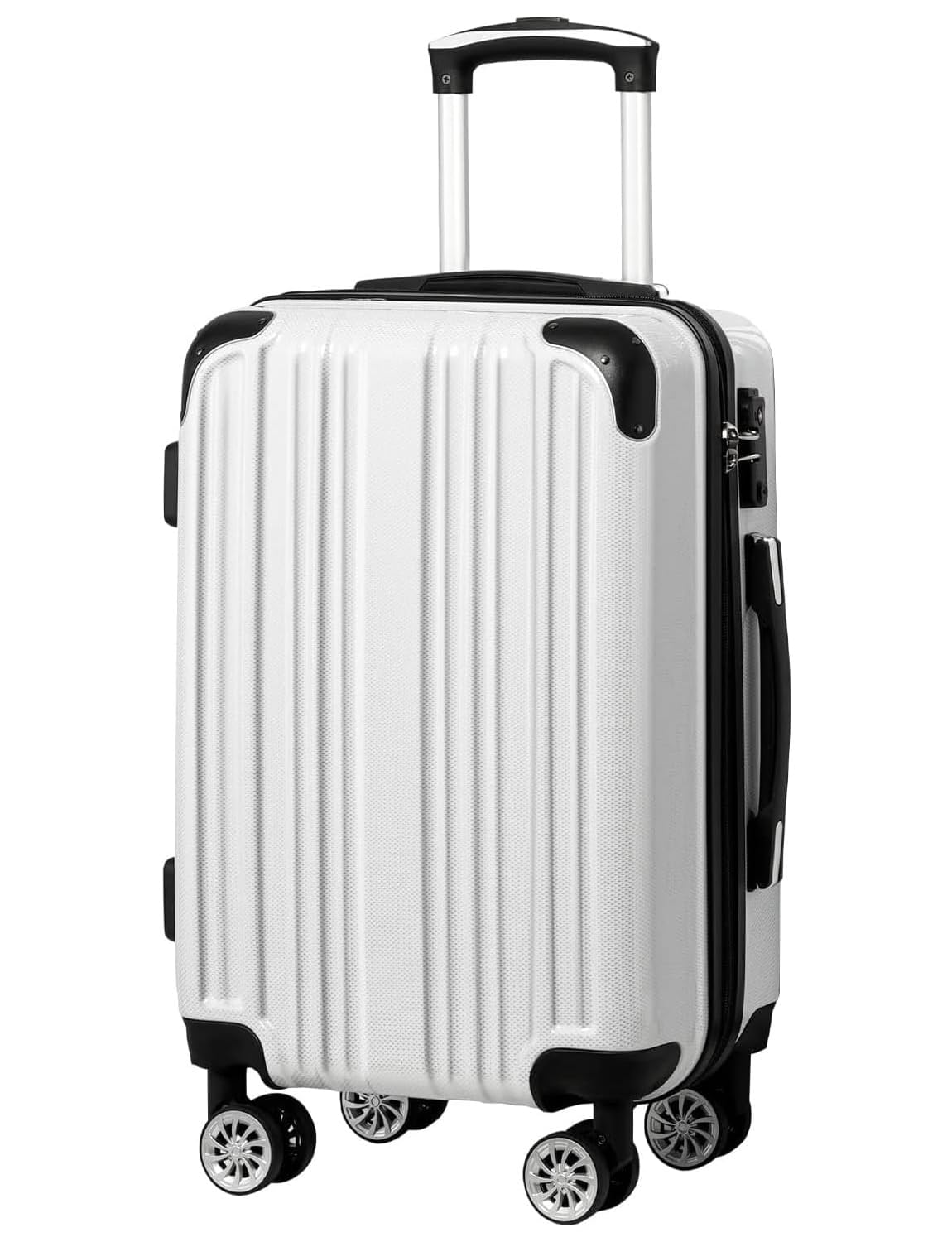
7. Coolife 20-Inch Hardshell
Best for Tight Depth Limits
Key Features
- Lock: TSA combination lock
- Shell: ABS
- Weight: 6.7 lb
- Overall dimensions: 15.4" x 8.7" x 22.4"
- Price: Budget
At 22.4 inches tall, the Coolife is the first bag here to check against your airline: 55 centimeters is a common European ceiling, and this case runs a little over it. That is a measurement to make at home rather than at the boarding desk.
The rest of the package is unusually complete for a budget hard shell: a TSA combination lock, a three-level aluminum handle, four dual spinner wheels, an ABS and polycarbonate shell, and 6.7 pounds of empty weight. YKK zippers are the claim, and zippers are where cheap cases fail, so it is the right place to spend.
Inside it is fully lined with organizational pockets and a divider, and the 38-liter volume packs a week if you roll rather than fold. Nothing about the interior is memorable, and at this price that is fine.
Depth is where it wins. At 8.7 inches — 22 centimeters — it is the slimmest figure in this group and the closest any of these gets to the 20 centimeters several European carriers specify, and depth is the dimension a sizer catches first. That makes it the budget pick we reach for when the gauge is the deciding number, provided the height clears your airline’s published limit.
Pros
- 8.7 inches deep, the slimmest here
- TSA lock and aluminum handle at a budget price
- 6.7 pounds empty
Cons
- 22.4 inches tall may exceed a 55-centimeter limit
- 38 liters goes fast on a longer trip
The budget hard shell to start with when the sizer is your worry: 8.7 inches of depth is the closest anything here comes to a European frame.
8. Sweetcrispy 20-Inch Carry-On
Best for Short City Breaks
Key Features
- Lock: TSA combination lock
- Weight: 6 lb
- Capacity: 35 liters
- Overall dimensions: 13" x 9" x 21"
- Price: Budget
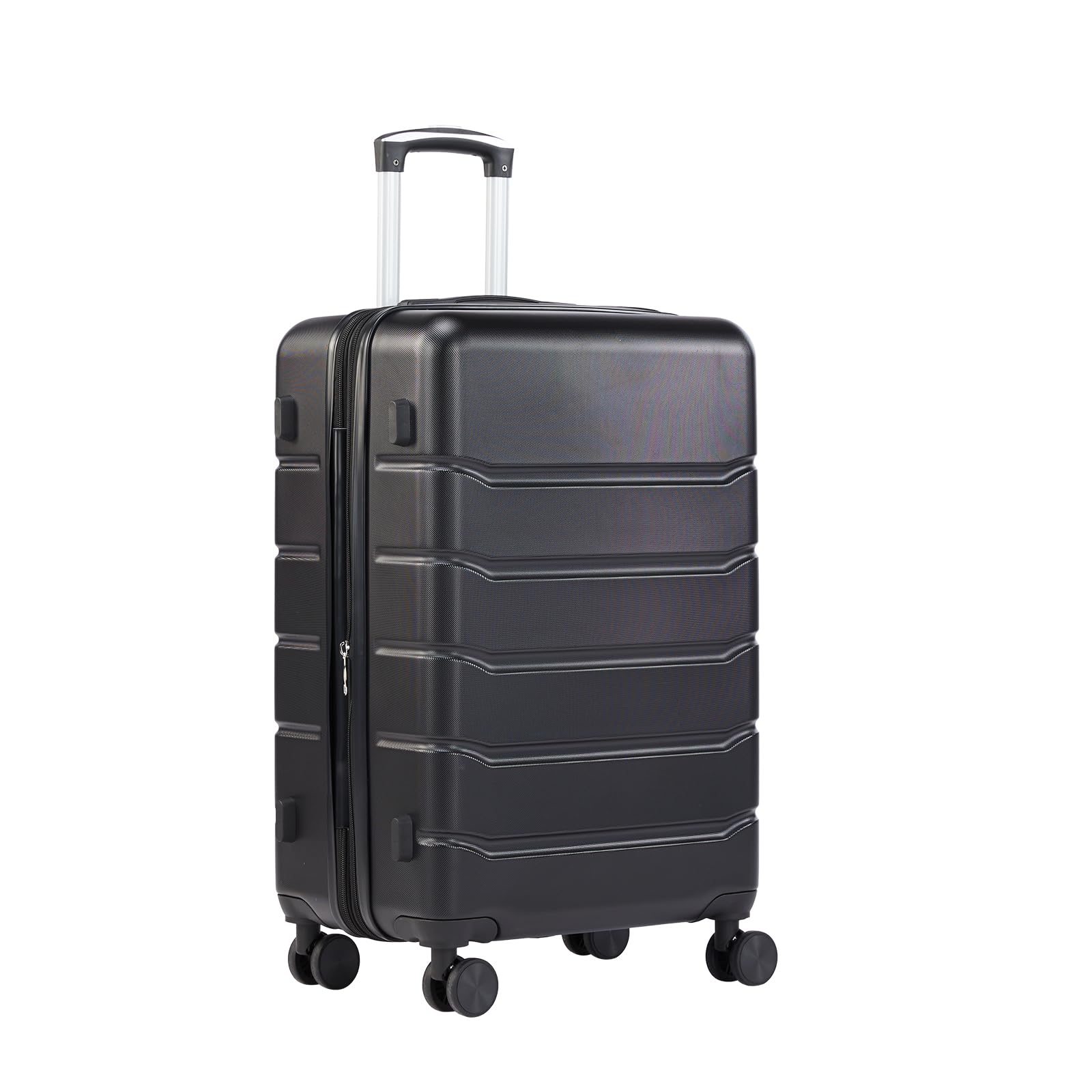
If the trip is four nights in one city and the fare was cheap, the Sweetcrispy is the suitcase that matches the mood: 6 pounds empty, 21 by 13 by 9 inches, and the lowest price in this group.
For that money you still get a TSA combination lock, an expandable shell, dual spinner wheels, and wet and dry mesh compartments inside — the last of which is genuinely useful on a trip where a swimsuit or a damp toothbrush has to travel home.
The caveats are the ones budget ABS always brings. Thirty-five liters is a long weekend, not a week, and a thin shell flexes when the bag is packed tight and leaning in a rack. Watch the wheels on cobblestones; that is the part these cases give up first.
We see it as the right bag for a short first trip, where losing it, denting it, or paying a fee for it would not ruin the holiday — and the built-in lock and expansion make it feel less disposable than the money suggests. For anything longer than a long weekend, spend a little more; the 38 and 40-liter cases here carry a real week.
Pros
- Cheapest hard shell here
- 6 pounds with a TSA lock
- Wet and dry compartments keep things separate
Cons
- Thin ABS shell flexes under pressure
- 35 liters fills fast for a week
Right for a four-night city break on a cheap fare: six pounds, a TSA lock, and the lowest price here, with volume to match.
How We Tested Carry-Ons for Europe
We began with a long list of carry-ons sold in the U.S., then filtered for bags close to common European cabin limits, four-wheel spinners, and a mix of hard and soft shells. We read owner reviews for recurring complaints about wheels, handles, and zippers, then purchased 12 finalists outright so no maker could shape the results.
For eight months, those bags went on weekend train trips, through airport terminals, over cobblestones, up hotel stairs, and into overhead bins. We weighed each one empty and packed for a five-day trip, measured it at the wheels and fully extended handle against a sizer, and noted whether the expansion panel made usable room or pushed the bag over a budget carrier’s limit. We lifted each packed bag into an overhead bin and carried it up stairs to judge portability when we were tired, then rolled it across tile, carpet, train aisles, and rough pavement to see which wheels tracked straight and which rattled. We also set and reset each built-in lock and checked whether the hardware snagged or felt flimsy.
To check durability and sturdiness, we overstuffed each bag, zipped and unzipped it repeatedly, and inspected zipper pulls, seams, and wheel housings for catching, fraying, or flex. After eight months, we compared what still felt tight and solid against what had loosened, and weighed that against what each bag cost; value meant construction that held up, not the lowest number on the tag. The bags that made the list stayed easy to move, easy to lift, and easy to trust.
How to Choose Carry-On Luggage for Europe
A bag that sails through a U.S. gate can cost you a fee in Europe, and the two numbers that decide it are overall depth and empty weight.
Measure Depth First, Then Accept the Compromise
Many European carriers build their cabin allowance around something close to 55 by 40 by 20 centimeters — about 21.6 by 15.7 by 7.9 inches — and the strict ones check with a metal frame at the gate. Depth is the dimension American bags miss: a standard 22 by 14 by 9-inch carry-on is 23 centimeters deep, three over the mark. Here’s the part that surprises people: none of the bags in this guide measures 20 centimeters. A hard shell cannot shrink, so on the strictest fare your choice is to pay for the larger cabin allowance or to carry a soft bag you can underpack and press into the sizer.
Before you buy, open your airline’s cabin bag page, write down its three dimensions, and compare them with the overall size on the listing, wheels included. Case dimensions and overall dimensions are different numbers, and the gap is usually an inch or two.
Weigh the Empty Bag Against the Cabin Cap
There is a second limit that gets checked at the gate: weight. Several European carriers cap cabin bags at 7 to 10 kilograms and put the bag on a scale, which is why a 9-pound hardside can be a worse choice than a 5.4-pound softside even though it looks tougher. Do the subtraction before you commit — a 4-kilogram empty bag uses more than half of a 7-kilogram allowance. We take two kilos less and pack one fewer pair of shoes every time.
Softside or Hard Shell, for Trains and Cobblestones
A polycarbonate shell protects what is inside and rolls predictably over stone; a soft bag gives, squashes into a crowded carriage, and shrugs off being wedged between seats. Pick by what you carry. Camera, bottles, or gifts for family, and a hard shell earns its weight. Clothes, a paperback, and a laptop sleeve, and the lighter soft bag is the friendlier companion.
Wheel count matters more than wheel size. Eight small wheels track straighter than four, and rubber-covered wheels are noticeably quieter on cobblestones at six in the morning.
Locks, Access, and Details Worth Paying For
A built-in TSA combination lock cannot be lost; a padlock can be replaced. Either way a lock is mostly deterrence in a hostel or a train corridor, so do not pay much of a premium for one. Spend on access instead. A full-length divider and compression straps keep a half-packed case from collapsing, and a front laptop compartment is worth its bulk only if the laptop comes out daily. Expansion gussets earn their place on the return leg, not the outbound one.
Frequently Asked Questions
How do I keep my carry-on under an airline’s weight limit?
Start with the empty weight, because a 9-pound bag has already spent about 4 kilograms of a 7-kilogram allowance. Wear your heaviest shoes and jacket on travel days, move dense items — chargers, toiletries, a paperback — into your personal item if the fare includes one, and weigh the loaded bag at home on a luggage scale. Adjusting in the hallway is free; adjusting at the gate is not.
Can you really travel two weeks in Europe with only a carry-on?
Yes, and it is less about the bag than about the laundry. Pack five days of clothes, two pairs of shoes including the ones you wear, and plan one wash mid-trip; a 40-liter case covers that comfortably. Roll rather than fold, use one packing cube per category, and leave a quarter of the space empty for the return. Book a place with a washer and the limit stops mattering.
Will a carry-on fit on European trains?
On high-speed trains, yes: overhead racks and end-of-carriage shelves are built for cabin bags. Regional trains are tighter and the aisles are narrow, so the practical test is whether you can lift a fully packed bag overhead with one hand. Pack to that weight, and board early enough to use the rack by the door.
Final Verdict
Start with the Travelpro Maxlite 5 and you will rarely regret it. At 5.4 pounds it protects a weight-capped fare, and softside construction presses into sizers and overhead bins that stop a rigid shell of the same size.
If you want a hard shell — for a camera, a laptop, or a bottle of something — the LEVEL8 square case is the best of that kind here, as long as you can spare the three and a half kilos it takes from your allowance. The LUGGEX gets you polycarbonate and eight wheels for noticeably less. And if the sizer itself is the worry, the Coolife‘s 8.7-inch depth is the closest anything here comes to a European frame, provided its height clears your airline’s limit.