This post contains affiliate links. We may earn a small commission when you buy through our links — at no extra cost to you.
The picture is always the same: it’s day three of the trip, the stroller is back at the rental because the metro station had no elevator, and the baby has decided she is not walking another block. That’s the moment a carrier stops being an accessory and becomes the reason you can keep going — hands free, baby asleep against your chest, both of you still out in the world.
I’ve gate-checked a stroller and regretted it, and my team has now spent six months wearing 12 carriers through airports, train stations, cobblestone old towns, and museum staircases that turned out to be three flights longer than advertised. The lesson that surprised me most: the spec sheet matters less than fit. A carrier that sits right on your frame beats one with six carry positions that rides badly on your shoulders, and in July, breathable fabric is not a marketing line.
Below are the ones that came home still in the rotation, sorted by what they’re genuinely good at — the newborn weeks, long toddler-hauling afternoons, hot weather, and the twenty quick up-and-downs you do in a single day of sightseeing.
Our Top Picks


The Best Baby Carriers for Europe Travel, Reviewed
1. Ergobaby Embrace
Best Overall
Key Features
- Closure: Buckle
- Weight range: 7–25 lb
- Carrier weight: 1 lb
- Carry positions: 2 front
- Price: Premium
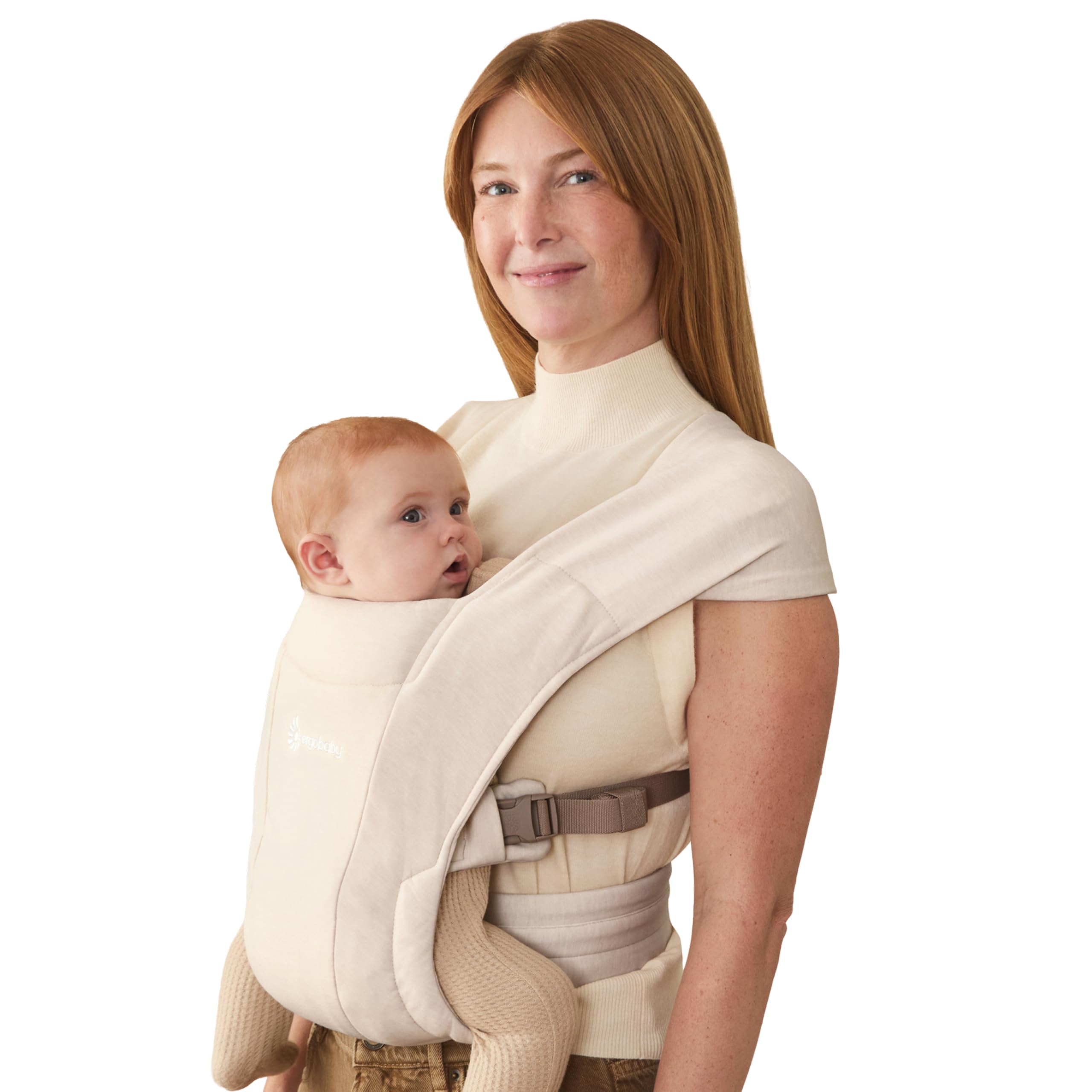
The Embrace weighs about a pound, and that number does more for a travel day than any feature list. It presses flat into a daypack, so when the baby went into a stroller for the afternoon or we sat down to a long lunch, the carrier went into the bag instead of hanging off the back of a chair. The cross-back straps go on the way a backpack does, there are only two positions to learn, and the soft knit body cups a small baby without anything extra.
Head and neck padding does the work for a newborn, and the panel adjusts as they grow, so there is no infant insert to pack or lose, which matters more than it sounds when every cubic inch of the luggage is spoken for. Front carry is the whole job here; this is a first-year carrier rather than a carrier for a walking child.
Two things we noticed over a week of use. The knit body carries weight with less structure than a padded carrier, so with a heavier baby and hours of cobblestones the pull lands on your shoulders, and the cross straps spread it without erasing it. The strap adjusters can also work loose over a long day, so check them after each handoff, especially when two adults of very different sizes are sharing the carrier.
It is machine washable too, which on a two-week trip matters far more than it does at home: a spill at breakfast does not follow you around for the rest of the day.
Pros
- About a pound, packs flat
- Cross-back straps go on solo
- Soft knit with newborn head support
- No infant insert to pack
Cons
- Rated only to 25 pounds
Our default for a trip with a baby in the first year: it weighs about a pound, folds into a daypack, and goes on solo in seconds at a ticket gate.
2. LÍLLÉbaby Complete
Best for Long Walking Days
Key Features
- Storage: Zippered pocket, sleeping hood
- Weight range: 7–45 lb
- Carrier weight: 2.5 lb
- Carry positions: 6
- Price: Premium
Six positions, a removable sleeping hood, straps that convert to backpack style and an extendable torso: the Complete is built like equipment rather than an accessory. It is rated from 7 to 45 pounds, which means the same carrier that takes a four-month-old through a market square still works when that child is a two-year-old on your back.
The lumbar panel is what we kept noticing. It sits low and wide across the small of your back and absorbs the pull that otherwise ends up between your shoulder blades after a morning of uneven pavement. On a trip where you are walking six or seven hours a day, that is the difference between still wearing it on day five and leaving it in the hotel room.
The cost is bulk: it does not disappear into a daypack the way a soft knit carrier does, so you wear it or you leave it behind. The strap routing is the other thing that takes a session. The two-way shoulder straps are clever once you have done them twice and baffling the first time, and the seat is wide, which suits broad frames and leaves petite wearers swimming.
What redeems it on the road is the hood, which clips over a sleeping baby’s head in a lit cabin or a bright station, and the flat zippered pocket, which swallows a passport and a phone without a bulge. Both are small design decisions that only prove themselves in use, and both matter more on a trip than they do at home.
Pros
- Lumbar panel eases long days
- Covers 7 to 45 pounds
- Sleeping hood and flat zip pocket
- Six positions including back carry
Cons
- Seat runs wide for petite frames
For long walking days and bigger babies: the lumbar panel earns its keep by hour three, and the 45-pound rating covers the toddler years.
3. Momcozy PureHug
Best for Hot Weather
Key Features
- Back straps: X-shaped cross straps
- Weight range: 7–44 lb
- Waist support: EVA lumbar panel
- Carrier weight: 1.65 lb
- Price: Midrange
August in Rome or a packed metro car in July will decide which carrier you actually use. The PureHug’s answer is an air-mesh panel across the front and a cooler fabric where your neck meets the carrier, and it is the one on this page designed around heat rather than simply surviving it.
Underneath the mesh there is real structure: X-shaped straps across the back, a molded EVA waist support that takes pressure off your lower back, and three seat settings that run from a narrow newborn seat to a wide toddler one. It is rated from 7 pounds into the mid-forties, so it covers a first trip and a second one with the same child.
The place it gives ground is the smallest babies. The seat runs wide, so a newborn sits with legs splayed further than you want in the first month. That will not reach you if you are travelling with a baby who can sit up, which is the traveller this one is for, because the mesh earns its keep on a long hot day and the padded waist holds up better than a soft knit carrier when you are walking from morning to dinner.
Pros
- Air-mesh panel for hot transit
- EVA waist support for long walks
- Covers 7 to 44 pounds
- X-straps spread the load
Cons
- Fabric feel varies between units
Hot-weather travel with a baby past the newborn stage is where this one wins: the air-mesh panel and padded waist make a sweaty afternoon on transit easier to take.
4. Infantino Flip 4-in-1
Best Budget
Key Features
- Care: Machine washable
- Weight range: 8–32 lb
- Carrier weight: 1.5 lb
- Carry positions: 4
- Price: Budget
It is the least expensive carrier on this page, and it is the one we hand to families who are not sure they will ever use a carrier. Four positions, facing in narrow and wide, facing out and a back carry, from 8 to 32 pounds, plus a wide waist belt that does more than you expect at the bottom of the market and a body that goes in the washing machine.
The day-to-day experience is friendlier than the price suggests. The padded shoulder straps and waist belt put weight on your hips instead of your neck, the fabric wipes down between washes, and it is light enough, about a pound and a half, to leave clipped around your waist while you eat lunch.
The buckles are what you make peace with. There are a lot of them, and the adjusters run through several points before you find the fit, which is fine at home and less fine on a moving train with a baby in one arm. Learn the sequence before you fly and you will never think about it again; skip that and the first jet bridge will teach you.
Where it earns its place on a Europe trip is coverage. The seat narrows for a small baby and widens as the legs grow, which is the detail that keeps a newborn out of a toddler-width panel and the reason the same carrier still fits at the end of the year. The straps move far enough for two very differently sized adults without rethreading, and it is the one here you will not mind leaving behind in a rental apartment.
Pros
- Four positions, 8 to 32 pounds
- Convertible seat widens as baby grows
- Strap range fits two adults
- Machine washable body
Cons
- Support fades as your baby grows
The budget pick: four positions, an 8-to-32-pound range that fits two adults, and a machine-washable body that doesn’t mind a rental apartment.
5. BabyBjörn Mini
Best for Newborns
Key Features
- Wearer fit: XS to XL
- Weight range: 7–24 lb
- Carrier weight: 1.8 lb
- Carry positions: 3 front
- Price: Midrange
The Mini and the Embrace solve the same problem, a newborn carrier that goes on in seconds and stows small, and they settle it differently. The Mini is the simpler of the two: three front positions, a soft 3D jersey body, buckles that sit where you can see them, and a fit that runs from XS to XL without a manual. It is the one we hand to someone who has never worn a carrier, because there is almost nothing to get wrong.
What we noticed is how little it asks of you. There is no infant insert, no separate head support to reposition and no fabric to knot; the panel just cups a small baby, and the head support folds down as they grow. With a baby already in your arms and a queue behind you at security, that speed is the feature.
What keeps it from being the only carrier you pack is support. It is soft, deliberately so, and soft means your back takes more of the load once the baby is out of the newborn stage, which is where the Embrace’s wider straps start to earn their keep. If your dates land in high summer, order the mesh version of this same carrier; the jersey is cozy in May and sticky in August.
Pros
- Fastest on and off solo
- Soft jersey with folding head support
- Fits XS to XL wearers
Cons
- Rated only to 24 pounds
The simplest carrier here for a newborn: three front positions, no insert, and the fastest on-and-off in the group, though it won’t see a first birthday.
6. Tushbaby Original
Best for Toddlers Up and Down
Key Features
- Storage: Five pockets, bottle holder
- Carry style: Hip seat
- Weight range: 8–45 lb
- Carrier weight: 2 lb
- Price: Midrange
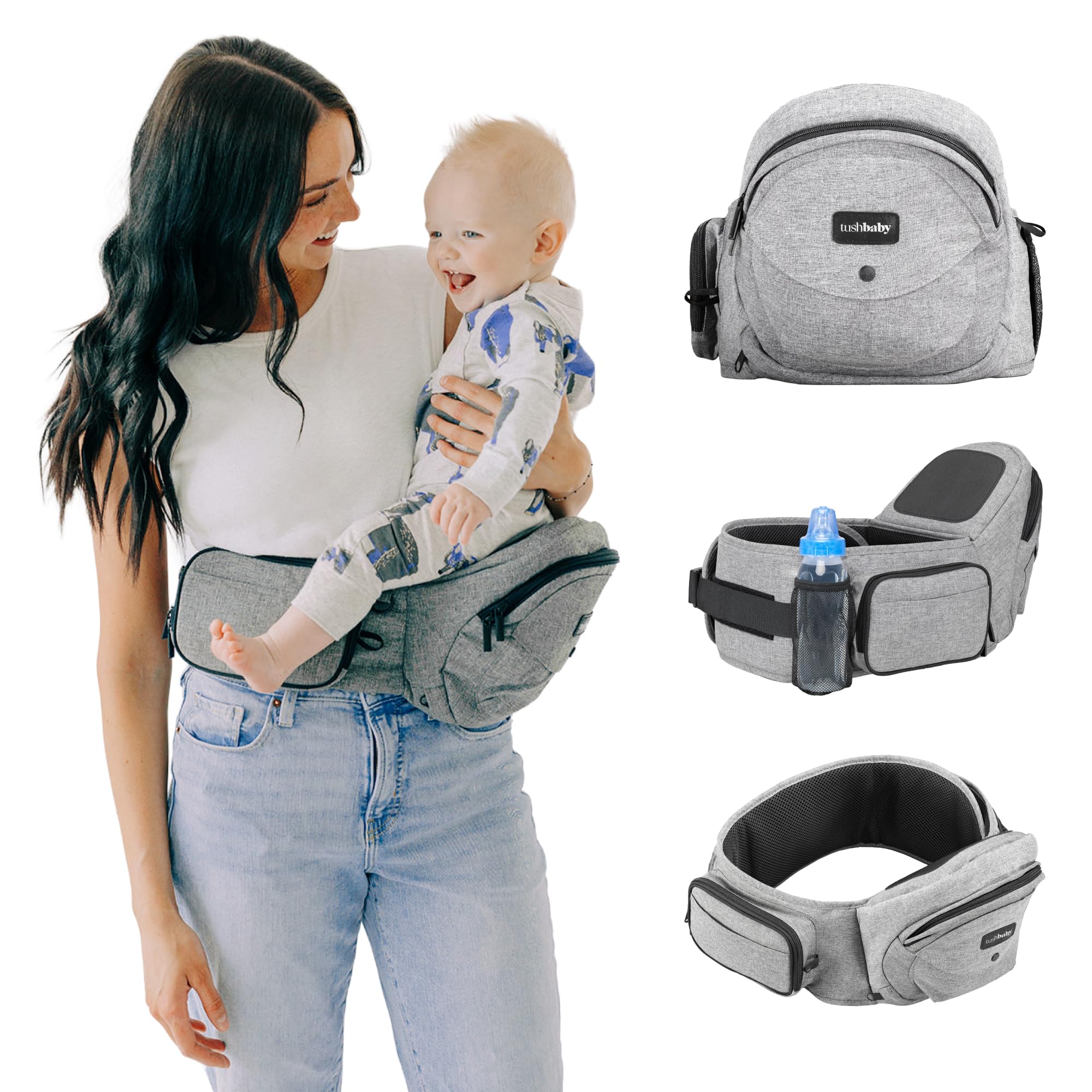
Somewhere around the second museum of the day, a toddler decides that walking is finished and being carried is the only option, and then four minutes later that walking is back. A full carrier is a lot of strap for that cycle. The Tushbaby is a molded hip seat on a wide waistband: sit the child on it, keep an arm around them, and put them down again without unbuckling anything.
It carries up to 45 pounds and puts that weight through your hips and lower back instead of your shoulders, with a lumbar panel built into the belt. Five pockets and a tuck-away bottle holder mean it can replace a small bag for a morning out, phone, transit card, keys, a diaper, which on a crowded tram is one less thing to keep track of.
The catch is the obvious one. Your arm does part of the job, so there is no hands-free carry for a sleeping baby and no all-day support for a long walk out of town. As a hip-seat carrier it is excellent; as the only carrier you pack for a week with a baby who naps on the go, it is not enough.
What we appreciated is how little ceremony it involves: nothing to thread, nothing to readjust between two adults beyond the waist strap, and a seat that is already there when the child reaches up. It is machine washable, which after a week of snacks and transit seats is more than a nice-to-have. On a trip where the child walks most of the time and gets carried for the last twenty minutes of every afternoon, this is the piece of gear that gets used most.
Pros
- Puts weight on hips and lower back
- Five pockets plus bottle holder
- Seat on and off in seconds
Cons
- Not hands-free for a sleeping child
The carrier to bring alongside a full one: it turns the toddler up-down cycle into a two-second move and keeps the weight on your hips, not your shoulders.
7. KeaBabies Wrap
Newborns, Carry-On Only

Key Features
- Closure: Tie
- Wrap length: 202.5 in
- Weight range: 7–35 lb
- Carrier weight: 1.1 lb
- Price: Budget
A wrap’s problem on the road is not comfort, it is the tying. The tails on this one run to about 200 inches, and on a station platform, in a museum lobby or in an airport bathroom that fabric is going somewhere unpleasant, a wet pavement or a public bathroom floor. We tied ours in the hotel room before leaving and re-tied over the back of a chair rather than the floor, which on a damp morning is the difference between using it and leaving it in the suitcase.
Past that, it is the most packable carrier here by a wide margin: a soft stretchy length of fabric that folds to the size of a T-shirt and weighs about a pound. For a newborn who wants to be held through a four-hour travel day, nothing else on this list is as comfortable for the baby, because the stretch keeps them snug against your chest and settles a fussy one in a way buckles do not.
Where it stops working is heat and weight. It is a stretchy knit worn in layers over your chest, so a July itinerary in southern Europe is the wrong assignment; spring, autumn and cooler cities suit it, and a mesh carrier is the better call for high summer. And while it is rated to 35 pounds, a stretchy wrap does its best work in the first months; once the baby is sitting up and heavy, the stretch starts working against you and a structured carrier carries the weight better.
Two small things help on a trip: it comes with a storage bag, which matters when you are digging through a diaper bag for a few yards of knit, and it is machine washable on cold, which is useful when the same fabric sits against a newborn’s face all day.
Pros
- Packs to T-shirt size, about a pound
- Stretchy knit settles newborns
- Machine washable on cold
Cons
- Too warm for high summer
If you’re packing for a newborn and want the smallest thing that works, this stretchy wrap folds to T-shirt size, best in cool weather, not August.
8. MOMTORY 6-in-1
Best for Short Carries

Key Features
- Care: Hand wash only
- Storage: Pockets and bottle slot
- Carry style: Hip seat with shoulder straps
- Carry positions: 6
- Price: Midrange
The pockets are what make the MOMTORY a travel object rather than a baby product: a bottle slot, a phone pocket and enough compartments that a morning out does not need a bag at all. That is a different design goal from the rest of this list, and on a trip where you are getting on and off buses it is the right one.
The seat underneath is wide and cushioned, which is the part that decides whether a hip-seat hybrid works; too small and the child slides forward, and your shoulders end up carrying what the hips were meant to. Six positions, an adjustable lumbar belt and a soft panel across the front that is there for anyone recovering from a c-section. The belt adjusts over a big range, and the mismatch goes the unusual way: it runs large rather than tight.
The seat does add bulk at the waist, so it layers under a coat less gracefully than a flat carrier and suits a mild-weather trip better than a winter one. For short carries, an up-and-down toddler, and anyone hoping to leave the diaper bag at the hotel, that is a trade worth making.
Pros
- Pockets replace a small bag
- Wide cushioned hip seat
- Adjustable lumbar belt runs large
Cons
- Hand wash only
A hip-seat hybrid that carries its own luggage: best for short carries and up-and-down toddlers, with a belt that runs large and real storage.
How We Tested Travel Baby Carriers
We built the shortlist by pulling every carrier with a certified safety standard, then narrowing by weight range, carry positions, price, and whether the straps could be adjusted without a second person. I read through traveler reviews for the complaints that only surface on the road — buckles that dig in by mile two, fabric that turns a baby’s back into a swamp in August — and used those to decide what to measure. Twelve carriers made the cut, spanning soft wraps, structured buckle carriers, and hip seats.
Each one then went through the same six months of days: a two-hour loop on pavement and cobblestones, an airport run with a security line and a gate change, a train trip with a loaded backpack, and a hot afternoon in direct sun. I put each carrier on and took it off alone, in a narrow airplane aisle and in a bathroom stall, without ever setting the baby down.
Fit got judged by where the waistband landed on my hips and whether I was still adjusting an hour in; a carrier that felt fine in the living room often started cutting into my shoulders by mile two. For heat, I checked the baby’s back and my own chest for dampness after every hot walk and compared mesh panels against plain jersey. For a secure fit, I leaned over to pick up a dropped boarding pass and watched whether the baby sagged or shifted. Fabric quality meant washing each one as often as the care label allowed, then checking seams and pilling. Value was price against what came in the box — storage, a sun hood, a washable drool pad — and how many stages it truly covered.
Comfort showed up the next morning as sore spots and lower-back ache, and in whether I wanted to put the thing on again. Enjoyment was simply which ones we reached for without thinking, and appearance mattered more than I expected on a trip where the carrier ends up in every photo.
How to Choose a Baby Carrier for Europe Travel
The carrier that travels well is not the one with the most positions; it is the one you can put on alone in a hurry and then fold away when the day changes shape.
Packability beats feature count
On a trip you carry the carrier as often as you carry the baby in it: into a museum cloakroom, under a café table, onto the back seat of a rental car. A structured carrier that presses flat into a daypack disappears when you switch to a stroller for the afternoon. A framed hiking carrier does not, and it is the wrong tool for cities anyway, too wide for a tram aisle and too tall for a shop door.
If your itinerary is airports, stations and pavement, buy for folding rather than trail features. The Ergobaby Embrace and the BabyBjörn Mini both stow small enough to live in a daypack; the LÍLLÉbaby Complete is a wear-it-or-leave-it-in-the-room proposition.
On and off with a baby in your arms
Count the buckles before you buy. Ticket gates, cramped restrooms, a bus pulling in and a baby who has just fallen asleep all ask you to get the carrier on or off without a second pair of hands. Cross-back straps that go on the way a backpack does are the friendliest design for that; a long tie-on wrap is the least friendly, because the tails need somewhere clean to hang while you knot them.
Whatever you choose, practice at home until you can do it without looking. The carrier you can manage alone is the one that gets used on day four, when the novelty has worn off and it is raining.
Match the fabric to the season you are traveling in
Europe in July and Europe in October are different purchases. Mesh panels and lighter knits make a packed metro car bearable in high summer; a stretchy wrap or a jersey carrier is lovely in Copenhagen in May and punishing in Seville in August.
If your dates are fixed in the hot months, prioritize airflow over softness and dress both of you in fewer layers than you think you need, because a carrier counts as one. A cool-weather carrier bought for a warm trip tends to stay in the suitcase.
Check the weight ceiling against the end of your trip
Work out roughly what your child will weigh at the far end of the trip, add a margin, and match the carrier’s stated ceiling to that number rather than to today’s. A carrier rated to 25 pounds is a one-trip purchase if your baby is already close to it; one rated to 45 pounds buys you a second summer.
The same figure matters for support: every carrier here is more comfortable near the middle of its range than at the top of it, which is why the long-walk picks are also the ones with the highest ceilings.
Plan for two wearers
Most trips involve at least two adults, and a carrier fitted to one rarely fits the other. Look for a stated wearer range: the BabyBjörn Mini covers XS to XL, the MOMTORY belt runs large rather than tight, and the Infantino Flip adjusts between very differently sized adults without rethreading.
Set it up once for each adult before you leave and note where the sliders sit. A handoff on a station platform should take seconds, not a conversation.
Frequently Asked Questions
Do we still need a carrier if we’re bringing a stroller?
Yes, for the parts of the trip a stroller cannot do: stairs down to a metro platform, cobblestones in an old town, a packed bus, a museum that makes you check the stroller at the door, and the queue at a bakery where the aisle is too narrow to turn around.
Plenty of families bring both and use the carrier in twenty-minute stretches. If you are committed to one piece of gear, the carrier is the more flexible of the two in cities built before elevators.
Can you wear a baby carrier through airport security?
Expect to take it off. Carriers usually go through the X-ray with your bags while you carry the baby through the detector, which is awkward if you are travelling alone, so plan to put it back on at the benches past the checkpoint rather than in the middle of the line.
Slip-on shoes, a jacket that comes off in one motion, and a second adult to hold the baby for those two minutes make the whole thing unremarkable.
How do you wash a baby carrier mid-trip?
Check the care label before you pack, because it varies across this group from machine washable to hand wash only. A muslin or a bib between the baby and the front panel cuts down on how often you need to wash anything at all.
For spot cleaning, a hotel sink works: rinse, press the water out inside a towel rather than wringing it, and hang it overnight. Stretchy wraps want cold water and air drying whatever the label allows.
How do you get a baby into a back carry on your own?
Practice at home over a bed before you try it on a pavement. With a buckle carrier, put the waistband on, seat the child on your hip, tighten the shoulder strap on that side, then lean forward and slide them around to your back before tightening the rest.
Back carry comes after the child can sit up unsupported, so check your own carrier’s minimum for that position before you use it on a trip.
Final Verdict
The Ergobaby Embrace is what we hand to a family flying to Europe with a baby in the first year: about a pound, soft enough for a nap on a train, and quick enough to put on alone at a ticket gate while the doors are closing.
If your child is already near 25 pounds, skip it and take the LÍLLÉbaby Complete, which carries a toddler through a full day of walking. A trip in August tips the choice to the Momcozy PureHug. And if the whole holiday is really about a two-year-old who wants up and down all afternoon, the Tushbaby does more for you than any full carrier will.