This post contains affiliate links. We may earn a small commission when you buy through our links — at no extra cost to you.
A bad pair of shoes can end a trip on day three — usually the day the step count hits 18,000 and the pavement turns to cobblestone. You walk more in a week there than in a month at home, on harder, more uneven ground, in the one pair you packed. The right pair carries you from museum to train platform to dinner and still fits in a carry-on.
I’ve walked off a plane into a mile of stone in the wrong shoes, so I’m fussy about this category. Over six months, my team and I tested 12 pairs on real trips and on commutes at home, and one pattern held: the softest shoe is rarely the one that saves your feet. Too much foam wobbles on uneven ground and leaves your toes doing the work.
Sizing undoes more travelers than cushioning does — feet swell on a long flight, and a half size that fit in the store is tight by afternoon. Every pick was judged at mile ten, not mile one, from slip-ons you can kick off at security to laced pairs that still look presentable at dinner.
Our Top Picks




The Best Walking Shoes for Men to Pack for Europe, Reviewed
1. Merrell Jungle Leather Slip-On
Best Overall
The case for packing one pair for a two-week trip rests on a shoe like this. Leather reads as casual footwear rather than athletic gear, so the Jungle slip-on works with chinos at dinner and with jeans on a train, and with no laces you’re in and out of it at airport security without stopping. Of everything here, it’s the pair we reach for when the itinerary mixes sightseeing with a reservation.
What keeps it in the top spot is the support underfoot. The arch is genuinely built up rather than nominal, the sole is firm enough that a rounded cobble doesn’t fold it sideways, and the leather upper holds the foot instead of letting it slide forward on a descent. It’s a firmer ride than the mesh shoes here, and on a long day you feel the pavement more than you might in a thick foam midsole, but you also finish with your knees intact, which is the trade we’ll take on stone.
No laces is the price of that convenience. Once the leather breaks in it molds to your foot, so the fit is fixed rather than adjustable, and if you like cranking a shoe down over a high instep, this isn’t the one.
Leather is also what makes it last. There’s no mesh to snag on a suitcase zipper and nothing to fray at the heel, and the upper takes a scuff better than knit does, so after a week of daily wear it still looks like a shoe worth wearing home.
Pros
- Leather upper works with chinos or jeans
- Substantial arch support and a stable sole
- Slips on at security and hotel rooms
Cons
- Starts snug across the instep
- The priciest shoe in this group
If you’re packing one pair for the whole trip, make it this one: leather that looks right at dinner, real arch support and a firm sole for cobblestones.
2. Skechers Summits High Range
Best for Hands-Free Entry
Key Features
- Care: Machine washable
- Entry: Hands-free step-in
- Insole: Air-cooled memory foam
- Construction: Vegan
- Price: Midrange
Skechers built these around a stiff heel cup you step into: press down and the back of the shoe folds up around your heel instead of crushing under it. In a security line, or in a hotel room where you’re taking your shoes off for the fourth time in a day, that’s a small luxury that keeps paying off.
We noted that the convenience doesn’t cost you much comfort. The air-cooled memory foam insole is soft underfoot, the shoe is light, and the upper flexes with your foot instead of pressing on it. What it lacks is the structure of the leather pick, and the foam gives back a little less as the day goes on. When they get filthy, though, they go in the washing machine, which the leather pair will not survive.
Fit is the thing to get right. The Summits run narrow through the forefoot, so a wide foot should go to the New Balance 515 or the ALLSWIFIT rather than sizing up here; extra length doesn’t widen the part that’s pinching. Take your usual size only if your feet are average to narrow.
Pros
- Hands-free entry, no bending or laces
- Soft memory foam insole
- Machine washable after a muddy day
- Light enough to wear all day
Cons
- Runs narrow through the forefoot
- Less durable than the leather pick
We rate it the easiest shoe here to live with on a travel day — step in, no laces, no bending — as long as your forefoot isn’t wide.
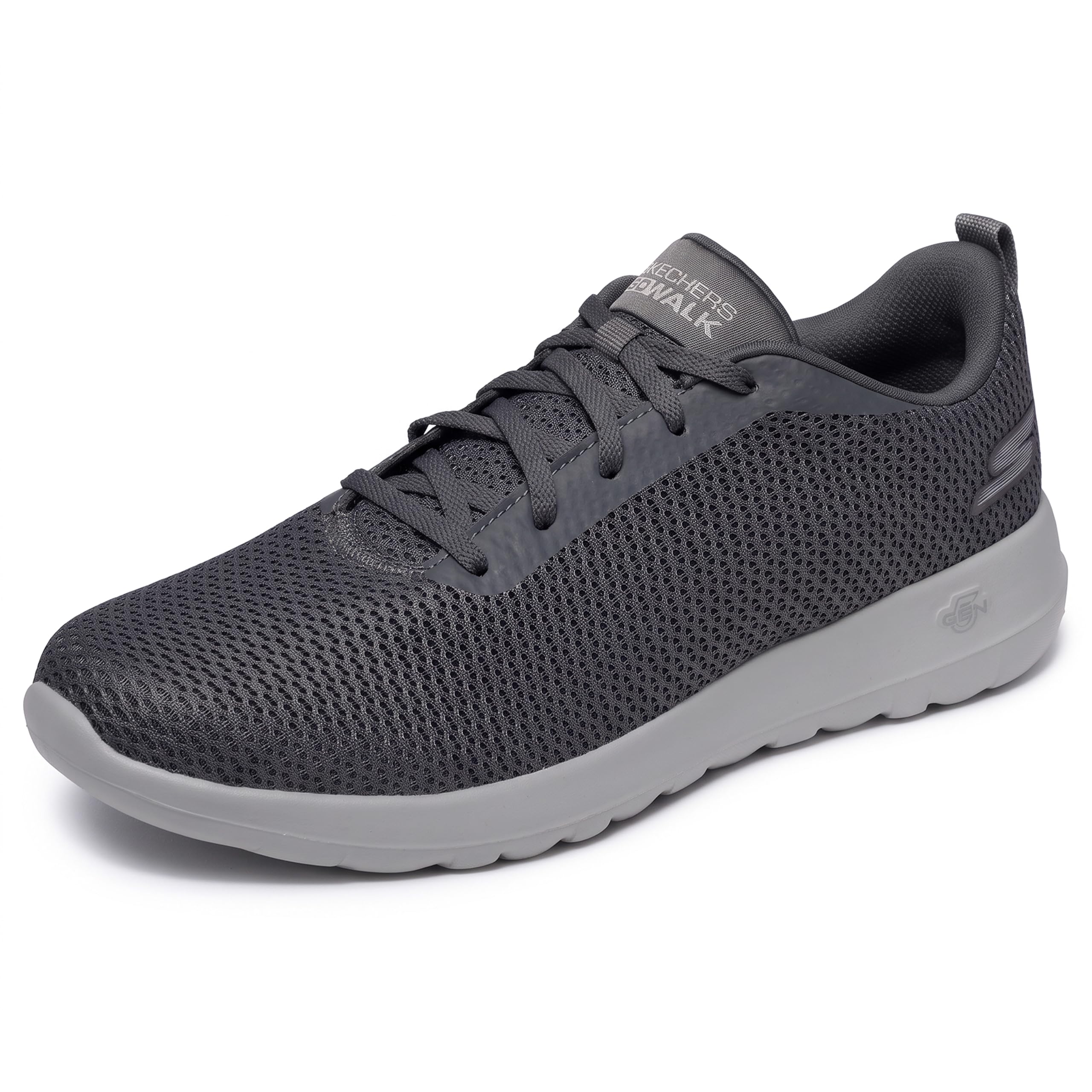
3. Skechers Go Walk Max Effort
Best Budget
Key Features
- Care: Machine washable
- Upper: Breathable mesh
- Insole: Goga Max
- Midsole: 5GEN cushioning
- Price: Budget
Open mesh is what you want in a European August. The upper here is thin enough that air moves through it, so your feet stay dry through a hot afternoon of walking, and at the end of that day that matters more than another half inch of foam.
For pavement and smooth stone, these are the best value in this group. The 5GEN midsole and Goga Max insole give a soft, springy step that holds up for hours, and they’re inexpensive enough that a splash through a puddle isn’t a disaster. We wish the sole were steadier: the outsole curves up at the sides, and on rough, uneven stone that curve can roll underfoot. Save them for cities with smoother sidewalks.
Arch support is where it’s thinnest. The insole is soft rather than built up, so if you pronate or have flat feet, spend more on the Merrell or the ALLSWIFIT. For everyone else, this is the pair that makes a hot, flat city day easy, and it leaves room in the bag for something nicer at night.
Pros
- Breathes well in summer heat
- Soft, springy step on pavement
- Machine washable
Cons
- Soft sole can roll on uneven stone
- Heel and outsole wear quickly
Our budget pick for hot weather and smooth streets: light, breathable and cushioned, though the soft sole gives up stability on rough cobblestones.
4. New Balance 515
Best for Wide Feet
Key Features
- Colors: Multiple colorways
- Widths: Wide and extra-wide
- Outsole: Rubber
- Price: Midrange
Retro running shoes have been the default sneaker in Europe for a while, and the 515 is the most classic-looking pick here: low, simple and unmistakably casual. If you want to look like you packed for the trip rather than for the gym, start here.
What makes it worth carrying is the width. The 515 comes in wide and extra-wide, and a proper wide fitting changes a long day more than any cushioning technology: toes can spread, the upper stops pressing on the little toe, and the shoe stops feeling a size too small by mid-afternoon.
The ride is the compromise. This is a flat, firm shoe with a thin stock insole, closer to a 1980s trainer than to the cushioned walkers on this list. Swap in a cushioning insert before you leave rather than after your first long day; the shoe takes one easily, and it turns a stiff shoe into something you can wear from breakfast to dinner.
We paid close attention to how the 515 holds up, because that’s where a retro shoe usually gives itself away. The outsole is rubber and the upper takes a scuff, but durability is the least settled thing about it, with uppers separating after a few months of daily wear in some cases. Treat it as a one- or two-season shoe and you’ll be happy with it.
Pros
- Comes in wide and extra-wide widths
- Classic retro look, easy to style
- True to size
Cons
- Firm, flat ride with a thin insole
- Durability is the weak point
We recommend the wide width for broad feet and retro taste — order it early, add a cushioning insert, and accept a firm, flat ride.
5. ALLSWIFIT Slip-On Walking Shoe
Best Cushioned Ride
Key Features
- Entry: Slip-on
- Upper: Breathable knit
- Outsole: Non-slip
- Price: Budget
A thick sole and a wide toe box are the two things this shoe gets right, and over a long day on hard pavement that combination does more than most of the technology names in this category. The foam slab underfoot takes the edge off concrete, and your toes have room to spread by the time you get back to the hotel.
We’re pleasantly surprised by the arch support. It’s built up rather than flat, which is rare at this price, and it’s the reason these work as walking shoes rather than just convenient slip-ons. They’re also the easiest pair here to get on: no laces, no bending over in a hotel hallway, no sitting on the edge of the bed to wrestle them on.
Two things to know before you order. The fit is genuinely roomy, which is good news for a broad forefoot and bad news if yours is narrow, because there’s nothing to cinch the upper down. And the cushioning is soft rather than springy, which feels generous on pavement and a little vague when the ground turns uneven.
Pros
- Thick cushioning for long pavement days
- Genuinely roomy toe box
- Real arch support at a low price
- Pulls on without laces
Cons
- Knit upper wears faster than leather
- Too roomy for narrow feet
The most cushioning for the money here: we like that it’s roomy, soft underfoot and easy to pull on, though the knit upper won’t last like leather.
6. adidas X_PLR Path
Best for Packing Light
Key Features
- Design: Running-inspired
- Closure: Lace-up
- Midsole: Cloudfoam
- Price: Budget
Packing a second pair is the oldest trick in travel shoe strategy, and these are built for that job: light, flat enough to slide down the side of a carry-on, and cheap enough that you don’t think twice about bringing them.
Cloudfoam gives them a soft, slightly springy step, and the running-inspired shape looks better with jeans than a lot of purpose-built walkers do. There isn’t much arch underfoot, flat and soft is the whole idea. They’re the pair you wear on the flight and to dinner, not the pair you count on for a fifteen-mile day.
So while we recognize they’re not a cobblestone shoe, thin outsole, thin upper, and the least impressive durability on this list, they cost less than anything else here and look better than that suggests. Wear them on the plane, keep them for evenings and short walks, and leave the long days to the picks above.
Pros
- Light enough to pack as a spare
- Soft Cloudfoam midsole
- Sharp with jeans and shorts
Cons
- Thin sole wears through
- Sizing is inconsistent
We see this as a light, good-looking second pair for the flight and evenings; the long walking days belong to the shoes higher on this list.
7. VILOCY Casual Dress Sneaker
Best for Dressier Evenings

Key Features
- Style: Oxford-style
- Upper: Knit mesh
- Closure: Lace-up
- Price: Budget
Knit oxfords exist for one reason: to be the shoe you wear to dinner in a city where the other men are in leather. This pair is laced and structured enough to pass at a restaurant table, and it’s still a mesh shoe with a flexible sole underneath.
It’s the best-looking option here after the Merrell, and it dresses up further than that: with chinos it reads as a dress-casual shoe, and with shorts it’s just a light summer pair. That range is worth something when you’re packing one bag.
Comfort is why it’s an also-consider rather than a runner-up. The sole is firm and flat, and the break-in can cost you a blister if you take them out of the box and walk a city in them, so give them a week at home first.
Sizing is the other catch: it runs large and there’s no wide option, so if your forefoot is broad, size for width and live with the extra length. For everyone else, it’s the pair that makes a dinner reservation one less thing to pack for.
Pros
- Reads dressier than a running shoe
- Knit upper breathes
- Works with chinos or shorts
Cons
- Firm sole needs a break-in
- Runs large with no wide option
Our take: a dressy knit oxford that passes at dinner and walks like a sneaker, once you’ve broken it in and sized down.
How We Tested Walking Shoes for Europe
We started with about 40 men’s walking and walking-adjacent sneakers, then cut by price, size availability, and construction. We kept pairs with removable cushioned insoles, rubber outsoles with real tread, uppers that wouldn’t need a month of break-in, and some room for wider feet, plus hands-free entry on the ones that offered it. Twelve made the cut.
Those 12 pairs spent six months in rotation, and several flew with us on actual trips. We wore them over cobblestone squares, train platforms, museum floors, and long airport connections, then kept them on for weekday commutes and weekend errands at home. Every pair got weighed on a kitchen scale, because packing light is half the point.
Comfort we judged the hard way, with a running log of where each pair started to rub and at what step count, and whether our feet felt better or worse the next morning. For fit, testers with narrow, average, and wide feet tried the same listed size and compared notes, which is how we learned that a couple of pairs ran a half size short and others loosened after a week. To check sole stiffness, we bent each shoe at the ball and twisted it in both hands, then noticed how a stiff sole felt after an hour on stone compared with a flexible one.
Durability came down to the outsole: we looked at heel and toe wear at 50 and 100 miles, and whether knit uppers snagged or insoles flattened. For appearance, we wore the finalists with jeans and with trousers, and out to dinner. We timed hands-free entry on the slip-ons and machine-washed the pairs that claimed to be washable, then asked at the end whether the pricier ones were still comfortable at mile 100.
How to Choose Walking Shoes for a European Trip
The right shoe for Europe grips wet stone, supports your arch for six hours and still looks presentable at dinner — and in that order.
Grip and stability first, cushioning second
Soft, thick foam feels wonderful on a smooth sidewalk and treacherous on a wet, rounded cobble, where a tall stack of cushioning has nothing to push against and the sole can roll sideways under your ankle. What you want instead is a midsole firm enough to resist twisting and an outsole with a tread pattern that bites into stone.
Our test is simple: press a thumb into the side of the sole and try to twist the shoe. If it folds like a sock, it is a pavement shoe, not an old-town shoe. That is why the Merrell sits at the top of this list and why we steer the softest pair toward cities with modern sidewalks.
Get the width right before you get the size right
Brand sizing wanders, and knit uppers run narrower than leather ones. Order at least three weeks before you fly, try the shoes on at the end of the day when your feet are at their largest, and leave a thumb’s width between your longest toe and the end of the shoe.
If your forefoot is broad, buy the wide width rather than sizing up. Extra length does not widen the toe box; it just makes the shoe slop. The New Balance 515 is the clearest wide-fit option here, while the Skechers Summits runs narrow through the front.
Slip-ons are convenient; laces are adjustable
A shoe you can step into without bending over earns its keep on a travel day: security lines, museum cloakrooms, an apartment with a shoes-off rule. The catch is that a slip-on cannot be re-tensioned when your feet swell on a flight or after eight hours of walking, and the upper alone does the work of holding your foot.
If your feet swell noticeably, a laced shoe with a roomy toe box is the more forgiving choice. If you are moving between airports, trains and hotels with one bag, hands-free wins and the Summits is the pair we hand people first.
Pick one pair that can go to dinner
European cities are forgiving about footwear, but there is a difference between a shoe that looks intentional and one that looks like you forgot to pack anything else. Dark leather and knit oxfords disappear into a restaurant; a white mesh sneaker does not.
Our advice is to let one pair cover the evenings, then let the second pair be the light, breathable one you actually want for the miles. That split does more for a two-week trip than any single shoe that tries to do both jobs.
Frequently Asked Questions
Do I need to break in walking shoes before a trip?
Yes, and more than a lap around the block. Wear new shoes for a few days at home, then on a two-hour walk, before they go in the suitcase. Leather loosens over the first week, and a firm-soled shoe can rub a heel raw before it softens.
Pack blister bandages either way. A shoe that feels fine for twenty minutes can behave very differently in hour six.
How many pairs of shoes should I pack for two weeks in Europe?
Two, plus a sandal or flip-flop if your accommodation calls for one. One supportive pair for daytime miles and one lighter or dressier pair for evenings and travel days will cover almost any itinerary.
Rotating also lets each pair dry out overnight, which is the single biggest thing you can do to keep them from smelling like a locker room by week two.
What do I do when my walking shoes get soaked?
Mesh dries fastest: pull the insoles out, stuff the shoes with newspaper or a towel, and leave them in moving air, never on a radiator, which can shrink the upper and warp the sole. Leather needs slower drying and a wipe-down afterward.
A spare pair of insoles takes almost no room in a bag and rescues a wet day.
Final Verdict
Start with the Merrell Jungle Leather slip-on. It is the one pair here that handles a long walking day and a restaurant table without a change of clothes, and its arch support and firm sole are what a week of cobblestones actually asks for.
If your feet are wide, order the New Balance 515 in a wide width and add a cushioning insert. For a light second pair that earns its suitcase space, the adidas X_PLR Path for evenings and flights or the Skechers Go Walk Max Effort for hot pavement covers the other half of the trip.