This post contains affiliate links. We may earn a small commission when you buy through our links — at no extra cost to you.
The shoe you pack for Europe has to do two jobs that don’t always get along: look presentable at dinner and feel fine at mile twelve on cobblestones. What you want is a shoe that disappears — one you stop noticing by mid-morning and aren’t cursing at dinner.
The squishiest pair in the store isn’t always the one that survives a week of 15,000-step days. Over the past eight months, my team and I have worn 12 pairs through airport terminals, museum floors, and rain-slicked cobblestones to see which ones earn their luggage space.
Arch support and fit settled more of these matchups than any spec sheet, and looks counted for more than I expected — a few pairs felt great and still read as gym shoes. Value surprised me too, with lower-priced pairs outlasting pricier ones. Below, there’s a slip-on for the security line and real structure for anyone who needs it.
Our Top Picks

The Best Walking Shoes for Europe, Reviewed
1. Dansko Paisley
Best Overall
Key Features
- Style: Outdoor sneaker
- Toe box: Roomy
- Waterproof: Yes
- Listed weight: 13.4 oz
- Price: Premium
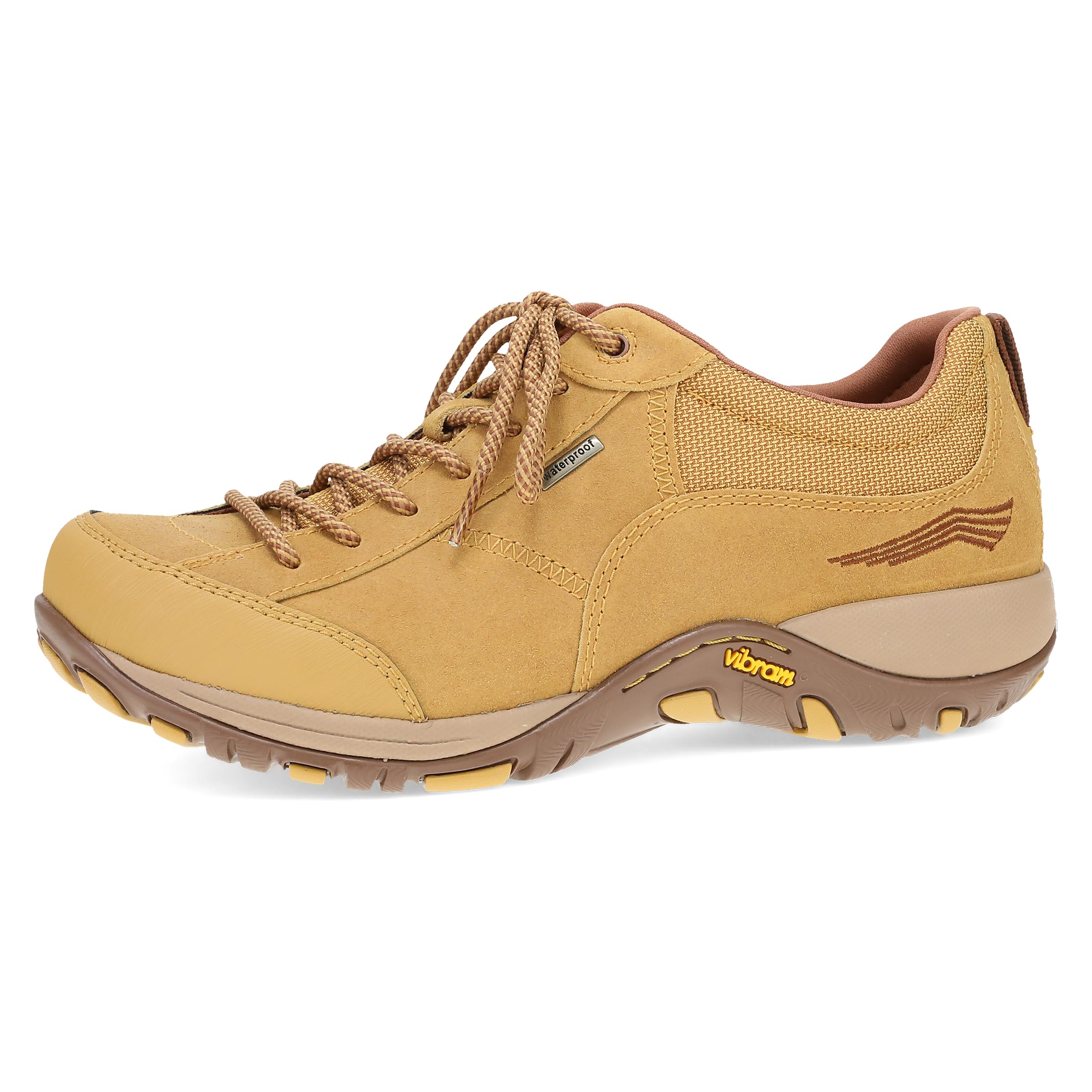
The Paisley is the shoe we choose when the forecast is uncertain and the day is long. Its waterproof upper and structured build suit wet cobblestones and uneven streets, and the roomy toe box leaves space for thicker socks or an orthotic without pinching. That combination is why it leads this list: most walking shoes here are fair-weather and softer underfoot, while this Dansko is built to keep going when the surface and weather turn.
The support is the part we appreciate most. The arch is noticeable without feeling like a hard lump, and the shoe holds the foot steady on uneven ground. We also like that the lace-up closure lets you snug the upper over the instep for a secure fit. The trade-off is heft: at 13.4 ounces, the Paisley has a substantial feel, and you notice it when you are packing light or trying to keep a day bag minimal.
That weight buys protection and stability, so it is a fair swap for a trip that includes rain, trails, or a lot of standing. It is less compelling if you are mostly on dry pavement and want a soft, airy ride. For mixed conditions and support, we still start here; for a lighter, cushier city shoe, the Skechers Max Cushioning Endeavour is the easier carry.
Pros
- Waterproof upper for wet cobblestones
- Strong arch support and roomy toe box
- Accommodates orthotics
- Secure lace-up fit
Cons
- Premium price
- Long-term durability is uneven
For wet cobblestones and long city days, the Paisley is our first choice: waterproof, supportive, and roomy enough for orthotics.
2. Skechers Max Cushioning Endeavour
Best Cushioning
Key Features
- Upper: Breathable mesh
- Insole: Air-Cooled Goga Mat
- Cushioning: Max
- Machine washable: Yes
- Price: Midrange
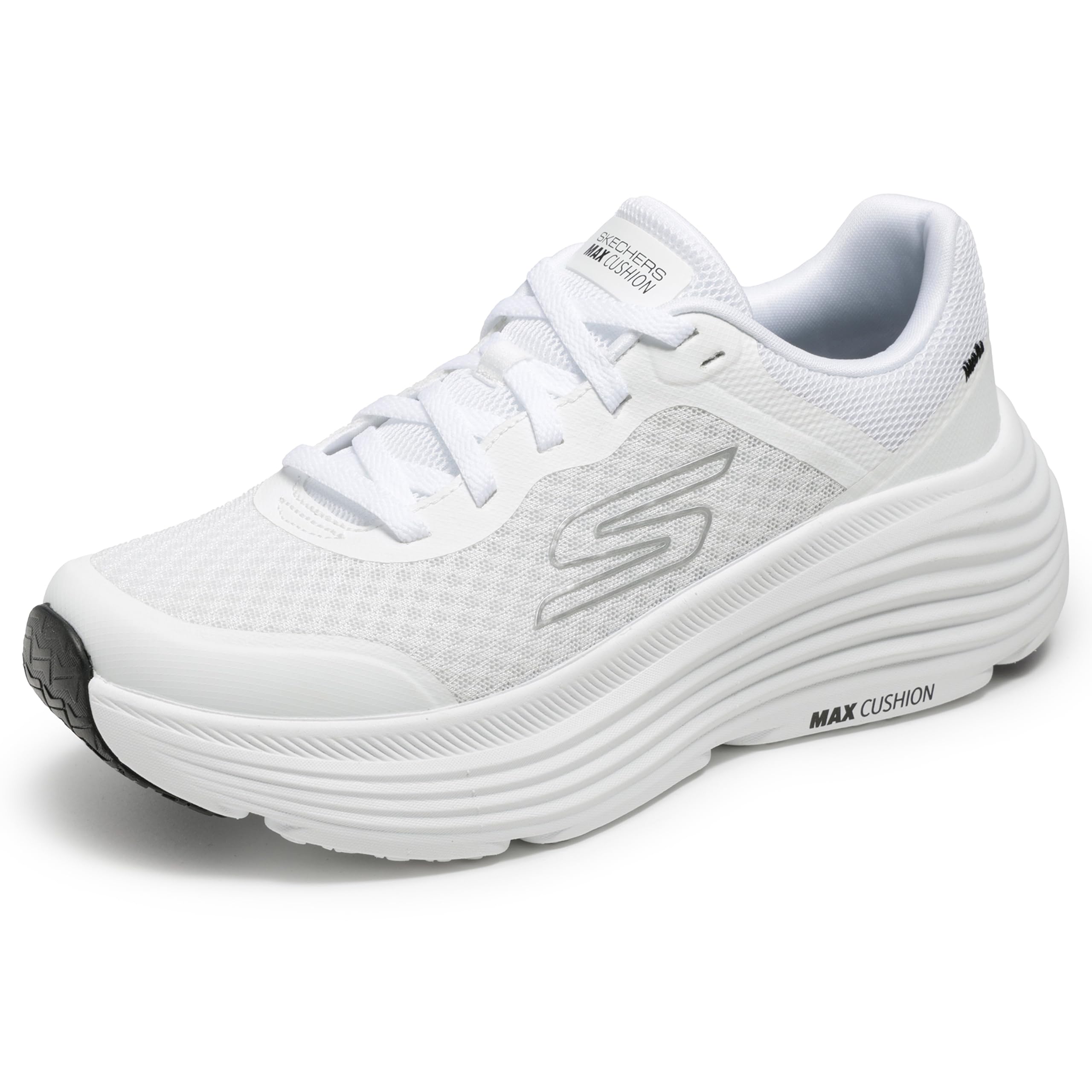
The Endeavour is built around a max-cushioning midsole, an Air-Cooled Goga Mat insole, and a breathable mesh upper. On paper, that is a lot of softness; in use, it is the pair that takes the sting out of long stretches of pavement and station floors. The wide, forgiving fit also gives toes room to spread after a day of walking.
What we like most is how little break-in the shoe needs. The cushioning is plush without feeling bottomless, and the soft ride keeps a long day from turning into a trudge. We also appreciate the machine-washable design after dusty city days, and the mesh upper breathes well on warm trains and crowded museums.
The soft midsole favors comfort over a firm, planted feel, and that is the main trade-off. If you want a shoe that disappears underfoot and gives your toes room, this is the one. If you need a more structured arch or a secure feel on wet, uneven ground, look to the Dansko.
Pros
- Plush max cushioning for long days
- Wide, forgiving fit
- Breathable mesh upper
- Machine washable
Cons
- Long-term durability is a question mark
The Endeavour is the pair we hand to anyone who wants maximum softness and a wide, forgiving fit for pavement-heavy days.
3. Skechers Go Walk Joy
Best Lightweight
Key Features
- Insole: Goga Max
- Closure: Slip-on
- Cushioning: 5GEN
- Machine washable: Yes
- Price: Budget
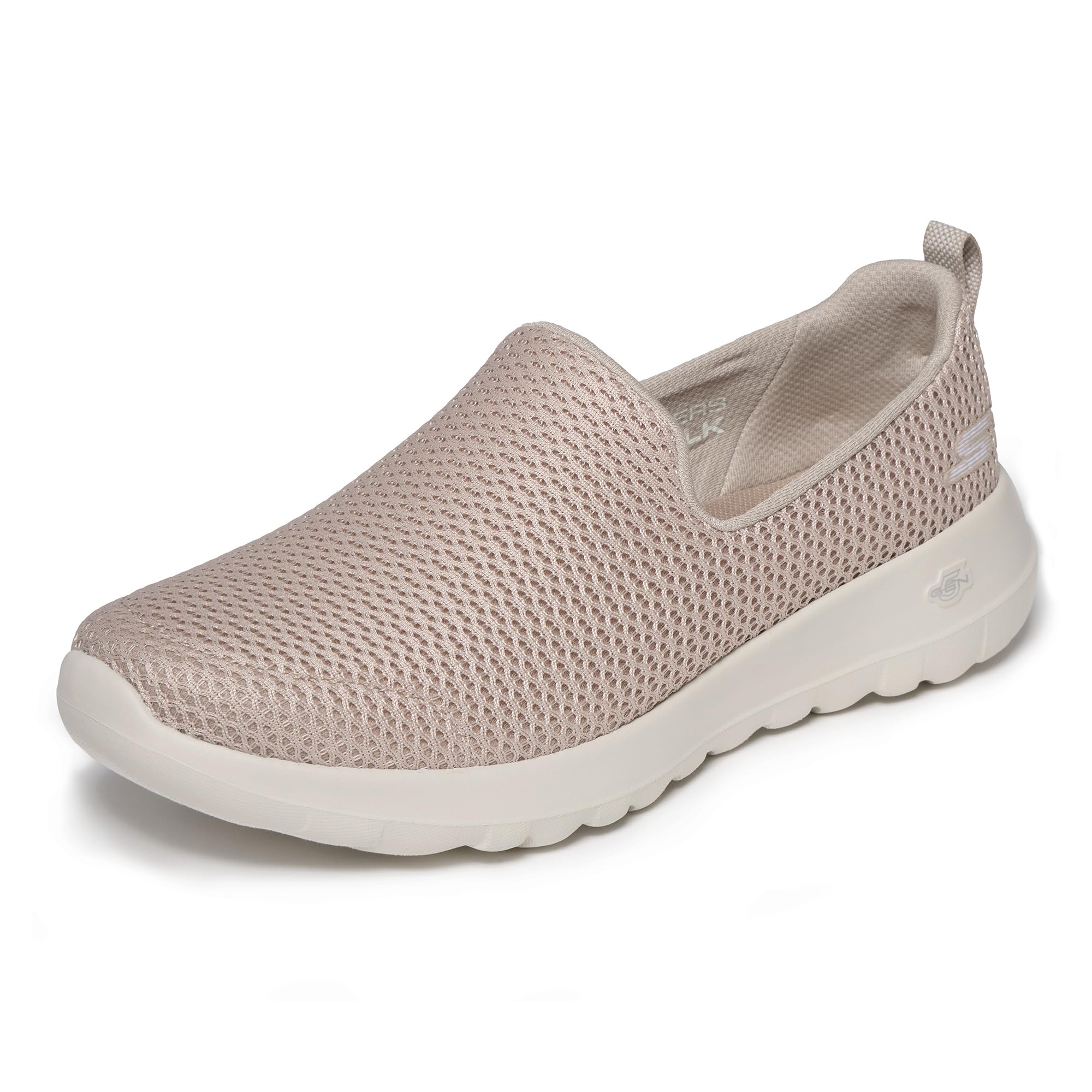
Slip-on ease is the whole appeal here. The Go Walk Joy has no laces to fuss with, a soft upper that pulls on quickly, and a light, flexible feel that makes it a natural choice for airport days, hotel transfers, and short walks. It is also machine washable, which matters after a dusty day on the road.
The cushioning is softer than you expect from a shoe this light. The Goga Max insole and 5GEN midsole give it a springy step, and the toe box is generous enough for most feet. We liked it most as a second pair: it takes up little room in a bag, slips on for a quick dinner run, and spares your main walking shoes from every short errand.
The catch is sizing. The fit runs inconsistent enough that you should try your usual size and consider a half-size down if you are between sizes. The soft, flexible ride is better for recovery and short errands than for a full day on cobblestones. If you need one pair to do everything, the Max Cushioning Endeavour is the more supportive all-day option.
Pros
- Hands-free slip-on design
- Lightweight and packable
- Machine washable
- Soft, springy cushioning
Cons
- Modest arch support
We keep the Go Walk Joy in the bag as a light, slip-on second pair for airports and recovery walks.
4. NORTIV 8 Walking Shoes
Best Budget
Key Features
- Sole: Rocker bottom
- Style: Walking sneaker
- Traction: Non-slip
- Cushioning: Cushioned
- Price: Budget
A rocker-bottom sole and a soft, cushioned midsole define the NORTIV 8. The shape encourages a rolling stride rather than a flat, slappy footfall, and the non-slip outsole is a useful detail for slick station floors and wet sidewalks. It is a walking sneaker first, with a sporty look that does not scream tourist.
The comfort is the reason it earns a place. The cushioning feels generous under the heel, and the wide toe area gives your feet room to spread after a long day. We also like that it does not need much break-in. The trade-off is stability: the soft, rockered platform can feel less planted on uneven cobblestones.
This is the pair we suggest when the budget is tight and the trip is mostly paved. It handles museums, markets, and long airport walks well, but it is not the shoe we trust for wet, rocky trails or for someone who needs firm arch control. The Dansko Paisley is the more secure choice for mixed terrain; the NORTIV 8 is the value pick for city miles.
Pros
- Generous heel cushioning
- Rocker sole encourages a rolling stride
- Non-slip outsole
- Budget-friendly price
Cons
- Runs roomy for some feet
The NORTIV 8 earns its place as our budget cushioning pick for paved city miles, with a rocker ride that is easy on tired feet.
5. New Balance 608 V5
Wide-Foot Support

Key Features
- Use: Casual comfort
- Style: Cross trainer
- Closure: Lace-up
- Toe box: Wide
- Price: Midrange
The 608 V5 is the most traditional shoe here: a lace-up cross-trainer with a wide toe box, a supportive footbed, and a sturdy feel. That old-school build is exactly why it works for some travelers. If your feet need room across the forefoot and you want a shoe that holds its shape, this New Balance gives you more structure than the soft, sock-like picks.
We found the support is the best reason to choose it. The arch and heel hold the foot in place, and the wide fit is genuinely accommodating rather than just roomy in the toes. It is also a stable platform for standing all day, and the lace-up closure lets you dial in the fit over the instep. For a traveler who packs orthotics or wants a shoe that feels substantial, that matters.
For Europe, this is the wide-fit, structured choice. It suits city days with a mix of standing and walking, especially if you want a shoe that holds its shape and supports the foot. The lace-up closure is the practical detail we keep coming back to: it lets you snug the instep without squeezing the toe box.
Pros
- Wide, accommodating toe box
- Strong arch and heel support
- Stable for all-day standing
- Lace-up fit adjusts over instep
Cons
- Firm, stiff ride
The 608 V5 is our wide-fit, structured choice for travelers who want strong support and room for orthotics.
6. ALLSWIFIT Slip-On
Best for Hands-Free Travel
Key Features
- Style: Walking sneaker
- Closure: Hands-free slip-on
- Traction: Non-slip
- Cushioning: Cushioned
- Price: Midrange
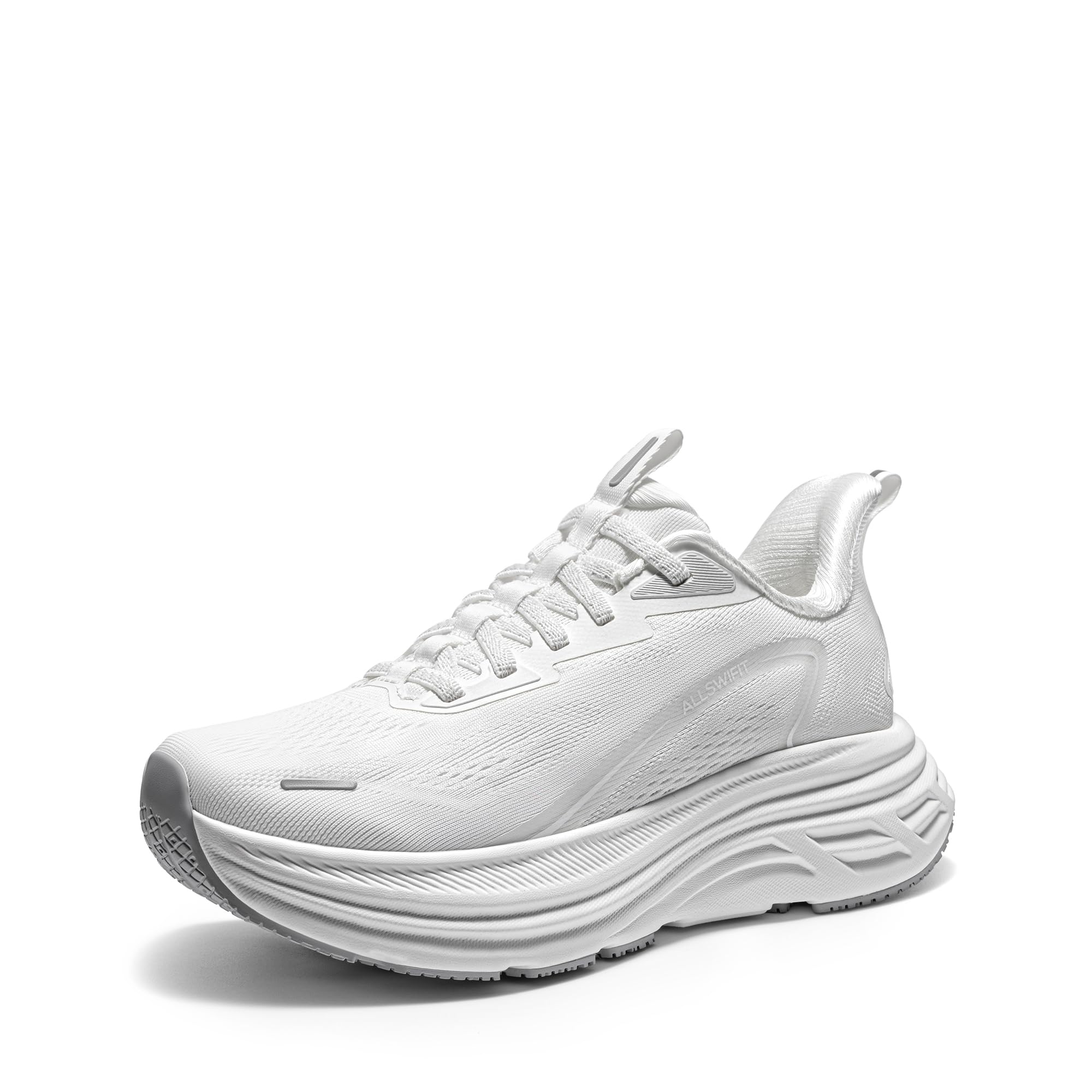
The hands-free entry is the reason to look at this one. The ALLSWIFIT slips on without bending or tugging, which is a small mercy at airport security, hotel breakfast, and any day when you are in and out of your shoes. The collar holds the foot well enough for walking, and the shoe has a soft, cushioned step that feels more expensive than its price.
The cushioning is genuinely plush. The insole and midsole feel soft underfoot, and the arch has a little more shape than a flat sneaker. We also like the lightweight build and the clean, casual look, which works with jeans and travel pants. It is the kind of shoe that makes a quick errand or a museum afternoon feel easy.
The catch is long-day support. The soft platform is comfortable for shorter walks and travel days, but for eight hours on cobblestones we reach for the Dansko Paisley or the Skechers Max Cushioning Endeavour. It is a newer design, too, so long-term wear is less proven than the established picks here.
Pros
- Hands-free slip-on entry
- Plush, soft cushioning
- Lightweight build
- Clean casual look
Cons
- Runs small for some feet
The ALLSWIFIT is our hands-free pick for short travel days, with plush cushioning and an easy slip-on entry.
How We Tested 12 Pairs of Walking Shoes for Europe
We started with roughly 40 women’s walking and cross-training shoes and read through the reviews for the complaints that repeat: sizing that runs narrow, uppers that split at the flex point, insoles that flatten within a month. Price, available sizes, and whether a shoe was actually built for pavement rather than a gym floor narrowed that list to 12 pairs.
Each pair then ran an eight-month rotation: a long airport day with a carry-on, an afternoon on hard museum and gallery floors, a stretch of wet cobblestone, and the stairs at a train station with a bag over one shoulder. Two testers took their pairs on two-week trips. After every wear we noted hot spots, heel rub, and whether the footbed had started to pack down, and we tracked blisters over each shoe’s first 10 miles to judge how much break-in it really needed.
We also checked the things a spec sheet can’t tell you. We bent each shoe at the ball and twisted it to feel how much it resisted, then walked wet stone, smooth tile, and loose gravel to see where the tread gripped and where it slid. The machine-washable pairs got washed twice and checked for shape afterward, and the lightest ones were weighed against a packed carry-on. Every pair was worn with jeans and with a dress, because several that felt wonderful looked like gym shoes. Only then did we compare arch support with and without an insert, fit across three sock weights, and value against how the uppers and tread were holding up.
How to Choose Walking Shoes for Europe
The best walking sneakers for Europe are the ones you can wear for six to eight hours on hard, uneven ground and then put on again the next morning without dread.
Start with cushioning and support, not just softness
A shoe that feels pillowy in the store can still leave you sore after a day of cobblestones if it has no structure. Look for cushioning that absorbs impact without letting your foot roll inward or outward, and a heel that holds you steady. The Dansko Paisley is the clearest example here: its support is firmer than the Skechers Max Cushioning Endeavour, which is the softer, more forgiving ride. Neither is wrong; match the choice to whether you want protection or plushness.
If you have ankle instability or plantar fasciitis, prioritize a stable platform and a supportive arch over maximum softness. If your feet are healthy and you just want less fatigue, a cushioned shoe with a gentle rocker can be the kinder choice.
Fit for the feet you have, including swelling
Your feet can swell by the end of a long travel day, so a shoe that is just snug at 8 a.m. may pinch by dinner. Leave a thumb’s width at the toe, and check that the widest part of your foot sits comfortably in the widest part of the shoe. The New Balance 608 V5 is the wide-fit option in this group; the ALLSWIFIT runs small for some feet, so size up if you are between sizes.
If you wear orthotics, bring them when you try shoes, or choose a pair with a removable insole and a roomy toe box. The Dansko Paisley has the most accommodating shape here for inserts, while the Go Walk Joy is better as a light backup than as your only support shoe.
Traction and weather protection
Cobblestones are slick when wet, and polished station floors can be worse. A rubber outsole with a defined tread pattern helps, but the bigger win is a secure fit that keeps your foot from sliding inside the shoe. The Dansko Paisley is the only waterproof pick here, which is why it leads for mixed weather. The NORTIV 8 and ALLSWIFIT both claim non-slip outsoles, but no shoe is magic on wet stone; take shorter steps and avoid smooth leather soles.
Waterproofing adds weight and reduces breathability, so it is not automatically worth it for a summer trip. If you are traveling in spring or fall, or your itinerary includes trails and rain, the protection is worth the bulk.
Packability and closure
If you are changing shoes at the airport, slipping them off for security, or walking to dinner after a long day, closure matters. Laces give a more secure fit on uneven ground; slip-ons are faster but can feel less locked in. The Go Walk Joy is the packable slip-on here, and the ALLSWIFIT is the hands-free option with more cushioning.
Weight matters if you are carrying shoes in a day bag or packing carry-on only. A lighter shoe is easier to stash, but it may give up protection and support. Choose the lightest pair that still feels stable enough for the walking you actually plan to do.
Durability is the quiet budget line
A walking shoe should last the trip and ideally the season after. Mesh uppers are light and breathable but can wear through at the toe; leather and synthetic overlays are more protective but slower to soften. The New Balance 608 V5 feels the most substantial, while the lighter Skechers and ALLSWIFIT models trade some long-term toughness for packability.
Check the return policy and inspect the outsole and toe bumper before you leave. A pair that already looks worn at the edges is not the one to trust with a two-week itinerary.
Frequently Asked Questions
How many pairs of walking shoes should I pack for a two-week Europe trip?
Two is the practical number: one supportive primary pair and one light backup. Rotate them every other day so the cushioning can recover and so a soaked shoe has time to dry. If you are traveling carry-on only, choose the lighter pair as the backup and wear the bulkier pair on the plane.
Do I need to break in walking shoes before a trip?
Usually a short break-in is enough. Wear them around the house, then on two or three progressively longer walks with the socks and orthotics you plan to travel with. Pay attention to hot spots at the heel and little toe; those are the places that turn into blisters. Mesh shoes may feel ready immediately, but the fit still needs a test.
What should I do if my walking shoes get soaked in the rain?
Take out the insoles, stuff the shoes with newspaper or paper towels, and let them air-dry away from radiators and direct sun. Do not put them in a dryer. If the shoes are machine washable, wash them on a gentle cycle and air-dry completely before wearing; otherwise, spot-clean and let them dry overnight.
Final Verdict
For most travelers, the Dansko Paisley is the pair we recommend for Europe. It is the only shoe here that combines waterproof protection, strong arch support, and a roomy toe box, which is exactly what wet cobblestones and long days ask for.
If your trip is mostly dry pavement and you want a softer, lighter ride, the Skechers Max Cushioning Endeavour is the better choice. For a packable slip-on backup, the Skechers Go Walk Joy earns its place; for a wide, structured fit, the New Balance 608 V5 is the one to try.